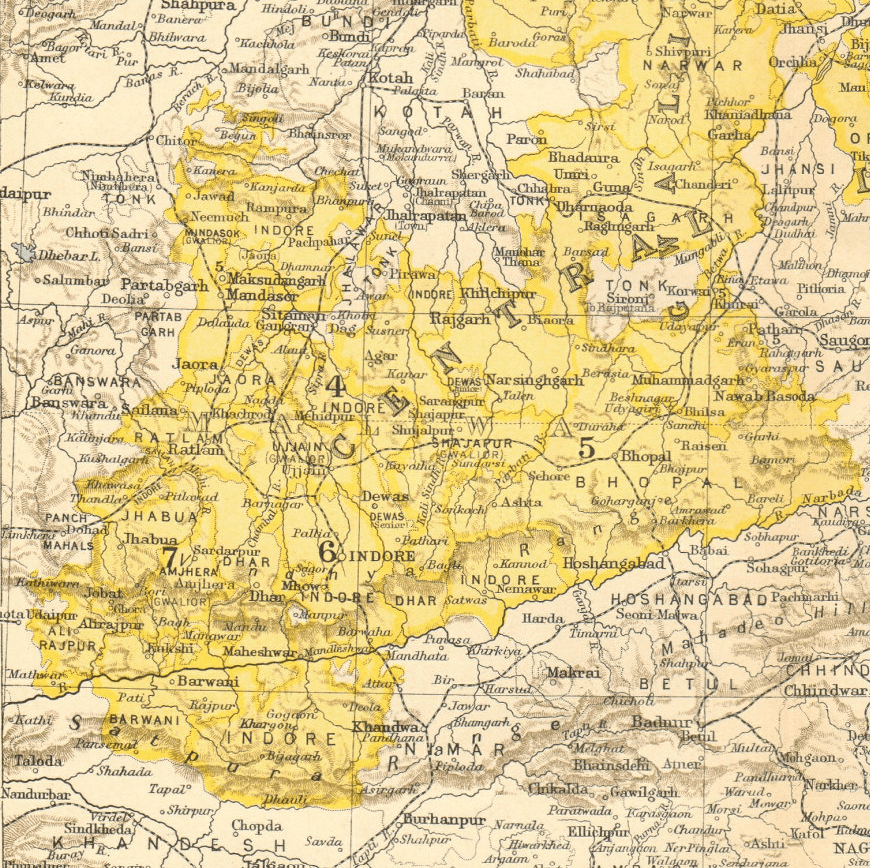
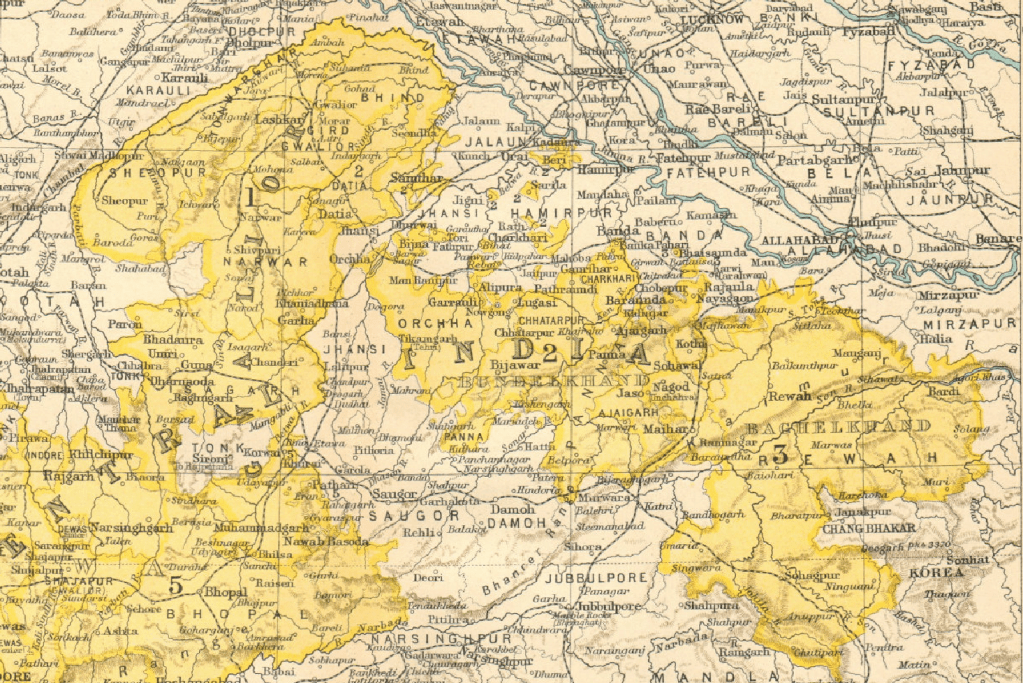
Indore State or the possessions of the Holkars were located in Central India and encompassed an area of some 9500 square miles; it comprised of several blocks of territory without clearly defined boundaries, with the most isolated pargana, Nandwas, located amid the Udaipur State territory to the north and Alampur bounded not only by Gwalior but by Datia on the east and the west.
The ancestors of the rulers of Indore, the Holkars, appear to have migrated southwards to the Deccan from the Mathura region and initially settled first in Mewar and later in the Aurangabad district before taking up their residence at the village of Hol or Hal on the Nira River, some 40 miles from Poona. (The name is derived from Hol or Hal – the place name – and kar, an inhabitant of) The founder of the House of Indore was Maihar Rao Holkar (1694-1766), a Mahratta chief serving under Peshwa Baji Rao I, rising to be one of the Peshwa’s main generals in Malwa, with his headquarters in Maheshwar and Indore. By the time of his death in 1766, he was virtually the ruler of Malwa.
from 1767 to 1795, his son’s widow, Ahalya Bai ruled the state with great skill and Indore became a seat of peace and justice, an island surrounded by violence. She appointed Tukoji Holkar, a distant relative as commander of her forces and her successor; on his death, a fight for power ensued, between his two legitimate sons, Kashi Rao and Malhar Rao and his two illegitimate sons, Jaswant Rao and Vithoji. As things turned out, the brothers began a contention for the throne. Malhar threw himself on the protection of the Peshwa, while Kashi appealed for help from Scindia of Gwalior’s minister, Sarke Rao Ghatke. Sarje Rao was saw this as an opportunity to gain power over the Holkar territories and on the pretext of preventing a civil war between the brothers, a reconciliation was effected and sworn to but it did not prevent Scindia from surrounding Malher Rao’s camp and not only nearly destroyed his army but killed Malher. His infant son, Khande Rao fell into Scindia’s custody while Jaswant Rao escaped to Nagpur and Vithoji to Kolhapur.
Jaswant Rao, aware his position was weak, did not initially assert any claims on the house of Holkar. Instead, he gave himself out as the champion of Khande Rao Holkar, Malhar Rao’s infant son and called on supporters of the house to rally to his banner. His ruse, as it was just that, eventually succeeded thus far as he became, after a successful albeit ruthless campaign against all sides, as placing him as the chief of the House of Holkar.
In 1803, at the outbreak of the Second Maratha War, Jaswant Rao remained neutral but in 1804, following the defeat of Scindia, he attacked the British and besieged Delhi. This was but a short victory – in November 1804, his forces were defeated at Dig and Farrukhabad, and a year later he sued for peace with the British.
The Holkar rule however continued and after the Third Mahrata War in 1818, Indore became a princely state under the protectorate of British India, complete with a Resident, whose duty was to advise but not rule, over Indore. However, as we have seen in Gwalior, the influence of the resident varied greatly. Indore became the capital of the princely state and the headquarters of the British Central India Agency.
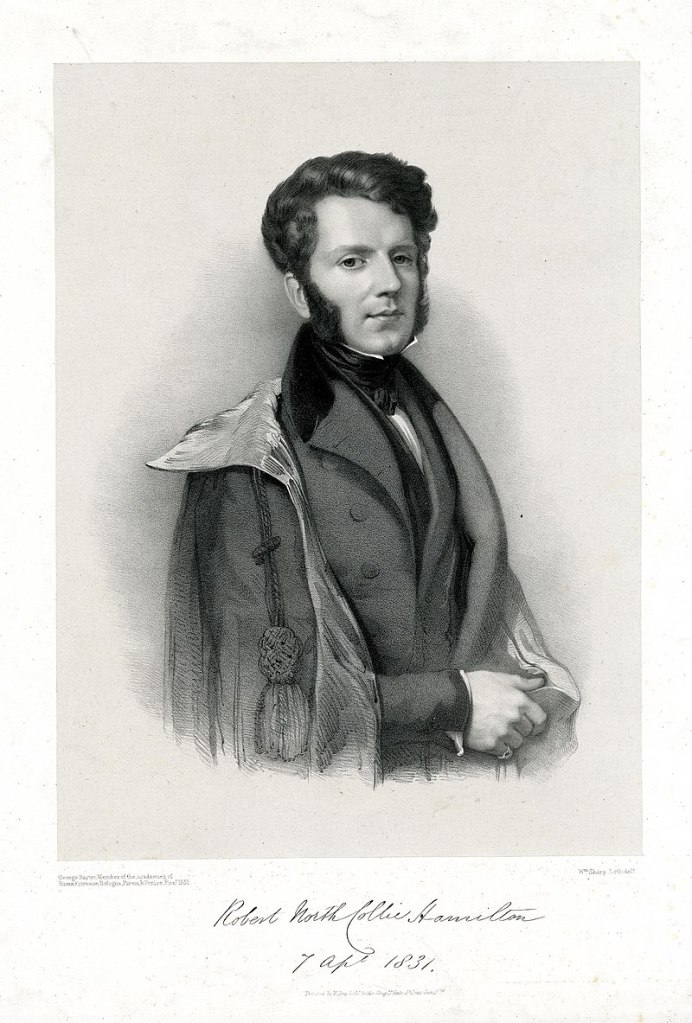
We will take up the story of Indore from the arrival of Sir Robert Hamilton in 1844 when Indore had no legal successor – the last ruler, Khande Rao, died at the age of 15 and left no issue. Hamilton was left with the arduous task of finding someone to take his place. Krishna Bai Holkar Sahiba (Masahiba), one of the widows of Jaswant Rao Holkar, put forward three candidates, but only one was deemed acceptable, and the new ruler was ultimately chosen for being a “healthy and comely child” with a most fortunate horoscope. He was also only 12 years old.
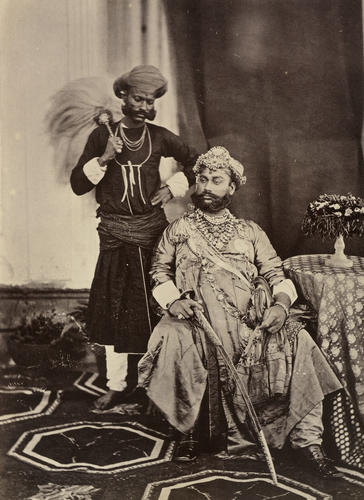
Robert Hamilton announced the selection in open darbar without informing the government, and on the 27th of June 1844, Tukoji Rao Holkar II was installed on the throne. The Governor-General had a few things to say about this and probably boxed Hamilton’s ears, but nevertheless, Hamilton’s decision stood. Due to the young age of the reigning chief, Masahiba and the regency council under Robert Hamilton continued to hold office until his coming of age. While they effectively ruled Indore, the young regent-in-waiting was given a sound and well-rounded education. By the age of 14, he practically had control over the State Treasury, and at 15 was actively attending council meetings and helping with the administration. Finally, in 1852, after a successful tour of Northern India in which he was to gain a broader knowledge of the world outside his own state (the tour was incognito and did not entail any pomp and circumstance; it also lasted a full year), Tukoji Rao Holkar was granted full administrative powers at the age of 20. Tukoji Rao Holkar II proved himself a competent and modern ruler – a promoter of education, agriculture, and industry in the state. Among his other reforms were the establishment of the first printing press in his state and the introduction of not only a postal service but a mint as well. He was also a fine horseman, and good marksman and an excellent swordsman. Robert Hamilton was rightly proud of his one-time ward. He remained the permanent Agent Governor-General for Central India from 1854 until his departure to England on sick leave in 1857.
Unfortunately for Holkar, after his benevolent and kindly treatment by Sir Robert Hamilton, he was given the rather unimaginative Henry Marion Durand instead.
 Mutiny Reflections
Another fascinating account!! Thank you for the effort you have taken with this!!
Once again, many of the same surnames are re-appearing. Is this Durand related to he of ‘Durand Line’ fame?
LikeLiked by 1 person
It is named after his son, Henry Mortimer Durand, who was responsible for it.
LikeLiked by 1 person
Thank you!
LikeLike
Interesting how the different personalities affected the events. Surprising that Durand could get along with Sikandra Begum – she sounds really interesting.
LikeLiked by 1 person
I think Durand and Sikandra Begum were probably quite similar, both strong personalities who could likely understand each other. She listened to Durand and with her he didn’t feel threatened. I think his problems with Holkar weren’t Holkar per se but because he had been taught by a man Durand disliked. It’s been hard to decipher it all, and the records are either very pro Durand or very against him. There seems to be no middle ground. I personally don’t like him much!
LikeLiked by 1 person