Enter Henry Marion Durand
There are two camps when it comes to Henry Marion Durand – the defenders of Durand and the detractors of Durand. On one hand, his defenders state he did his best and was right to mistrust Holkar; the other party, however, accuse him of high-handedness in his treatment of Holkar and his mismanagement of the mutiny in Indore. Both sides have their merits, however, but where Indore is concerned, Durand’s conduct is questionable.
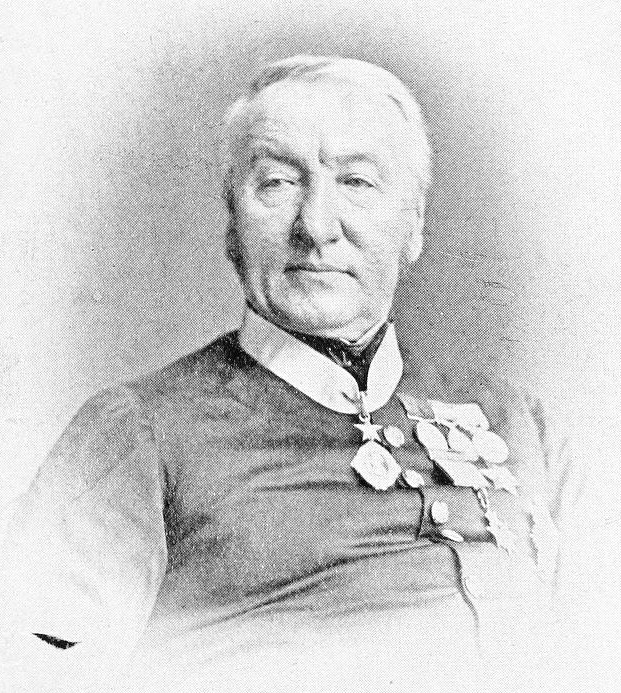
The dalliance of Lieutenant-Colonel Henry Percy, the fifth son of the 1st Early of Beverley, a cavalry officer who served in the Peninsular War and the Battle of Waterloo, with a French woman, Marion Durand, during his time as a prisoner of war in France, gave rise to two sons – Henry Marion (born in 1812) and Percy Mortimer Durand. Unfortunately, little is known of Marion Durand herself. Henry Percy provided for her – as she was settled in Paris, but she never came to England, and even her son, Henry, who bore her namesake, could barely remember her. By the time of Henry Percy’s death in 1825, the boys were orphans and left in the charge of Mr. Deans, a family friend.
In 1825, Henry Durand joined Addiscombe, and by 1829, he was on his way to India, where upon his arrival, he served as a second lieutenant in the Bengal Engineers. His career is somewhat marked by protests and resignations. He served with distinction in the First Anglo-Afghan War but resigned his post in protest when the whole of Bala Hissar was returned to the Afghans. However, this resulted in his furlough to England, where he became acquainted with Lord Ellenborough, who offered Durand the position of ADC and, upon his arrival in India, promoted the young man to his private secretary.
In 1843, Durand attained the rank of Captain, and in the same year, he assisted Ellenborough in the Gwalior Campaign. Unfortunately for Durand, Ellenborough was dismissed by the EICo in 1844, and Durand, now without his lucrative position as secretary, found himself appointed Commissioner of Tenasserim in Burma. Durand proved himself a hard administrator and quite incapable, by his very nature, of compromise. When he discovered that European and Burmese speculators were cutting down valuable teak forests in abuse of their licenses, Durand had them punished, and the agents of the Calcutta firm were convicted by the Conservator of Forests of wanton destruction. Durand then substituted government management in lieu of the licensing system, which earned him censors in the press. The Conservator of Forests sued the paper’s editor for libel and charged a European with fraudulent timber transactions – both cases were tried by Durand. He found the parties guilty, sentencing the editor to not just a fine but imprisonment. The prisoners sent a petition to the Deputy-Governor of Bengal, Sir Henry Maddock, who requested the Calcutta judges to publish a report on the case. Their report proved unfavourable for Durand, and he was dismissed from his post by Maddock and not by the Governor-General. In protest, Durand sailed for England in 1846 to lay his case before the Court of Directors. Before he left, Governor-General Lord Hardinge offered him a coveted position in Punjab, which Durand coldly declined. As it is, Durand’s case in front of the board failed, but they chose to offer him a reinstatement in an equivalent position.
Earl of Dalhousie promptly ignored the EICo order, and Durand found himself back in military service. After successfully serving in the Second Sikh War, after which he received warm thanks from Sir Colin Campbell, Durand was promoted to Brevet Major, and Dalhousie offered him a position in the Punjab instead of Burma. Again, Durand refused, this time on the grounds it would belittle him to serve under men whom he viewed as technically his subordinates. Instead, he received the position of Political Agent to the Gwalior court, which he took. Durand, however, could not help himself.
When Sir Charles Napier arrived in India as Commander-in-Chief in 1849, he offered Durand command of the Sappers and Miners.
” I want to know, ” wrote Napier,” if this will suit your book…If it does, do let me hear from you directly. Nothing will gratify me more than that the first thing in my gift should go to one of Lord Ellenborough’s friends, and no job, for that I do for no man living, intentionally. If I did, I could never look Lord Ellenborough in the face. Your claims appear to me to be stronger than those of any man above you.”
Durand, however, obstinate and convinced he had been denied his proper place back in Burma, refused. He did not reject the position of Political Agent to the Bhopal Court, but he did so begrudgingly.
Instead of thanking Dalhousie with any enthusiasm, he simply expressed his willingness to serve the Governor-General wherever it might please him. Napier was swift to answer Durand.
“You had no cause to give such an answer to the Governor-General…His desire has been to serve you….he might have left you to vegetate and taken no notice of you at all…Were I in Lord Dalhousie’s place, I tell you honestly I would have thrown you overboard on receiving your answer. …your answer is very little short of an insult…you and others think Hardinge ill-used you. Well, tell him so! If one man insults you, you have not the right to insist on an apology from another who has no concern with the quarrel, especially if he tries to make up to you for the ill-usage you have received.”
Durand acquiesced, at least for once, and he wrote to Dalhousie in kinder terms; he then swiftly moved to Bhopal.
In 1854, Durand had had about all he could stomach of India and the EICo – although his tenure in Bhopal was successful, he was ready to go home and look for employment elsewhere.
In England, he did not meet with much success where work was concerned, and though he decided to leave his family in Europe for some time so the children could acquire some practical education, Durand did not like the idea of returning to India either. “The thought of returning to India is more hateful to me than any language can express,” he wrote, “it is the indefinite separation from my wife and children, whilst no amount of success could wipe out the memory of the last nine years…The best years of my life have been passed in practical experience that common proverb has accidentally dropped a negative, and that in India, ‘honesty is not the best policy.’” Leaving his family in Lausanne, Switzerland, Durand returned to England once more in 1855.
Now, after 28 years of service to the EICo, Durand found himself unemployed in India. In Calcutta, he was considered a “dangerous man” and had no hope of securing a political position with such a reputation and found work as an inspecting engineer for the Department of Public Works. In the meantime, Dalhousie had departed, and Lord Canning arrived.
Canning, impressed from the first by Durand’s ability, requested him to write memoranda on the occupation of Quetta and the war with Persia. Shortly before the mutiny, Durand warned Canning against further operations in Afghanistan and the danger it entailed of “denuding India of British troops.” Canning convinced Durand had more to offer than as an inspecting engineer, appointed him Acting Political Agent to Indore, much to the disappointment of Sir Robert Hamilton, who had given his life’s work to the young maharajah.
Hamilton had allowed the Maharaja some latitude, certainly, more than most political agents were willing to give. He had taught Holkar to speak his mind and to “ventilate grievances and to expound the supposed means of remedying them.” Such discourse was not tolerated by Durand, and he felt it was the worst presumption on the part of an Indian noble to express a personal opinion in the presence of a political agent. Whereas Hamilton had treated Holkar with kindness, Durand never expressed any. While Scindia had the offices of Macpherson and the leadership of Dinkar Rao, Holkar suddenly had a stern and, by all means, an unsympathetic political agent who viewed him with distrust. It was an unhappy combination. Durand was quicker to detect faults rather than appreciate virtues – he also had a strong dislike for Robert Hamilton, and it is no surprise he dealt with Holkar harsher than he should have.
Unfortunately, Durand had applied his personality to the EICo as well – Dalhousie had disliked him, and Robert Hamilton did his best to ensure Indore did not fall into his hands. He had received the appointment not by trickery or flattery but more directly because Canning, in some sense, felt he owed him. Durand was a man of experience and a tried political officer, and Canning at least appreciated the man’s qualities. However, what he did essentially sent Durand on the wrong mission. Of the three assistants Durand had under him at Indore, two were Hamilton’s sons-in-law, and the station’s clergyman happened to be Hamilton’s brother. If this situation was not awkward enough, Durand questioned Hamilton’s ability to maintain his Indore establishment, which consisted of nothing less than a host of servants and 22 horses, an extravagance Durand could not afford. Hamilton had left strict orders that nothing was to be changed in his absence, but it did not prevent Durand from casting some aspersions on Hamilton’s character. However, not everything was miser for Durand. His beloved wife, Annie, had decided her place was with her husband and, leaving the children in Switzerland, she hurried to meet her husband in India. Her children would never see her again.
None of this would matter. Three weeks after Durand’s arrival, a sepoy of the 37th BNI was caught carrying letters of a treasonable nature intended for the Rewa Maharaja. On the 14th of May, the news of the Meerut outbreak reached Indore. The news reached Hamilton in England, and after only six weeks into his leave, he was on his way back to India, arriving in Calcutta in August 1857.
 Mutiny Reflections
Another fascinating account!! Thank you for the effort you have taken with this!!
Once again, many of the same surnames are re-appearing. Is this Durand related to he of ‘Durand Line’ fame?
LikeLiked by 1 person
It is named after his son, Henry Mortimer Durand, who was responsible for it.
LikeLiked by 1 person
Thank you!
LikeLike
Interesting how the different personalities affected the events. Surprising that Durand could get along with Sikandra Begum – she sounds really interesting.
LikeLiked by 1 person
I think Durand and Sikandra Begum were probably quite similar, both strong personalities who could likely understand each other. She listened to Durand and with her he didn’t feel threatened. I think his problems with Holkar weren’t Holkar per se but because he had been taught by a man Durand disliked. It’s been hard to decipher it all, and the records are either very pro Durand or very against him. There seems to be no middle ground. I personally don’t like him much!
LikeLiked by 1 person