Indore and Mhow Wait
On the 1st of June, the news of the Nasirabad mutiny reached Indore. Durand, not as convinced as Platt was by his men, went the next day to Mhow to see things for himself and to make a personal request for European Battery to be sent to Indore. Oddly enough, though, Durand was so pleased with what he saw at Mhow and found Platt’s arrangements so satisfactory, he now believed should the native regiments rise, Platt was more than capable of putting an end to any mischief. As such, he decided not to send the battery to Indore after all. What he did not count on was the mutiny at Neemuch.
By the 6th of June, word spread to Indore that the Neemuch troops had mutinied. This was certainly disheartening – the leaders of the Neemuch mutineers belonged to the left wing of the 1st Cavalry, the ring wing of which was stationed at Mhow. Meanwhile, back at Mhow, the 23rd BNI were professing their loyalty and volunteering their willingness to move against the mutineers, wherever Platt would lead them. Durand wrote to Platt expressing his gratification and was himself pleased to accept their services; if the 1st Cavalry did likewise, he was ready to accept theirs as well. The cavalry remained aloof but respectful. Durand, in the meantime, was well aware that Holkar’s name was being used as an incentive to rise in rebellion at Indore, however, he chose for the time being to ignore any talk of disloyalty.
“Holkar is with us,” Durand professed as he wrote to Lord Ellenborough “His fears and interests are on our side, and so far as any Darbar, especially a Mahratta Darbar, is trustworthy, Holkar’s seems so. I have seen nothing suspicious.”
In an article published by B.N. Luniya, “Complicity of Maharaja Holkar with the Mutineers”, Dr. Luniya casts some doubt on Holkar’s loyalty. Citing government records which he found in the record rooms of the ex-Holkar state, Luniya categorically sets out to prove Holkar was not loyal to the EICo. Some of this, too, is borne out by Colonel Malleson in his work on the Indian Mutiny. What one can infer, however, is that the Holkar was most likely waiting to see which way the tide would turn. He also had little choice in the matter – with Durand unsupportive and then gone and lacking the support that Scindia received in Gwalior, Holkar’s hand was forced. If he sided with the mutineers, the British would have his neck; if he showed the mutineers no support at all, the outcome would not have been good for Holkar either.
Dr. Luniya argues that Holkar could have disarmed his own troops if he suspected them of disloyalty – this might have been possible if Holkar had a mighty contingent like that at Gwalior. He did not. His force, all things considered, was small. He was constrained by the treaty in place which limited his recruiting powers and disbanded or disarmed troops would have been more of a problem than keeping them under arms. While his guard stayed together, there was some hope Holkar could control them; if he disarmed them, he could have incited a mutiny by his own actions. No one at the time called for such a move from Holkar and to show such open distrust in his own guard would have been suicidal. We will return to Dr. Luniya at a later stage.
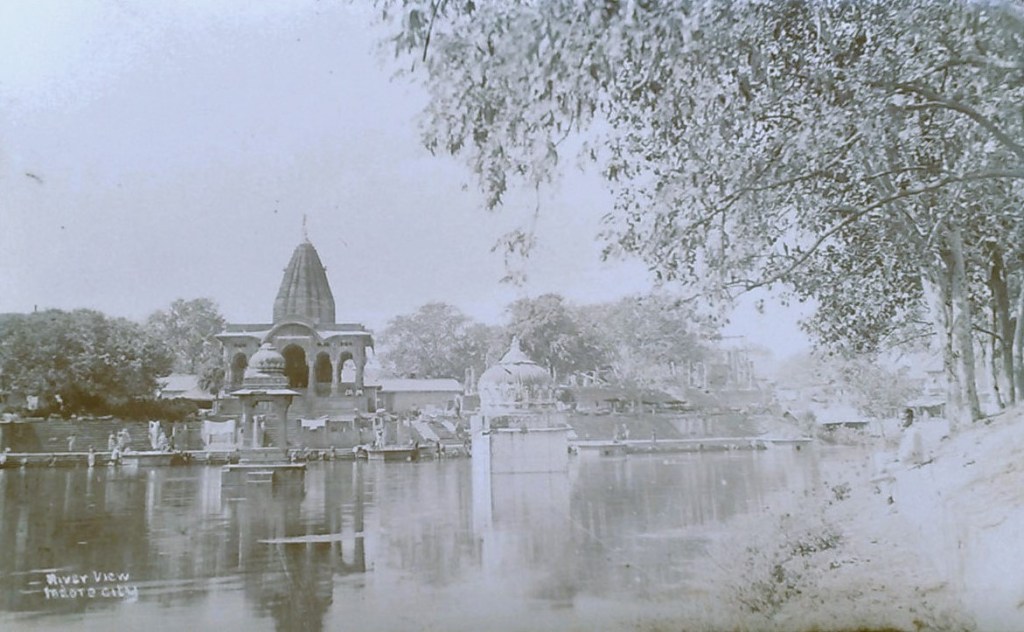
On the 6th of June, Durand ordered the two guns of the Bhopal Contingent to be moved up the west side of the Residency building and posted the Bhopal cavalry in the square of the Residency stables. The Residency at Indore did not comprise just the two-storied house Durand lived in. The park surrounding it housed the bungalows of the Political Assistants, the post office, the telegraph office, the treasury and a bazaar. It was bound on one side by the Mhow road that then crossed a bridge over the nearby Khan River. As the park was some two miles away from Indore town itself, Durand had some right to be worried. With Holkar unsure of his troops and a possible insurgency in Mhow in the making, he would have to make the best of the Residency, should it come to an uprising in Indore. Holkar supplied Durand with three guns – initially six-pounders, but these were soon changed to 9-pounders – a company of infantry and two cavalry troops.
However, not all was well. On the 7th of June, the cavalry of the United Malwa Contingent mutinied on the road at Muttragur on the way to Neemuch and murdered their commander, Captain Francis Walker Brodie (of the 21st BNI), and 27-year-old Lieutenant Charles John Hunt, acting adjutant. The news reached Durand on the 9th – contrary to his orders, this force had been brought within reach of Neemuch, and this was the consequence. – two murdered officers and the defection of the cavalry to the side of the Neemuch Brigade. The news brought fresh worries for Holkar, who turned to Durand. Many men in his own cavalry troop had relatives among the Malwa Contingent Cavalry, and he believed they were, in his estimation, “as one.” He no longer had any confidence in his men. With a troop of the Malwa Contingent Cavalry in Indore, Durand listened to Holkar, at least this once, and sent them off to Mehidpur. They were offered rewards if they would do good service to Major Timins, the contingent’s commandant. Timins might have had something to say to Durand later when the contingent mutinied later in the year. Durand, however, also called the rest of Colonel Travers’ Bhopal Contingent Cavalry at Sehore to march to Indore – only 50 men – and on their arrival, Colonel Travers took over the defence of the Residency. Holkar’s Cavalry, known to be mutinous, was sent by the Maharaja for duty in the districts.
Durand wrote to Lord Elphinstone in Bombay and described the state of the troops around Indore.
“Anything more ticklish that the state of the troops in Mhow, Saugor and Jubbulpore can scarcely be conceived. Of course, there has been volunteering, &c., and ‘entire confidence’ on the part of the commanding officers. But that is all moonshine; everyone knows the real state of affairs.”
He was watching and hoping something could stop what he saw as an inevitable outcome. This hope lay in Major-General Woodburn, despatched from the Bombay Presidency towards Mhow. He had with him five troops of the 14th Dragoons, an artillery battery, one company and sappers and a company of a native regiment; more than enough men to overpower the force at Mhow. Unfortunately, Aurangabad lay on their track and the Woodburn was diverted to suppress the disturbances; it was a political move – “it was believed that on the suppression of those disturbances depended the fidelity of the British interests of the troops of the Nizam and that therefore, at any sacrifice they must be suppressed.” Suppress is what Woodburn did, but then he simply did not march any further. While he stayed put on higher orders, Elphinstone scrambled to send another column to Central India.
So Durand was once again left with what little he had, and it was proving to be faithless. Mutiny was closing in on him from all sides – The northern portion of the Trunk Road between Agra and Bombay was in the hands of the Jhansi mutineers, who were soon supported by the Gwalior Contingent. The troops at Jabalpur, Lalitpur and Sagour were on the verge of rising, Bundelkhand was awash with anarchy, communication past his borders was becoming increasingly difficult; since the 14th of June the telegraph was cut off between Gwalior and Sirpi, all messages with Agra had stopped, and for a hundred miles further the line had been destroyed. It would seem if things continued to progress, the last telegraph to work would be within the last 150 miles above Indore.
On the 20th of June, Durand received a message from Captain Harrison, who commanded the troops at Goonah, that the officers from Sirpi had joined him, adding they were falling back on Indore. Durand ordered him to halt at Beowra (120 miles from Indore) to keep the telegraph lines open. As it was, news was difficult to procure. Letters from Agra and the other northern provinces now had to run through Jaipur, and it was not helped when Durand received strange notes from officers, sometimes only a scrap of paper, telling of “disaster and delay” and “cowardly massacres and of unavailing attempts to avenge them.” The messages were often written in French o Greek as many Indians could read English – but this attempt to disguise the message was written by officers who had not used classical languages past their school days – it puzzled Durand ( a native French speaker) to no end when he received a note written in Greek characters, turned out to be very indifferent French!
If that was not enough, the troops at Mhow were grumbling. The usually optimistic Colonel Platt, too, was hesitant regarding their mood. He refused to punish an emissary that had been caught tampering with the regiment – the man was sent to Indore instead to let Durand deal with him.
Meanwhile, Durand was determined not to give up Indore without a fight and he said so, most bluntly to Lord Canning’s private secretary:
“If the Mhow troops rise and attack us, they will, I hope, find a harder nut to crack than some of our chicken-hearted people here think. I have two or three men of the right metal – Colonel Stockley, Colonel Travers and Captain Ludlow of the Madras Engineer, and Captain Cobbe of the Madras Artillery. Or measures, whether of offensive or defensive character, are arranged, and if we can only get our contingent troops to act decently, which please God if they are not very severely tried, I trust we may, we should be able, I think to bring off the European artillery battery if it were contending against the 23rd Native Infantry and 1st Cavalry single-handed; or if suddenly attacked here, defend the treasury and residency with heavy damage to those who attacked.”
Durand’s resolve was clearly expressed in a letter to Lord Ellenborough:
I am told the Mhow troops are afraid of rising, know that they have an officer in command of them of dauntless stuff, and European battery in no humour to spare; also, they need look to no respect on my part to weak and washy proclamations which smell of fear. Shot and steel shall be my only converse with them if they come here, and if the men will only stand and fight behind the safe cover I have assigned to them, they may beat of five thousand good troops who should try it sans artillery. I hope, my Lord, to tell you that all kept as quiet in Malwa as it is now; but if not, and anything happens to myself, remember me as your affectionate, H.M. Durand.
Lord Elphinstone’s promises and Woodburn’s troops were still the buoys Durand clung to. It was, in Durand’s estimation, “an ugly complication,” and he urged Elphinstone to send on the troops. In the meantime, he received an erroneous message that Delhi had been retaken by the British on the 12th of June (it hadn’t but this message flashed the length and breadth of India regardless) and it gave him a little hope; on the 28th Elphinstone telegraphed the Woodburn could not advance after all and asked what the effect of this news would be on his district. Durand replied he “could not answer one hour for the safety of Central India if it should become known that the column was not marching on Mhow.” He further pressed Elphinstone to push Woodburn on with no more delay.
Lord Elphinstone belatedly replied that the advance had not been countermanded, but unfortunately, the contents of the first message had leaked out through the signaller’s office, and it was soon known in the bazaars at Indore, Mhow and beyond. It coincided with a message from an Indore banker to Durand, stating he had some troubling news from Delhi, but he would not send it by telegraph.
On the 1st of July, the first news Durand received was a letter from the 20th of June from Agra. The report of the fall of Delhi was not just premature; it was false. He sat down at his writing desk to pen a telegraph to Lord Elphinstone. It was a quiet morning – there was no word from Mhow or from Holkar. Besides the news from Agra, it looked like at least today would pass by peaceably enough. Durand collected his thoughts and began to write.
Suddenly, a messenger rushed into the room and, in a panic, reported to the Durand that there was a commotion in the nearby bazaar. Durand laid down his pen and went out onto the Residency steps. He could hear noise in the distance, rising rapidly – and suddenly, three guns opened fire. The mutiny had come to Indore but not from Mhow. It came from Holkar’s troops.
Durand, Holkar and the Residents of Indore
As for the young Maharaja, he had done what he could convince Durand in the past months that nothing was right in Indore. In an interview with Durand and William Shakespear (an assistant of Durand’s), he appealed to Durand for advice. Certain trouble would soon come to Indore – not from without, but from within his own guard, he asked Durand to send all the treasury money to the palace for safeguarding to prevent any looting; Durand however, did not think the step was necessary and he left Holkar, none the wiser of what he should do. Holkar continued to try and help, even offering to take Shakespear’s wife and child under his protection. He had repeatedly warned Durand that the Bhopal Contingent was not to be trusted, but Durand had disregarded him and requested Travers to hurry over to Indore to assist him. Travers himself did not believe in his own men but chose to bring them to Indore anyway. Unfortunately, Durand did not listen to Holkar, nor did he pay much mind to what anyone else said either. The residents at Indore first implored and then badgered Durand to send away the women and children at least to a place of safety, as long as there was still time. However, up to this point, Durand actually believed Delhi had fallen, and the news would be enough to stamp out any glimmer of mutiny in Indore. He continued to believe the mutiny, if it came, would come from Mhow and that Woodburn would arrive soon enough to put an end to it all.
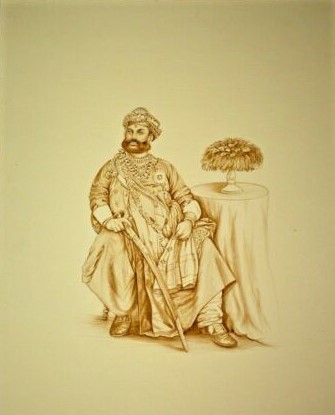
No one realised it was too late to leave Indore. And Holkar, for all his good intentions, was about to be taken over by circumstances that were not only out of his control but well out of Durand’s. Perhaps if Durand had trusted the young Maharaja instead of ignoring him, things might have turned out differently.
Sources:
Ball, Charles. The History of the Indian Mutiny: Giving a Detailed Account of the Sepoy Insurrection in India. Vol. I. London: London Printing and Publishing Company, 1892.
Behan, T. L. Bulletins and Other State Intelligence for the Year 1858. Part IV. London: Harrison & Sons, London Gazette Office, 1860.
Burway, Muntazim Bahadur M. W. The Life of His Highness Maharaja Tukoji Rao Holkar II, Ruler of Indore. Indore: Holkar State Press, 1925.
Durand, H. M. The Life of Major-General Sir Henry Marion Durand. London: W. H. Allen & Co., 1883.
Forrest, George W. A History of the Indian Mutiny. Vol. III. London & Edinburgh: William Blackwood & Sons, 1902.
Intelligence Branch, comp. The Revolt in Central India 1857-59. Simla: Government Monotype Press, 1908.
Kaye, John William, and G. B. Malleson. Kaye’s and Malleson’s History of the Indian Mutiny of 1857-8. Edited by G. B. Malleson. London: W. H. Allen & Co., 1889.
Luard, C. E., comp. Indore State Gazetteer. Vol. II. Calcutta: Superintendent Government Printing, India, 1908.
Luniya, B. N. (1955). COMPLICITY OF THE MAHARAJAH HOLKAR WITH THE MUTINEERS. Proceedings of the Indian History Congress, 18, 238–242. http://www.jstor.org/stable/44137391)
Lowe, Thomas. Central India during the Rebellion of 1857 and 1858. London: Longman, Green, Longman & Roberts, 1860.
Malleson, G. B. History of the Indian Mutiny, 1857-58. Vol. I. London: Wm. H. Allen & Co., 1878.
Srivastava, Khushalilal. The Revolt in Central India – Malwa. Bombay: Allied Publishers, 1966.
Links:
https://www.theweek.in/theweek/cover/2021/08/12/how-356-sepoys-of-bhopal-contingent-defied-begum-british-to-set-up-a-parallel-govt.html
https://blogs.soas.ac.uk/archives/2020/03/08/sikandar_begum_nawab_of_bhopal/
https://indianculture.gov.in/stories/begums-bhopal-107-years-golden-reign
.
.
 Mutiny Reflections
Another fascinating account!! Thank you for the effort you have taken with this!!
Once again, many of the same surnames are re-appearing. Is this Durand related to he of ‘Durand Line’ fame?
LikeLiked by 1 person
It is named after his son, Henry Mortimer Durand, who was responsible for it.
LikeLiked by 1 person
Thank you!
LikeLike
Interesting how the different personalities affected the events. Surprising that Durand could get along with Sikandra Begum – she sounds really interesting.
LikeLiked by 1 person
I think Durand and Sikandra Begum were probably quite similar, both strong personalities who could likely understand each other. She listened to Durand and with her he didn’t feel threatened. I think his problems with Holkar weren’t Holkar per se but because he had been taught by a man Durand disliked. It’s been hard to decipher it all, and the records are either very pro Durand or very against him. There seems to be no middle ground. I personally don’t like him much!
LikeLiked by 1 person