The Rebellion in Bihar Ends – or Does It?
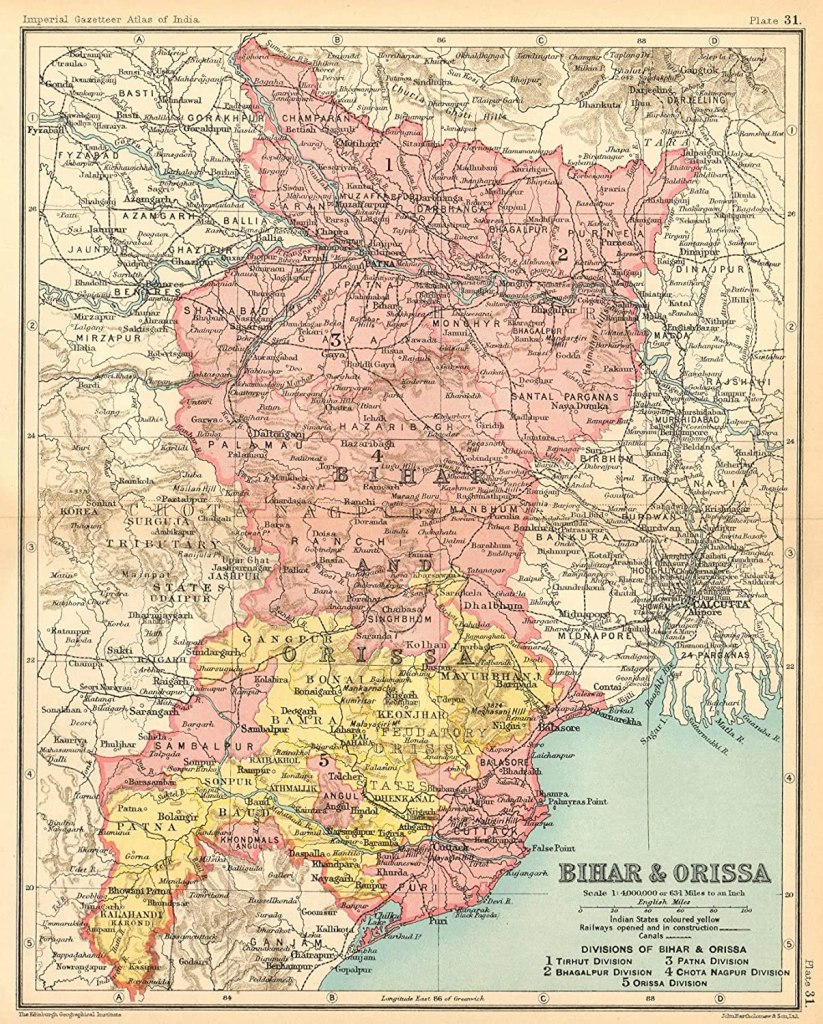
What Brigadier Douglas had succeeded in doing was not, effectively, the stamping out of the last flicker of rebellion in Bihar; he had instead forced it to change course. Although there is no doubt his exertions were commendable for preventing the rebels from gaining any ground after being corralled at Jagdispur and then sent on the run. However, the Kaimur Hill expedition only strengthened the resolve of the rebel leaders to continue their struggle. Two of them, Hurkissen Singh and Meghur Singh, had both gone vanished, leaving the Patna commissioner to speculate they were likely trying to join Seedha Singh – the rebel leader from Ghazipur – and Ram Bahadur Singh. Both of them were in Palamau with a sizeable body of sepoys. The sepoys in Shahabad itself did not surrender, instead it was found they, as late as December 1858, still expecting to receive reinforcements from Oudh and Gorakhpur, neither of which materialised in any notable form. In early 1859, bands of sepoys were still roaming around Bihar and their plundering ways had not abated.
In February 1859, a somewhat breathless Mr Grey, the magistrate at Gaya, reported he had pursued a party of rebels who had suddenly appeared in his district. Only 30 in number, the men were attempting to reach the hills. Grey put himself in contact, not with any British force, but with the local zamindars, who deputed their levies to watch the passes, while Grey proceeded there himself. One zamindar took a distinct dislike to the rebels crossing his boundaries, for they had shot and killed one of his men. He promptly attacked the rest, taking two prisoners. It turned out they belonged to the 6th BNI who had mutinied in Allahabad in June 1857.
Grey now faced problems not unlike those of Douglas. He found only one hill passage practicable for horses but completely impossible to ascend at night, so he was forced to wait for daylight. As soon as there was enough light to see by, he made his way into the hills. The rebels by now had a considerable distance on Grey, but six miles into the chase, he lost all trace of them. All he could ascertain was that they were moving in a westerly direction and were out of the hills. Grey called a halt for the night and the next day proceeded up the Patna road to the banks of the Son River only to find they had crossed well ahead of him the night before.
However, while they might have evaded Grey, the Darogah of Jehanabad now followed them with his men only to lose them once again, in the dark. For Grey, it was over. The horses of his men, and his own, were too tired to go any further, and he had no idea in which direction the rebels had gone. He was also far outside his own district and as such, gave up the chase and returned to Gaya. On his way back, he ran into a second party of rebels crossing the Son River but he had no means of stopping them. As it is, Grey had traversed 90 miles in 48 hours, but the sepoys had managed, by avoiding villages and marching day and night across the country instead, to never had a hope of catching them. What became of them Grey could not say, but it was presumed they ultimately reached home, somewhere in the endless landscape of Bihar.
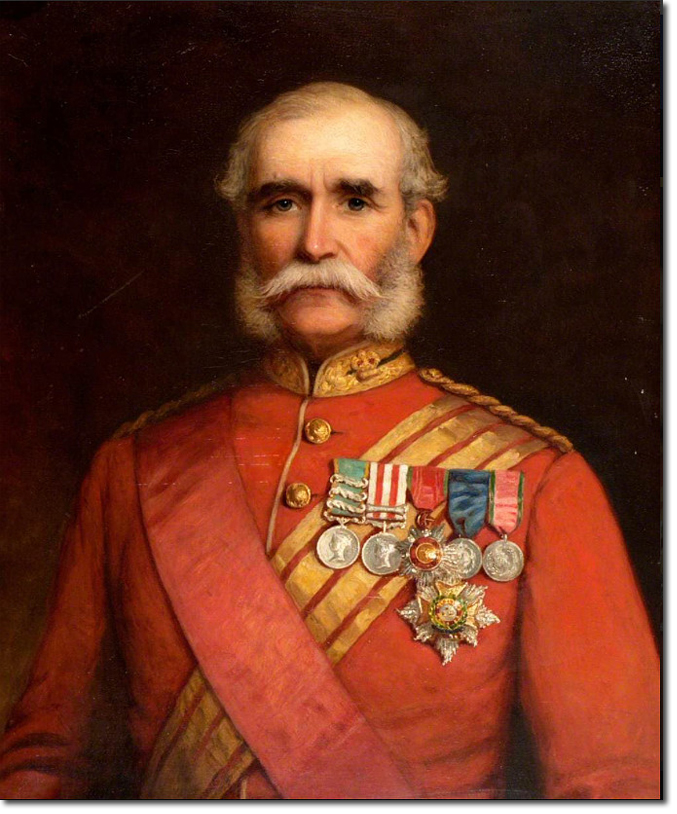
If not, then perhaps they ran into Lieutenant-Colonel Turner, who was still as vigilant as ever. Having received news from Douglas to keep watching the Kaimur Hills and prevent any rebels from entering them, he had detached the Benares Police Cavalry to proceed just south of Jehanabad while he himself moved into the hills with his infantry. He managed to cross the front of the line of march and turned them back, forcing them into the plains. While he descended the hills, the Ludhiana Regiment were waiting at Rothas and the Indian Naval Brigade were at Dehri Ghat. Turner, with a detachment of HM’s 77th Regiment formed a juncture with 100 men of the 2nd Battalion of the 60th now attempted to “operate against the enemy.”
This particular enemy was not having an easy time of it. The Naval Brigade treated them “roughly”, and they were forced to turn northwards along the banks of the Karamnasa River and ended up squarely in the hands of Mr Bingham, Deputy Magistrate of Chainpur. Bingham was obviously not as adventurous as Mr Grey, for he quickly barricaded himself in his residency, and called for the cavalry to come to his aid. Either the cavalry or perhaps the idea of attacking Chynepore was not in the plans, for the rebels turned off and began to move instead along the hills towards Bognapore to the east.
“The Deputy Magistrate of Sasseram having kindly placed at my disposal 40 of the Sasseram Sebundy Levy, under Isserie Sing, their Sub-Lieutenant (an efficient and able Native Officer), I attached this party to the Police Cavalry under Lieutenant Stafford at Chundaree, who, on receiving Mr. Bingham’s ‘application for assistance, marched with his whole force at 5 p. M. and, falling in with a party of the enemy, directed the Sub-Lieutenant with his infantry to attack them.”
Lieutenant Stafford “fell in” with a party of 60 rebels, who appeared to be intent on reaching the Kaimur Hills. He quickly spread his cavalry into the plains and then, with a shout, attacked the rebels in the dark, at midnight, driving them into the hills, killing and wounding 12 and capturing two of their horses and two muskets. After three hours he withdrew his infantry and, leaving the cavalry to keep an eye on anyone foolhardy enough to come back down, made his way to Mr Bingham, whom he found safe and unharmed.
Meanwhile, Turner was dealing with conflicting reports, for no one could say for sure where the rebels had gone. He was given to believe they were still in front of him, yet another report insisted they were on the Grand Trunk Road. Neither report was wrong, for they had once again split off into smaller groups and were pursuing different directions. The Police Cavalry arrived too late to cut them off, and Turner had to content himself with the news that they were now heading north. The work was immensely frustrating, as a nearly bewildering list of place names follows.
“Arrived at Kauraich, within a few miles of Kochas, I learned that the enemy was at Toorkee, a village 3 miles to the west. I turned to attack him, but, on reaching it, found that he had marched at 5 A. M. It was then 10. Halting for the men to breakfast, I pushed on again, at 2 P. M. to Sulkooa, where the enemy had turned eastward, in the direction of Dinareh. I followed till dark, and until I had lost all intelligence of him, and then halted, to allow the men to get their dinners. In this manner I continued the pursuit of the enemy for the next three days, via Kochus, Dinareh, Bhaupore, Munneepore, Nawa, Nugger, Kesuth, and Waina, towards the Ganges, never allowing him to halt for more than a few hours, and straining every nerve to push him upon the Arrah Police Force,’ which I had been informed was on the Line between Domiaon and Peeroo.
In this I was partly successful, Mr. Herschel, the Magistrate, having since informed me that he was enabled to compel one party to lay down their arms, and that the other had been attacked in crossing the Ganges, and lost upwards of eighty killed. The Police Cavalry, as directed, overtook me near Toorkee, but, seeing that it would be impossible for the Detachment of the 2nd 60th to do so, I directed it to return, and remain at Jehanabad. All occasion for the services of these troops having now passed away, I have ordered them to return to Benares, by the usual marches.
In conclusion, I beg you will call the attention of the Major-General Commanding to the willingness with which the troops exerted themselves to keep close to the enemy, and drive him at once from the district, distressed as they were by the scorching hot wind.“
As it was, the rebels continued to move from place to place in Palamau, Shahabad, Ghazipur and even in the Nepal hills, with bands still active in different areas in Bihar until May 1859. Hurkissen Singh was captured in August 1859 and after being tried by Mr Richardson, officiating Judge of Shahabad and Special Commissioner under Act X IV of 1857 was found guilty of several charges, including mutiny and hanged in December. Amar Singh kept up the momentum and attempted, with unflagging energy, to revive the rebellion, but unable to halt anywhere for too long, with magistrates and every government agent on his tail, he finally found his way to Nepal in a last ditch effort to rally the demoralised troops of what was left of Nana Sahib’s army. However, he was captured in December 1859 by the Nepalese, who while they tolerated the presence of rebels in the Nepal terai, were not keen on them trying to sow sedition. Singh was promptly handed over to the British. Before they could decide whether to try him in Gorakhpur or in his own district of Shahabad, Amar Singh died of dysentery on 5 February 1860 in the Gorakhpur Jail hospital.
Sources:
The London Gazette No. 22242, March 24 1859 p. 1253-1254 / p. 1287-1289
Supplement to the London Gazette No. 22265, May 18, 1859, p. 2026-2027
Supplement to the London Gazette No. 22291, July 25, 1859, p. 287
Behan, T. L., ed. Bulletins and Other State Intelligence for the Year 1859. Part I. London: Harrison & Sons, 1860.
Chaudhuri, Sashi Bhusan. Civil Rebellions on the Indian Mutinies (1857-1859). Calcutta: The World Press Private Ltd., 1957
Kaye, John William, and George Bruce Malleson. Kaye’s and Malleson’s History of the Indian Mutiny of 1857–8. Edited by G. B. Malleson. 6 vols. London: W.H. Allen & Co., 1888–1889.
O’Malley, L.S.S. Bengal District Gazetteers, Shahabad. Calcutta: The Bengal Secretariat Book Depot, 1906
Sen, Surendra Nath. Eighteen Fifty-Seven. Delhi: Publications Division, 1957.
 Mutiny Reflections