92 Years, 11 Months and 21 Days of Company Rule
Before we can begin exploring the final stages of the India Mutiny, we must first understand that another revolution was happening, one that would lead not only to the end of the East India Company but to the creation of the British Raj, when Indians became direct subjects of Queen Victoria and subsequent monarchs until independence, 90 years later, in 1947. It was a turning point in Indian history and one that continues to be debated today, for it can be said, with the creation of the Raj, the definition of what we see as colonialism had arrived.
Before 1858, the EICo was trading company – their motivations were not the well-being of the Indian people even in the broadest sense of the word, but financial gain and profit. Their rule in India can be broken down in three phases:
1: Commercial Trading (1600 – 1740s)
- Profit through monopoly trade.
- The Company acted as a submissive merchant entity. They petitioned the powerful Mughal Emperors (like Jahangir) for trade concessions, established unfortified coastal trading posts (factories), and bought Indian textiles, spices, and saltpetre using European silver bullion.
- Securing sea routes and outcompeting other European traders (Dutch and Portuguese) while avoiding any conflict with local Indian rulers.
2: Militarised Protectionism (1740s – 1757)
- Defending trade interests through military force.
- As the Mughal Empire began to fracture, local instability threatened Company profits. To protect their warehouses from rivals (specifically the French) and local rulers, the Company began fortifying their bases in Calcutta, Madras, and Bombay, and hiring private armies—including recruiting local Indian soldiers (sepoys).
- Military survival and securing political leverage with local Nawabs to protect their trade monopolies.
3: Territorial Extraction & Revenue Farming (1757 – 1813)
- Territorial conquest to fund trade.
- Following Robert Clive’s victory at the Battle of Plassey (1757) and the Battle of Buxar (1764), the Company shifted from merchants to rulers. They forced the Mughal Emperor to grant them the Diwani (the right to collect land revenue) over Bengal.
At this point, the Company stopped bringing silver from Britain. Instead, they used the taxes collected from Indian peasants to buy Indian goods, which they then sold globally. They used the surplus to fund a massive private army to conquer more territory.
4: Administrative Imperialism & Subjugation (1813 – 1858)
- Governance, Westernisation, and land annexation.
- As Parliament stripped the Company of its trading monopolies in 1813 and 1833, the Company’s sole purpose became ruling India as an administrative proxy for the British Empire.
- Maximising land tax revenue, imposing Western laws, education, and social reforms, and aggressively annexing independent Indian states (The Doctrine of Lapse and other nefarious annexations, such as declaring a ruler incompetent as in Oudh). Aggressive land settlements, the destruction of customs in regard to zamindars and landowners by stripping them of their power among other poorly thought out ideas, caused the structural friction that would eventually come and bite them when the mutiny broke out.
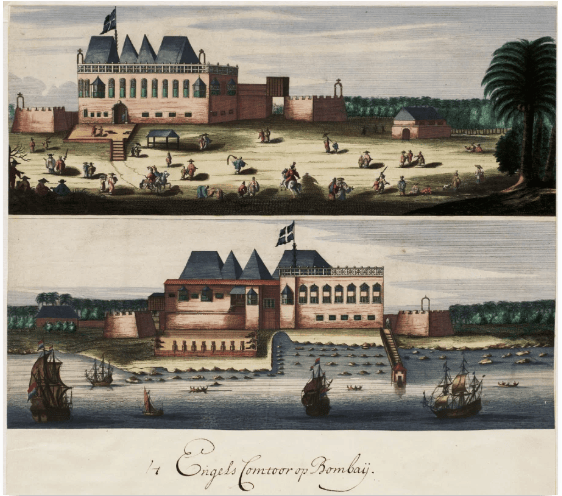
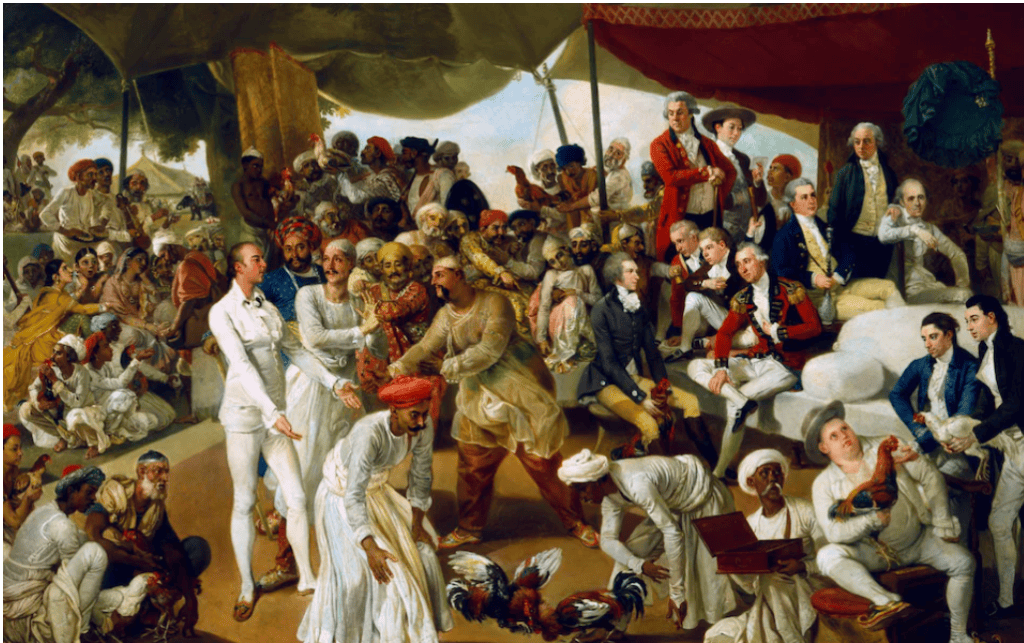
However, it is necessary to point out that the EICo was neither universally hated from day one, nor was it genuinely liked; rather, it was tolerated, manipulated, and resisted based on self-interest. Public sentiment was deeply fractured because India was not a single nation at the time, but a patchwork of competing kingdoms. Whether the Company was seen as an oppressor or a useful ally depended entirely on who you were, where you lived, and what time period you were in. For a long time, many Indian nawabs, rajas, and merchants did not see the EICo as a foreign invading empire, but simply as a powerful mercenary force or trading partner that could be used to defeat their local rivals. Put crudely, a friend with benefits.
- Under the Subsidiary Alliance system, rulers of states like Hyderabad and Awadh willingly accepted EICo troops to protect them from aggressive neighbours like the Marathas or Tipu Sultan. For these rulers, the EICo was a shield that kept them on their thrones.
- Wealthy Indian bankers and merchants (like the Jagat Seths of Bengal) initially thrived under the EICo. The Company provided a stable legal system for contracts and a massive global network for trade. In fact, Indian bankers frequently financed the EICo’s military campaigns because the Company paid its debts with interest, unlike some local rulers.
- The EICo often placed compliant rulers on thrones after deposing rebellious ones. These puppet nawabs enjoyed immense luxury and British protection, completely detached from the struggles of their citizens.
In the 1700s, the EIC was tolerated and even embraced by specific Indian elites who used British power to advance their own wealth and security. However, by the 19th century, as the power of the Company grew and evolved from trade to governance, the groups that once benefited or tolerated them, were changing their minds. In many respects the EICo was indeed a false friend who frequently broke treaties, and then used excuses or the Doctrine of Lapse to seize their territories regardless of how long they had been allies. In their defence, it must be admitted that the EICo did attempt to forge an assimilation of the various systems in India, borrowing much from the Mughal system of governance having realised very early on that ruling a vast population required continuity, not sudden change.
| Administrative Area | Local Rulers / Mughal System | East India Company (EIC) |
|---|---|---|
| Tax Infrastructure | Relied on Zamindars (local tax collectors) and existing Mughal land records. | Adopted the exact same Zamindari infrastructure and Mughal revenue terms (e.g., Diwani). |
| Legal System | Used a mix of Islamic law (Sharia), Hindu customary laws, and royal decrees. | Retained and codified local personal laws, utilizing traditional scholars (Maulavis and Pandits) to advise British judges. |
| Currency & Language | Minted coins in the name of the Mughal Emperor; used Persian as the official language of administration. | Continued minting Mughal-style coins until 1835 and kept Persian as the official government language until 1837. |
| Primary Incentive | Dynastic survival, status, and local political dominance. | Corporate profitability, stock dividends, and financing global trade. |
| Accountability | Localized and personal. Rulers lived in the territory and faced immediate local rebellion if they pushed too hard. | Absentee and institutional. Ultimate accountability was to shareholders and Parliament in London, thousands of miles away. |
| Flexibility of Demands | Variable based on seasonal performance and personal negotiation. | Fixed and standardized based on legal contracts, legal deadlines, and corporate targets. |
When the EICo won the Diwani (the right to collect revenues) over Bengal in 1765, they didn’t alter the tax collection network. They kept the existing Mughal tax collectors (zamindars) and used the exact same revenue books. In the early decades, the EIC did not impose British common law on daily Indian life. In their newly established courts, they kept Hindu and Muslim personal laws intact for matters of marriage, inheritance, and religious custom. EICo officials initially adopted the lifestyle, court etiquette, and gift-giving customs (nazar) of Mughal nobles to legitimize their authority in the eyes of the public. Despite borrowing the framework, the EICo altered the foundational philosophy of how that framework operated.
Under local rulers, governance was highly personal and open to negotiation. A local landlord could plead his case directly to a Nawab for a temporary reprieve. The EICo replaced this personal touch with rigid, written statutes. If the law said a tax was due by sunset, the system enforced it automatically, regardless of personal relationships or excuses. In the Mughal system, the state had a right to a share of the harvest, but the peasant or landlord had an ancestral right to occupy and work that land. The EICo fundamentally changed this by turning land into private property that could be bought, sold, or foreclosed on like a commercial asset. When a local Nawab collected taxes, that wealth generally stayed within the local economy. It was spent on local armies, palaces, monuments, and services. Under the EICo, much of the collected tax revenue was converted into trade goods and shipped out of India, creating a one-way financial drain.
The EICo and the British Government
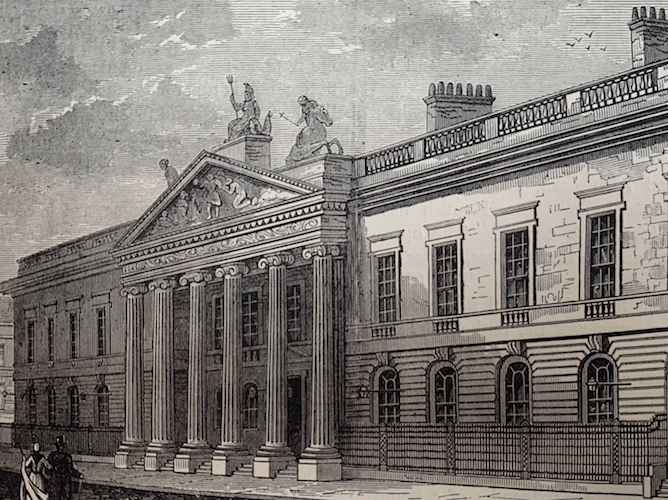
As the EICo grew and its territories in India expanded, they fell more often than not foul with the government back in Britain. For nearly 90 years before the mutiny even became an idea, the East India Company had been facing scrutiny – its corruption, territorial control and the nearly consistent financial crises the EICo found itself had already forced the British Government to intervene. The Regulating Acts, primarily anchored by the landmark act of 1773 were supposed to have established formal government control over the EICo in India.
The 1773 Act called for the creation of Governor General and in one stroke, elevated Warren Hastings from Governor of Bengal to Governor-General of India, with the subordinate presidencies of Bombay and Madras under his control. A Supreme Court of Judicature at Fort William in Calcutta was established to administer British law, while a four member Governing-Council was elected to assist the Governor-General, requiring a majority vote for decisions to be passed; the act further prohibited Company servants from engaging in private trade or accepting bribes. This, in essence, was not a bad idea.
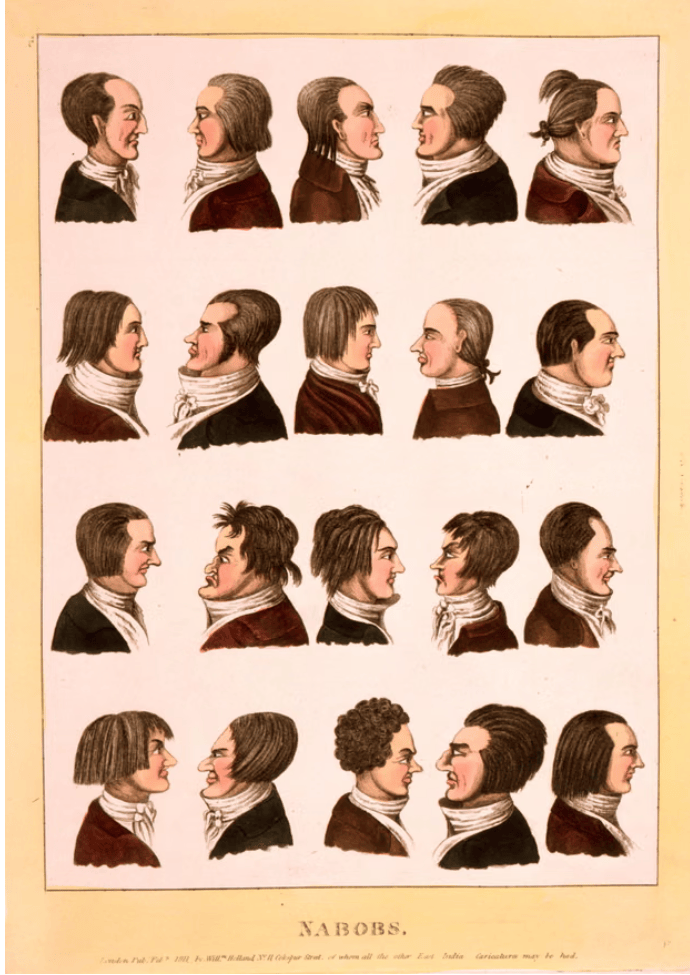
Company employees returning to England, the so-called Nabobs, had indeed been filling their coffers, their fortunes were not only unexplained but large enough to buy political influence at home. However, corruption and mismanagement, despite vast territorial gains, had left the EICo facing bankruptcy. The Company even requested a bail out to the tune of £1.4 million. This was hardly an acceptable state of affairs. Unfortunately, the 1773 Act did nothing to define the actual power balance between the Governor-General and his Council, leading to a near constant political gridlock. In essence, nothing was getting done and the government back in England, while footing the bill, still had no actual control over the EICo. So in 1784, Pitt’s India Act was supposed to fix this with a dual system of control. The EICo kept its commercial operations but the government-appointed Board of Control took definitive charge of all political, military and revenue affairs.
However, Pitt’s India Act was hardly the cure – it was a bandage that for a time, stopped the patient from bleeding to death. The Act had successfully established dual control – separating trade from politics – but as a result, created new inefficiencies and failed to curb the EICo’s aggressive, rogue behaviour in India.
The division of power between the Crown’s Board of Control and the EICo’s Court of Directors was vague and the two bodies frequently clashed, deliberately delayed decisions and wrapped everything up in enough red tape to ensure that nothing could be done until someone relented. Pitt had insisted that the EICo desist from engaging in wars in India – aggressive territorial expansions and unprovoked wars against Indian princes were to cease. The EICo simply ignored Pitt and followed their own path regardless. However, the largest failure of the Act was that it completely neglected the welfare of the very people of India. With the focus heavily on who got the wealth in London and Calcutta, provisions for the welfare, rights and protection of the millions of Indian subjects under EICo rule were at best half-hearted, and at worst, simply not implemented. In other words, India was a cash cow for the British government, the problem was the EICo was not interested in sharing. The act did nothing to stop greed, corruption and exploitation; and neither the Government nor the EICo particularly cared about the Indian people. As Pitt’s Act had left so many loopholes, the British Parliament enacted a series of escalating measures – Charter Acts – every 20 years in an attempt to strip the EICo of its autonomy and transform this behemoth of trading company into a mere administrative department, subject to the British government.
| Year & Legislation | Key Measures Taken |
|---|---|
| The Act of 1786 | This act gave the Governor-General the power to veto and override his council in extraordinary cases, centralising control. |
| Charter Act of 1793 | Mandated that the Company pay all its top officials directly out of Indian revenues and extended the Company’s trade monopoly for 20 more years, but kept them under tight British ministerial review. |
| Charter Act of 1813 | Abolished the Company’s monopoly on Indian trade due to heavy pressure from British merchants. Except for tea and trade with China, the Indian market was opened to all British subjects. It also allowed Christian missionaries into India. |
| Charter Act of 1833 | Completely ended the Company’s commercial activities. It was ordered to stop trading entirely and liquidate its assets. The Company became a purely administrative entity ruling India in trust for the British Crown. |
| Charter Act of 1853 | Removed the Company’s right to automatically renew its charter for another 20 years, signalling that Parliament could take over at any moment. It also introduced competitive civil service exams, stripping the Company directors of their patronage power to appoint friends to lucrative Indian posts. |
While the Charter Acts successfully solved problems for Britain — opening up trade to British merchants and asserting government control — they completely failed to fix the structural, economic, and social issues plaguing India. In fact, the acts often swapped old problems for much larger ones, directly creating the volatile conditions that exploded into the 1857 Indian Rebellion.
1. Economic Ruin Instead of Fair Trade
The 1813 and 1833 Acts ended the Company’s trade monopoly, opening India to the free market. However, this did not benefit Indian merchants. Instead, it allowed cheap, machine-made British textiles to flood the country duty-free, while heavy tariffs were placed on Indian goods entering Britain. This “de-industrialised” India, destroying the world-renowned local handloom industry and plunging millions of weavers into poverty.
2. Social Friction
The 1813 Act lifted the ban on Christian missionaries. Driven by a belief in British cultural superiority, the government and missionaries began aggressively introducing Western education, legal reforms, and religious proselytising. While some reforms (like the ban on Sati) were positive, the aggressive manner in which they were pushed made the Indian public deeply suspect that the British government was planning to forcefully convert the entire population.
3. Reckless Expansion and Legal Loopholes
Because the 1833 Act stripped the Company of commercial profits, its officials turned to a new way to make money: annexing land. Since they could no longer trade, they generated revenue by conquering independent Indian states and taxing the land. Under policies like Lord Dalhousie’s Doctrine of Lapse, the British seized states like Awadh, Jhansi, and Nagpur on flimsy legal grounds, deeply angering the ruling Indian aristocracy.
Ultimately, the Charter Acts created a highly centralized, detached, and racially arrogant government. By trying to reform the Company piece by piece rather than addressing the grievances of the Indian people, the British Parliament allowed systemic anger to build across every layer of Indian society—peasants, soldiers (sepoys), and princes alike. Eventually, the rebellion would force the Parliament to admit that the system they had sought to establish in India was broken and the only way forward was to abolish the Company for good.
 Mutiny Reflections