The Abolition Decision
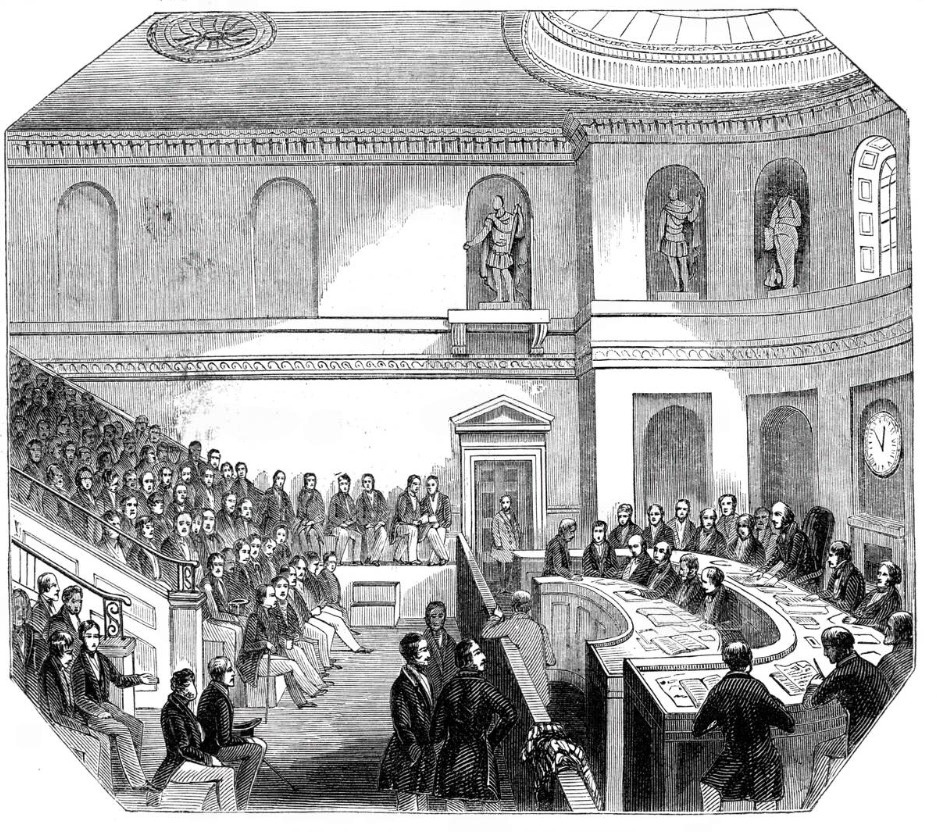
As news of the horrific violence and scale of the Indian Rebellion reached London throughout the summer and autumn of 1857, the British political establishment reached a consensus: the Company’s dual system of governance was a liability and had to go. In December 1857, Prime Minister Lord Palmerston formally communicated to the EICo’s Court of Directors that the government intended to introduce a bill to strip them of their governing powers. While the political decision was made at this moment the remainder of 1858 would be about the legal and legislative process to execute it.
Most unhappy was of course, the Court of Directors. In February 1858, knowing that the government was preparing the legislation, the Court of Directors did not wait for the bill to be read in Parliament and a petition as a pre-emptive strike to convince Parliament not to go through with it. In the petition the EICo argued that:
- It was unjust to blame the corporate leadership for a military mutiny.
- The Company had built the Indian Empire from scratch without costing the British taxpayer a single penny.
- Handing India directly to British politicians would lead to corruption and political meddling in London.
Parliament completely ignored the petition but the EICo was saved for a brief moment, not because Parliament was debating whether to abolish the Company, but because of British domestic politics. Just after introducing the first Government of India Bill, Palmerston’s government unexpectedly collapsed due to an unrelated political crisis (an assassination attempt on Napoleon III of France linked to Britain). A new administration under Lord Derby took over. They agreed that the EICo must be abolished, but they had to draft a brand-new bill (India Bill No. 3) that both political parties could agree on. It would take until August for the final, agreed-upon Government of India Act to clear all parliamentary hurdles and receive Royal Assent from Queen Victoria. In August 1858, following the crisis of the 1857 Indian Rebellion, the British Parliament passed the Government of India Act 1858, officially ending the East India Company’s political and administrative rule and transferring power directly to the British Crown.
However, before the Queen’s Proclamation came to pass in November 1858, three very busy months were about to unfold. The Act of 2 August passed the law on paper, but the machinery of empire required time to physically and legally execute the takeover. In England, the entire leadership framework governing India had to be instantly dismantled and rebuilt. The Company’s Court of Directors and the Crown’s Board of Control were shut down and in their place, the India Office was created, with Lord Stanley appointed as the first Secretary of State for India (a British Cabinet position). He spent August and September taking over the Company’s London headquarters, absorbing its archives, and choosing a new 15-member Council of India to help run the subcontinent from London.
Then of course came the Proclamation itself for which no one could agree on the wording. The debates raged on between August and September as Queen Victoria continued to review the initial drafts written by politicians and rejected them. She demanded a rewrite that breathed “feelings of generosity, benevolence, and religious toleration.” She wanted it to sound like a reassuring motherly sovereign, not a conquering army. Once finalized in October, copies of the declaration had to be physically shipped across the ocean and painstakingly translated into dozens of local Indian languages (including Urdu, Hindi, Bengali, and Marathi) so it could be read simultaneously across the subcontinent.
The Mood In India
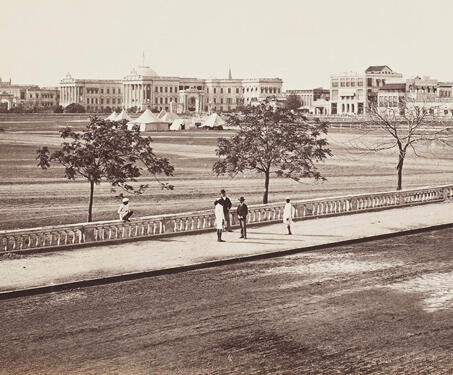
While politicians in London rearranged offices, the situation on the ground in India remained highly unstable. The “victory of British arms” had been prematurely declared by Governor-General Charles Canning in July 1858, but guerrilla resistance was still actively occurring. The fighting had not ended nor was the mutiny over.
It was a nervous time for everyone. At the very top, the transition was in fact handled with extreme caution and as much secrecy as possible but it was obvious on the ground in India that something was up. Governor-General Charles Canning deliberately kept a tight lid on the corporate transition during August and September. He feared that if the news leaked to the remaining rebel forces that the EICo had “fallen,” it would be interpreted as a sign of British weakness and give the rebellion a second wind. As Canning had been heavily criticized by his fellow British citizens and EICo officials in India for being too soft on the mutineers, in the months leading up to November, he fought to restrain the bloodthirsty desire for absolute vengeance shared by many EICo officers, knowing that the Crown’s new rule could not begin with endless executions if it wanted long-term stability.
The transition between August and November 1858 created a sharp divide in how the news was handled by the British in India. It was a period filled with anxiety, bitterness, and professional self-preservation among EICo officials, contrasted by the rigid determination of top military and political leaders to enforce the Crown’s authority. For the civilian officials of the Company—the administrators, tax collectors, and judges—the abolition decision caused a mix of panic and deep resentment. The officials felt betrayed by the home government, many believing they had spent decades building an empire, only for London politicians to blame them entirely for a military mutiny they felt was outside their control. The immediate concern for Company bureaucrats was their livelihood. Fortunately for them, the Government of India Act 1858 contained a clause transferring all EICo civil servants directly into the new Imperial Civil Service (ICS). They spent these months desperately securing their legal status, pensions, and seniority under the new regime. EICo officials mockingly referred to the incoming Crown officials and military commanders arriving from London as outsiders who “did not understand India” or its complex customs, predicting that direct rule would be a disaster.
While this was certainly not a fine start for the new civil administration, the army presented problems of its own, for while the civilian officials managed to keep their jobs, the European soldiers and officers of the Company’s army felt completely cheated. Unlike the Royal Army, EICo soldiers had signed contracts specifically with a company. When told in August that they were now property of the Crown, they felt they were being treated like cattle. This brewing resentment during the transition months would explode into what would after be called the “White Mutiny” of 1859, where thousands of British soldiers refused to fight, demanded bounty money, and forced the government to ship them home.
Once the administrative pieces were in place, Charles Canning held a Darbar on 1 November 1858 in Allahabad where the read the Proclamation was read aloud to the assembled audience. At that exact moment, Canning shed his old title of Governor-General and officially became the first Viceroy of India—the direct personal representative of the British Crown. The transition window was officially closed, and the British Raj began. The atmosphere among the British was not one of triumphant celebration, but of sombre relief. They held grand parades and fired royal salutes, but the overarching feeling was that a chaotic, mercenary era of corporate rule had violently collapsed, and they were now tasked with building a rigid, heavily guarded military state to replace it. It would take until June 1874 for the corporate entity itself to be formally wound up and dissolved under the East India Stock Dividend Redemption Act.
The Proclamation itself effected a constitutional reorganisation rather than a single executive act. The dual government of the Company and the Board of Control was abolished with the Court of Directors and the Board replaced by a single Secretary of State for India, a Cabinet minister answerable to Parliament. Canning’s new title of Viceroy enabled him to act as the Crown’s agent when in relations with the princely states but he remained the Governor-General of India for regular administration. In the same breath, the patronage and the military forces of the EICo passed to Crown, with the Company servants guaranteed not only their jobs but their pensions. However, it must be noted that the reading of the Proclamation was very ceremonial in nature and would be reaffirmed in further Darbars on a more lavish scale – the assumption by Queen Victoria of the title Empress of India (Kaiser-i-Hind) under the Royal Titles Act 1876, which was proclaimed at the Delhi Durbar of 1 January 1877 and at the Delhi Durbars of 1903 under Curzon and 1911 under Hardinge, where George V announced the transfer of the capital from Calcutta to Delhi. While the promises made by the 1858 Proclamation would lay the foundation of British rule for the next 90 years, it was distinct and separate from the adjacent acts of governing. The Government of India Act of 1858 was, so to speak, the enabling statute that allowed for the Proclamation; but it was not the same animal as the Regulating Act of 1773 nor the charters. Nor should it be conflated with constitutional reforms in future governments, known as the Indian Council Acts of 1861, 1892, and 1909, the Government of India Acts of 1919 and 1935, which would address the representative and federal issues that were not foreseen by the Proclamation.
November 1 1858 marked the birth of the British Raj. It was the end of adventurers, scallywags, rogues, freebooters, freelances and hookah smoking Nabobs. The pagoda tree had well and truly be shaken through and through, there would be no room or patience for frivolity, of wild abandon, of maniacal escapades. The drawing rooms of the mighty of the EICo were closed, the taverns at the docks of Calcutta slowly disappeared and in their place came a new world, a world dominated by the so-called Incorruptibles, that brand of officer of the Indian Civil Service to whom back-breaking work of ground level administration on the Indian subcontinent would now fall. They are the men buried in the far-flung places of Kipling’s India and the final few who flung their topis into the sea when the last ship left Indian shores in 1947.
 Mutiny Reflections