Lieutenant-Colonel Walter at Arrah
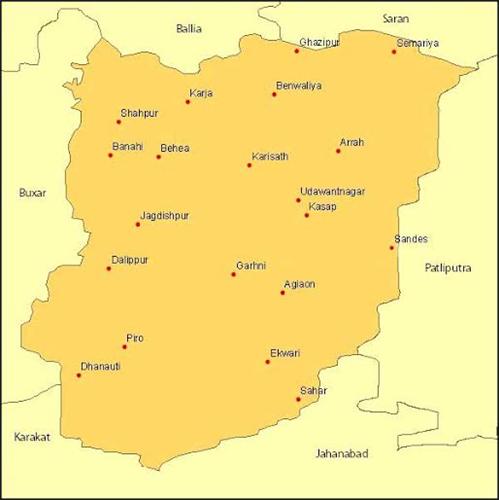
Arrah had remained under British control since the previous year, garrisoned continuously by detachments of HM’s 10th Regiment, HM’s 35th Regiment, the Sikh Irregular Cavalry and the Bengal Police Battalion (Rattray’s Sikhs). Since the untimely and most unfortunate death of Captain Le Grand in April, Lieutenant-Colonel J.M. Walter had been tasked with keeping the peace around Arrah. He had managed to do so with little fuss; except for the occasional attack on the station by errant bands of rebels passing through the district, intent on plunder, things had been relatively calm. That is, until July 1858.
On 29 July, Walter was informed that a large force was just west of Arrah. Believing he could put them to the task, Walter set off at 9 in the morning the next day with:
Bengal Artillery, two 3-pounders and one 12-pounder howitzer;
Her Majesty’s 10th Regiment, 80 rank and file;
Her Majesty’s 35th Regiment, 140 rank and file; 60th
Royal Rifles, 210 rank and file;
3rd Sikh Irregular Cavalry, 55 sabres;
Bengal Police Battalion, 30 rank and file.
It was unclear exactly how many rebels he was to face, but it was soon clear they were moving quickly and were quite aware that Walter was on his way. They had taken care to destroy the bridge over the Bewar River, causing Walter to halt to allow his men to throw a temporary crossing over the river overnight. The next morning he marched to Jaderaganj, 10 miles west of Arrah, down the Buxar Road. He just missed them. They had upped and left a few hours earlier, and Walter, surrounded by waist-deep lakes and in the pouring rain, was unable to follow them with either his cavalry or his artillery.
He decided to move on the village of Karisath, which he knew for sure was a rebel stronghold, and determined that if he could not follow one band of rebels, he could at least lay Korisauth to waste. The rebels were not oblivious to Walter’s intention and rode out to meet him at 11 in the morning, with 800 infantry and 80 cavalry. Non-plussed by the odds, Walter set his cavalry on them and ordered his skirmishers to clear not just the groves of trees but the belt of jungle around the place. He then brought up his artillery and opened on them. The cavalry, in the meantime, had turned their left flank; Walter saw they now changed direction to the right. He changed his line to the left and extended his skirmishers in that direction. However, no one was interested in a long fight. The rains had given way to dreadful heat and several of Walter’s men dropped down from heat exhaustion. After a swift chase, Walter called a halt to the proceedings. The rebels retreated from Korisauth and made their way into the jungles, carrying off 50 of their wounded. They left behind 27 dead. Walter had no casualties and all of his sun-stroke victims recovered. The village was burned to the ground, and Walter returned to Arrah.
This was but a small skirmish, but it would be actions like these that would define the monsoon months from July until August. The rebels were on the move through Bihar and Ghazipur, plundering as they went. For Brigadier Douglas and his intrepid outposts, it would be a severely harassing season.
 Mutiny Reflections