Cureton’s Multani Horse
A little must be said, at this juncture, about Cureton’s Multani Horse, not to be confused with other Multani Horse regiments we have met throughout the mutiny.
At the outbreak of the mutiny, with Peshawar in danger, one Lieutenant-Colonel Herbert Edwardes, commissioner of Peshawar, remembered his comrades of the 2nd Sikh War and, without hesitation, summoned them to his aid. Edwardes knew them well; during the aforementioned war, risalas of Multanis had formed a portion of the force with which Edwardes had stemmed the progress of Mulraj. It was a different war and a different time, but Edwardes had not forgotten their gallantry. Now, when Edwardes needed them again, they came. On 20 May 1857, his letter reached Dera Ismael Khan, and on 1 June, Ghulam Hasan Khan, along with other chiefs and their followers, some 300 horsemen, arrived, armed to the teeth, in Peshawar. For the next months, they kept the frontier quiet and Peshawar in order, re-establishing order when the Bengal regiments mutinied. By January 1858, they were no longer needed in Peshawar, but the chiefs were not ready to leave — Khan requested Edwardes to be allowed to form up a regiment of 600 horse for service over the river in the Bengal Presidency. Jumping at the chance, John Lawrence approved the request, and at Lahore, in the same month, the regiment was raised. Captain Charles Cureton, an able officer with much irregular cavalry experience, was appointed commander, Lieutenant Dixon as second-in-command, Lieutenant Williams as adjutant, Lieutenant Frederick Campbell Gostling and B.M. Smith, doing duty, and Assistant Surgeon Bailie to take care of the medical needs. The native command fell to Ghulam Hasan Khan himself, and the other chiefs appointed under him. The regiment, at full strength, consisted of five troops of Multani Pathans, one of Multani Baluchis, each numbering 100 men. Many of the recruits had already served under the British on the frontier as police and had served as auxiliaries during the Second Sikh War, but with a distinct dislike of discipline and a repugnance to drill, Cureton had to turn them, in as short a time as possible, into a regular regiment.
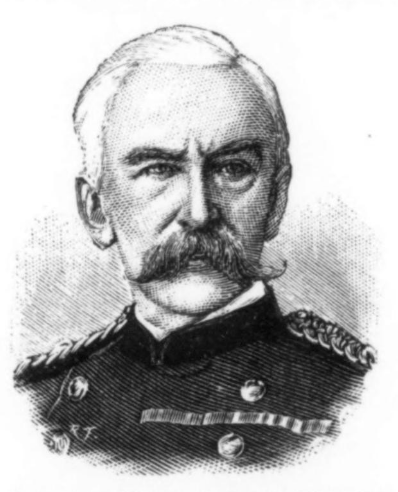
Cureton himself was the most experienced man for the job. He had arrived in India in 1843 and by 1846, was posted as adjutant of the 12th regiment of irregular cavalry. He was present at Aliwal during the First Anglo-Sikh War; during the second war, he served as ADC to his father, General Charles Robert Cureton, KCB, until the latter’s death at Ramnagar on 22 November 1848, where Cureton himself was slightly wounded. However, he was at the passage of the Chenab, the Battle of Gujrat and in the pursuit of the Sikh Army under Sir Walter Gilbert, at the capture of Attock and the occupation of Peshawar. Cureton’s services were far from over. It was onwards to the north-west frontier campaigns of 1849 until 1852, and on 4 May 1852, he was appointed second-in-command of the 2nd Irregular Cavalry. A brief change of scenery brought him into the meshes of that disgraceful war, the Santhal Rebellion, but he was soon back in the Punjab. During the mutiny, Cureton took part in the destruction of the Sialkot mutineers at Trimu Ghat under Brigadier General John Nicholson and then against the Gogaira rebels. While Cureton may not have seen action at Delhi, as many of his fellows did, fate certainly had something more in store for him.
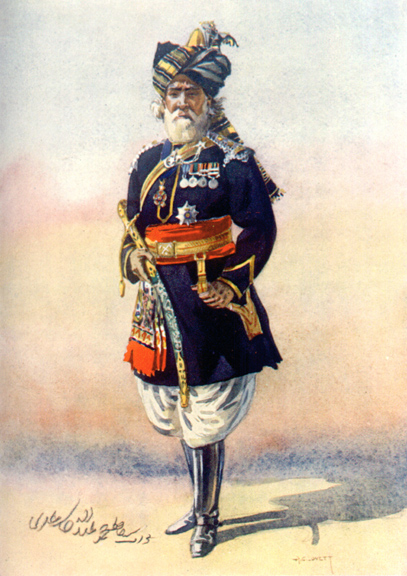
Cureton understood the men he was set to command. He knew he would have to acquire “influence with these wild soldiers of fortune” and stem their “impulsive natures”, but he had to experience to do it. He made no attempt to acquaint them with drill or discipline in the British fashion, but “limited his efforts to teaching a few elementary manoeuvres, so as to enable them to work together.” As to their uniform and arms, which they provided themselves and consisted of a sword, a matchlock or a lance, a pistol and a dagger, Cureton merely instructed their clothes to be dyed khaki, and he distributed a few English carbines. As for discipline, he “endeavoured to put himself in the position of their khan; he inflicted but few punishments, but when he did punish, it was done with great severity.” While all of this was acceptable to the men, the most elementary drill was still causing them great consternation. When ordered to form into two ranks, “their pride took alarm”, and no one wanted to be in the rear rank. Cureton’s solution was simple — they would sort it out themselves, in a most unmilitary fashion, with men, inferior in rank and family to others, to take up the rear. The arrangement proved satisfactory, and finally, the Multanis were ready to ride.
“After a march of 270 miles, the Mooltanis arrived in Roorkee…”
Cureton’s Multani Cavalry, seen here in their infancy, would become the 15th Lancers (Cureton’s Multanis), a single-class regiment, with all the men recruited exclusively from the Punjab; they would serve in the Second Afghan War and in the First World War, where they would become the first British cavalry regiment to land in France. In 1821, they were amalgamated with the 14th Murray’s Jat Lancers to form the 20th Lancers.
 Mutiny Reflections