6 – 7 May
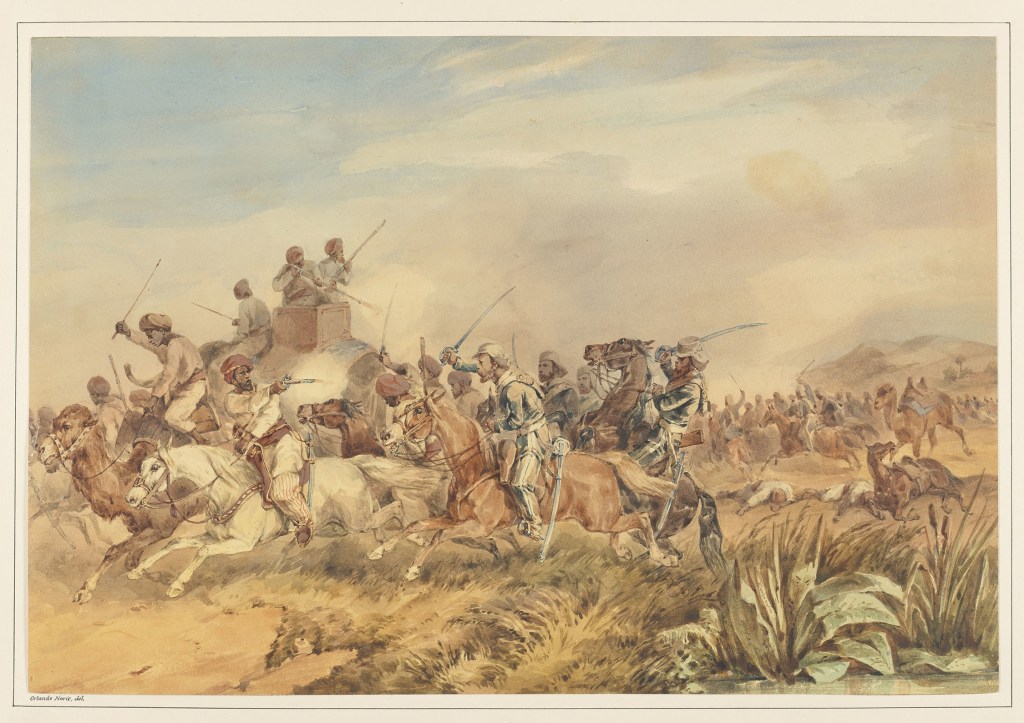
Early on 6 May, well before dawn, the camp was struck, and the Roorkee Field Force marched to Bareilly. Jones drew up his force as close as he could to the city. Having failed to gain any definitive intelligence regarding the movements of Sir Colin Campbell, Jones had to rely on what he could see. The country around him was “swarming with fugitive sowars,” as far as he could gather, Sir Colin Campbell had fought Khan Bahadur Khan the previous day and was now encamped in the cantonments. After taking in the situation as he could perceive it, Jones detached Captain Cureton with the Multani Cavalry in pursuit of the fleeing sowars and infantry, having ascertained their line of retreat. Cureton’s men plunged with some glee into this ghastly work, cutting up no less than 100 men and bringing him Jones the information that the general who had opposed him at Meraganj was among the dead.
A few townspeople informed Jones that the rebels had abandoned their guns over the bridge on this side of Bareilly, and he sent Brigadier Coke with a party of cavalry to verify the statement. Sure enough, Coke found the guns, but they were hardly abandoned; instead, they were very much manned and opened fire as soon as they caught sight of Coke. Coke sent Major Muter to report to Jones that he felt it would be advisable to move the heavy guns to his assistance to repay the compliment he had received at the bridge. Jones concurred, and Lieutenant Stubbs quickly moved his guns into position at some 12oo yards from the rebels.
While Stubbs occupied the rebel artillery in a duel that did not last more than a quarter of an hour before it was decided in Stubbs’ favour, Coke advanced the 60th Rifles, supported by the 17th Punjabis. They rushed up the street and captured “at the point of the bayonet” the guns the rebels were now in vainly trying to remove. To their surprise, out of nowhere, the Punjabis and the 60th were suddenly confronted by a band of Ghazis, full of the same ardour as the compatriots had shown the day before. They rushed the Punjabis and the rifles with a blind madness, slashing with their tulwars, killing outright the colour sergeant of the Rifles and severely cutting up several other men. The Punjabis took them to task and ended the event.
Brigadier Coke now directed the advance through the city, capturing the principal points and ordered certain streets barricaded. At the same time, Captain Lambert with the 1st Punjabis, two guns and a squadron of Dragoons made a sweep up the left of Bareilly, “bringing their left shoulders forward, swept the gardens clear of the enemy…” Captain Cureton with the Multanis, accompanied by Jones’ ADC Lieutenant H. Deeds, passed around the city and rode directly into Sir Colin’s camp. Before the morning was over, the Punjabi infantry had settled themselves down in Bareilly’s principal mosque for a well-earned rest.
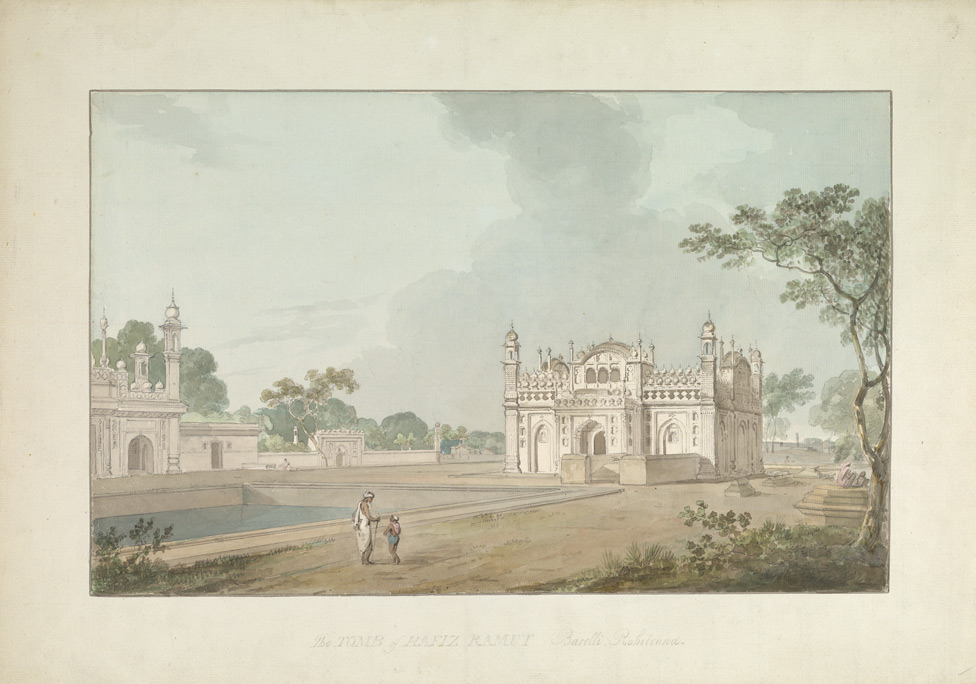
The men of Campbell’s force had themselves been advancing that morning onto Bareilly when they were greeted by the thunderous sound of Jones’ guns. It must have been a curious state of affairs. Some hours earlier, Campbell had ordered his artillery to bombard the city, but had been met with complete silence. According to the information he now received from his spies, Bareilly had been abandoned to a man, hence no reply being made to his barrage — and yet, there was the sound of guns. Proceeding with some caution, the infantry approached the city but found it deserted, except for a few badmashes, left behind by Khan Bahadur Khan to give an illusion Bareilly was still occupied.
The next day, 7 May, with the same suddenness as on the day before, from a large house just outside the city itself sprang another band of Ghazis.
“…a company (I think it was No. 6 of the Ninety-Third) was sent to storm the house, after several shells had been pitched into it. This was done without much loss, except that of one man; I now forget his name, but think it was William MacDonald. He rushed into a room full of Ghazis, who, before his comrades could get to his assistance, had cut him into sixteen pieces with their sharp tulwars! As the natives said, he was cut into annas. But the house was taken, and the whole of the Ghazis slain, with only the loss of this one man killed and about half a dozen wounded.” (Forbes-Mitchell)
Lieutenant Cooper was said to have behaved with ‘great gallantry’ when he rushed forward to save the life of one of his sergeants, but if hospital assistant Menzies believed he would be given a similar compliment, he was very much mistaken. With the Ghazis striking at the 93rd, Menzies was suddenly overcome with an urge to fight – he dashed into the melee, quite forgetting he was a doctor, and sword drawn, pitched in. Once the fight was done, Colonel Ross took a good hold of poor Menzies and gave him such an earful for his behaviour, Surgeon Munro found it “quite hard.”
The remaining townspeople, quite heartily fed up with these carryings on, put together a deputation which they sent to Sir Colin Campbell, declaring their surrender of the city into his hands. By ten in the morning, the 93rd had pitched their camp on the grounds of the ruined church. As far as anyone could ascertain, Khan Bahadur Khan was indeed gone, and his entire army had left with him. Rumours flew about that the Nana Sahib was high-tailing it with his remaining followers towards the Nepali Serai; while this could not be verified, there was no doubt that Feroz Shah had detached himself from Khan Bahadur Khan and had gone back to attack Shajahanpore. The latter was more than rumour, and that particular problem would be dealt with the next day. It could now be said that Bareilly was taken, but it had not been the decisive victory that Sir Colin Campbell had wanted. The principal rebel leaders had once again eluded him; he had won another city, but he had not won the war. There would still be more fighting to do.
A Careless Accident
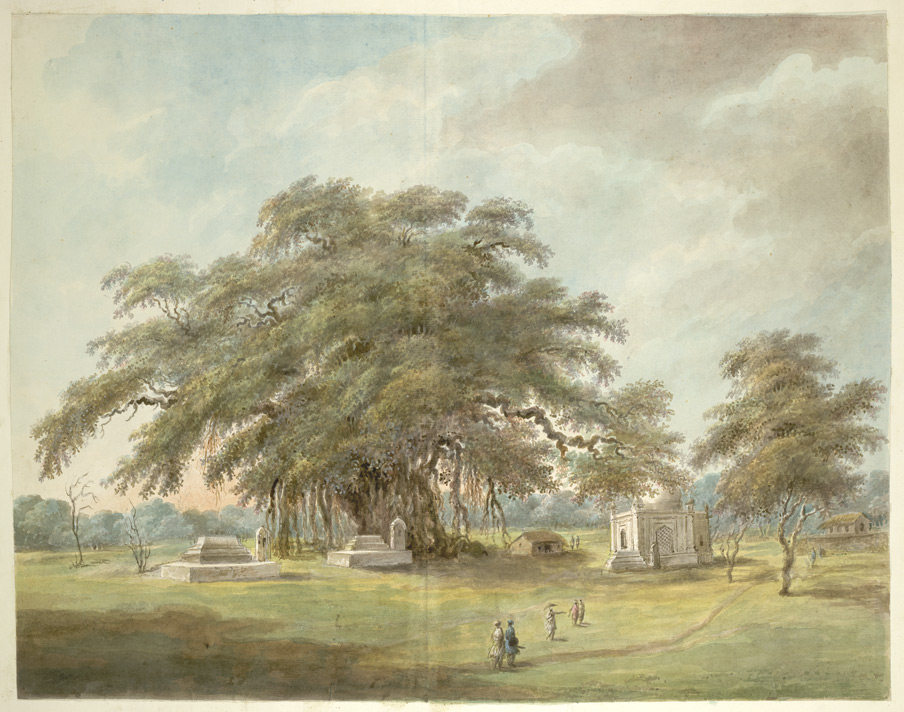
Bareilly had been quite thoroughly picked over – there was hardly any plunder left to satisfy even the least fussy of the Sikhs; it was not Lucknow after all, and whatever riches the city had long disappeared into other pockets. The rebels had, however, most likely by design, left an explosive surprise for the British. After their experiences in Lucknow, the men under Sir Colin Campbell should have known that the rebels were prone to filling dry wells with munitions; they had deliberately left barrels of powder in the streets with the hope they would catch embers from the burning houses; they had packed the Shah Najaf in November with enough powder that it had covered Forbes-Mitchell nearly to his knees when he stumbled upon it in a dark room. So, they should have been a little more careful at Bareilly, but it seems some lessons must be learned three times.
This time, the rebels had cast gunpowder and loaded shells into a dry well “under a huge tree” in the centre of the old cantonment.
“
“The well had been filled to the very mouth with powder and shells, and then covered with a thin layer of dry sand. A large number of ordnance khalasies (tent pitchers), bullock drivers, and dooly bearers had congregated under the tree to cook their mid-day meal, lighting their fires right on the top of this powder-magazine, when it suddenly exploded with a most terrific report, shaking the ground for miles, making the tent-pegs fly out of the hard earth, and throwing down tents more than a mile from the spot. I was lying down in a tent at the time, and the concussion was so great that I felt as if lifted clear off the ground. The tent-pegs flew out all round, and down came the tents, before the men, many of whom were asleep, had time to get clear of the canvas. By the time we got our arms free of the tents, bugles were sounding the assembly in all directions, and staff officers galloping over the plain to ascertain what had happened. The spot where the accident had occurred was easily found. The powder, having been in a deep well, it acted like a huge mortar, fired perpendicularly; an immense cloud of black smoke was sent up in a vertical column at least a thousand yards high, and thousands of shells were bursting in it, the fragments flying all round in a circle of several hundred yards. As the place was not far from the ammunition park, the first idea was that the enemy had succeeded in blowing up the ammunition; but those who had ever witnessed a similar accident could see that, whatever had happened, the concussion was too great to be caused by only one or two wagon-loads of powder. From the appearance of the column of smoke and the shells bursting in it, as if shot out of a huge mortar, it was evident that the accident was confined to one small spot, and the belief became general that the enemy had exploded an enormous mine. But after some time, the truth became known, the troops were dispersed, and the tents re-pitched.”
Sadly, the accident cost the lives of ” a large number of camp-followers and cattle belonging to the ordnance park.” These unfortunate people, as is the case throughout the mutiny, did not receive a grand monument for their sufferings and untimely deaths.
 Mutiny Reflections