We Have the Kaiser Bagh – the 14th of March
At 9am on the 14th, Napier was satisfied that the walls of the Chota Imambara had been sufficiently breached by the incessant pounding they had received over the past day to allow for the attack to commence. The sapping endeavours had likewise yielded success, and the British now held all the buildings on the left as far as the Imambara.
Accordingly, Frank’s Division supplied a storming-party of 60 men consisting of Brayser’s Sikhs and two companies of HM’s 10th, to be supported by the remainder of the Sikhs, the remaining companies of the 10th and the entirety of HM’s 90th. Lieutenant Medley, with several other Engineers, who, with a strong party, would likewise join in on the assault.
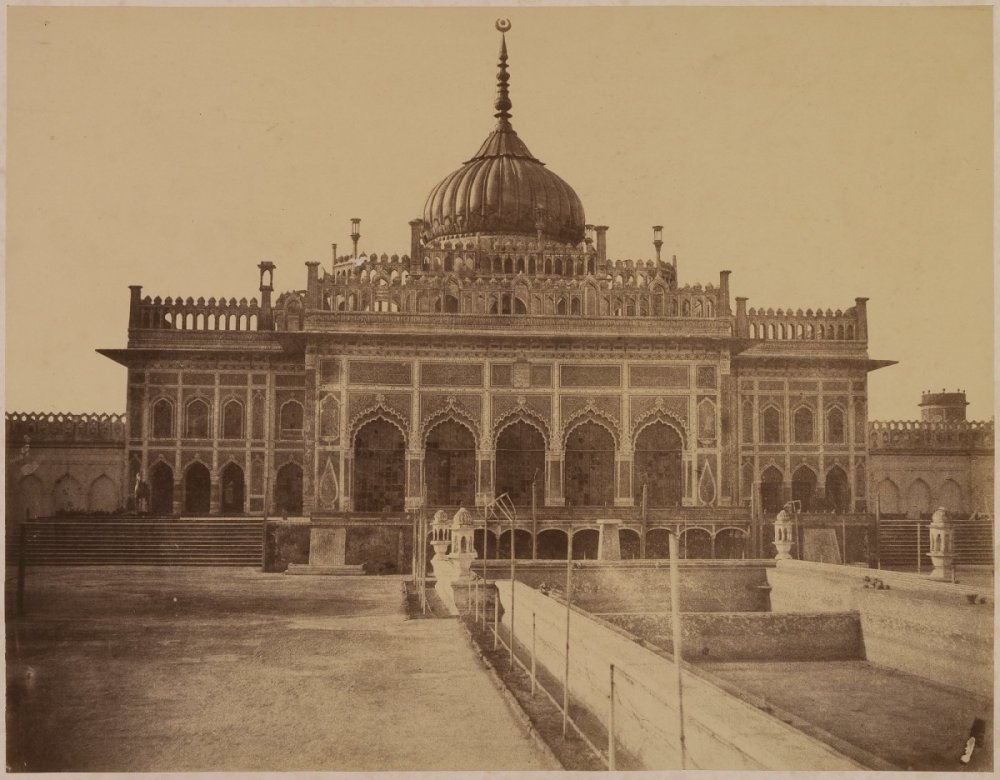
While the guns were still smashing at the walls, now from a distance of no more than 30 yards, the assault party, Medley, Lang and Brownlow of the engineers and 150 sappers (with scaling ladders, powder bags, crowbars and miscellaneous tools), had proceeded shortly after dawn, through the courtyard of the Begum Kothi and the freshly taken positions. They came to a halt behind the wall of the last building that stood in the line, separated from the wall of the Imambara by only a short breadth of road. While the pounding of the wall continued, the rebels, for their part, lined the roofs of the houses on either side of the Imambara and the building itself, taking potshots at anyone who dared raise their heads. As the breach would not be practicable for some time, Medley and his men found a comfortable niche and smoked their cheroots, waiting for Napier to give the all clear. At 9am, the guns fell silent.
By now, everyone was ready for a fight, and without a second invitation, Brayser’s Sikhs and the men of the 10th raced each other to the breach. They scrambled over the rubble, expecting a stiff resistance on the other side, only to find that the rebels had once again thought better of it, and had rushed towards the Kaiser Bagh, leaving the Chota Imambara in the hands of the British without as much as a shot being fired.
However, the day was hardly over.
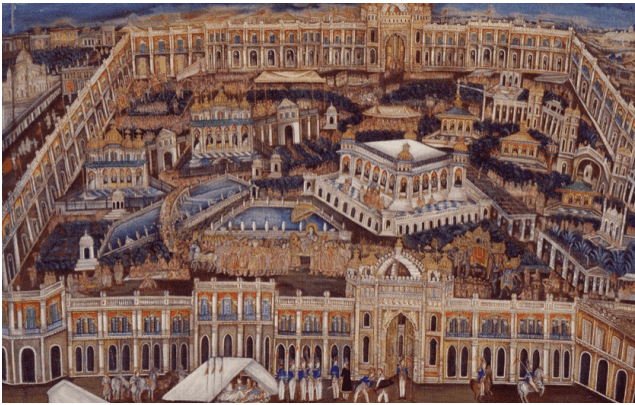
The assault party poured through the main gateway into the road to find they had, in fact, turned the 2nd line of the rebel defences. While the rebels here hastily retreated towards the Kaiser Bagh, a series of skirmishes now took place as the Sikhs and the 10th drove the rebels from one building after the other, taking the houses into their possession as quickly as the rebels abandoned them. To the accompanying sound of musketry, the sappers busily loopholed the parapets of the various buildings to enable the men to reply to the fire still being levelled on them. They smashed open doors and broke through communicating walls to allow for the troops still in the rear to push forward. Meanwhile, the troops in front – the original assaulting party continued to push forward with such rapidity, it appeared nothing would stop them.
“Fighting – there was none in the ordinary sense of the term, for as soon as we got near him, Pandy bolted, but he kept up such an abominable fire from the house tops, doors and loopholes, that man after man went off wounded to the rear, while we still pushed on, our numbers getting thinner and thinner every minute, from the necessity of leaving men to keep possession of the places as fast as we took them.”
In the general rush, the engineers found they needed more powder to clear a barricaded entrance way and sent a message to the rear. Hearing that someone needed to carry it, Private Dempsey of the 10th immediately threw off his coat, handed his musket to a comrade and stepped up to volunteer. Placing the powder bag on his back, he made off to the fore. Running past burning houses, from which any single spark would have put an end to his career, he dodged a gauntlet of rebel musketry; uninjured, he dropped the powder off with the engineers and then ran the whole way back to rejoin his regiment, arriving in time to be one of the first to enter through the breach the powder had successfully sprung open.
All of a sudden, Medley realised where they were and the force was in the Chini Bazaar, close to the Kaiser Bagh, well behind the rebels’ 3rd line of defence and to his horror, there were barely 50 men left. Before they knew it, they were in the first courtyards of the Kaiser Bagh itself.
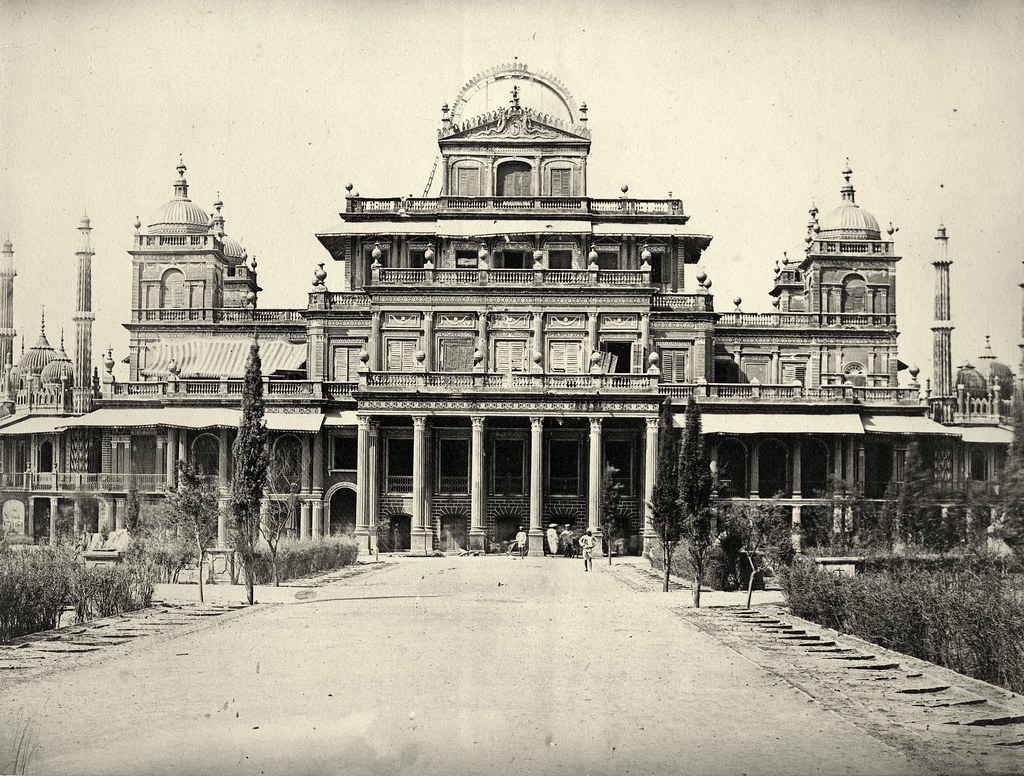
With some difficulty, the men called to a halt. The rebels, seeing that they really had only a small number of attackers to deal with, now came around on both flanks and opened fire at 20 yards.
“We drew swords, pulled out our revolvers, and rushed at them, on which they fled; and just then, up came a lot of our Gurkhas, and charging them along the 3rd line of entrenchments, cleared the enemy out very speedily…”
General Franks now finally caught up with the advance party bringing up the supports. With him came Robert Napier. Together with a very enthusiastic Captain Harry Havelock, who had been leading the 10th forward, they stood in the shelter of a gateway to try and figure out what to do next. The order of the day had been to capture the Chota Imambara, but here they were, within shouting distance of the Kaiser Bagh. It seemed foolish to retire, and although contrary to orders, the only logical step was to call for more men and continue the advance. Franks ordered up the rest of the supports, and one of the engineers was sent to the Sikandar Bagh to bring up more men from there and from the positions on the right to take possession of the buildings towards the river. Then, as soon as everyone was in place, the whole line of attack would advance simultaneously.
Before long, they were in the Kaiser Bagh, and the work of clearing it, one house at a time, commenced. In the flurry of skirmishes, charges and counter-charges, Lieutenant Lang and four Sikhs suddenly found themselves on the roof of a building. They forgot how exactly they had entered and, proceeding back down, went out on the wrong side and wandered haphazardly through the courtyards, unable to find an exit.
“Presently came a volley of bullets, with shouts of Maro Firinghi Soor!` (Kill the foreign pigs!), and I thought I should be caught, for I was in a cul-de-sac, knew no way out, and even if I was only wounded, I must be captured. We rushed desperately at every door attempting to smash it open, and tho’ urged by desperation, fired at, bullets smashing on the walls about us, we could not get through; at last I sprang up at a Venetian window with all my force; it gave and I tumbled into a room and saw a light beyond; the four Sikhs followed me through the building into another court, and through a gateway and saw some of our own men.”
Gradually, more men were sent up, and the advance was made through the main Kaiser Bagh palace itself and through the large courtyard of a mosque. HM’s 10th was not in the mood to be magnanimous to the sepoys whom they flushed out from the gardens, the buildings, summer palaces and courtyards – “In one open space the rebels were so numerous, and had no means of escape. They threw themselves down on their knees and prayed for mercy, but no mercy they gave to our helpless women and children, and I can assure you they got none, for they lay six deep in this one spot alone….” (Malcolm) However, the rashness of the attack led to unwelcome casualties; loose powder ignited left by the rebels in some of the rooms; several explosions rent the air, killing or wounding anyone who happened to be close by. As at the Begum Kothi, those rebels who had no means of escape stood their ground, firing with such precision to their last bullet. Then, bayonets to the fore, they charged their attackers, knowing full well their last minute on earth had come. Others attempted to hide themselves in the gardens, only to be flushed out by the Sikhs who were not in the mood to show any quarter. There was another scene, which Lieutenant Lang was not prepared for.
“While clearing a suite of rooms, we discovered some Pandies skulking about in a garden. We left a few men at the windows and went beating carefully through the garden. One of our watchers came to say they were killing one another, and so we found fourteen lying in a heap, dying on one corner. Our men made all sure and carried off their horses and two small guns.”
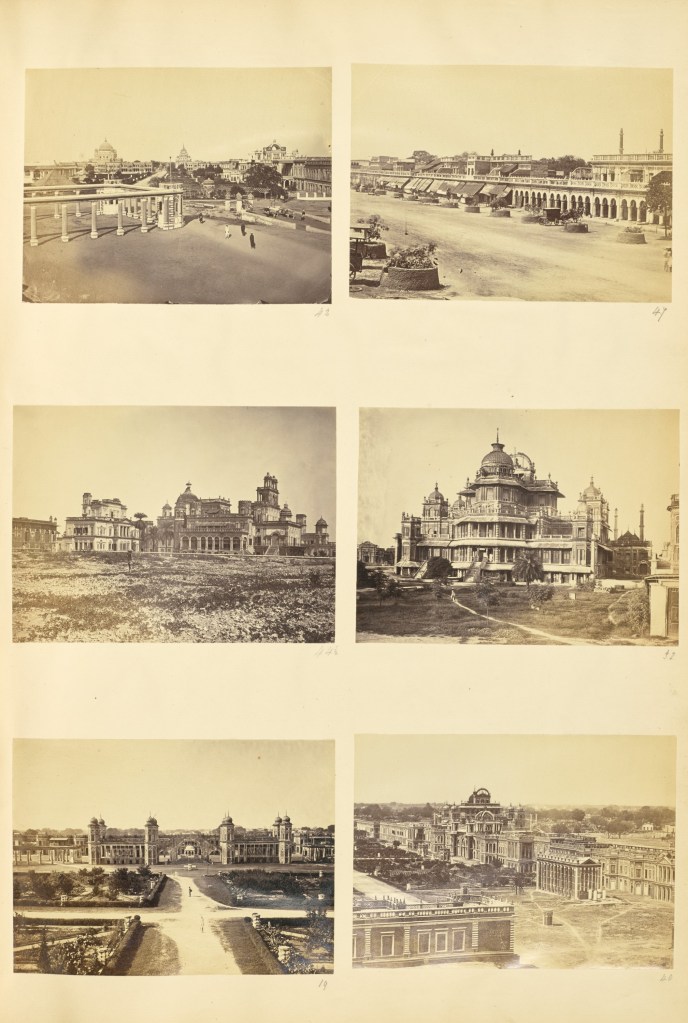
Shortly after breakfast, back in the Headquarters Camp, all the men who were not busy with their duties were lounging about enjoying their cigars, reading papers and enjoying their last coffee. To their surprise, the heavy firing of musketry from the direction of the Kaiser Bagh suddenly died away. At the same time, an orderly on a breathless horse came up at full speed, with a note in his hand. He dismounted and rushed into one of the tents. Moments later, Wylie Norman emerged and mounted his horse. William Russell, who happened to be one of the men lounging about, called out, inquiring what the matter was.
“Have we got the Imambara?” Russell asked
“The Imambara! Why, man,” replied Norman, “We’re in the Kaiser Bagh!”
Within minutes, the camp was a hive a activity. Following Norman at no little delay was Sir Colin Campbell and his entire staff, Russell tagging along behind. They rode first to the Begum Kothi, passing the 42nd, the 38th and the 90th, marching as fast as their legs could carry them, towards the Kaiser Bagh. Proceeding through Napier’s sap, the party stopped to allow a long string of doolies carrying the day’s bill of wounded to the rear. When they reached the breach in the Imambara wall, they found it clogged up by soldiers who were still pouring through it, each struggling to be in on the taking of the Kaiser Bagh. Changing direction, Sir Colin Campbell rode up the street and entered the Imambara through the main gateway amid the cheering of the troops. He then ascended to the roof of the building and looked on at the scene of chaos he had unleashed on Lucknow.
“Beyond us are the many-tinted domes and cupola-spires, and the multiple-shaped roofs of the Kaiserbagh itself, from which there is still spattering fire of musketry. From the other side of the Goorntee beyond it, puff after puff of white smoke, and the heavy boom of the guns, show that Outram is still pounding away at the enemy between the Kaiserbagh and the Iron bridge.”
Descending the steps, they proceed onwards through the gateway from the main courtyard to find themselves on Hazratganj itself, blocked up by troops of the 90th, some of the 20th, the 97th and the 38th, with the 42nd jogging up behind them. Struggling through the crush, Russell spotted General Mansfield on the other side of the street.
“Is it true we have the Kaiser Bagh?”
“Well,” he replied, “Colonel Harness and Napier have sent word that we have turned the inner line of defences. We are in the Kaiser Bagh, but whilst this work is going on, we can scarcely be said to have it.”
“That we had got so far as the spot where I stood without very great loss was wonderful. All the casemates of the Imambarra, every parapeted house-top on the way to it, every portico, every colonnade in the courts, was blocked up with brick-work, pierced in every direction for musketry. And now we were out in the street, we saw what murderous work it would have been to have forced a passage through what was in fact nothing less than a double line of crenellated parapets and walls, inaccessible to scaling ladders, swept by grape and case from the defences at right angles to the line of the street, and raked by the fire of projecting palaces and gables which would cross their musketry with that from the walls, the whole line of the advance being dominated by lofty mosques, minars, the flat-roofed houses of the street, and such citadels as the Imambarra itself would be when the gates were closed, and the Mess-house and the coachmen’s houses. Such was the Huzrutgunj…I came at last to an immense earthwork, which crossed the road, with a deep ditch in front, and some embrasures faced with planks, which were burning fiercely. Through the flames peered the muzzles of two guns, most probably well graped, and so we turned sharp to the left, as it would have been neither profitable nor glorious to have been killed by an overheated cannon; and passing along a crenellated wall we turned in through a tall archway, which was nearly blocked up by the rubbish of the tumbled brickwork, through which our sappers had just broken a passage, and found ourselves in one of the courts of the Kaiserbagh.“
Just as Russell entered, an officer warned him that they were hardly alone – sepoys were still hiding in the rooms around the courtyard – as if the prove his point, bullets came whistling through the air, cutting up the ground at their feet. There was nothing for it but to run for the cover of an archway, beyond which was another court. It was filled with marble statues, orange trees and long lines of “palazzi in the Italian style” at one end of which was a small body of soldiers, barely in any recognisable order, delivering a rapid fire at rebels both seen and unseen. The assault was long over, and discipline was rapidly becoming a thing of the past. Russell found himself now a witness to one of the most “strangest and most disturbing scenes” he could imagine.
Through the courtyard, darted Europeans, Gurkhas and Sikhs, firing at the windows from which shots are still, hissing angrily through the air. At every door, groups of men smash their way through with the stocks of their weapons or simply fire at the hinges until the door falls in.
“Here and there, the invaders have forced their way into the long corridors, and you hear the musketry rattling inside; the crash of glass, the shouts and yells of the combatants, and little jets of smoke curl out of the closed lattices. Lying amid the orange groves are dead and dying sepoys, and the white statues are
reddened > with blood. Leaning against a smiling Venus is a British soldier shot through the neck, gasping, and at every gasp bleeding to death! Here and there, officers are running to and fro after their men, persuading or threatening in vain.”
No one was listening – the men were wild with fury and drunk with plunder. To this we shall return shortly.
 Mutiny Reflections