After the Murders, Kotah in 1858
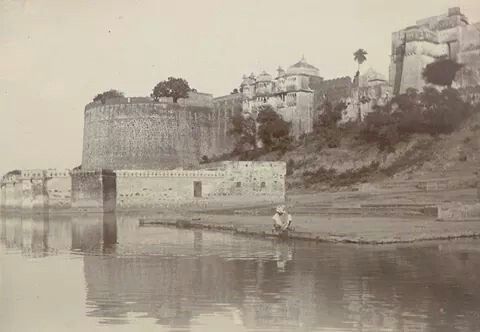
Maharao Ram Singh was not having an easy time of things. Following the murder of the Burtons, he had shut himself up in Garh Palace with a handful of loyal troops and his bodyguard. He had a mere nine cannons against the 250 of the rebels who were now actively besieging him. They tried, on several occasions, to storm his palace but were repulsed; instead, they captured the ferry boats and took control of the river. Their reasoning was sound — the men still loyal to the Maharao were using the Water Gate on the river to sneak into the palace. The Maharao continued to send impassioned pleas for succour to Brigadier Lawrence:
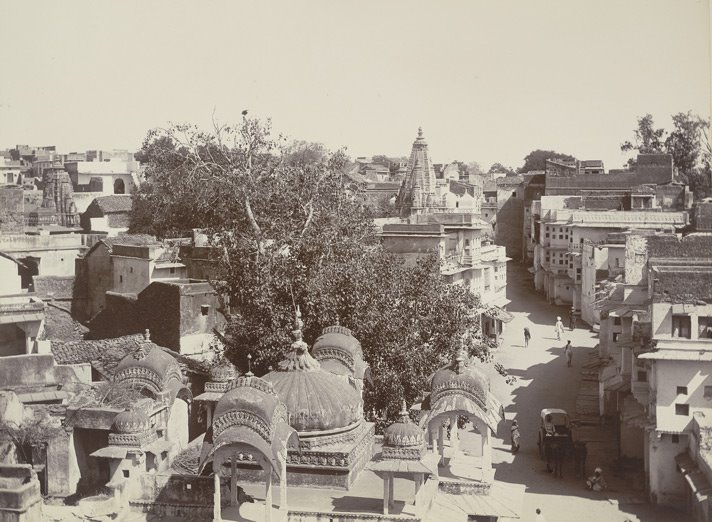
“…as the whole city of Rampura is in the rebels’ possession, they have plundered all the city people and bankers’ houses besides which my entire country is under them, and they consume all the revenue and property of the people… Indeed, I hardly see how I can escape with my life — although I have been expecting the arrival of a British force and have demanded help from my brother chiefs, I am excessively grieved to find that no one comes yet to assist me.”
With the Maharao besieged, the rabble took over Kotah and spent the next few months terrorising the citizens. As if this was not bad enough, with the defeat of Firoz Shah at Mandsaur, the dispersed men of his force made a beeline for Kotah, demanding food, while looting the place to the bones. The Maharao, feeling considerably threatened, did attempt to break the siege by launching two offensives. The first, on 1 January, was partially successful, as his loyal troops managed to only regain two city gates. They also captured 20 cannons. He then received reinforcements of 1500 men from Karauli, who settled themselves at Keshorai Pathan, some 20 miles downstream from Kotah. The Maharao then called a truce with his oppressors, which was negotiated to last until 26 February, the date of the Holi Festival. Meanwhile, the Karauli troops inched closer to Kotah, first crossing the river to the north at Nanta and then, on 9 February, were on the outskirts of the city.
Following Holi, which went off without a hitch, a second offensive was launched the next day by the Maharao and the Karauli troops. They managed to retake the ferry and the river crossings, while capturing several more cannons. This particular battle, however, would rage for the next 25 days, covering Kotah in a veil of smoke during the day and the nights lit up by gunfire and cannon. At this juncture, on 20 March, Major General Henry Gee Roberts and the Rajputana Field Force arrived.
Sources:
Cochrane, J., comp. Narrative of the Indian Mutinies of 1857, Compiled for the Madras Military Male Orphan Asylum. Madras: Military Male Orphan Asylum Press, 1858.
Crofton, O. S. List of Inscriptions on Tombs or Monuments in Rajputana and Central India. Delhi: Manager of Publications, 1934.
Dennys, Julius B. Some Reminiscences of My Life. Privately printed, 1904.
Hodson, V. C. P. List of the Officers of the Bengal Army, 1758–1834. Vol. I. London: Constable & Co., 1927.
Intelligence Branch, comp. The Revolt in Central India 1857-59. Simla: Government Monotype Press, 1908.
Kaye, John William, and G. B. Malleson. Kaye’s and Malleson’s History of the Indian Mutiny of 1857-8. Edited by G. B. Malleson. Vol. III. London: W. H. Allen & Co., 1889.
Llewellyn-Jones, Rosie. The Great Uprising in India, 1857–58: Untold Stories, Indian and British. Woodbridge, Suffolk: Boydell Press, 2007.
Parihar, Vinita. “THE PEOPLE’S RISING IN KOTA DURING THE UPHEAVAL OF 1857.” Proceedings of the Indian History Congress 68 (2007): 596–99. http://www.jstor.org/stable/44147869.
Prichard, Iltudus Thomas. The Mutinies in Rajpootana: A Personal Narrative. London: John W. Parker and Son, 1860.
Vashishtha, Vijay Kumar. Rajputana Agency 1832-1858. Jaipur: Aalekh Publishers, 1978
Links:
http://www.kotaheritagesociety.in/khs/an-overview.html
http://colsudhirfarm.com/1857kotatrail.html
https://www.indianrajputs.com/view/kotah
Major Charles Aeneas Burton (1812 – 1857) – Genealogy geni.com
 Mutiny Reflections