Kotah Before 1857
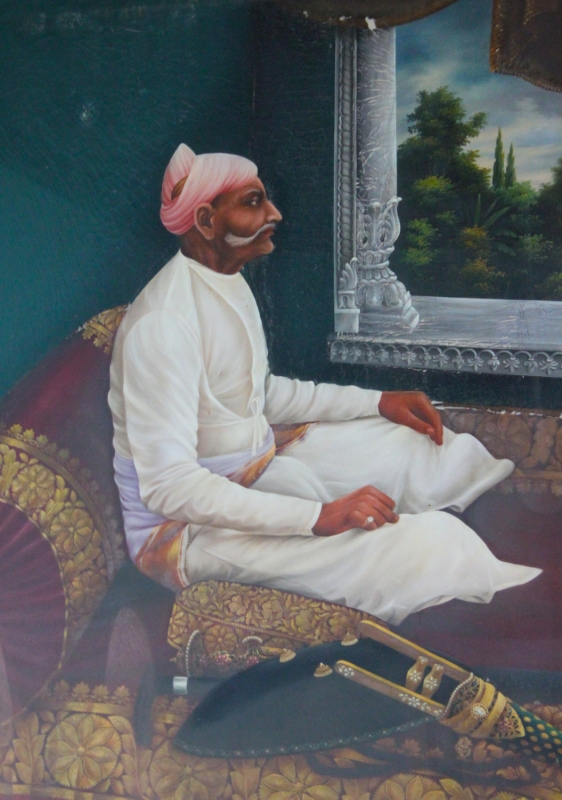
The history of Kotah, like so many states in India, is tied up with the machinations of the EICo, but on a lesser scale. After the decisive Battle of Bhartwara in 1761, when young Zalim Singh Jhala put Jaipur in their place to prevent them from taking over Kotah, it became a stable and prosperous province.
Unfortunately, he did have a falling out with the actual ruler of Kotah, Maharao Guman Singh, which consequently led to Zalim moving to Udaipur, where he presented his services to the court. The venture was so successful that the Maharana granted him the title of Raj-Rana, which he took back with him to Kotah in 1771 when Guman Singh, on his deathbed, requested Zalim’s return. The dying Maharao left the care of his young son Umed Singh to Zalim. To solidify his position, he left the State of Kotah solely under his administration until the boy came of age. From here on, and for the next decades, Raj-Rana Zalim Singh was the real ruler of Kotah, while Umed Singh was left to pursue more becoming hobbies such as hunting and as a patron of the arts, which flourished along with Kotah State. Zalim Singh repaired and fortified all the Kotah forts, introduced European weapons to the army and built two gun foundries. Although his main duty was to gather revenue for the court he served, Zalim Singh put his interest in horticulture to good use, and Kotah would be known as the granary of Rajputana.
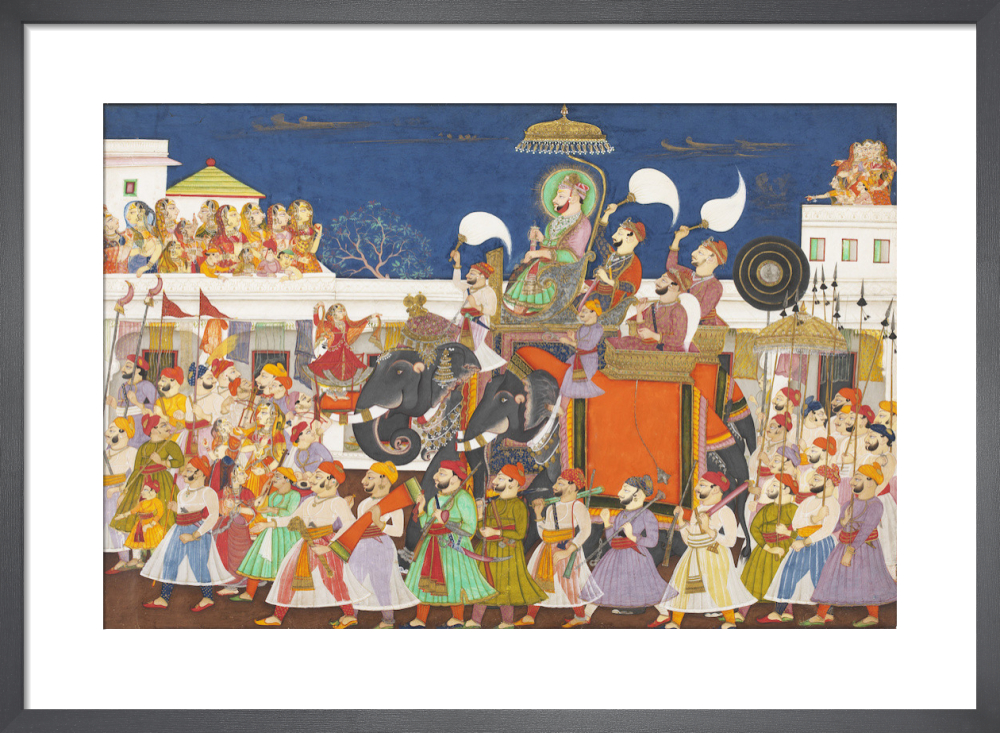
In 1817, with the threat of the Mahrattas and the Pindaris, Kotah became the first state in Rajputana to sign a treaty with the East India Company in exchange for protection. A subsequent amendment to the treaty, in 1818, guaranteed for Zalim Singh and his heirs not only the entire administration of Kotah for regular succession and in perpetuity. However, in 1819, the new Maharao of Kotah, Kishore Singh, clashed with Zalim Singh, who, blind and well into his eighties, was still refusing to relinquish his power.
It was after all Zalim’s signature on the 1817 treaty and not the Maharao’s — this left the EICo in a very unpleasant position and one of their own doing: they were now forced to take a stand against the rightful heir of Kotah on behalf of Zalim Singh. The Diwan, as Zalim Singh was titled, had, after all, supported Hastings in his dispute with the Marathas and the Pindaris, and they were equally eager to keep him in his place as their supporters. Certainly, his younger son was not exactly in their court – he was actively working with the Maharao to usurp his father from power. When both sides called on the EICo to solve the dispute, as both sides, by treaty, had a right to expect, the EICo made futile attempts at reconciliation but ultimately decided to support Zalim Singh. In 1821, at the Battle of Mangrol, it was the British advance against the Maharao’s troops that secured the final victory, and the Maharao was forced to flee to Nathdwara in neighbouring Mewar.
By the end of 1821, however, things had been brought to some conclusion. Zalim Singh was ordered by the EICo to grant amnesty to the Maharao’s troops, and the Maharao was allowed to return to Kotah. The Maharao was granted some administrative rights, thus reducing the power of the Dewan and Major John Caulfield was placed in the middle of the factions to ensure they continued on in some kind of peace.
In 1823, Zalim died, and his son replaced him as Dewan, which was his position by right, secured by the treaty. The Kotah throne passed from Maharao Kishore Singh, who died in 1828, to his son, Maharao Ram Singh II, and the two ruling houses of Kotah decided the old argument was actually far from over. The position all around was untenable. The Maharao had, after all, the right to rule, and the British, realising there was no possible way of resolving the issue without further violence, came up with a plan.
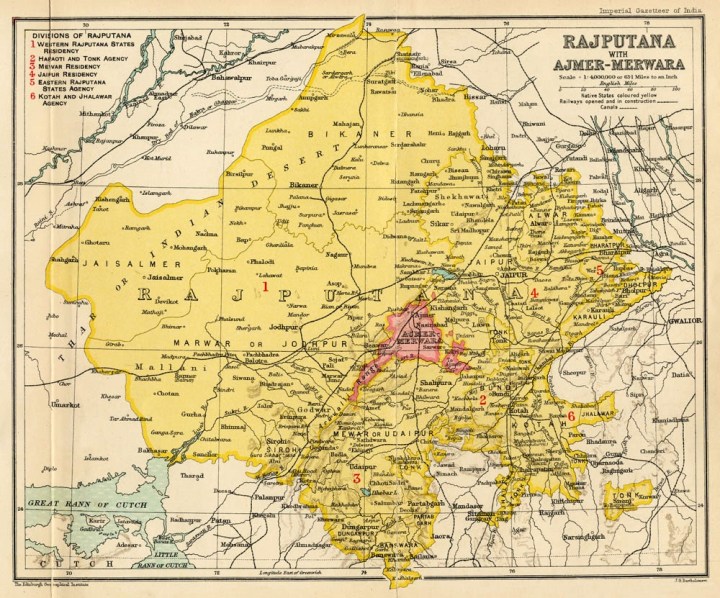
In recognition of the services of Zalim Singh and his family, the British simply made a separate provision in the treaty and partitioned Kotah. They handed over 17 districts, worth 12 lakhs revenue per annum, to Zalim Singh’s descendants and named it the State of Jhalawar. In 1838 took it under their protection and placed Zalim Singh’s grandson, Madan Singh, on the newly acquired throne.
The Maharao, for his part received a reduction in the tributes he was paying the EICo for their protection, while the subsidy for his European-trained troops was reduced from 3 to 2 lakhs per annum. The force was subsequently renamed the Kotah Contingent. He was also allowed to keep his own state troops, the Raj Paltan.
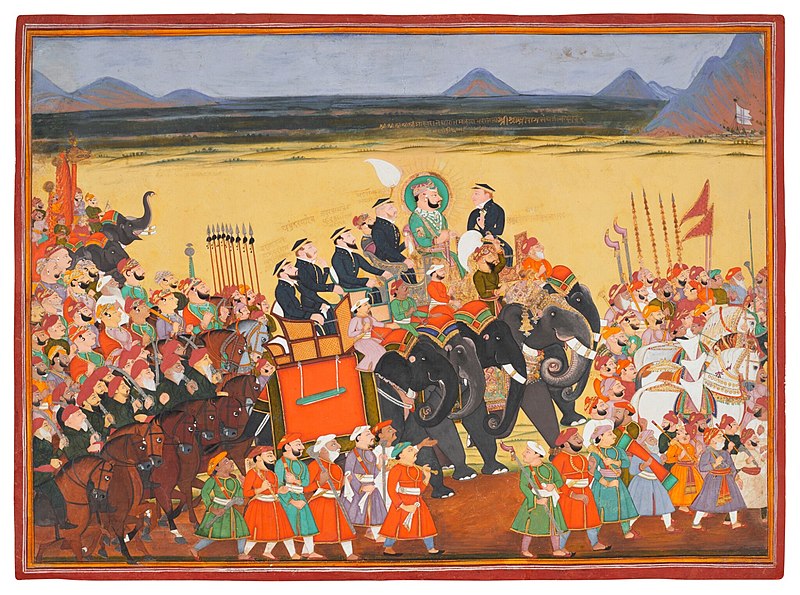
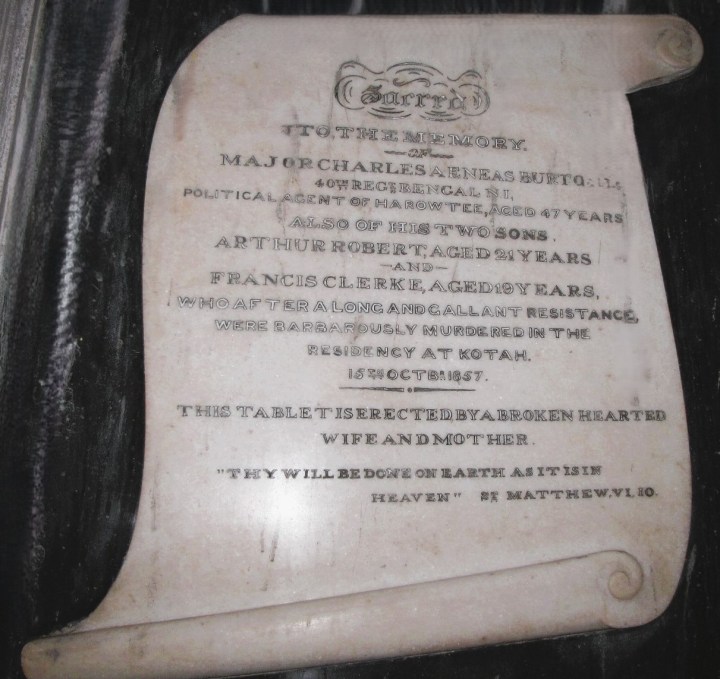
The Story of Kotah begins in 1857 with the murder of Mr Burton and his sons, and ends with a siege and a very horrific battle in 1858.
 Mutiny Reflections