Major General Henry Gee Roberts
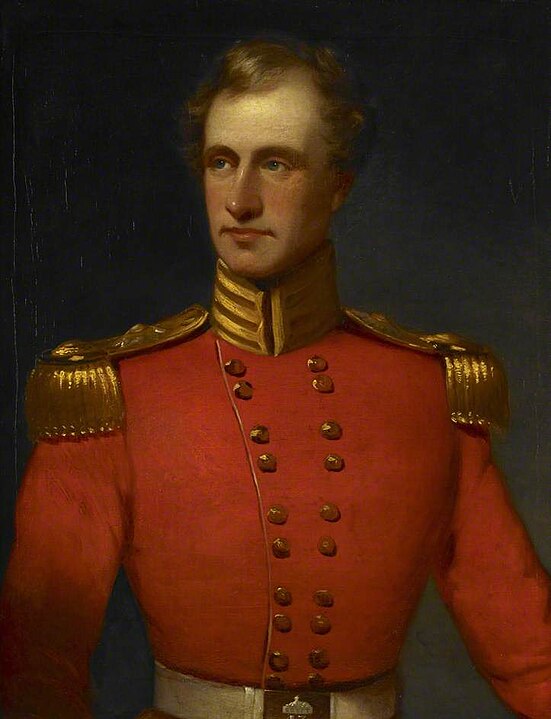
Major General Henry Gee Roberts was an officer with considerable India experience and well suited for the work ahead of him. Born in 1800, the second son of William Roberts, MD, and his wife Margaret (née Jones) near Gloucester, Roberts obtained a cadetship in 1818 for service in the EICo army. He took up his first posting with the 13th Bombay Native Infantry a year later. Subsequently, he spent time with his regiment on service in Gujarat. Promoted captain in 1824, Roberts was given command of the Resident’s Escort in Kutch — the Resident happened to be Major Henry Pottinger of Roberts’ regiment.
As the Amirs of Sindh took exception to the annexation of Kutch and were spending their time riling up the local tribes and the Khosas (a desert tribe of Sindh), Roberts was ordered to put a halt to the marauding and put in command of the Cutch Irregular Horse. Soon after, he found himself in political employ as Pottinger’s assistant. One of his duties was to quiet down the cattle-lifters of Thar, a district north of Kutch, a venture in which he proved himself a success. He then concentrated on chasing the Khosas out of the district. Sir Bartle Frere had warm words to say about Roberts, although it is unlikely the Khosas or the cattle lifters of Thar shared the same opinion:
“He used the influence acquired as a daring sportsman and a successful soldier to give to the wretched people about him their first experience of power used for other purposes than tyranny and oppression, and of intelligence directed to protect the right and punish the wrongdoer.”
Following three years of furlough in England, Roberts returned to India. One of his first duties was to raise an irregular cavalry regiment in Gujarat, which he then commanded until 1841. Roberts was promoted to major in the 13th Bombay NI in 1835 and, in 1841, was raised to lieutenant-colonel, the same year he transferred to the 11th Bombay NI. However, he only remained with the 11th a short time, for by November 1841, he was serving with the same rank in the 20th Bombay NI. The 20th took part in Sir Charles Napier’s Sindh Campaign in 1843. As Roberts remained at Sukkur during Napier’s advance on Haiderabad, he was not present at Meanee. But he was ever on the alert, and rapidly sent on the reinforcements Napier needed to take Haidarabad. He proved himself an “… energetic officer, good in every situation… It was impossible to exceed the boldness and readiness of the support he gave me in the south, at great risk, enfeebling himself in the north.”
In 1843, Roberts was ordered to Schwan with 1500 men to intercept Shere Mohamed. While he did not meet Mohamed in his first battle, he paid his brother a visit, who happened to be encamped at Pirari with 3000 men, some 14 miles to the west of Schwan. By night march, on 8 June, Roberts reached Pirari with his troops the following morning. While his cavalry prevented any possibility of retreat, Roberts captured not only the Amir but all his guns and sent his force running. He then crossed the Indus and, together with Napier and General John Jacob, took up the fight against Sher Mohamed. Mohamed would eventually be routed by Jacob. To put a stop to any further fighting in Sind, Roberts was sent to Kutch to take up the appointment as Resident. “The chiefs welcomed him as an old friend, and his administration proved most successful in repressing disorder and allaying feuds of long-standing. When Napier gave up the command in India in 1851, he wrote to the commander-in-chief in Bombay that Roberts was the best officer in the Bombay army, and perhaps in India, of his rank, and that he had shown in Cutch that his abilities as an administrator were equal to those he possessed for war.”
He was promoted to colonel of the 21st Bombay NI in 1852 and major-general in 1854; he had certainly had an active career with commands throughout the southern division at Satara and Karachi. In 1853, the first Rajputana Field Force was formed, and Roberts was appointed their commander. Shortly after, he returned to England on leave and arrived back in India in May 1857. He remained in Bombay as commander of the northern division of the Bombay army. It would not be until January 1858, when Bombay was considered safe enough to utilise the troops in quelling the mutiny in Bengal, did Roberts take command of the Rajputana Field Force.
The Rajputana Field Force
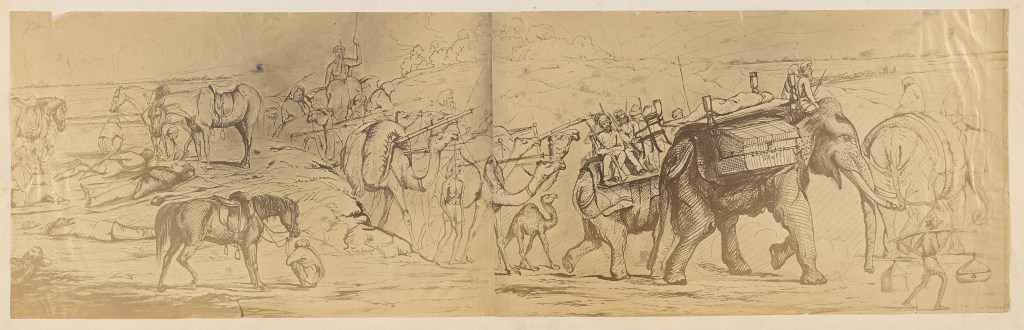
The Rajputana Field Force was composed of :
11th Company Royal Engineers
One Company of Bombay Sappers under Captain Cumberland
Second-Class Siege Train: six 18-pounder guns; four 12-pounder guns; four 8-inch howitzers; four 8-inch mortars
Mountain Train: 6 guns manned by Indian artillerymen
Cavalry
8th Hussars (Col. R. de Salis), 450 men*
1st Bombay Light Cavalry, 300 men
2nd Bombay Light Cavalry, 175 men
1st Sind Horse, two squadrons (Capt. Green), 200 men
2nd Beluchi Horse, 400 men*
*The 8th Hussars and the 2nd Beluchi Horse arrived before Kotah on 29 March.
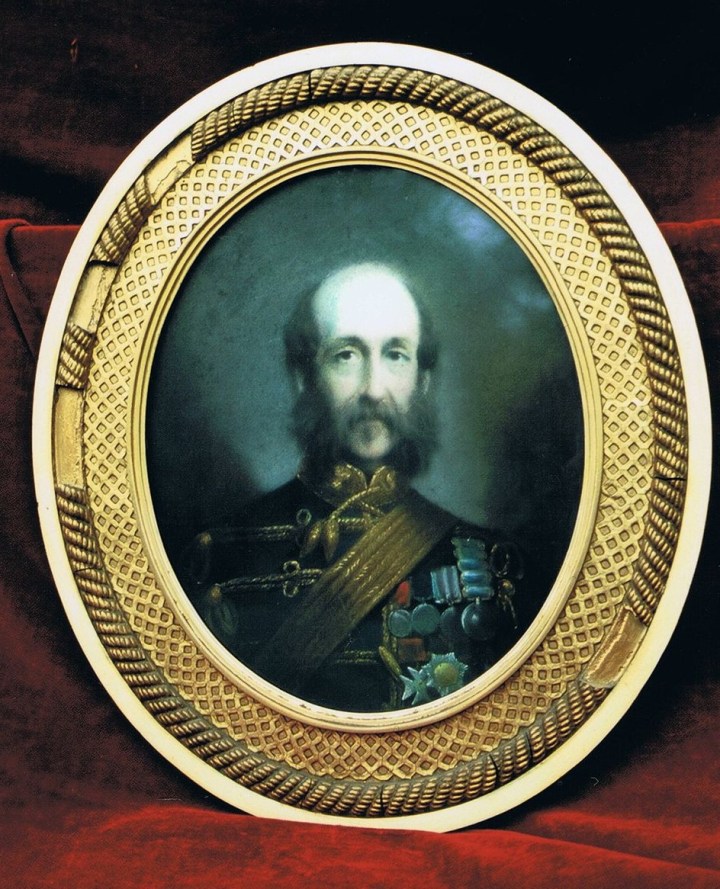
Infantry
72nd Highlanders (Lt. Col. Parke), 500 men
83rd Regiment of Foot, 1 wing. (Major Heatley), 700 men
95th Regiment of Foot (Lt. Col. Raines), 600 men
10th Bombay NI, 600 men
12th Bombay NI, 500 men
13th Bombay NI, 700 men
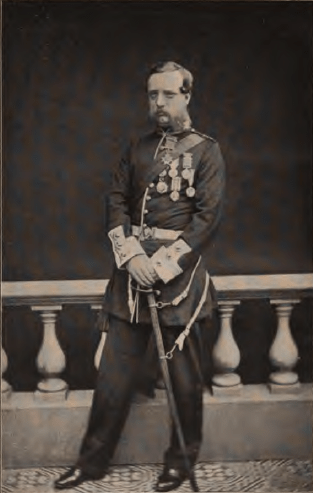
Artillery
2nd Troop, Bombay Horse Artillery (Capt. J.G. Petrie) — four 6-pounders
3rd Troop, Bombay Horse Artillery (Brev. Lt. Col. E.S. Blake)
European Horse Battery (2nd Capt. C.S. Lemarchand)
1/2 Bombay Artillery (Capt. W.D. Aitken)
4/3 Bombay Artillery (2 guns) (Lieut. G.G. Brown)
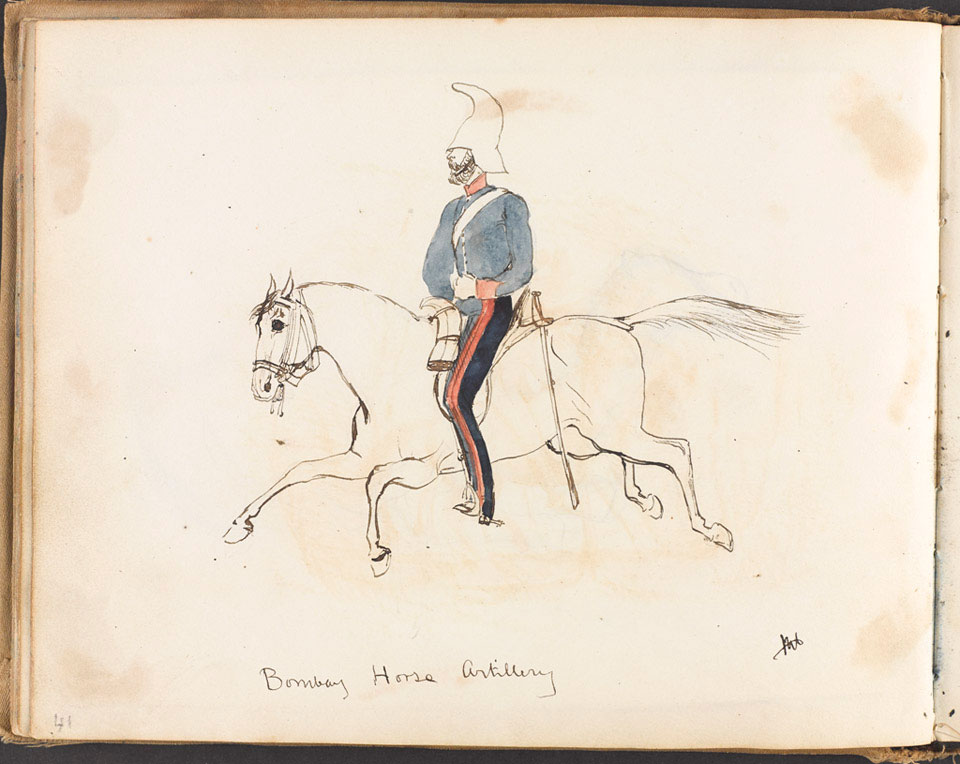
– drawing by J.N. Crealock
At Nasirabad, Brigadier Lawrence handed over military command to Major General Roberts as his senior officer. Lawrence returned to his civil and political duties as Agent General to the Governor-General. In this capacity, he then accompanied the force.
With the 8th Hussars came one very interesting addition, in the form of Mrs. Fanny Duberly, the redoubtable wife of Captain Henry Duberly, paymaster to the Hussars. She had accompanied her husband to Crimea and was now just as determined to join in on his India campaigns. As she deserves a longer post of her own, for now, it must suffice to say, Mrs. Duberly would be there!
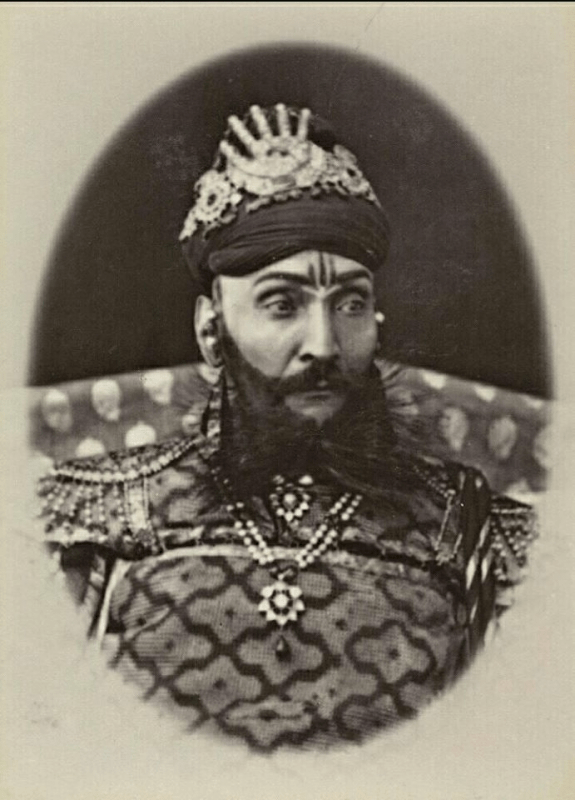
Before Kotah, Roberts paid a courtesy call on the Raja of Bundi, a close personal friend of the Maharao of Kotah. Being well up on the events afflicting his neighbour, Roberts saw it as an opportune moment to exchange not just pleasantries, but information. He also made his arrival as splendid as possible. Wrote Crealock,
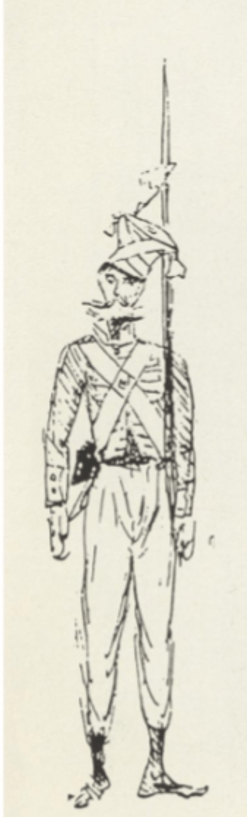
– J.N. Crealock
” We formed a great calvacade some forty officers with every uniform imaginabl with an escort of Bombay Lancers…half way up the hill (to the palace) we dismounted leaving the escort below, the Guard of Honour presented arms – a roll of drums and ‘The Christchurch Bells’ were placed (doubtless for God Save the Queen) such an absurd sight the Guard being dressed in an imitation of us – European Coatees – absurd hats and loose trousers, ‘Astley’s Astleys’ we murmur – up turret stairs thro corridors lined with Native armed with matchlocks, fuses burning….”
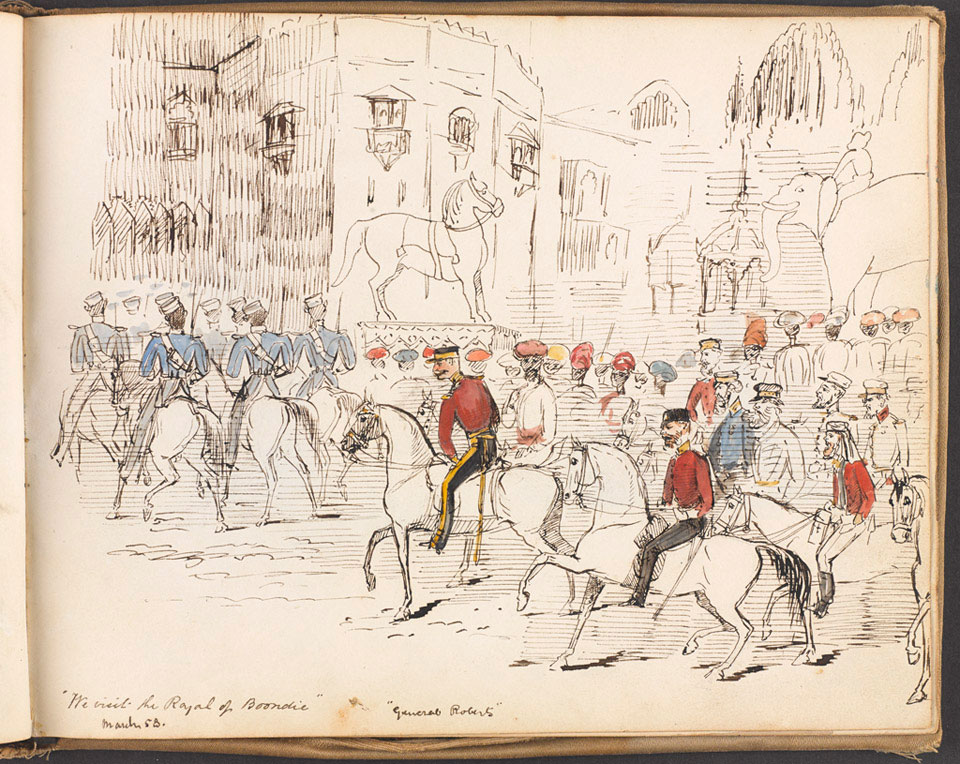
As Bundi had maintained an ambivalent stance during the mutiny, neither actively helping the mutineers, nor assisting the British in any meaningful way, the pomp was as much for the benefit of the citizens of Bundi as for the Raja – a small reminder, that after nearly 5 months away, the EICo was indeed back. Thirty-five years later, an Englishman named Rudyard Kipling would take up residence in Bundi, and begin writing “Kim.”
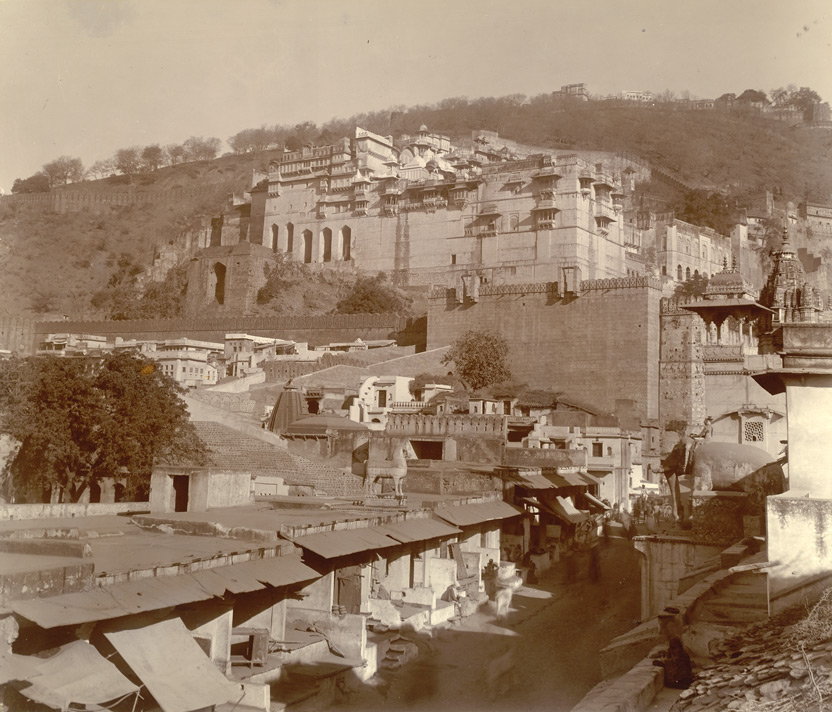
From Bundi, it was but a short ride to the destination of Kotah.
Sources:
Holmes, T. Rice. A History of the Indian Mutiny. London: Macmillan & Co., 1904.
Intelligence Branch, comp. The Revolt in Central India 1857-59. Simla: Government Monotype Press, 1908.
Malleson, G. B. History of the Indian Mutiny, commencing from the close of the 2nd Volume of Sir John Kaye’s History of the Sepoy War. Vol. II. London: W.H. Allen & Co., 1888.
Raines, Julius. The 95th (The Derbyshire) Regiment in Central India. London: Swan Sonnenschein & Co., 1900.
 Mutiny Reflections