Events in Kotah – May to October, 1857
When the news of Meerut arrived in Kotah, Major Burton felt keenly that his family would be safer in Neemuch, where they kept a furnished house. Within days of their departure, he was apprised of the loss of Delhi. Acting on orders from the government, the Kotah Contingent (save 120 men who remained behind at their headquarters in Deoli with Major Burton) was sent off to Agra to soothe the fears of the population in Agra.
We have already seen that events in Rajputana came swiftly on the heels of Delhi, with the mutiny at Nasirabad on the 28th of May. With calls from his wife and from the military authorities at Neemuch for help, Burton quickly formed a small force, numbering 1500 men comprising troops from Bundi and Jhalawar, along with some of the Raj Paltan – the Maharao’s personal guard. He then selected 54 men of the Kotah Contingent, whom he had kept back as his own escort when the contingent marched to Agra. With a few officers, Burton left the nearly empty cantonment of Deoli behind and set out for Neemuch, 90 miles (ca. 145 km) distant. His plan was to secure Neemuch, but before he arrived, the mutiny had already occurred, and Neemuch was in flames. His wife and children had fled to Jawad to the security of Burton’s son Charles. The Burton boys now stood guard and waited for their father to arrive, who marched into Jawad Fort during the same night.
The Neemuch rebels, in the meantime, sent messages to Burton’s men, offering them rewards for not only Burton’s head but that of every member of his family. The offer was repulsed, and as soon as the now so-called Neemuch Brigade marched off towards Agra, Burton led the civilians from Jawad back to Neemuch. Here they would remain, surrounded by their ruined homes and scattered possessions for the remainder of the monsoon.
In all the tumult, the Maharao of Kotah had remained on the side of the British. Burton was so impressed that he requested George Lawrence to repay the loyalty with the discontinuance of the annual tribute. Without permission from Lawrence, however, Burton devised a reward of his own for the Maharao who had so gallantly lent him his Raj Pultan. He not only lowered the tribute but presented the Maharao with a 12-pounder gun, taken from Neemuch. He also promised him “considerable advantages” if he continued on this path of loyalty. There had been no ill-will between Burton and the Maharao, who genuinely seemed to like the Political Agent – as such, Burton was, in his capacity, rewarding a man he thought of as his friend.
Meanwhile, at Neemuch, things were not going well. The first of the Bombay troops had arrived, and in early July, Burton was apprised of the mutiny of the Kotah Contingent at Agra. To add to his irritation, he now had Captain Showers to deal with. We must remember that Showers had been ordered by Lawrence to leave Mount Abu, which he did with much reluctance, and for his part, he now paid the compliment onwards to Major Burton, by insisting he leave Neemuch.
Major Burton, however, was now filled with some trepidation regarding his escort, the 45 men of the Kotah Contingent he had chosen as his escort. He could not leave until a suitable replacement escort was made available to him. He wrote to Lawrence, asking for advice as to what exactly he should do with the Kotah men. Meanwhile, the Maharao of Kotah, too, wanted them gone as he feared they were talking mutiny to the men of the Raj Pultan. With Lawrence’s approval, he sent the Kotah Contingent back to Deoli, and the Maharao would furnish the same number of men to replace them, from the Raj Pultan. The arrangement was satisfactory to everyone but Captain Showers.
He told Burton he ought to leave Neemuch directly, or I shall send a solemn protest against your remaining here,” and ended the conversation with such nasty words that Burton was forced to write to Lawrence to complain.
“…considering the difference in rank, age and experience between us, and that so far from speaking in a suggestive manner, as represented by you, Captain Showers to me was dictatorial and loud, you will admit I evinced forbearance and respect for the position he occupied by refraining from altercation.”
It is not surprising that Showers makes no mention of this in his “Missing Chapter, ” nor does he make any reference to Burton whatsoever.
Burton Returns to Kotah
Burton had no intention of remaining in Neemuch as the Bombay men could safely hold the station without him. He was needed elsewhere, but without an escort, he was not safe to move. Captain Lloyd, independent of Showers, now asked him to release the Raj Pultan men and leave Neemuch. The Bombay men were uncomfortable with their continued presence and, for some reason, suspicious of Burton, who, in their eyes, was emulating the agents of old, who had identified so closely with the maharaos they served. Lloyd denied Burton a guard, and with the Raj Pultan men already on their way back to Kotah, Burton organised some camels, packed his belongings, sent his tents on ahead and prepared to leave Neemuch.
Intending to return to Kotah with all haste, he was all set to ride, despite the incessant rain, when the Vakeel of Kotah, Nand Kishore, arrived in Neemuch. It was disheartening news – the Maharao, he said, was “most anxious to see him again after such a long absence”, but as he was despairing over the current loyalty of the Raj Pultan, he recommended Burton avoid Kotah for another 30 days. Diplomatic to the last, Burton agreed and was confident the Kotah Darbar would inform him as soon as it was safe for him to return.
As for Burton, he would have to deal with the embarrassment, but for his part, could do so with a clear conscience. If he had returned to Kotah without heeding the Maharao’s advice, any uproar among the troops would have been blamed on his behaviour. By not returning, however, the responsibility for the Kotah troops was placed on the Maharao’s shoulders. For the next 5 weeks, with his hands tied, Burton remained at Neemuch. While he waited, he sent the Vakeel back to Kotah to assess the situation. When he returned on the 15th of September, he came with a formal invitation from the Maharao – “The Political Agent may visit Kotah with impunity for I have removed the mutinous soldiers, for there is no fear of their causing a disturbance.”
The action the Maharao had taken was to remove two men from Kotah – one, Lala Jai Dayal, who had been in Burton’s employ as vakeel of the Kotah Residency until Burton dismissed him for “being addicted to liquor and other debaucheries, ” the other was Risaldar Mehrab Khan in command of a company of the Raj Pultan. Lala Jai Dayal was an embarrassment to the Maharao as he was not only employed but paid by him to serve at the Residency; the other was openly fermenting dissent in the ranks of the Raj Pultan.
For their insolence, the Maharao posted Lala Jai Daya to Shergarh, 70 miles south of Kotah, to supervise the district there at a safe distance from Kotah. As for the Risaldar, he was ordered to Etawah with ten sowars and the remaining troops of the Raj Pultan were likewise sent out of the city on district duty. The situation would have thus far been acceptable had the two men obeyed the Maharao, but in complete disregard of his authority, they formed their own plans.
Lala Jai Dayal did leave Kotah, but he never arrived in Shergarh – he simply moved out of sight of the city and settled himself down fourteen miles away, to await events. The Risaldar, on the other hand, did actually start for Etwah but, as his men objected to being thus sent off, returned to Kotah. As for Burton, he was on his way back to Kotah, but the Maharao, embarrassed by the open defiance of the men, could not bring himself to tell his friend that Kotah was again anything but safe.
Finally released from Neemuch, Burton with two of his sons, 21-year-old Arthur Robert (one of the twins) and Francis Clarke, only 19, bid goodbye to Mrs Burton and the remaining family and started off to Kotah on the 5th of October with an escort of 35 Sikh horsemen. Shortly before their departure, Vakeel Nand Kishore paid his respects to Mrs Burton and entreated her, on behalf of the Maharao, to return to Kotah. In reply, Burton said, “…you hear with the Vakeel says – the road is perfectly safe, so is Kotah, and even if it were not, no harm would happen, for the Maharao is too fond of all of us to allow anyone to injure me or mine, besides I have no enemy, and what then, can there be to fear?”
However, Mrs Burton, perhaps through some thought for the miserable state of the roads, the discomfort of a long march and above all the safety of younger children, followed the advice of her friends and remained in Neemuch with her four children. In his last letter to his wife, from his camp at Singoli, 35 miles from Kotah, Burton wrote he was sorry they had not “all come together” and once again reiterated the Vakeel’s assurances that Kotah was absolutely safe.
On the 12th of October, Major Burton and his sons arrived in Kotah.
It was hardly the welcome they had expected. After a long and tiring march, they were suddenly told by the Vakeel, who but days before had insisted Kotah was safe, was now advising them in most urgent terms not to enter the city at any cost. He entreated them to go to Nanta, as ordered by the Maharao. Puzzled by this sudden change of heart, Burton asked to know the reason. Sheepishly, the Vakeel admitted the Raj Pultan could not be trusted, and it was possible that, should any mutineers pass through Kotah, the Raj Pultan would be inclined to join them. He failed to mention to Burton that his ex-vakeel and the Risaldar, so recently evicted, were, in fact, back in Kotah.
The Burtons proceeded to Nanta but sent their things to Kotah as they waited for the Vakeel to return. When he did, he was surprised that Burton was still determined to return to Kotah and was shocked when Burton replied, “But if you can give me any reason for not going on, I’ll not go on, but go my circuit to Bundi.” Cowed, the Vakeel left, and in the evening, the Maharao himself paid Burton a visit, but there was still no mention of the real state of the Raj Pultan. That same night, the Burtons were settled back in the “old house” by the river.
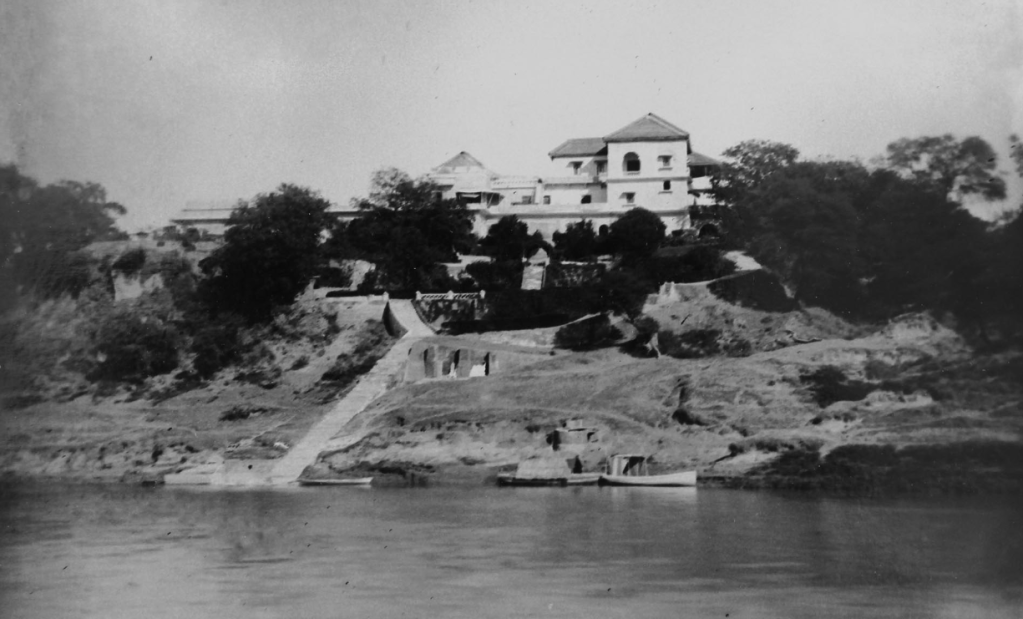
Once again, Burton wrote to his wife to reassure her, adding he had personally chosen the guards for the Residency. There were 150 men in all taken from the Sikh horsemen and Dadupanthi Rajputs, the Raj Pultan guard having been replaced completely by the Bairagi Guard. The Bairagis were a roaming band of Hindu fakirs, and the Dadupanthis were followers of a 16th-century Rajputani mystic. These groups were nothing short of mercenaries for hire when other soldiers were unavailable to act as guards. It was nothing short of an odd choice, but Burton, it would appear, had chosen to place his trust implicitly in a Hindu guard. In his final letter to his mother, Arthur wrote,
“We have got 20 sowars in that old garden and we also have 100 sepoys in the old lines, there is not a single Mussulman amongst them, a guard is placed at each side of the house, and at night, there is one at each corner, so you see, we are all well cared for. The Maharao paid us a visit yesterday but said nothing about the Mutiny, except that he was glad to hear that Delhi had fallen.”
The next morning, the Burtons, astride two elephants and surrounded by their guard, repaid the Maharao’s visit. Burton held a closed meeting with only the Maharao and his Vakeel. He instructed the Maharao to punish the ringleaders of the disaffected Raj Pultan troops and dismiss anyone who was in concert with them. Some sources further report that Burton suggested the four mutinous officers be hanged, but whether this is true or not, it appears to be what the Vakeel chose to hear when, after the meeting, he went straight to the chief minister, Ratan Lal, to report the proceedings. In his turn, Ratan Lal took off to the troops of the Raj Pultan. What happened next shows just how much danger the Burtons really were.
Shortly after the Burtons left the palace, the adjutant of the Raj Pultan attempted to warn the Maharao that the troops were no longer under control and the Burtons should by no means be allowed to return to the Residency. According to his information, they were planning an attack either on the road or during the night. The Maharao, in response, replied that the Vakeel could tell Burton in the morning. The same adjutant, Ujjul Deen Khan, then tried to tell Nand Kishore. Realising that matters were really worse than anticipated, told Ujjul Deen Khan to keep his men in order as the responsibility for Burton’s lives lay with him, the Vakeel. It was only because the town gates were ordered closed earlier than usual that Lala Jai Dayal and Mehrab Khan were left waiting until the next day to rally the men and kill the Burtons.
 Mutiny Reflections