The 3rd, 4th and 5th of December
The morning of the 3rd started, once again, with an artillery duel. The rebels had, during the night, dragged a gun in position, cleverly hidden by the town, and opened fire into the Naval Brigade camp. The round shot flew over and through their tents but with such remarkable inaccuracy no one was injured. Their salvo was quickly answered by one of the guns from the brigade’s battery ending the repartee. As a precaution, the sailors were turned out that night to ensure there would be no surprises when the ladies were leaving.
Everything was in place to send off the wounded, the Lucknow ladies, their husbands and other civilians on the road to Allahabad at 10 o’clock that night. It was, in Dr Munro’s opinion, a travesty that men with broken limbs, suffering from bullet wounds and amputations would be conveyed in unsprung, open bullock carts. He lodged his complaint with Adrian Hope who directed him to speak with Colonel Mansfield, Chief of Staff. After hearing what Munro had to say – “that in my opinion the serious cases of amputation, fractures &c., should not be moved as directed,” Mansfield lost his temper. He shouted at Munro, that he had “no right to express any opinion,” and as the order for their removal had been issued with the approval of the principal medical officer, Munro had nothing to do but to obey and had, as such, no responsibility. Muno stood his ground and replied that while he would obey any order, a “certain amount of responsibility did attach” to him, especially where the men of his regiment were concerned and he was, “bound to draw attention to any arrangements which in my opinion might be followed by serious if not fatal consequences to them.” This reply only served to infuriate Mansfield further, who now ordered Munro to leave. When the doctor hesitated, Mansfield turned on the shocked Adrian Hope who was ordered to remove Munro instantly.
“Accordingly, I was ejected from the tent but as I was being hustled out, I turned and said ‘ Excuse me, sir, but I have only done what I consider my duty.” Two years later, when Sir Colin visited the 93rd mess, he would tell Munro the aftermath of the story. A fuming Mansfield had marched into his tent and –
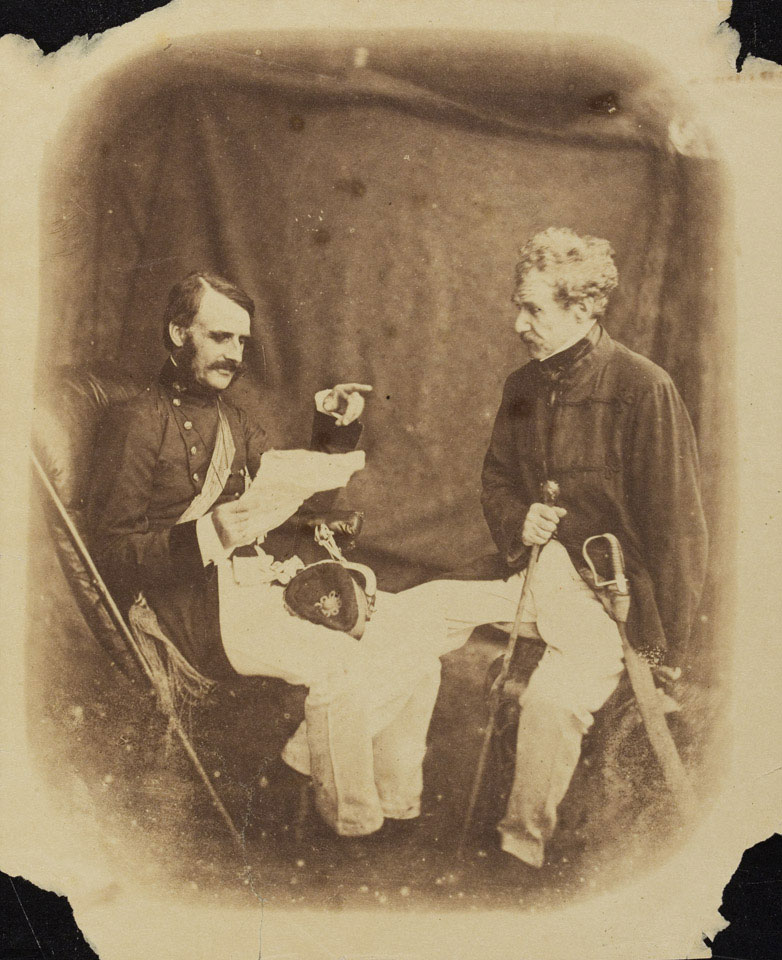
“‘I wish to try a medical officer by court-martial.’
‘ All right,’ said he, in reply, ‘ try him. But who is he?’
‘The surgeon of the 93rd Highlanders.’
‘Oh! No, Mansfield, there must be some mistake; I know that fellow very well, for he was with me in the Crimea. You must forgive and forget his offence whatever it is, for I am certain he cannot have been guilty of neglect of duty.’
Sir Colin then laughed “heartily” as he told the story. Undoubtedly, had Sir Colin not known him so well, Munro thought, Mansfield would most likely have gotten his wish. By all accounts, it was a rather fortunate for Munro he belonged to the 93rd.
With the all-important Allahabad road secure it was time for Sir Colin Campbel to bid his worst worries goodbye. In the fashion that would become sadly common among the Lucknow ladies, some of them took their time to vent their frustration on Hope Grant- they were dissatisfied with their carriages and had been expecting a more suitable conveyance. He reminded them everything had been done to provide for their safety and they should be more than satisfied, they should be grateful. Leaving the ladies to stew over his words, he hurried off to bid goodbye to his nephew, Frank Grant, who was leaving with them. He had suffered much from attacks of “liver and fever” in Delhi – the march to Lucknow and back to Cawnpore had not done his constitution any wonders; the young man was completely done in. Brigadier Inglis just managed to catch his wife and children before they left – he would be staying behind. The convoy of 860 people finally left, when it finally left, would be four miles long.
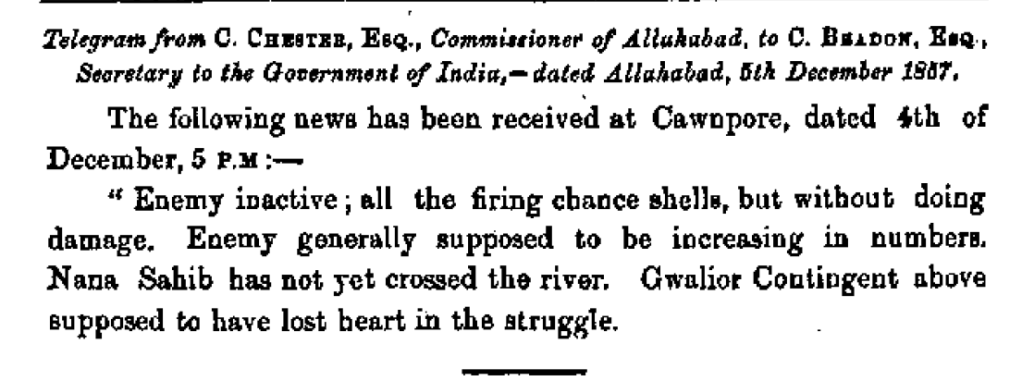
On the 4th of December, the rebels once again turned their attention to the Bridge of Boats. Their ingenious idea, of sending fire rafts down the river, was watched with some consternation from the entrenchment. Peels men” more accustomed to the water than the Pandies”, swept them off well before they reached the bridge. To dissuade them from trying this particular stunt again, Peel opened fire on Cawnpore.
On the afternoon of the 5th however, the rebels amassed on Campbell’s left flank, with artillery, cavalry and infantry. They opened fire on the picket, which happened to be the No. 8 company of the 93rd, under Captain Williams. The men held their ground until three of Remmington’s guns could be brought forward. The troop of the 9th Lancers, under Captain Fawcett, were ordered out and charged a short way while the artillery, with a few guns up a lane on the rebel left flank, enfiladed them with such success that the rebels were “obliged to retire”. On the riverside, Peel ensured no one would be foolhardy enough to try an attack on the entrenchment; for good measure, he treated the rebels to a heavy but swift fire from his guns.
During the 4th and 5th reinforcements reached Cawnpore – the men Julia Inglis had watched marching past and Captain Oliver Jones was so eager to join. Among them were the 42nd Highlanders (headquarters and 5 companies) who had marched the 80 miles from Chhimi to Cawnpore in just 56 hours, arriving on the 5th, with their bagpipes playing while their comrades of the 93rd, who they had last seen in May in Dover, cheered them in. Campbell’s force had now swelled to 5000 infantry, 600 cavalry and 35 guns.
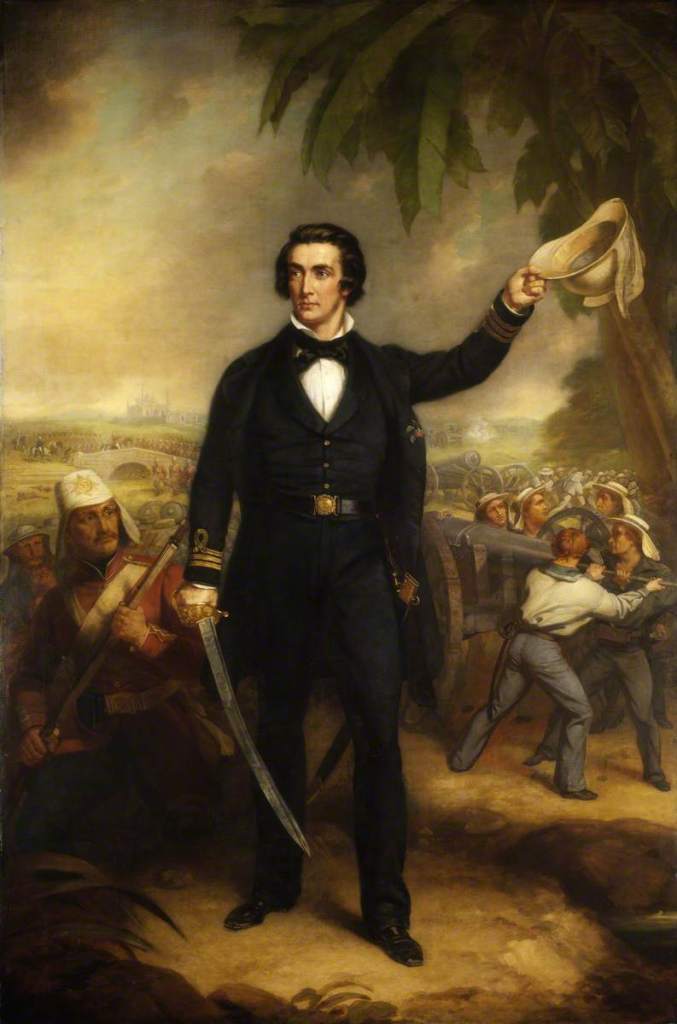
It was rapidly becoming clear that Campbell’s defensive stance, as useful as it had been until now would no longer suffice. Unbeknownst to the rebels, however, he had planned a rather warm day for them on the 6th of December.
Sources:
Adye, John. Recollections of a Military Life. London: Smith, Elder, & Co., 1895.
Bourchier, George. Eight Months’ Campaign Against the Bengal Sepoy Army during the Mutiny of 1857. London: Smith, Elder, and Co., 1858.
Ewart, John Alexander. The Story of a Soldier’s Life; or, Peace, War, and Mutiny. Vol. 2. London: Sampson Low, Marston, Searle, & Rivington, 1881.
Forbes, Archibald. Colin Campbell, Lord Clyde. London: Macmillan and Co., 1895.
Forbes-Mitchell, William. Reminiscences of the Great Mutiny, 1857–59: Including the Relief, Siege, and Capture of Lucknow, and the Campaigns in Rohilcund and Oude. London: Macmillan and Co., 1894.
Gordon-Alexander, William. Recollections of a Highland Subaltern: During the Campaigns of the 93rd Highlanders in India, under Colin Campbell, Lord Clyde, in 1857, 1858 and 1859. London: Edward Arnold, 1898.
Gough, Hugh. Old Memories. Edinburgh: William Blackwood and Sons, 1897.
Grant, Hope. Incidents in the Sepoy War, 1857-58: Compiled from the Private Journals of General Sir Hope Grant. Edited by Henry Knollys. Edinburgh: William Blackwood and Sons, 1873.
Groves, Percy. History of the 42nd Royal Highlanders: ‘The Black Watch’ 1729-1893. Edinburgh: W. & A. K. Johnston, 1893.
“Lord Clyde’s Campaign in India.” Blackwood’s Edinburgh Magazine 84, no. 516 (October 1858): 480–513.
Mackay, James [Rev. John]. From London to Lucknow: With Memoranda of Mutinies, Marches, Flights, Fights, and Forays. 2 vols. London: James Nisbet & Co., 1860.
Malleson, G. B. History of the Indian Mutiny, 1857–1858, Commencing from the Close of the Second Volume of Sir John Kaye’s History of the Sepoy War. Vol. 2. London: Wm. H. Allen & Co., 1879.
Munro, William. Records of Service and Campaigning in Many Lands. Vol. 2. London: Hurst and Blackett, 1887.
Munro, William. Reminiscences of Military Service with the 93rd Sutherland Highlanders. London: Hurst and Blackett, 1883.
North, Charles Napier. Journal of an English Officer in India. London: Hurst and Blackett, 1858.
Roberts, Frederick Sleigh. Forty-One Years in India: From Subaltern to Commander-in-Chief. Vol. 1. London: Richard Bentley & Son, 1897.
Verney, G. L. The Devil’s Wind: The Story of the Naval Brigade at Lucknow, from the Letters of Edmund Hope Verney and Other Papers Concerning the Enterprise of the Ship’s Company of H.M.S. Shannon in the Campaign in India, 1857-58. London: Hutchinson, 1956.
 Mutiny Reflections
impressive chest of tools
LikeLiked by 1 person
We certainly have it easier going to the doctor now! Munro prided himself for always using chloroform. Seeing that chest, I can’t imagine anyone would refuse it, but they did.
LikeLiked by 1 person