John Ewart was born in the 67th (South Hampshire) Regiment at Sholapur, India on the 11th of June 1821. His father, John Frederick, held the command of the station. The force at the time consisted of the 5th Madras Cavalry, the 8th and 10th Bombay Native Infantry and his father’s own regiment, HM’s 67th, of which he was Lieutenant Colonel. In December 1822, the Lieutenant Colonel obtained leave and on the 6th of January 1823, the young boy, with his parents and 2 brothers, left India onboard the “Sarah”, bound for England.
When Ewart was just four years old, his father, who had not returned to India but pursued various regimental postings at home, he left the 67th to follow a new calling as the Inspecting Field Officer of the Coventry Recruiting District and in 1826 moved his family, which had grown by one more child, a daughter, to Chatham. There was no doubt in the little boy’s mind that one day he would a soldier as, armed with “a tiny sword,” he remembered falling in behind one of the regiment’s companies, to march past his father. The same year, his father settled the family in Coventry, where the lieutenant colonel would spend the next 21 years of his life. For young John, it was the start of school.
He was sent as a pupil to Reverend Edward Gibson until 1831, when he was sent to boarding school with his brother William at Clapham Common, just five miles outside London. An outbreak of scarlet fever caused the school to close and in 1832, the Ewart boys were back in Coventry in Gibson’s day school. It was the same year his father bought him an “exceedingly nice pony.” Summers seems to have been of a more practical sort in the Ewart family — an uncle, Captain Brisbane of HM’s 34th — offered to take John to the regimental depot in Ireland in May 1833, so off he went for nearly three months. It was an experience Ewart enjoyed immensely — the barracks was close to a river where he could fish, the officers kept a pack of beagles, and the depot even had a good brass band. At night, he slept in the barracks with one of the captain’s dogs on his bed. By August, he was back in Coventry, in time to join Reverend Gibson’s new boarding school in the village of Allesey. The larks of a schoolboy, however, would shortly have an end. In 1832 his name had been put down on a list of candidates for admission to the Sandhurst Royal Military College.
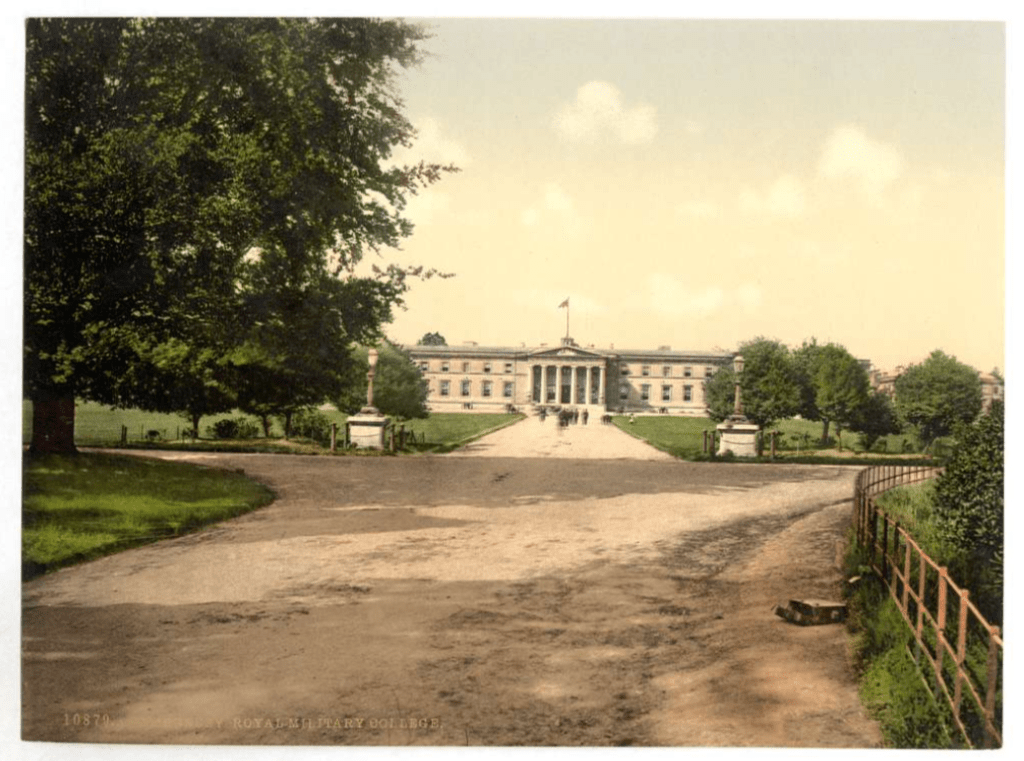
“It was on 10th January 1835 that I arrived at the College, accompanied by my father, when I was speedily ushered into the much dreaded Board Room. The examination had already commenced, and I found about 30 other candidates assembled, varying in age from thirteen to fifteen years; it comprehended in those days the first four rules of arithmetic, simple and compound, with Cornelius Nepos or Caesar in prose, and Virgil or Ovid in verse; or if a candidate preferred, he could dispense with Latin and take up arithmetic only, as high as the Rule of Three, with Vulgar and Decimal Fractions – certainly in either case not a very severe test. I was soon able to announce to my father that I had passed, and after undergoing inspection by the College surgeon, found myself at age 13 and a half, duly enrolled amongst the cadets as A 33; a week afterwards, I put on my first red coat.”
For the next seven years, Ewart found his home at Sandhurst and, as a student, excelled. To obtain a commission without purchase, he needed to pass six of the following subjects:
Euclid’s Geometry,
Permanent and field fortification,
Course of military surveying,
Higher Mathematics,
Conic sections,
Attack and defence of fortresses,
General History, ancient and modern,
Latin, German, or French.
Only the first three subjects were obligatory.
To be eligible for a commission, the boys had to pass through a course in maps and globes and military drawing in either pen or brushwork. They also attended the riding school three times a week, the horses supplied by a cavalry regiment at Hounslow. They played cricket, football and hockey, took part in paper chases and annually, boat races. Bullying, according to Ewart, was carried out with impunity, but so was fagging — however, the latter “did no harm and every cadet who remained long enough had his turn of fagging others.” He passed his final examination in 1838 and obtained a commission without purchase, just shy of 17.
General Sir George Murray thoughtfully put Ewart’s name down for the 42nd Royal Highlanders, of which he was full colonel, but with no vacancy in sight, on the 27th of July 1838, he was gazetted as an ensign in the 35th Royal Sussex Regiment, stationed in Mauritius. The regimental depot was Stirling Castle in Scotland; on the 30th of August, Ewart left home to join his regiment. They were relieved by the depot of the 71st Highlanders in 1839, and the 35th left Stirling for Chatham. The same year, he was presented to the Queen by his father at a levee, and he was “struck by her youthful appearance and charming manner.”
Towards the end of 1839, an order arrived for a draft to be sent out to the service companies, consisting of one field officer, one captain, one lieutenant, two ensigns and 130 men. It was not Ewart’s turn for foreign service, but as one of the ensigns wanted to exchange to the cavalry, he offered his place for £100 to anyone willing to go in his stead. Ewart took the chance. The money, Ewart knew, would save his father the cost of providing him with an outfit. In January 1840, the “Boyne” set sail for Mauritius with Ewart on board. He arrived 156 days later at Port Louis. Here, he would remain for the next 3 years. Duty on the island was light, and Ewart soon found the life agreed with him immensely; he enjoyed his work, cricket and racing helped pass the time, and if it had not been for the centipedes, Mauritius was a veritable paradise.
In 1843, with a two-year leave of absence in hand, Ewart sailed back home. However, his father had other plans; Ewart had been entertaining thoughts of exchanging into the 92nd Highlanders, but with no opportunities in the offering, at the wish of his father, he gave up 13 months of leave and joined the senior department of the Royal Military College, Sandhurst.
In all, he spent a further 3 1/2 years at Sandhurst.
He was back in Mauritius, still with the 35th, in 1846, for another two years in the tropics. Promotions were slow in his regiment, and the only way for Ewart to step from lieutenant to captain was by purchase. In 1848, now back in England, he was offered just that by his Brevet-Major Cooper, who needed the princely sum of £700 over the regulation to sell out; if he could not get the money, he would exchange to another regiment. As Ewart was now first lieutenant for purchase, he quickly wrote to his father. His father provided him with £400 besides the regulation sum, while the remaining £300 was made up amongst the subalterns of the 35th. An additional £25 was then paid by his father, and Ewart was gazetted a captain on the 12th of May 1848. It was the only step he would ever take in his career. However, with no prospects of promotion in the 35th, Ewart finally exchanged into the 93rd Highlanders. He would remain with the regiment all through the Crimean War and the Indian Mutiny. One of his cousins, Salisbury Ewart, joined the 93rd in 1852 and would carry one of the colours at the Battle of Alma. His brother Charles was commissioned to the Royal Engineers in 1845, and the eldest, Frederick, to the Navy. It was a relative of theirs, Charles Ewart of the Scots Greys, who had captured the regimental eagle of the French 45th Regiment of Line at Waterloo – a deed, which Ewart found so inspirational, he attempted to emulate it, with mixed results, at the Sikandar Bagh in November 1857, some 42 years later.
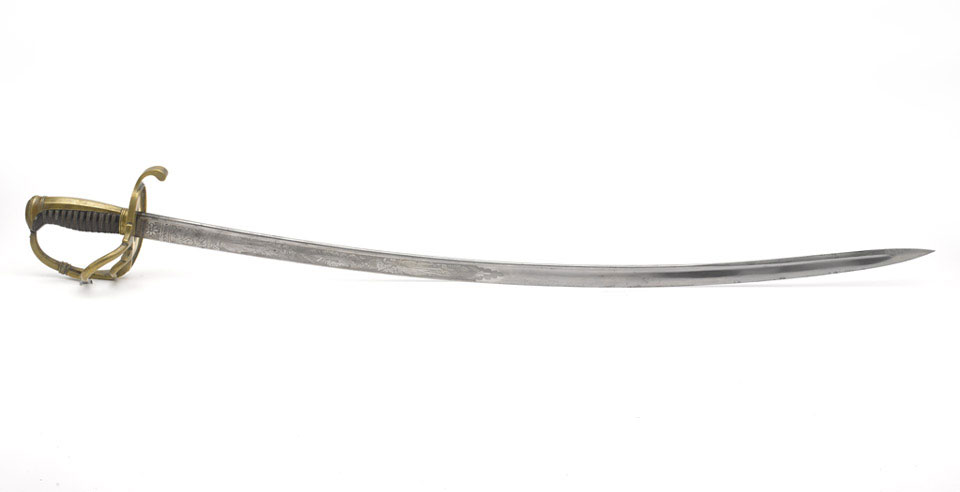
Ewart used this sword and scabbard as a substitute to a claymore he had lost during the Battle of the Alma (1854). He came across it on the march to Sevastopol when he found some baggage carts that had belonged to Russian hussar officers.
NAM. 2011-05-1-1
https://collection.nam.ac.uk/detail.php?acc=2011-05-1-1
Crimea
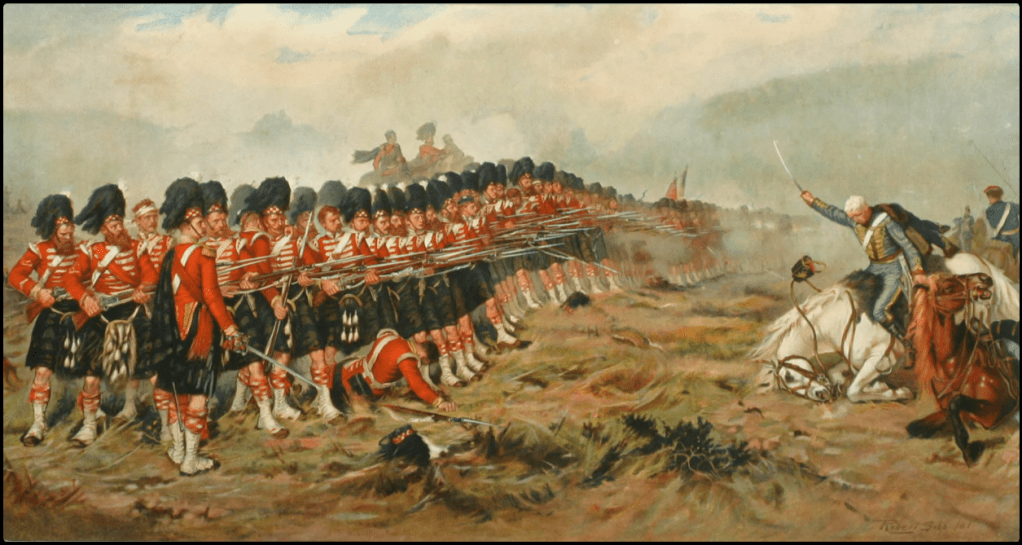
William Russell the war correspondent who observed the action later described the Russian cavalry as charging a “thin red streak tipped with a line of steel”, which later became known as “the thin red line”
Just before embarking for Crimea, Captain John Ewart met his cousin, Lieutenant-Colonel John Ewart of the EICo, then on leave. “Poor fellow! As we shook hands, one of his last observations was: ‘If you ever come out to India, don’t forget to visit me at Cawnpore, where I am likely to be stationed.’ Less than four years from the day they had last seen each other, Ewart’s arm was shot off within “a few yards” of Wheeler’s entrenchment. His cousin and wife were among the many victims of Cawnpore.
For Ewart, Crimea was a long war. In April 1854, he was sent to Gallipoli to lead his troops in the war and reached Varna in June, having been promoted to Brevet Major in May. He would serve at the Battle of Alma and the Battle of Balaklava; in charge of the 6th Company of the 93rd, he was one of the officers depicted in the painting The Thin Red Line.” He was subsequently promoted to full Major in December 1854. He was with Lord Raglan at the death of General Strangeways and had been the first to inform Raglan of the Russian advance at Inkerman. In May 1855, Ewart led his command to the Sea of Azov and assisted in the capture of Kertch and the fortress of Yenikale. He also joined the Siege of Sebastopol and was a part of the assaults of the 18th of June and the 5th of September.
Promoted to Brevet Lieutenant-Colonel, he was one of four officers of the 93rd who received the French Legion of Honour and Turkish Order of the Medjidie, and one of three officers of the 93rd who received the Piedmontese Silver Medal inscribed with the words ” Al valore militare,” having served throughout the entire campaign without being absent from his duty for a single day. He returned to England in July 1856. In less than a year, Ewart was back on board a ship, this time, with orders to sail for China.
The Advance of the 93rd Highlanders
We take up his story on the 1st of December, 1857 at Cawnpore.
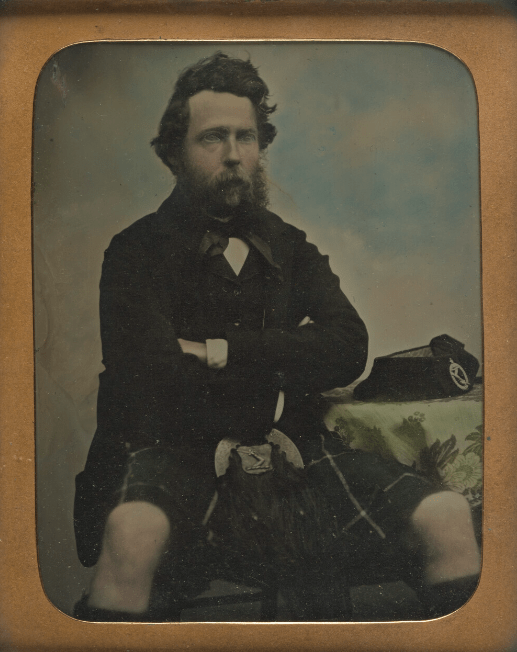
For Brevet Lieutenant-Colonel Ewart, the 1st of December at Cawnpore began as a regular day, as field officer of the day for the brigade. Following a surprise attack on the 93rd, Sir Colin Campbell ordered the regiment to advance towards the canal and take up a position behind some houses, where they were to remain for the rest of the day. He briefly spoke to Sir Colin Campbell and offered him the Colours he had captured at Sikandarbagh, the very ones he had tried to present him and had been rather swiftly rebuked with “Damn your Colours, Sir!” Since then, Ewart had given Campbell a slightly wider berth. Campbell, perhaps touched by the offer, replied, “Yes, above all things, ” and added it would always be kept as an heirloom in his family. Happier than he had been, Ewart mounted his horse and went off to visit the guards and pickets. The day, however, would not get better. As he approached one of the pickets, some of the rebels had crossed one of the canal bridges and, mounting a small gun on a wall, fired a few rounds. The balls fell harmlessly around Ewart. He carried on.
After visiting the outposts, he returned to the 93rd. As the men were still “potted as Sir Campbell had ordered”, now relatively safe from the artillery fire which the rebels were still keeping up, albeit with little effect, Ewart dismounted his horse. A company had been placed behind each house. As he stood between two of the buildings to see “what the mutineers were about,” a cannon shot struck him on the left elbow. It carried off his left arm, which, when he looked down, was merely hanging on by a thin piece of skin. He was aware the hit had been a violent one, but only when he saw his bleeding stump did he realise what had happened. The ball had also smashed the handle of his revolver and smashed his beloved field glass to pieces. The latter had been a gift from his eldest brother and had seen him not just through the mutiny, thus far, but through Crimea. Ewart did not feel any “inclination to fall”, nor was he knocked over; as he stood there, dazed, a quick-thinking private of the 93rd, named McKay, rushed up and tied his handkerchief tightly around the stump. Captain Burroughs quickly organised a doolie to carry Ewart to the 93rd hospital, while Dr Menzies walked beside him, pushing his thumb on the large artery to prevent Ewart from bleeding to death.
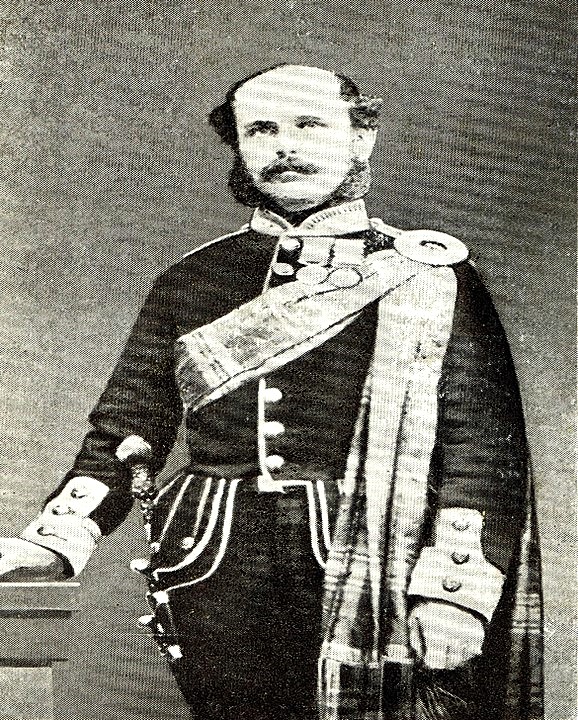
At the hospital, Dr Munro examined the wound and, with a pair of scissors, cut off the thin piece of skin that still held his arm. The arm fell to the floor (it would later be buried in the garden by his friends), and Ewart was told to lie still – a further amputation would be needed, but now, as Ewart was in shock, Munro deemed it was too dangerous to operate further. Ewart, as he recalls, continued to insist Munro operate – for his part, Munro saw Ewart in a state of collapse “from the shock following such a terrible wound and from the sudden gush of arterial blood that followed.” He knew Ewart would die from blood loss and shock if he operated, so the doctor continued to insist that Ewart lie quiet. The bleeding from the stump continued to worry Ewart, but finally, after some more entreaties and checking Ewart’s pulse, Munro decided he was strong enough to endure the amputation. He was carried to the table.
Unlike other doctors, Munro insisted his amputees had the full advantage of medical science and quickly administered chloroform – he never operated without it either during or after a battle. The opinion of Dr John Hall in the Crimea – “…however barbarous it may appear, the smart of the knife is a powerful stimulant: and it is much better to hear a man bawl lustily than to see him sink silently into the grave” held no merit with Munro.
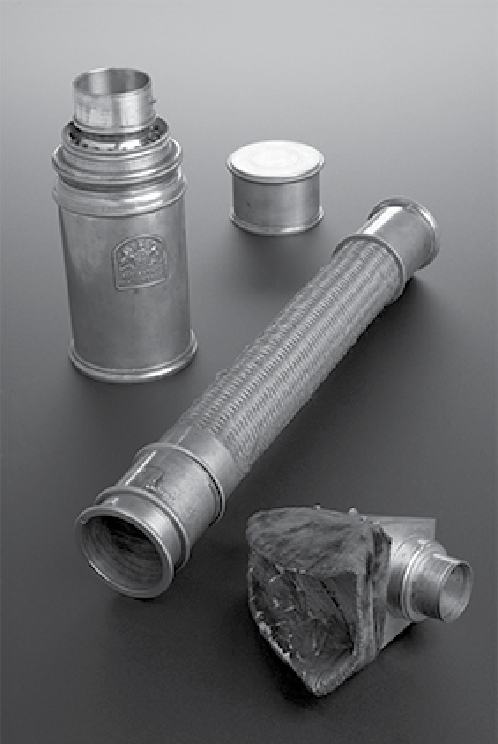
With doctors Sinclair, Menzies and Pollard in attendance, Munro amputated close up below Ewart’s shoulder. When Ewart came to, he found another piece of his arm gone and the wound “nicely bandaged up. He was then placed in a doolie and left to think, at leisure, about his loss. He found he was annoyed and full of “bitter sorrow” – being exceedingly fond of cricket, archery and billiards he realised he would most likely never play any of them again. Worryingly, he could still feel his fingers, even more so than when he had had them. It would be a sensation that would never leave him.
Adrian Hope was one of his first visitors, and he thoughtfully brought him his air cushion; Lieutenant-Colonel Gordon wrote to Ewart’s mother to tell her of her son’s loss – Ewart’s other arm was still injured, stiff from the sword cuts he had received at Lucknow. In his room were other wounded men, but only one, as Ewart listened to him groaning, appeared to be in fearful agony.
On the night of December 3rd, as the ladies prepared to leave Cawnpore for Allahabad, Ewart asked Munro if he could join them. He was, after all, a useless invalid, there was little point staying in Cawnpore. Munro, still smarting from his encounter with William Mansfield regarding the transportation of the wounded in open bullock carts, refused to let Ewart go. ” A soldier must, however, always obey orders, and I bowed to the opinion of my Surgeon,” but asked if he could be moved to a quieter room, somewhat further away from the rebel guns.
On the 5th of December Ewart was finally moved to a large house near the river and found himself in a ground floor room with his fellow officers of the 93rd – Captain Cornwall injured by a shot through the shoulder by a ball from a shrapnel shell, Lieutenants Goldsmith and S.E. Wood, both injured in the arm, Lieutenant Welch, shot through the body, Ensign Hay with an injured leg. There was Captain Munro of the 53rd, shot through the body, and an EICo officer named McCrea, his arm broken by a ball. As soon as he could, Sir Colin Campbell came to visit and promised Ewart he would send the Colours at the first chance to England – he hoped Ewart would rejoin the 93rd soon. Hope Grant soon looked in and stayed with Ewart for some time. Lieutenant Sterling of the 93rd soon joined them on the 6th, “…a particularly nice lad, who used to take the ladies’ parts in our Crimean theatricals, was also brought in on the 6th, with his right leg terribly smashed by a cannonball…Poor Sterling underwent amputation of the right thigh and seemed to suffer terribly from his wound, calling out constantly to be moved. In accordance with his wish, he was at last placed next to myself, but died a few days after the cannon shot struck him.” He died on the 12th of December.
Surgeon Munro had left Ewart, as he thought, in competent hands. He was unable to return to the hospital after the 6th, being sent with the regiment to complete the rout of the mutineers. After the action at Serai Ghat, he was ordered to proceed to Bithur.
As for Ewart, the first few days after the amputation, he was getting on well. His old servant, John Davidson and a young bandsman of the 93rd, William Macpherson took turns to watch him. The wound had taken on a “healthy appearance”, and Ewart hoped he would be up and about soon. However, one day, Davidson, as he sat next to Ewart, suddenly jumped up with a start. Ewart could not imagine what had happened, but when he looked at his left side, he found his wound was bleeding profusely through the bandage. Davidson ran off to find the doctor, who quickly stopped the bleeding. It would appear Ewart, who was still lying in his dhoolie, had probably knocked the stump. He was also plagued by flies and mosquitoes – as Macpherson had to return to duty, Ewart directed his Madrasi servant, who called himself Cheney, to employ a boy from town to fan off the flies which swarmed around him. As for his wound, following the bleed, it no longer looked healthy but had started to mortify. Ewart had contracted hospital gangrene.
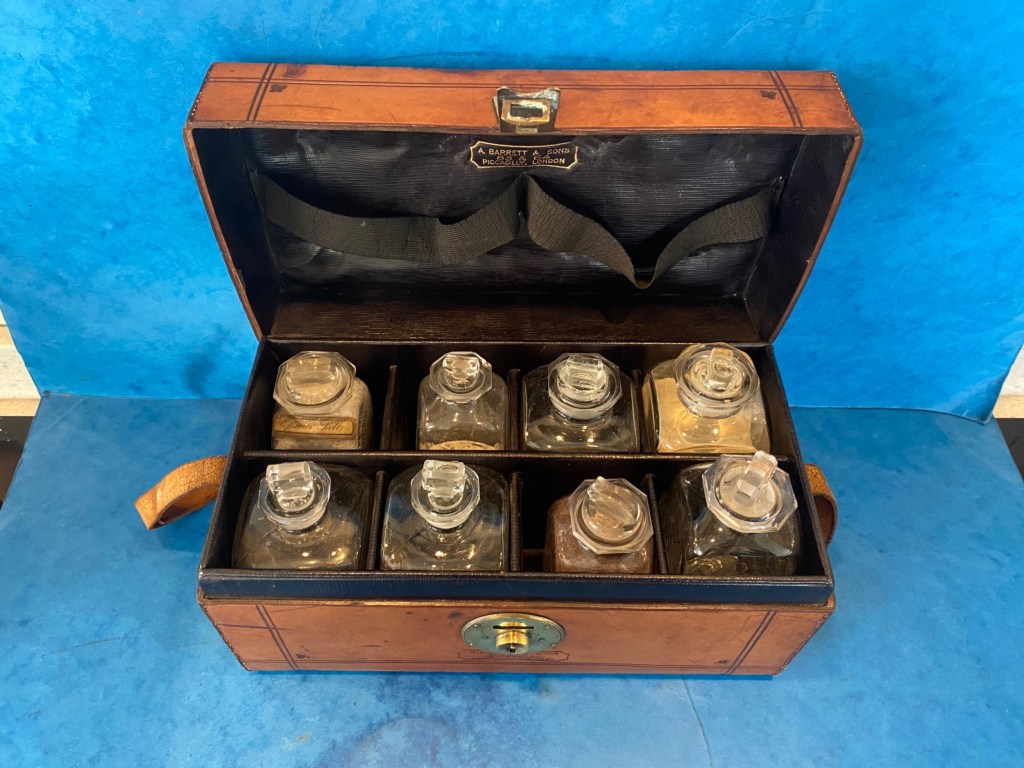
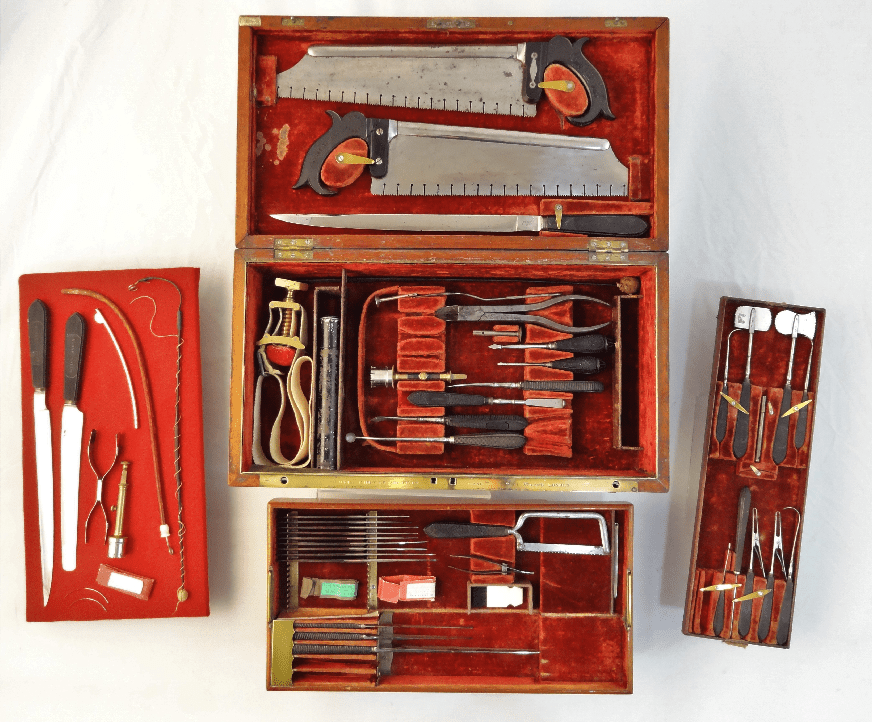
https://www.sellingantiques.co.uk/885868/victorian-military-leather-medicine-box
The Assistant Surgeon was called, and Ewart begged him to perform a further operation. Obstinantly, the man refused – he had “more work to attend to than he could possibly manage” and Ewart would just have to wait.
“Although the 93rd Highlanders possessed a Surgeon and three Assistant- Surgeons, they were all taken away with the regiment when it advanced from Cawnpore on the 6th December, and the wounded officers and men belonging to it and other regiments were handed over to a perfect stranger, an Assistant- Surgeon on the Staff, who was so overworked that it was quite out of his power to bestow the necessary care and attention the unfortunate sufferers entrusted to him.”
The gangrene, meanwhile, continued to spread. Ewart again asked the surgeon to take what was left of his arm out of the socket, but the doctor was too “knocked up” to be of any use, and Ewart believed, at this point, the doctor might well have killed him on the operating table, out of sheer exhaustion. The only thing he tried was to burn out the gangrene, causing Ewart immense pain and no relief. Desperate, in pain and quite convinced he was being left to die, a message was sent, most likely by one of the servants, to the surgeon of the 93rd.
The note Munro received at Bithur said Ewart was very ill; the messenger bluntly stated he was dying. Unable to proceed to Cawnpore that night, Munro started the next morning with Blake of the 93rd and Reverend Henderson – it was not prudent, even during the day to ride the 20 miles without an escort but Munro could not let a ” brother – officer die without making an effort to try to save him when I was so near.”
When Munro saw the wound, he was horrified.
“The stump, apparently, had not been dressed — at least, not properly dressed – since I left him. The ligatures were lying loose in the wound, though detached from the arteries, and the wound itself was looking unhealthy, the lower portion, or flap, being in a state of mortification. I at once removed the ligatures, carefully washed the wound, and applied necessary remedies to the gangrenous part. I then gave directions to the hospital attendant as to what further should be done, for I saw no medical officer, and desired him to say to whoever was in charge that, if possible, Colonel Ewart should be removed to some building where he would have fresh air and more comfort.”
After looking in on the other wounded men, Munro returned to Bithur but left an order, should Ewart need him, he was to be called at once. He arrived at Bithur in time to perform another operation – this time of Lieutenant Nightingale of the 93rd, whose right hand had been nearly blown to pieces. He had to amputate above the wrist. “Alarmed at the danger Ewart had run after he had been left at Cawnpore, I determined not to part with Nightingale until his wound should be healed and until I saw him walking about. Accordingly, to make certain that he should be cared for, I carried him with me wherever we went, kept him in one of my own tents, and watched and nursed him myself, and was glad I did so.”
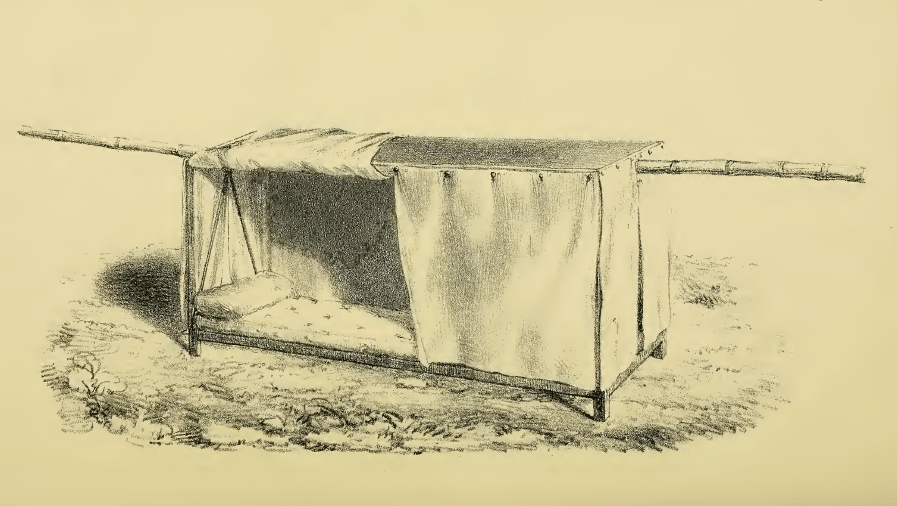
Ewart was moved to another room, but only after Brigadier Inglis, who happened to call in at the hospital, saw what a terrible state Ewart was in. He also directed his regimental surgeon, Doctor Boyd, to attend Ewart personally – there was little more anyone could do. The second room, however, proved to be hardly better. The flies were indeed worse and an officer, already in it, was seriously ill with dysentery. The windows were closed, leaving the air a putrid, stinking mess. It was hardly the atmosphere for a man in Ewart’s condition. However, kindness comes in many forms. On the 23rd of December, Captain Peel, having heard a report of Ewart’s state, wrote him a note:
“Camp near Cawnpore,
23rd December 1857.
My dear Colonel Ewart, -The march is resumed tomorrow, and I did not know it till late this evening. I am quite sorry not to see you again before leaving. The toilet vinegar that accompanies this, if it has the merit assigned, may possibly relieve your headache; and I should advocate the use of eau-de-Cologne with the liberality of a lady’s hand, in a building temporarily converted as a hospital. I trust, my dear Colonel Ewart, that God, in His mercy, may give you a speedy recovery.
“Yours very truly,
“(Signed) William Peel
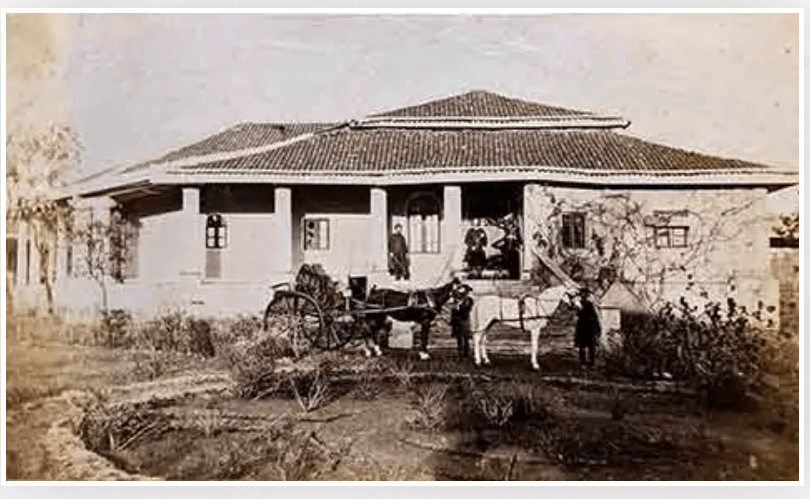
The note was accompanied by a large bottle of eau-de-Cologne and another of toilet vinegar, both of which proved a boon to Ewart. His saviour, however, proved to be Major Henry Aimé Ouvry of the 9th Lancers. Ouvry had been left behind, sick with “neuralgia”, persistent diarrhoea and rheumatism, made worse, he believed, by the attack of cholera he had suffered through during the Siege of Delhi. The medical board gave him 6 weeks of sick leave to remain at Cawnpore but was advised as soon as he could to proceed to England to regain his health. His only option, if he wanted to get well enough to travel, was to take as much distance as possible from the fetid conditions in the hospital. A tent was hardly an option so Ouvry requisitioned one of the abandoned bungalows, close to the burned-out church, for his own use. How he came to know of Ewart’s condition was a mystery, but the day after Munro left, Ouvry arrived at the hospital.
“Ewart, my dear fellow, you must leave this place. I have a house in the town; will you come and live with me?” I replied that I would willingly go anywhere if he could get me moved, and he immediately had an interview with the doctor. The latter offered no objection, being thankful, no doubt, to be rid of what he probably considered a hopeless case; and some native bearers having been procured, I was speedily transported, under Ouvry’s kind superintendence, to the above-mentioned bungalow, situated at a considerable distance from the hospital, and on the other side of the canal.”
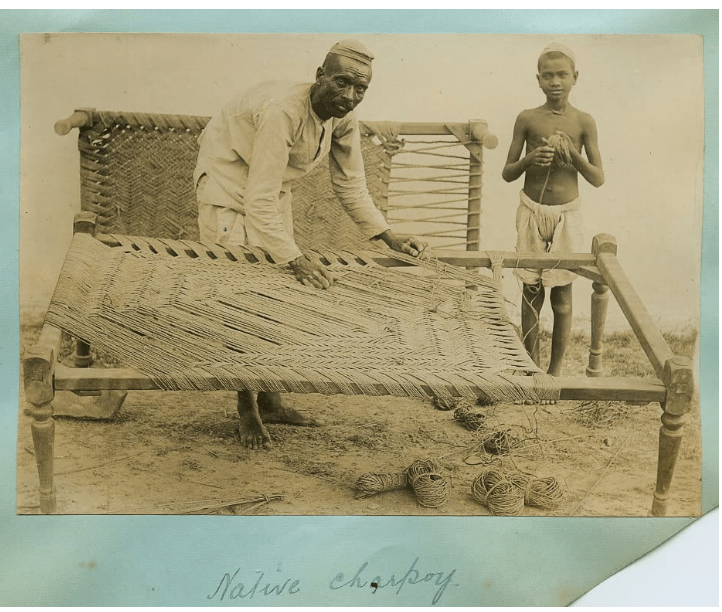
Ouvry organised a charpoy for Ewart to lie on and sent his servant to purchase a soft, cotton-stuffed mattress in town, freeing Ewart finally from the old doolie he had been obliged to lie in since the 1st of December and Christmas Day had just passed. Shortly after establishing Ewart in his new quarters, Ouvry sent for Dr Boyd. Ewart handed him Munro’s prescription. The doctor looked hardly optimistic but decided, for the sake of the patient, who he believed would die anyway, to try it. It was a tincture of nitric acid, possibly the last and only hope Munro saw, to stop the spread of the gangrene.
However, Ewart was doomed for more suffering. He was attacked with what Boyd called pleurodynia, or as it was described in Ewart’s time, an acute rheumatism of the body. The sharp, spasmodic pain, typically in the chest or the upper abdomen and accompanied by fever, would have made his life a misery. Wounded in both arms and his back suffering from bed sores, Ewart was in excruciating pain, and “hardly knew in what position to lie.” He noticed his legs hung like “two bits of string and all power to use them being gone.” His servants tried to prop him up as best they could, but the only relief Ewart found now was in liberal doses of opium.
Boyd prescribed quinine and other remedies to combat the pleurodynia. Ouvry stood by as a temporary nurse; his servants rarely left his side, and, with Munro’s nitric acid, Ewart started to mend. Slowly, his appetite returned, and finally, Boyd cleared Ewart to leave his bed.
The kindly major went off in search of a chair for Ewart and returned with an old buggy. He knocked off the wheels and rigged it up as an impromptu armchair with a comfortable seat. Ewart’s servant propped him up with a pillow and cushion and then went out to find fresh eggs and grapes. Thus, installed, Ewart could finally see where he was. Through the glass doors at one end of the room, he could see the tower of the church. He also noticed a house which appeared to be a hotel. His room, as such, was devoid of anything interesting, except his own bed and the buggy chair. It had a stone floor and was a plain, white-washed apartment with 6 glass doors – many of the panes were broken, but they had been mended by the servants with paper. He never saw Ouvry’s room.

Except for 200 men of the 32nd and four companies of the 38th, all the troops had long since left Cawnpore. In his helpless state, Ewart lay awake at night thinking of the horrible murders committed in the town and even believed the mutineers might return now that Sir Colin Campbell was gone. The natives of the town might rise up and murder him for “the sake of revenge or to get possession of my baggage.” In regard to Ouvry, Ewart believed the man must have possessed great pluck to take a house so far away from the entrenchment. Being the soldier he was, Ewart decided he would, if worse came to worst, sell his life dearly – he could still fight with his right arm, and he instructed his servant to place a loaded revolver by his side at night, but ” for some days I should have had hard work to fire it.”
 Mutiny Reflections