“Patrols have been sent forward to ascertain the truth of a rumour which had reached the Commander-in-Chief the previous evening, to the effect that the city had been evacuated, returned with confirmation of the report; but the new in other respects was far from satisfactory. Mansfield’s movement had caused the enemy to retire, but they had got away without loss, and had succeeded in carrying off all their guns; so that only one half of Tantia Tope’s force had really been dealt with; the other half still remained to be disposed of…” (Roberts)
Serai Ghat — December 8th-9th 1857
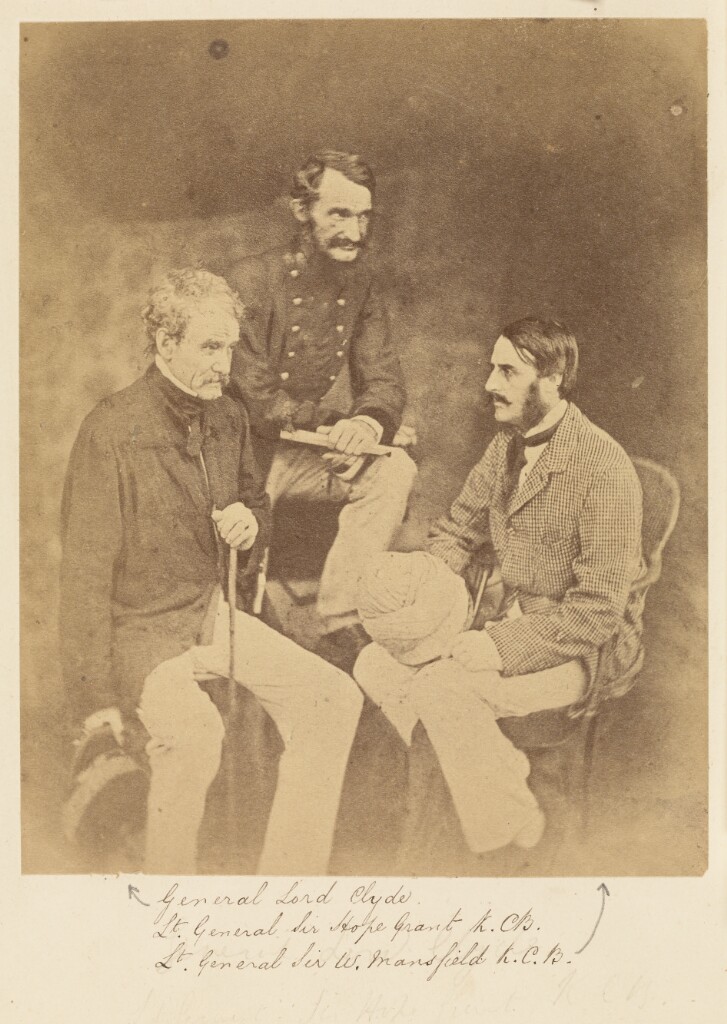
The left wing and the centre of Tope’s army had succeeded in making good their retreat up the Bithur Road. Giving his men one day’s rest, on the 8th of December, Sir Colin Campbell sent a body of troops towards Bithur. Leaving nothing to chance, Campbell chose Brigadier General James Hope Grant to lead them.
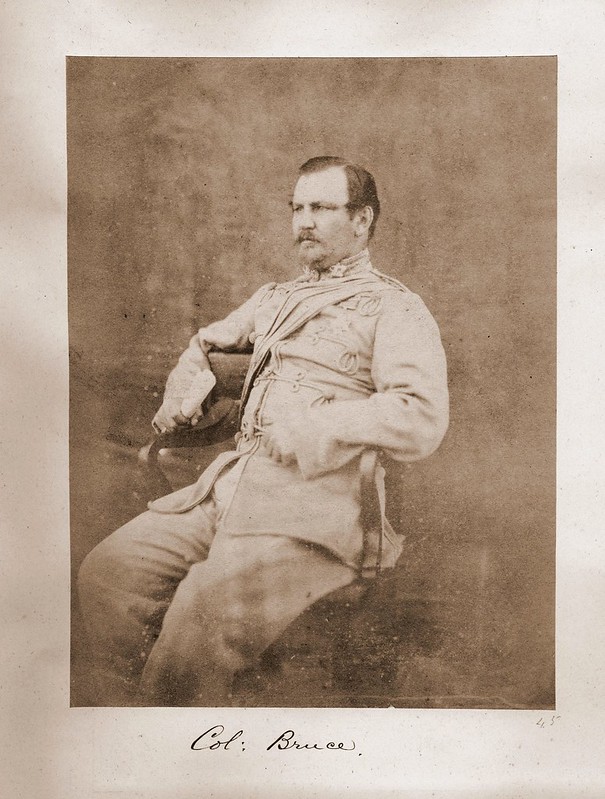
The information regarding the rebels’ movements, however, was hardly reliable. As such, Sir Colin Campbell entrusted Grant with discretionary powers — he could change his course if he could ascertain which road the rebels, with their guns, had taken. Lieutenant Roberts would ride with Grant, and it was imperative to know where the rebels were heading. As Quartermaster General on service, Robert applied to Captain Herbert Bruce (5th Punjab Cavalry) in charge of the Intelligence Department, if they had, by chance, a scout for him. Bruce selected none other than Unjur Tiwari.
Tiwari was a sepoy, formerly of the 1st Bengal Native Infantry, who had been in Banda at the time of the outbreak — he helped a European clerk and his wife escape to safety. When offered a gold ring for his services, the only reward they had, Tiwari refused. Determined to prove his regiment was not all made up of men with evil designs, Tiwari joined Sir Henry Havelock’s force and offered his services as a spy. His information was gathered with some of the worst outcomes for him personally; Tiwari was captured more than once and even tortured on one occasion when carrying a letter to Cawnpore for Sir James Outram. Tiwari managed to escape, and, the letter still successfully hidden, was delivered to Sir Colin Campbell. He now continued his endeavours, for Lieutenant Roberts.
From the 7th of December until April 1858, Tiwari would serve as Roberts’s informant, spy, and scout — a better man, he would have been hard-pressed to find. Explaining to Tiwari what he needed, the sepoy spy immediately started towards Bithur, promising Roberts he would meet him the next day, on the line of march.
At 1 o’clock in the afternoon on the 8th of December, Brigadier Hope Grant left Cawnpore with the 4th Brigade, consisting of the 42nd, the 53rd, the 93rd, the 4th Punjab Rifles, of Captain Middleton’s Field Battery, Captain Remington’s Troop Horse Artillery, 551 Cavalry; and 100 sappers, in all 2700 men of all arms. Grant insisted on questioning every man they found along the march — some gave him no information at all, others said that several guns had passed 2 days before; another claimed it was 5 brass guns and a 24-pounder, but as to where the rebels were heading, no one could, or would, say.
When they reached the junction in the road where it turns off to Bithur, to Roberts’ joy, Tiwari turned up. He said the Nana Sahib had slept at Bithur the night before, but had been warned of Grant’s approach. As such, he had made haste early that morning, with all his guns and most of his followers, and was now at a ferry some miles up the road trying to make his way into Oudh.
Prudently, Grant called a halt. The men had marched 13 miles (ca. 21 kilometres) in the hot sun without a short rest; it was now nearing dusk and there were still another 13 miles to march. With nothing to gain by arriving in the dark, the men were allowed to stop for food, and at midnight the march recommenced.
“It was a weary march, and it was the only occasion on which I ever attempted to sleep on horseback, but I was so completely done up that I made my syce lead the horse, and, twisting my greatcoat straps round my wrists, slept, or rather dozed, for a couple of hours, waking up every few minutes with a start, as I found myself slipping over to one side.” (Munro)
They reached Sheorajpur, three miles from the Serai Ghat ferry, shortly before dawn. Leaving everything behind here that was now unnecessary on the field — baggage, camp followers and other impedimenta — under a guard of 100 infantry, 2 guns and a squadron of cavalry, Grant now advanced with the rest to the ferry — he was proceeding, not on the direct route to the river, but by a cross-country road, to avoid any surprises. When within a mile of the ferry, Grant halted his men and galloped to the front to reconnoitre with a detachment of cavalry, consisting of Sikhs. Half a mile from the river, two Irregular cavalry soldiers, “sauntering quite leisurely towards us,” who had apparently mistaken Grant’s Sikh escort for their own people, hailed them. They were quickly disabused of their fraternity when they suddenly realised their mistake. The men turned and took off running, the Sikhs in pursuit. One was killed and the other, to his discomfort, was caught and questioned. Without much persuasion, he explained the rebels were indeed but a short way up by the ferry, but had by no means completed crossing. Grant pushed on. They soon caught sight of the rebels.
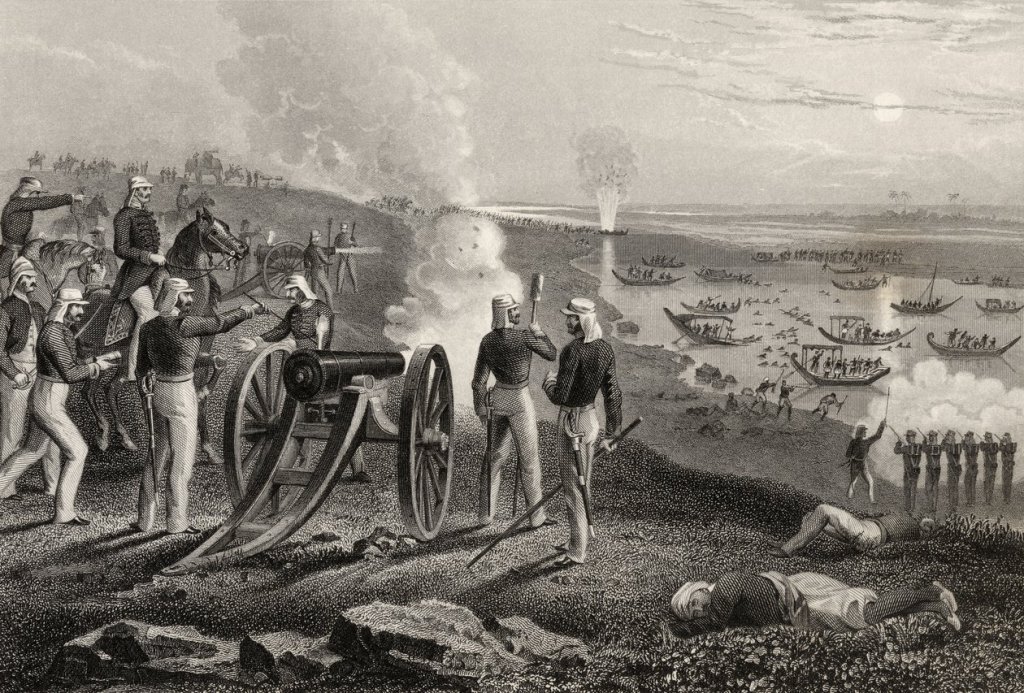
Crowds had collected on the riverbank, hurriedly loading the waiting boats — some guns had already been taken onboard, but none had yet crossed the river. Grant ordered his cavalry, guns, and infantry to come up with all haste. He had not reckoned however with the treacherously sandy ground, and the artillery soon found themselves stuck. They managed to struggle onwards to “sounder ground” and only when they were within 1000 yards of the ferry, did the rebels suddenly realise they were no longer alone.
“As soon as we came within 1000 yards of the enemy, a tremendous fire was opened upon us; but Lieutenant Warren, a fine young fellow, who commanded the leading guns, never stopped until within 500 or 600 yards of the rebels, when he opened fire on them. In a few minutes, Captain Middleton joined him with the remainder of the battery. Captain Remington now galloped up with his troop, and came into action in an excellent position behind a bank, at a range of 200 yards or less. This concentrated artillery-fire told with such terrible effect upon the enemy, crowded into a mass with their guns, bullocks, and baggage, that they gave way, and retreated as fast as possible along the river-bank, where it would have been difficult to have pursued, them in force, owing to the marshy state of the ground.”
The irregular cavalry overtook some men, cutting them down as they fled — others drowned in the river attempting, in their haste, to swim across. In all, the rebels lost all their guns, their baggage, and everything they possessed. Fifteen guns were taken and one 24-pounder, which was found yoked and up to its axles, stuck in the sand. On closer examination, it was found they belonged to the Gwalior Contingent, and they had left behind their very fine bullocks to draw them.
Hope Grant rested his men for the night and the next day, marched to Bithur.
Captain Jones, Royal Navy, Joins the Army
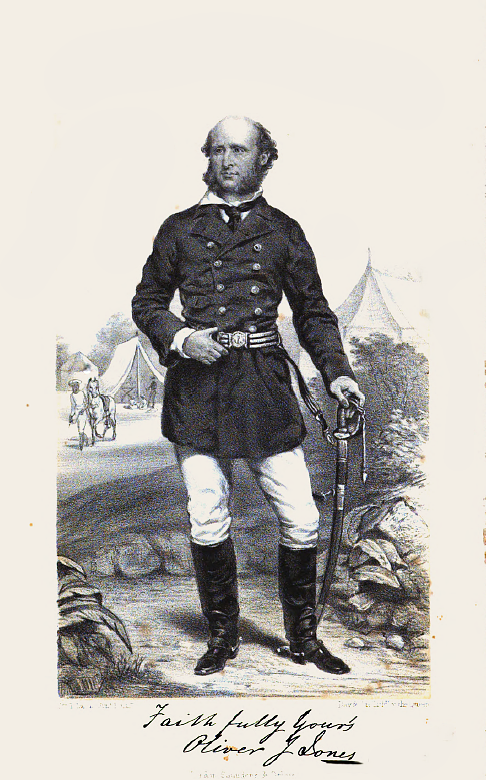
“We were all much astonished this morning to see a post-captain in top boots, spurs, and corduroys, come riding across the parade ground; he wore a full-dress sword, and a curious-looking sword, very much curved, and broad, with a wooden hilt, an undress frock-coat with the three stripes, and a number of shiny leather accoutrements hanging about him by marvellously contrived straps; there was a drinking flask, a revolver case, a present-use pouch, a reserve pouch, and a telescope case, all made of black shiny leather; his saddle was quite new and white, with white holsters and bags hanging from it, white bridle, and white reins; this all turned out to be Captain Oliver Jones, an officer on half-pay, come up here for a lark as he told me.” (Verney)
The news about India that reached Jones in England through the early months of 1857 had compelled him to tender his services, preferably to captain a ship and carry troops; failing that, he applied for any other duty -once again, Jones was denied. Frustrated in his attempts to join the vengeful army, Jones decided to “go on my own hook” and applied, at the Admiralty, for one year’s leave. What he would do in India when he arrived was anyone’s guess, even his own. Jones was left kicking up his heels in Calcutta — no one was particularly interested in employing quite so mercenary a man; his letters of introduction secured him an interview with Lord Canning who promised to do something for him, at some point, perhaps. Undeterred, the intrepid Captain Jones hired, the very next day, a post carriage through Messrs. Mackillop, Stewart, and Co., settled his financial matters, packed his bags and left. The ever-reassuring people of Calcutta thoughtfully informed Jones, his endeavour would undoubtedly fail; he would be “killed and eaten” as soon as he set foot outside the city’s borders. On the 20th of November, he fell in with detachments of Highlanders and Rifles at Raniganj, on their way to join the army. While waiting for the train, Jones fell into conversation with two officers, to whom he liberally complained of the problem of finding a servant who would travel upcountry with him. Helpfully, they sent him to take up the matter with the Commissariat.
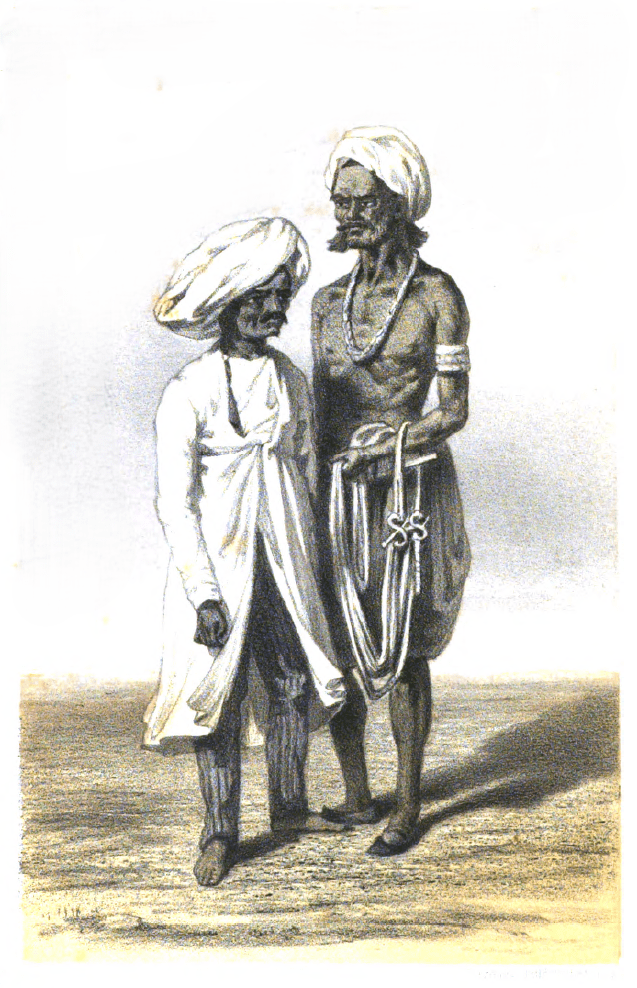
“Though it seemed curious that servants should be supplied on demand by the commissariat, like a cask of rum or a piece of beef, yet I jumped at the chance, and went to Captain Lowe and made my application. He told me that there were plenty, but that unfortunately they had all gone away for the night, and as I was starting within a couple of hours he was afraid he would not be able to get hold of one; however, he would try…My carriage was at the door, and I was just going to start, when up comes a little Madras man, and says, ” I Captain Jones’s servant,” and in the space of a minute Hydrabad Malayapen (or Malakoff, as he soon after was named, for shortness) was installed as my valet, butler, cook, interpreter, &c. & c., and all for the sum of twelve rupees per mensem, out of which he was to feed and clothe himself, besides sending nearly half of it home to his family.”
It was Jones’ luck to fall in on the road with Major English of the 53rd, coming up from the Ramghar District, who after a brief interview, offered Jones to join his detachment. He would, however, have to find a horse first, a near impossibility. Jones, as ever, was not a man to be thwarted by something so mundane as transportation. On English’s advice, he sought out Colonel Beecher – the very man in charge of buying up every single horse for the Government – and he obliged Jones with an Arab horse at a modest price, 14 hands’ high and just recently rejected for being too small for cavalry and too light for artillery. So with his “tolerably good-looking” horse, Jones joined the 53rd, with whom he would remain for the next 5 months.
As soon as he arrived in Allahabad, Jones sought out his naval “fellow creatures” who, under Lieutenant Wilson, had remained in the fort on garrison duty ever since Peel had left. The 250 sailors were anxious to see service and rejoin Captain Peel. They had heard of Windham’s near disaster at Cawnpore, a rumour was afloat that Campbell had rescued the Lucknow Garrison, but here they were, performing sentry duty in the confines of Allahabad Fort. On the 6th of December, however, they received their chance.
Captain Peel’s telegram to Lieutenant Wilson was clear and to the point – he was to proceed, with Mr. Verney, the band and 80 men to Cawnpore, and leave as soon as they received his order. With just three hours’s notice, the naval brigade was packed and ready to leave with the one thought, uppermost “in each mind, namely, the desire to follow him.” For the old petty officers and young seamen left behind it was a sore blow and many “gave way to floods of tears” as the brigade marched out of the fort.
The railhead at Chhemie gave the sailors their first sight of war – with the ladies of Lucknow travelled two of their own, Lieutenants Salmon and Hay, both wounded and expected to carry on to Allahabad by carriage. There was something so abominable, seeing the wounded laying on increasingly dirty straw on the backs of bullock carts, Jones surreptitiously smuggled the men into the train for Allahabad with the help of the conductor. Both men would return to duty, fighting fit sooner than others who would be left, for another 4 days travelling by bullock cart.
The long wait – 2 days – at the station soon came to an end and late on the afternoon of the 7th of December, they marched 8 miles to join Colonel Barker (Royal Artillery) and his column on the road and another 16 miles brought them to Fatehpur. No one knew quite what to do – the town was, all things considered, destroyed but peaceful. They were now waiting for Brigadier Carthew to make his appearance with his detachment of Madras troops to take command of Fatehpur. Jones, still enthusiastic about his new-found life, found the tedium of the wait was relieved by a round of socialising. He met old colleagues of the Madras Infantry, from his days at Moulmein (Burma, when Jones was aboard HMS Pilot), and another whose brother happened to be his neighbour back home. “On going up to breakfast at their mess, I found that I knew all the old hands, and we mutually congratulated ourselves upon meeting again in so unlikely a place as 600 miles above Calcutta for a Madras regiment and a sailor.” War, at least as Jones saw it, was a delightful way to catch up with old acquaintances. For Lieutenant Wilson, the halt at Fatehpur showed him just how eager his men were to fight – four sailors had smuggled themselves in his detachment and until roll call on the 9th of December, had remained undetected, in the hope William Peel would approve of their zeal – they would, for their pains, remain behind at Fatehpur and at the next opportunity be sent back to Allahabad.
However, not all was well. The town’s collector, George Probyn was increasingly skittish, and no wonder; he had spent months hiding in the villages of Hardeo Baksh, sailed down the Ganges in September with his family to Cawnpore in a venture that had every reason to fail, and instead of a little rest, Probyn was sent back to work. Sir Colin Campbell had already admonished him once following Kadjwa, that “General” Probyn was to keep his nose out of military business but Probyn continued to see rebels with every turn. He had put himself in contact with Colonel Barker as soon as he arrived, and it was proposed “after mature consideration,” that the southern and south-eastern portions of the district needed, in the terms of the day, “settling.” A letter from Sir Colin Campbell entreated Barker to maintain the peace around Fatehpur – as more troops and supplies were increasingly passing through the town on their way to Cawnpore, it was of upmost importance to ensure the road remained not just clear of rebels, but safe from beligerents and thieves.
Fatehpur District, December 11th
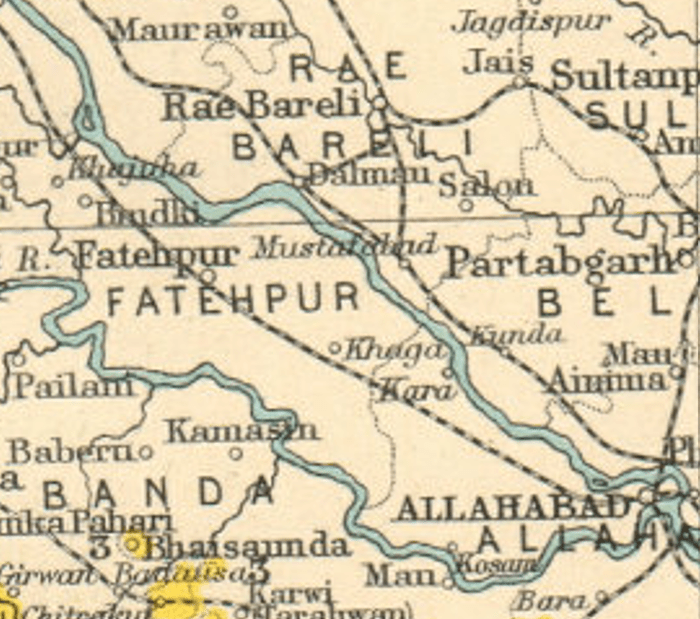
On the 11th of December, Colonel Barker, accompanied by Mr. Probyn and detachments of all arms, including cavalry and the Naval Brigade, marched back up the Grand Trunk Road to Khaga, which they reached the next morning. At midnight, they started again for Koth, a large village on a cliff overlooking the Jumna River which, according to his informants, was the rendezvous for mutineers and “turbulent characters” of the district. However, due to some misunderstanding, part of the infantry did not move off until some time after the regiment and the artillery were already some way off; they then took the wrong road in the dark and continued to flounder on their way until 10 in the morning, when they finally found Colonel Barker only a few miles out of Kharga. After giving the lost detachment a few hours of rest, he resumed the march.
On the way they “visited” a village called Kirtrairm that Barker had been informed was full of disaffected inhabitants who had armed themselves, driven away the police and plundered the tehsildar. They then engaged, as was often found in these lawless times, in terrorising their better-disposed neighbours with sundry raids against their person and livestock. As Barker approached the village, a volley of matchlock fire greeted him from the walls and a few men ran out of the village, brandishing arms. Their attack was, however, a much-misguided effort and quickly turned into an attempt to escape – three were shot outright and after a short skirmish, several were caught and brought before Mr. Probyn. Probyn acted with some restraint – he only hanged one man. The display, however, was enough to convince the cowed villagers that perhaps scuffles with their neighbours were not the best proceedings – Probyn swiftly established his Indian officials back in the tehsil and the march continued.
To Barker’s disgust, the road to Koth was hardly what he had expected. It went from disagreeable to difficult, intersected by nullahs. Some of these watercourses were merely dry ditches, others proved less agreeable for swift passage being deeper and still full of water while one was still positively a river. It was not wide but the banks were considerably steeper than expected, causing a hassling delay and worries for the artillery. Colonel Barker was by now positively grouchy – he had planned to attack Koth, a supposed hotbed of mutineers by surprise. With all the racket his army column was making, however, there was little chance of that – from a safe distance, a body of rebel cavalry watched Barker’s proceedings with some interest; as soon the last gun was forced across, they vanished. As for the rest of the sepoys, if there ever were any in Koth, they were long gone before Barker arrived – at 4pm he found an empty village. To be safe, he sent out a “cloud of skirmishers” but there was no opposition. The villagers, the sepoys, their belongings and all could be seen in full flight, some in large boats, others swimming, crossing the river.A few shots were fired at them but to no avail – English and some of the 53rd rushed down to the river bank but only managed to kill a few men who they took to be mutinous sepoys.
The column rested again for the night and Barker resumed his operations the next morning. He sent out parties of men in each direction along the riverbank to destroy any boats they could find and bring in anyone who had not been wise enough to affect his escape – in this they were more successful and several men were brought in to Probyn for questioning. He made a thorough search of the village and found a “considerable quantity of European wearing apparel” intermingled with the uniforms of the 3rd & 6th Light Cavalry. He then burned the village to the ground before moving off in the afternoon.
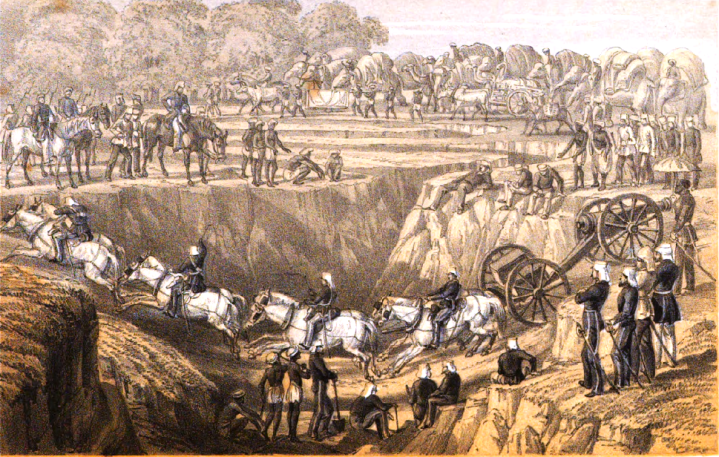
The next village to fall to the flames was Gurha Narewahi, which was supposedly disaffected but what their crimes were exactly, Barker fails to mention. Once again, the ground proved difficult to cross and one particular nullah was so deep the banks of it needed to be broken down and a road constructed for the cavalry.
As for Jones, he did not find this particular “fire and sword” display much to his liking. Nor indeed were his servants. Malakoff had done his best to keep the increasingly terrified coolies in line but after Koth, fear rightfully got the better of them and they threw Jones’ belongings to the ground, refusing the move another inch. When Malakoff’s entreaties failed, Jones’ threats, while brandishing a large wooden stick convinced them otherwise – they hastily took up their loads and carried them to the end of the march all the way to Fatehpur.
However, Barker was not quite finished with settling the district. He burned down a village called Ranek, another called Rari and then on the 16th of December, extended his operations to both sides of the river, to take the villages of “Sukundur and Laton” both of which, he was convinced were “notorious for harbouring mutineers and budmashes, who were continually plundering and murdering the inhabitants of neighbouring villages.” Jones accompanied one of the detachments, to another, called Lehundah. Here the inhabitants had had enough time to flee in their boats to the other side of the river before the British were on them. It was ugly work.
“On returning by a different route I came across a poor wretch with his face half shot off, and his family
wailing around him; indeed I was attracted by their cries, and I stayed by them till all the stragglers had
passed, to save them from further injury. Close to me, in a cleft in the earth, crouched like hares in their forms, a very old couple was discovered by the soldiers, but who left them alone on my begging them to do so. It is sad work shooting and killing these miserable peasants, while the more active rascals who have committed the atrocities to escape, but such is always a servile war, and such its stern necessities. After burning the village we resumed our march, and rejoined the column.”
The next morning they continued their march back to Fatehpur by a “circuitous route to exhibit, as much as possible, the troops to the inhabitants of the district, and visiting one or two other villages.” (Barker) It was undoubtedly a relief for the populace that Barker had to limit his operations to six days otherwise, there would hardly have been a village left on either side of the river between Fatehpur and Khaga. For Probyn, it was a resounding success – within days, the revenues, which had been but reluctantly coming in suddenly appeared to fill his treasury. Supplies were readily brought forward by any petty landowner still left alive in the district and he was able to re-establish his police force . As for rebels, Barker could only account for the small number they actually did find by the fact that his march was hardly a secret – after the first village was burned to the ground, everyone who had had any sense had fled in his wake. In the end, all he had done, to further the cause, was terrorise every single villager he came across and make their lives just more miserable.
On the road back they met a detachment of artillery and Madras sepoys, under Brigadier Carthew – on the 19th he officially took charge of Fatehpur and Barker moved onto Cawnpore. It would be left to Carthew now to continue the settling of Fatehpur District.
At Bithur 10th-23rd December
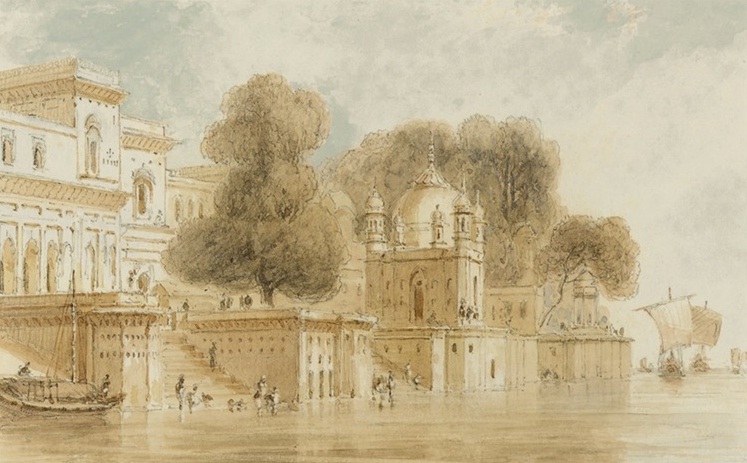
“The next day saw us at the Nana’s palace of Bithoor, where we fondly hoped to line our pockets with loot and plunder; but, alas ! our hopes were frustrated by the escape of the Nana, who got warning of our approach and fled with all his treasure…The furniture and fittings of the palace were speedily ransacked, broken up, and burnt by the soldiers.” (Gough)
The whole purpose of Brigadier Hope Grant of going to Bithur was to effectively destroy it and while they were about it, find the fabled treasure it was said the Nana had left behind. The men took their vengence by destroying the Nana’s temple and burning his palace to the ground. Before they struck the match however, Lieutenant Roberts gave the place a good work over and found in the quarters of Azimullah Khan a number of letters. Khan was by far the most trusted of the Nana’s advisors and for reasons of his own, harboured a particular hatred for the British.
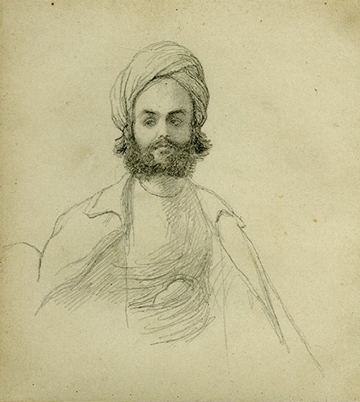
During the 1837-28 famine, the young boy Azimullah with his mother,stumbed, half-starved into the Christian mission at Cawnpore.
They were but two amongst hundreds but there was something about the boy and his mother that must have struck Reverend Carshore. No one could say where they had come from but it was surmised eventually, his father was most likely a Pathan in the service of the English as a servant. Andrew Ward believes it likely that Azimullah already spoke some English and could very well have brought a letter of introduction with him; whichever case it was, Carshore took special care of both. He employed his mother into his service and the young Azimullah was sent to school. While his mother worked as an ayah for the Reverend Perkins and his wife, her son attended Perkins’ school and within three years, this astonishingly gifted boy was fluent in not just English but had mastered French. However, no matter how many hours and years he spent with this particular breed of Englishman, he could never be convinced to embrace their religion and he remained quite untouched by Christianity and over the years the disdain for their faith turned into hatred. He had most likely been on the receiving end of some of the more aggressive attempts at conversion and had undoubtedly seen disagreeable scenes between the English and their servants, convincing him even further that this barbaric race had most likely very little of his best interests in mind. His boyhood friendship with the Perkins’s son became an impossibility when the boys matured and Azimullah would forever be the servant to the sahib. When he outgrew the school Azimullah was employed as a kitmutgar – a table servant with the duties of a butler, empowered to keep the other servants in line. Although he met with considerable kindness from some of his employers an English-speaking servant was hardly in their best interest. A man who could understand everything they were saying could hardly, in their eyes be trustworthy.
Brigadier Scott – whose wife was so taken by the handsome young man, that she taught him to play the piano – decided the talents of Azimullah were made for better things than serving soup. He employed him as a munshi or private translator and defacto secretary. Through Scott, Azimullah reacquainted himself with the sons of Baji Rao Pasha, namely the Nana Sahib (to whom Azimullah attempted to teach English). When Scott left, leaving glowing letters of reference for his trusted munshi, it would appear, however, that his next employer, Brigadier Ashburnham, was far less enamoured with Azimullah. He fired him on charges of “bribery and corruption.” It left the door open for Azimullah to set up his new quarters in Nana Sahib’s court, where he quickly took over a new role, as his advisor on all things English all the while whispering those little home truths that would eventually come back and bite the British in the back. In 1853, his influence had grown to such an extent in the court, that the Nana Sahib sent him to England with a retinue to plead his case with the Board of Control or with anyone he came across, for that matter, for the restoration of his adoptive father’s pension. The mission would eventually, after 2 years, be declared an expensive failure, but it was not without its benefits. While in England, he was taken under the protective wing of Lucie, Lady Duff-Gordon – he lived in her home and socialised in the upper echelons of salon society. Young ladies fell for his charms, they gushed over his fine costumes and flattered themselves to number in their acquaintances, a genuine Indian prince, as Azimullah styled himself. One of these ladies believed herself to be Azimullah’s fiancée, another patronised him as her Eastern son. It was their letters that Lieutenant Roberts found in Azimullah’s quarters and they made for rather disturbing reading. The correspondence appears to have made the rounds in the camp – Lieutenant Gough was privy to them, as were other officers, each quite astonished in their turn as to how foolish English women really were. Yet the letters which worried Roberts more were Azimullah’s correspondence with the French at Chandernagore, somewhat closer to home. Azimullah had tried but failed to convince the French, right up to April 1857, to assist him and the Nana in their coming war against the English; the French on their part, had contrived to appease him with words of support – that it came to nothing, it was believed, had much to do with the inherent inability of the French to keep their promises. In light of what happened at Cawnpore, it was hardly likely the French would have been quite so foolish as to throw themselves in the lion’s mouth no matter how much they would have enjoyed bashing the British.
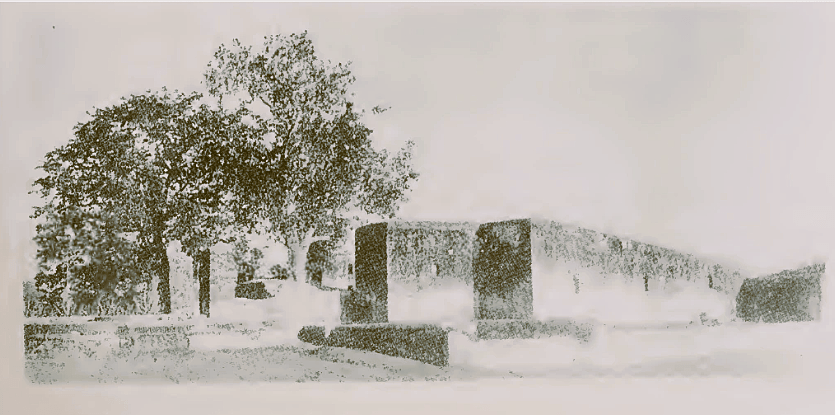
With his customary grumbling, Lieutenant Alexander had little to say about Bithur, the British camp or anything commendable. A few salient points, however, can be taken from his narrative – their camping ground, nicely settled by the ghats had to be moved when an elephant, captured at Serai Ghat, believed to have been poisoned at Bithur, suddenly died. The poor animal was too large to move and indeed impossible to bury – according to Alexander, some 300 men tried, for several days to cover it in dirt, but to no avail. For their part, the sappers would need repeated attempts to bring down the walls of all “the best buildings in Bithur” resorting finally to simply blowing them up.
After several days of fruitless searching, the British at Bithur managed to find some of the legendary treasure but it consisted of far less than they had anticipated. In a deep well under 42 feet of water, they emptied with much difficulty until it was only 2 feet deep. The “volunteer parties of the 53rd, 42nd and 93rd “supplied these working parties, and the Bengal sappers supplied the men who worked in the
water down the well, the latter required to be relieved every hour. At first, all four skins (or buckets) had to be kept going for a whole day and night before any impression could be made on the quantity of water in the well; then the sappers thought they had come to the bottom of it, but discovered that they had only reached some waterlogged beams of very heavy wood such as teak. Two buckets were then stopped, and the huge and exceedingly heavy beams were run up one by one with great difficulty out of the well.” (Alexander)
The wood was discarded, and underneath were 2 pewter pots but empty. However, slowly the well began to give up its treasure – gold and silver plate which Hope Grant believed were of considerable antiquity and the “State howdah of the ex-Peshwa” was dragged to the surface as “…were some curious gurrahs or pots, lamps which seemed of Jewish manufacture, and spoons of a barbaric weight.” The sappers brought up several ammunition boxes, tightly sealed, which contained bundles of state rupees and gold coins but this was hardly the mountains of treasure they had been expecting. If the Nana had in fact left behind his entire horde, it was beyond the means of the British to find it. After 10 days, the town would be considered well and truly looted. How far their actions had tested the Indians however, Lieutenant Nightingale would soon find out.
Returning from a day of shooting (birds and wildlife for a change) with Lieutenant Grieg, Nightingale gave his gun to his servant to carry. The man “by some means or for some reason” cocked the gun and in handing it back to Nightingale, held it out with the muzzle pointed at the lieutenant’s head, at the same time, touching the trigger. Nightingale reacted by throwing his hand up to save his head when the gun discharged, mangling his hand beyond description. Grieg’s first instinct was to shoot the servant, but Nightingale shouted through his pain to leave off. No one could ever ascertain if it was an accident or by design, but considering the veritable insults the British had dished out in Bithur, the volatile nature of Cawnpore and the destruction of the Nana’s temple, it must have occurred to the more astute, it was wiser to let the matter drop. Munro amputated what was left of Nightingale’s hand and called it an unfortunate incident.
“I think that a cause of the mutiny may be that in every British mind in India contempt for the natives is deeply rooted. When a kindness is done to a native by an Englishman, it is often accompanied by a contemptuous thought which appears only too clearly in the countenance; the terms in which I have heard even clergymen and others, who would desire to do good to the Hindoos, speak of them, convinces me that this is the case; it must be most trying to a people who consider us as outcasts.” (Verney)
As 1857 drew to a close, the rise of a vengeful army would begin, carrying Lieutenant Alexander, Captain Oliver Jones and Mr. Verney with it; it would also bring it under the close scrutiny of one William Howard Russell, the erstwhile correspondent for the Times. On the 23rd of December, Sir Colin Campbell would finally take the war into the Central Doab to Fatehgarh and a new chapter of the mutiny would begin.
Sources:
Bulletins and Despatches for the Year 1858. Part 1. London: Harrison and Sons, 1859.
Burgoyne, Roderick Hamilton, comp. and ed. Historical Records of the 93rd Sutherland Highlanders. London: Richard Bentley and Son, 1873. (Note: While officially published in 1883, this reflects the 1873 draft edition noted in your record).
Forbes, Archibald. Colin Campbell, Lord Clyde. London: Macmillan and Co., 1895.
Forrest, G. W. A History of the Indian Mutiny: Reviewed and Illustrated from Original Documents. Vol. 2. Edinburgh: William Blackwood and Sons, 1904.
Gordon-Alexander, William. Recollections of a Highland Subaltern: During the Campaigns of the 93rd Highlanders in India, under Colin Campbell, Lord Clyde, in 1857, 1858 and 1859. London: Edward Arnold, 1898.
Gough, Hugh. Old Memories. Edinburgh: William Blackwood and Sons, 1897.
Grant, Hope. Incidents in the Sepoy War, 1857-58: Compiled from the Private Journals of General Sir Hope Grant. Edited by Henry Knollys. Edinburgh: William Blackwood and Sons, 1873.
Jarman, F. “Azimullah Khan—A Reappraisal of One of the Major Figures of the Revolt of 1857.” South Asia: Journal of South Asian Studies 31, no. 3 (December 2008): 419–44. https://doi.org/10.1080/00856400802441912.
Jones, Oliver J. Recollections of a Winter’s Campaign in India: In 1857–58. London: Saunders, Otley, and Co., 1859.
Mackay, James [Rev. John]. From London to Lucknow: With Memoranda of Mutinies, Marches, Flights, Fights, and Forays. 2 vols. London: James Nisbet & Co., 1860.
Malleson, G. B. History of the Indian Mutiny, 1857–1858, Commencing from the Close of the Second Volume of Sir John Kaye’s History of the Sepoy War. Vol. 2. London: Wm. H. Allen & Co., 1879.
Munro, William. Reminiscences of Military Service with the 93rd Sutherland Highlanders. London: Hurst and Blackett, 1883.
Roberts, Frederick Sleigh. Forty-One Years in India: From Subaltern to Commander-in-Chief. Vol. 1. London: Richard Bentley & Son, 1897.
Verney, Edmund Hope. The Shannon’s Brigade in India: Being some Account of Sir William Peel’s Naval Brigade in the Indian Campaign of 1857-1858. London: Saunders, Otley, and Co., 1862.
Ward, Andrew. Our Bones Are Scattered: The Cawnpore Massacres and the Indian Mutiny of 1857. New York: Henry Holt and Co., 1996.
 Mutiny Reflections