Taking the Ridge
As it was, progress was the order of the day. Besides driving the rebels back, the British had captured twelve guns, all of the ammunition and their stores. With Badli-ki-Serai cleared of rebels, the whole force continued its advance until it reached a high, open plain on the Karnal side of the canal. Here, a halt was called.
It was thereupon determined to advance across the canal through cantonments and take the heights above them. The Royal Rifles moved to the left and broke into skirmishing order, advancing onwards to the canal, which was, at this season of the year, fordable. Crossing the canal and advancing up the rocky face of the hill, round shot and grape came pouring in very thickly. On crowning the heights and descending the other side, the Rifles advanced a short way, when the colonel of the regiment caused his bugles to sound, “Left shoulders forward.” This was one of the most effective movements of the day, as it completely outflanked the enemy on the heights. At the same time, Captain Money’s troop guns opened fire from the road crowning the heights, on the left side of the Flag Staff Tower. The guns on the heights were now captured at the charge…After the general engagement of the day, the enemy made a contemptible effort to retake the guns on the heights, but our men very soon repulsed the attack.”
Rising 60 feet above the city, the Ridge covered the main line of communication with the Punjab which was essentially the lifeline of the British in Delhi. To the left ran the Jamuna River, then unfordable due to the high volume of meltwater from the Himalayas and by the onset of the monsoon rains. The river was also sufficiently wide enough to prevent the enemy from engaging in any meaningful bombardment; however the immediate right of the position of the numerous bazaars, buildings and garden- walls would provide the mutineers with enough cover to launch attacks but the ground itself was too difficult to allow to make any deliberate advances consisting of jungle, forest, rocks and scrub brush. Thus protected from attacks to their flank or rear, the British would further be covered by the Najafgarh jhil or swamp which during the rainy season simply turned vast areas of land into a lake. The Ridge ran for one and a half miles, abruptly ending at the Sabzi Mandi and then continuing away towards the southwest. The East Jumna Canal and the Grant Trunk Road to the Punjab entered the city at this point, while “this ridge formed the front of our position, and covered our camp, which was pitched with its left resting on the river, and protected thereby, but its right rested on the Subzee Mandi Suburb, which thus became the key of our position, as by it alone could our flank be turned, and our communications with the Punjab threatened.”
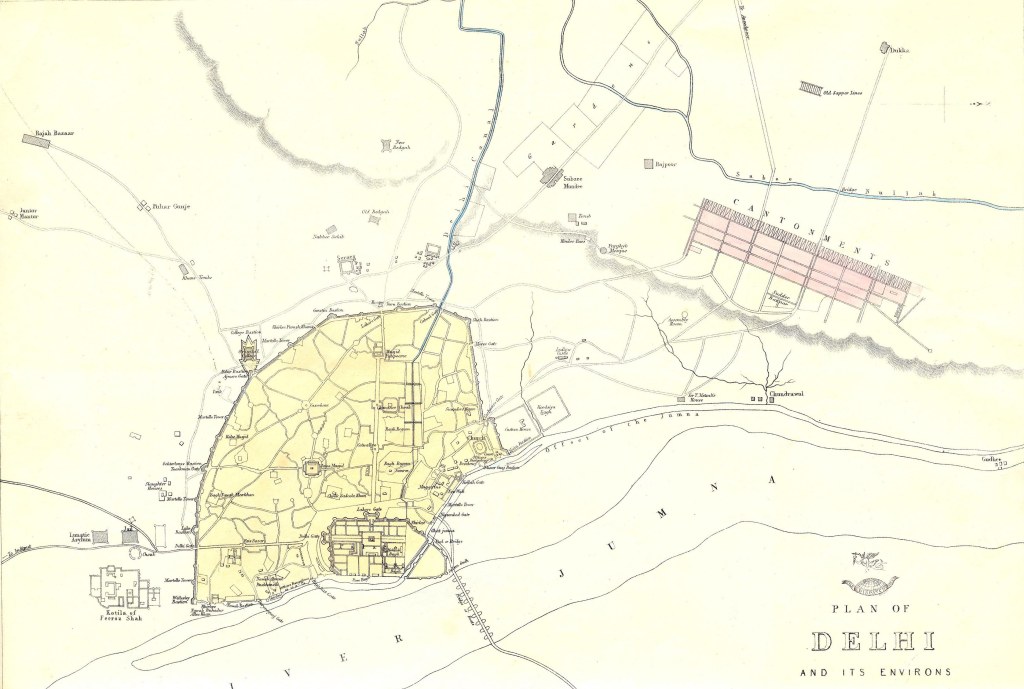
The side of the city facing the Ridge had several points of note, namely on the right, and close to the river, the Water Bastion, on the left and nearly opposite to the point where the Ridge ended at Sabzi Mandi, stood the Moree Bastion. Between the two points was the Kashmiri Bastion, while again to the left, the Lahore Gate, which was untenable by the British guns. As this was the main gate of the city and sheltered by two areas occupied by the rebels – Paharipore and Kishanganj- the rebels could enter and leave the city unhindered. They used this to obvious advantage, sallying out from the Sabzi Mandi to attack the British flank.
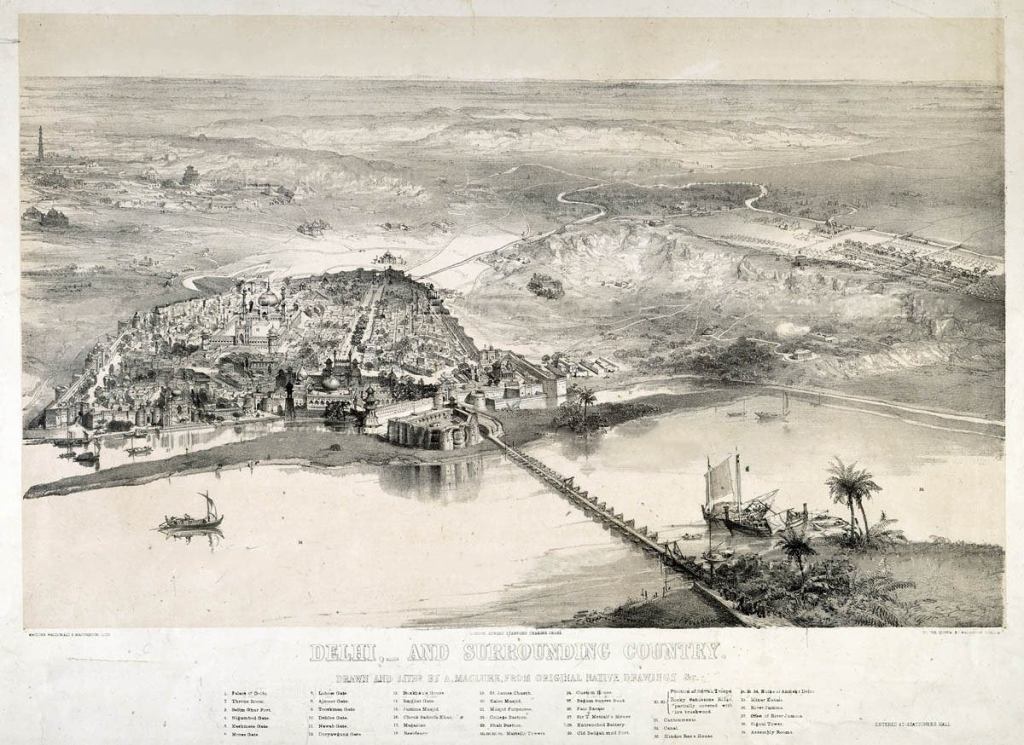
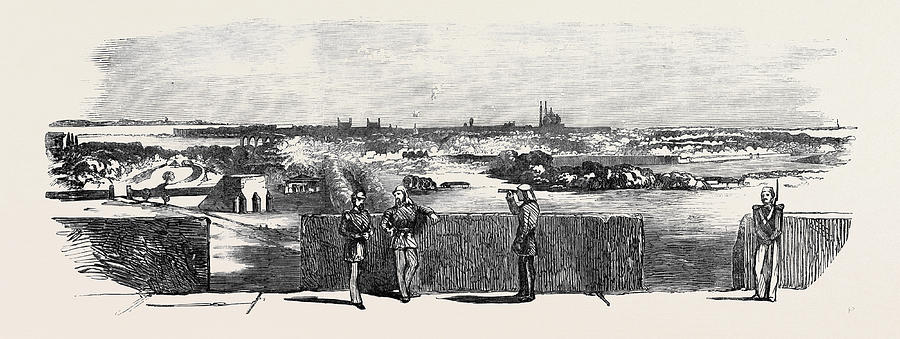
The distance of the Ridge to the city walls varied distinctly. On the right, it stood only some 1200 yards from the walls, but from the Flagstaff tower the distance increased to a mile and a half, while still further along, at the end near the river, it measured nearly two and a half miles. This, of course, made the left side reasonably safe and, being behind the Ridge, an ideal location for the main part of the camp. Above all, it commanded an excellent view of the city of Delhi – a better position could not have been wished for.
General Barnard divided his force into two separate columns – the column under his command took its way across the plain. “Crossing the half-ruined bridge over the canal, our force was fired down upon by some guns which had stopped beside the Flagstaff Tower, but their balls were ill-directed, breaking down the tombstones in the churchyard to the right. The parade ground, with the blackened shells of the officers’ bungalows, now came into view. A little above were the sepoy’s huts. Captain Money’s troop then wheeled to the right of the Flagstaff. The firing was admirable. The enemy fled after a few shots, leaving three guns behind them, and disappeared down the covered road which led to the city…”
The other column, under General Archdale Wilson, led an attack through the suburbs of Sabzi-Mandi. The area was quiet and deserted, and no one stopped the advancing soldiers from setting the houses on fire. The spirit of vengeance was still very much alive. From the Kabul Gate, the column then turned left, skirting towards the Ridge. No sooner had they been seen from the city walls than the firing commenced, the round shot whizzing and whirring around their heads. “They pushed hastily under the shelter of the walls and gates of a large stone building called Hindoo Rao’s House, where they met with the victorious column of Sir Henry Barnard and the Ghoorkas, who had ascended the front of the hill. The enemy had taken the range of the house, and the justness of their aim was surprising. A gun limber was blown up, and the clothes of a young officer of artillery caught fire; he was most cruelly burned.”

The rebels were driven from the Ridge by the two columns, thus allowing General Bernard not only to take the old cantonments as his camp but also to occupy the best position possible for operations against the city itself. He now had not only the Flagstaff Tower, but Hindu Rao’s House and a mosque midway between the two points; on the right flank was a mound that commanded the Sabzi Mandi suburb, while to the rear of the Ridge was a canal.
After the initial shock of the British attack had worn off, the rebels tried to retake the Ridge; in the afternoon, they opened a heavy cannonade on the position and attacked the right flank, attempting to take the camp. The attack was repulsed, and they lost one gun for their effort. As it was clear it would take a little more to disperse the British, they retreated back to the city, and contented themselves for the rest of the night with sending shot and shell towards the Ridge.
 Mutiny Reflections