Captain Robert Hope Moncrieff Aitken, 13th Regiment, Bengal Native Infantry
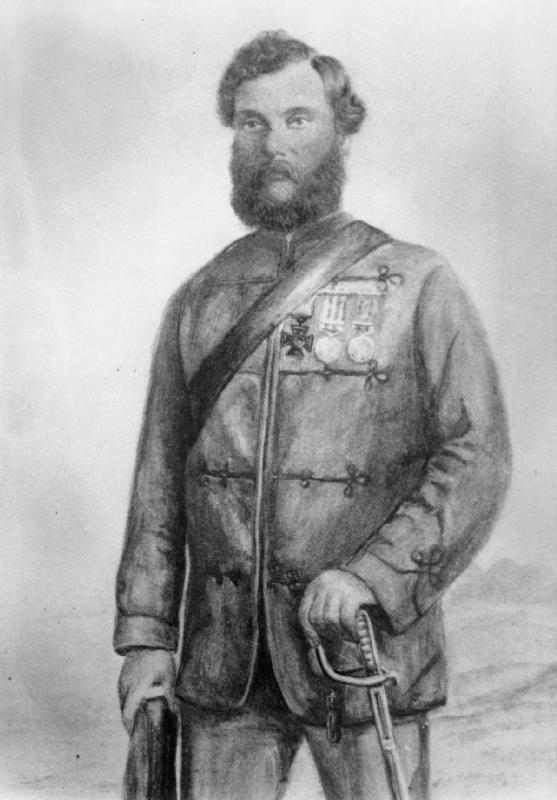
“For various acts of gallantry performed during the defence of the Residency of Lucknow, from the 30th of June to the 22nd of November, 1857.
1. On three different occasions, Lieutenant Aitken went into the garden under the enemy’s loopholes in the “Captain’s Bazaar”. On two of these occasions, he brought out a number of bullocks which had been left in the garden;— subsequently, on the 3rd of July, the enemy having set fire to the Bhoosa Stock in the garden, and it being apprehended that the fire would reach the Powder Magazine which had been left there, Lieutenant Aitken, accompanied by other Officers, went into the garden, and cut down all the tents which might have communicated the fire to the powder. This was done, close to the enemy’s loopholes. Under a bright light from the flames, it was a most dangerous service.
2. On the night of the 20 August, the Enemy, having set fire to the Baillie Guard Gate, Lieutenant Aitken was the first man in the gateway, and, assisted by some sepoys and a water-carrier of his Regiment, he partially opened the gate under a-heavy, fire of musketry, and, having removed the burning wood and straw, saved the gate.
3. On the evening of the 25 September, this Officer led on twelve sepoys of his Regiment, for the purpose of attacking two guns opposite the gate referred to, in order to prevent their being turned-on the late Major-General Havelock’s second column. Having captured them, he attacked and took the Teree Kotee, with a small force.
4. On the morning of 26 September, with a small party of his Regiment, he assaulted and captured the barricaded gateway of the Furreed Buksh Palace, and the Palace itself. On this occasion, he sprang up against a small wicket gate on the right and prevented the enemy from shutting it, until, with assistance, it was forced open, and the assaulting party were thus enabled to rush in. The complete success of the attack was solely owing to this Officer’s distinguished bravery.
5. In a subsequent sortie on 29 September, Lieutenant Aitken volunteered to take a gun which still continued firing, taking with him four soldiers through the houses and lanes to the gun. The enemy fired on this party from the houses, but they held their ground, until a stronger party coming up, the gun was upset from its carriage, and taken into the Residency. Another gun was subsequently taken. (No. 22727, The London Gazette of 17 April 1863, p. 2070)
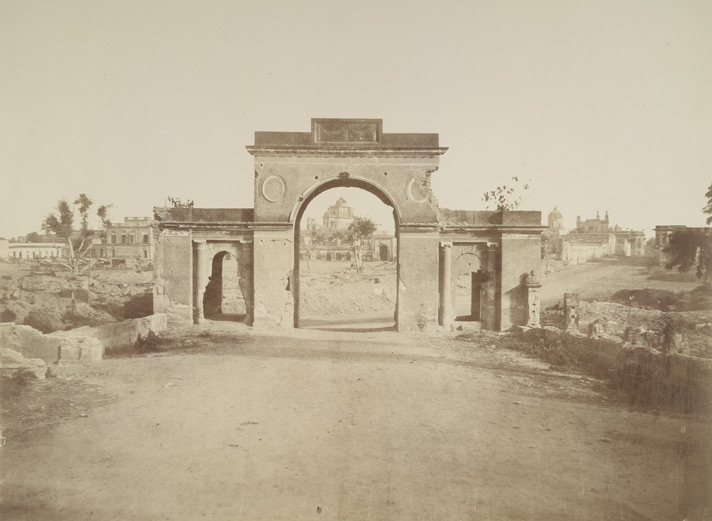
For all his gallantry, Aitken features little in the literature of the Siege of Lucknow. Everyone was aware of him, and obviously, he made sure he was everywhere but of his post the Bailey Guard Gate, hardly anything is said. Rees, Gubbins, Wilson and Joyce make fleeting mention of Aitken and fortunately, his VC citation is detailed enough without requiring much more enhancement. Whether there was still a latent prejudice against the men of the 13th NI that so gallantly fought at the Bailey Guard is a matter for discussion however Brigadier Inglis certainly was not painted with that brush, as his report shows.
“With respect to the native troops, I am of the opinion that their loyalty has never been surpassed. They were indifferently fed and worse housed. They were exposed— especially the 13th Regiment — under the gallant Lieutenant Aitken, to a most galling fire of round shot and musketry which materially decreased their numbers. They were so near the enemy that conversation could be carried on between them; and every effort, persuasion, promise, and threat was alternately resorted to, in vain, to seduce them from their allegiance to the handful of Europeans, who, in all probability, would have been sacrificed by their desertion. All the troops behaved nobly, and the names of those men of the native force who have particularly distinguished themselves, have been laid before Major-General Sir James Outram, G-.C.B., who has promised to promote them.”
However another possibility exists, and that is the very position of the Bailey Guard Gateway. During the siege, it was a most exposed position, and thus extremely dangerous to access. Rees appears never to have visited it, and unless someone had business there, it was a position to avoid at all costs. Besides being shadowed by snipers seated in the nearby clock tower, the rebels practically lived next to the men of the post. There was little Aitken could do to prevent this but he had one weapon the rebels did not – his men believed in him and he in turn, trusted them implicitly. If loyalty meant anything during the Siege of Lucknow, it was personified by the men of the 13th at the Bailey Guard Gate.
The dangers of his position were rapidly becoming clear when towards the end of of August, the rebels took to firing from a “very heavy piece of ordnance” possibly a 32-pounder, which they had managed to get into position at the Clock Tower, barely 100 yards distant from the Bailey Guard Gate. After several round shot had passed clean through the gates and destroyed 2 ammunition wagons with which they were barricaded, Aitken, assisted only by the men of the 13th and supported by the engineers, began to construct a sunken battery. The objective was to position an 18-pounder between the Treasury and the Bailey Guard Gate and supported by a 24-pounder howitzer. Before the month was up, the battery was completed, and the men of the 13th, after some initial assistance from three artillerymen, manned and worked the gun themselves, “with very good effect.” On the 5th of September, when a general assault began against most of the posts in the Residency, Aitken, with his new battery, quickly silenced the Clock Tower Battery, and much to the irritation of the rebels, he managed to tear down a portion of their defences.
For every trick of the rebels, Aitken had a reply. Just like the new battery, he answered their attempt to burn down the gate on the 20th of August with a rather simple solution. After a small body of insurgents had crept up to the gate and piled up wood and straw against it before setting alight, quite so under Aitken’s nose. Unperturbed, Aitken forced the gate open and then under a heavy fire, stood in the light of the flames, conducting the bheesties in their efforts to put out the flames. How the rebels managed to not shoot Aitken is a miracle and he managed to have the fire put out before any serious damage was done to the wooden structure. Then, without missing a moment, he ordered the walls flanking the gate to be loopholed, in case the rebels decided to try this trick again. They never did.
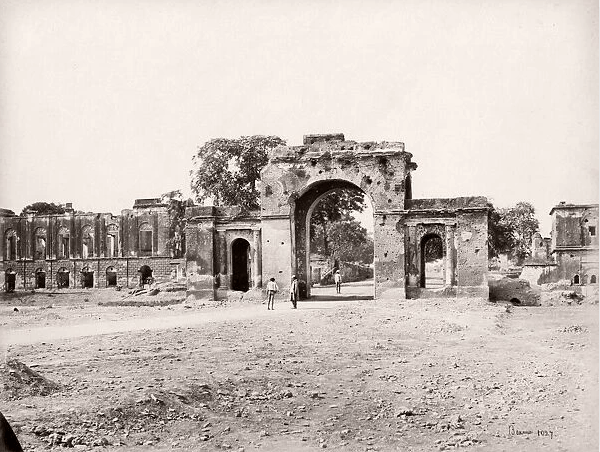
On the evening of the 25th of September, Aitken led out a party of his men, armed with pick axes and shovels to level a rebel battery outside the Bailey Guard Gate, which could have seriously hindered the advance of the oncoming troops. Aitken had heard their approach above the din of battle. Unfortunately, the 78th Highlanders, in the growing dusk, could not tell friend from foe and indeed, did not expect the men clearing the road could be anything but rebels. They attacked Aitken’s men.
The sepoys made no resistance as the Highlanders bore down on them with bayonets; they wounded three and one of them said, in the vernacular, as he fell, ” Never mind, it is fated. Victory to the Bailey Guard!” The others lay on the ground crying out, “Aitken sahib! Aitken sahib!” Hearing the commotion, Aitken threw himself between the Highlanders and his men, shouting most furiously, “For God’s sake, don’t harm these poor fellows! They have saved all our lives!” The Highlanders grounded their arms before any of the men were seriously injured – only three were wounded but none mortally.
Ultimately, Aitken’s VC belonged as much to him as it did to the men of the 13th NI. Without them, he would not have held the Bailey Guard, occupied the Tehri Kothi, taken the Farhat Baksh Palace or performed the deeds which led to his citation. However, it must also be mentioned that Aitken would be mentioned by Inglis in despatches 10 times – a feat almost as singular as winning a VC and perhaps a sign of a very brave man. Aitken was after all not alone at the Residency – his wife was with him and living in the relative safety of Ommanney’s House. Aitken had her life to fight for too.
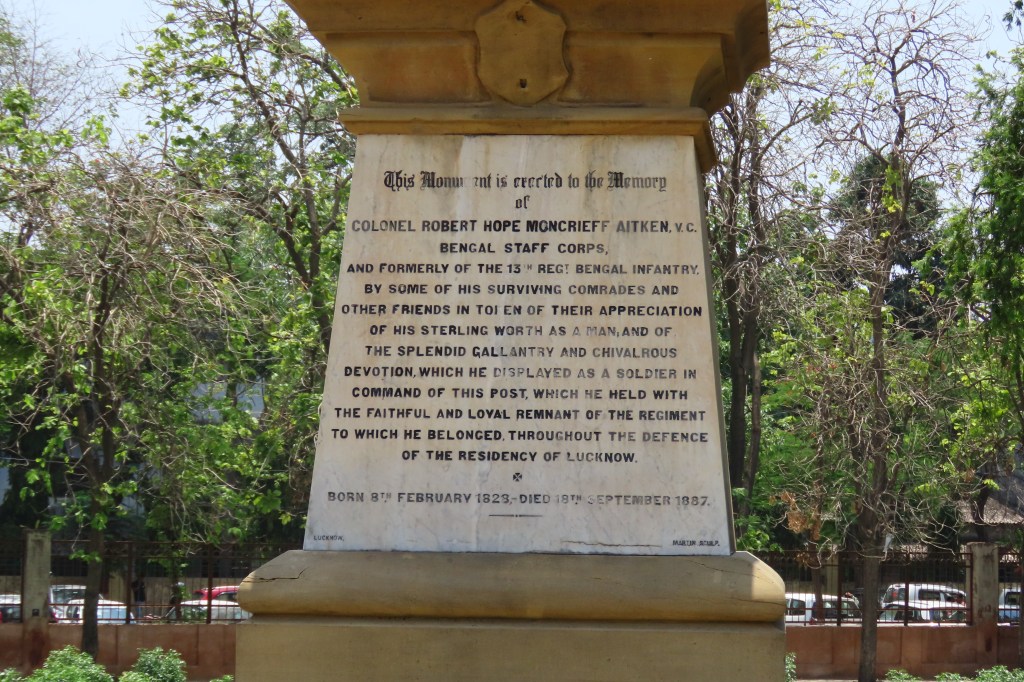
However, there was more than personal loyalty towards Aitken. The 13th NI were essentially, his family.
Born in 1826, the son of J. JAitken of Cupar, Fife, Scotland, Robert went to India in 1847 and entered the EICo’s army as an ensign in the 13th Regiment of the Bengal Native Infantry. He served through the Punjab Campaign, was present at Ramnagar, at the passage of the Chenab, at Gujerat and with the column, under Major-General Gilbert that chased the Sikh and Afghan army. The campaign won for Aitken a campaign medal and clasp.
He then served with the 13th in the Santhal Rebellion of 1855 and finally, as their lieutenant, brought his regiment through the Siege of Lucknow. Although they mutinied in part in 1857, it was one of the few regiments to save their colours and these were brought into the Residency. Here they remained until they were carried to Cawnpore after the final relief by Sir Colin Campbell. They were the only regiment to have saved their colours – those of the 48th were found in Cawnpore as late as 1906 in a very dilapidated condition but there is no evidence they were present at the siege. Those of the 71st Regiment would embarrassingly be captured by the 93rd Highlanders in November at the Secundrabagh. Perhaps the presence of the Colours at the Bailey Guard had the motivational effect the men so sorely needed, in the presence of such a formidable foe.
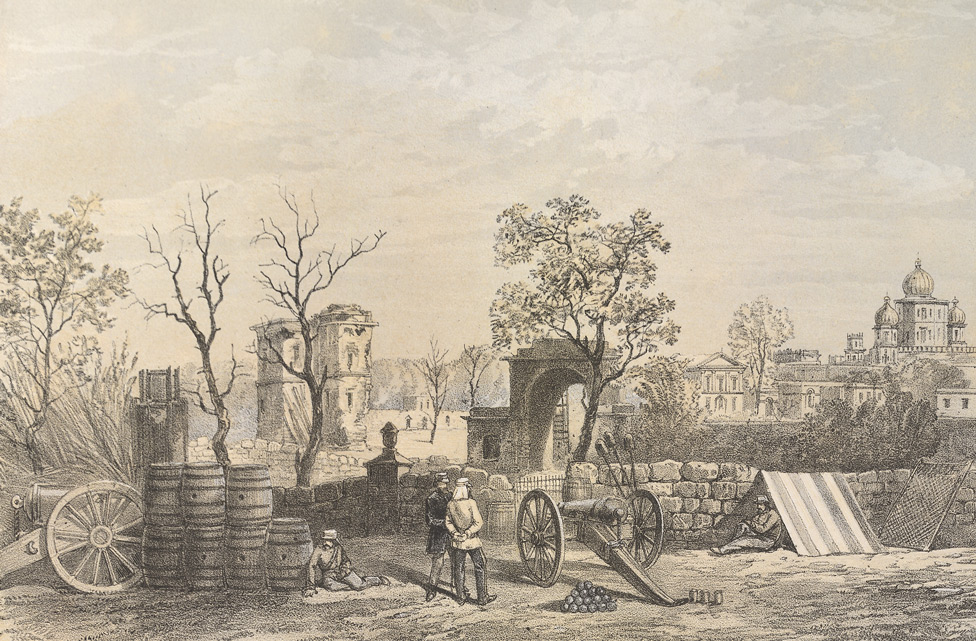
As for his VC, Aitken would not receive the medal itself until 1865. It should have been an honourable affair, carried out as it was at the Lucknow Residency and at the Bailey Guard itself. Aitken was by now a major in the 13th Regiment and the ceremony was much for him as for his men. Shortly before the general parade commenced, at which the Commander-in-Chief, Sir Hugh Rose was to present the medal, someone noticed the VC itself was missing. A flustered ADC suggested it had been left behind at Simla at which a frantic hunt was instituted to find another VC holder at the ceremony who might, perchance be willing to part with his medal for a moment, so it could be presented to Aitken. Unfortunately, of the 181 other VCs, not a single one was in Lucknow in May 1865. After Sir Hugh had calmed down enough to actually speak, he suggested Colonel Stewart lend Rose his CB as at a distance, the assembled company and troops would not be able to tell the difference. The parade went ahead following Rose’s suggestion, but at the ball that followed, Aitken had to wear a painted leather imitation VC.
As it turned out, the VC was not in Simla, it had in fact been lost and the War Office, of all things, billed Aitken for the replacement. However, as it could be proved the medal had been lost before Aitken even had a chance to wear it, the War Office rescinded their bill. The original medal did eventually show up in 1900 at an auction having been curiously bought in Simla in 1874. The War Office intervened with haste and the medal was surrendered as legal property of the Crown. Where it had been in the meantime, no one asked. As for Colonel Aitken, he never received the original medal – he died suddenly at the age of 61 at his home in St, Andrews, Scotland, in 1887, just six years after retiring.
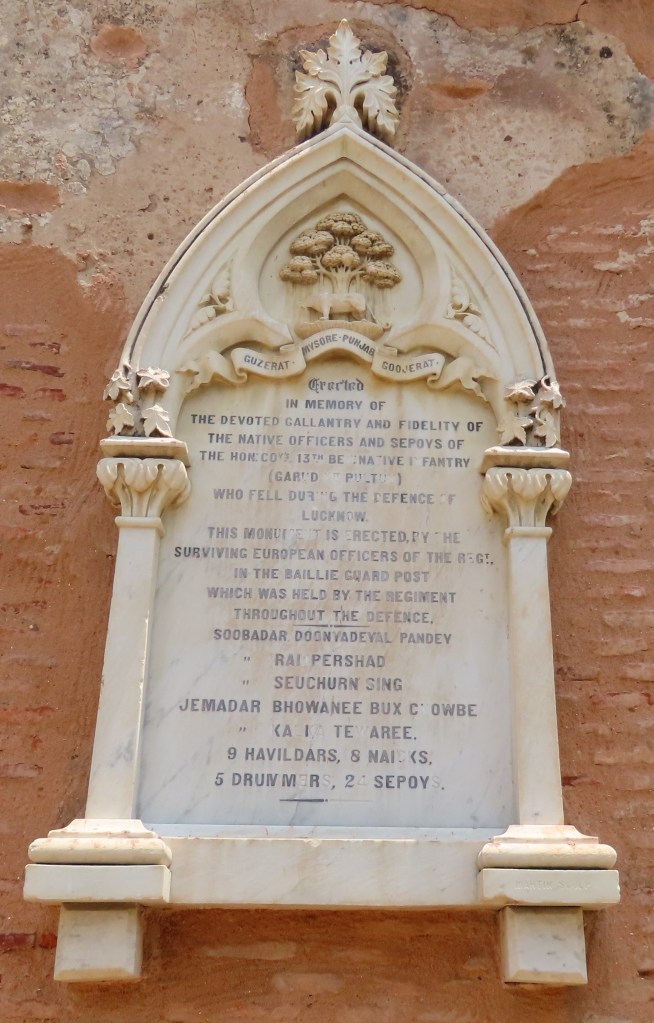
These are by far not the only VCs to be awarded to men at Lucknow, except Lucknow Kavanagh, who already has a whole post dedicated to him, but there would be no others rewarded to the men of the original garrison. In the first 87 days of the siege, these men represented everything noble and brave at the Residency and perhaps, because there are so few of them, their exploits can be better appreciated. As such, their VCs speak for the whole Lucknow Residency – the few who remain a voice in history for the many.
Sources:
Anderson, R. P. A Personal Journal of the Siege of Lucknow. Edited by T. C. Anderson. London: W. Thacker & Co., 1858.
Best, Brian. The Victoria Crosses That Saved an Empire: The Story of the Mutiny VCs. Barnsley: Frontline Books, 2016.
Bullock, H. “Colours—Indian Army: Bengal Native Infantry.” Journal of the Society for Army Historical Research 8, no. 34 (October 1929): 258–61. https://www.jstor.org/stable/44232297.
Gubbins, Martin Richard. An Account of the Mutinies in Oudh, and of the Siege of the Lucknow Residency. London: Richard Bentley, 1858.
Inglis, Julia Selina. The Siege of Lucknow: A Diary. London: James R. Osgood, McIlvaine & Co., 1892.
Innes, J. J. McLeod. Lucknow and Oude in the Mutiny: A Narrative and a Study. London: Innes & Co., 1895.
Joyce, Michael. Ordeal at Lucknow: The Defence of the Residency. London: John Murray, 1938.
Ruutz-Rees, Leopold Edward. A Personal Narrative of the Siege of Lucknow: From Its Commencement to Its Relief by Sir Colin Campbell. London: Longman, Brown, Green, Longmans, & Roberts, 1858.
Links:
https://vcgca.org/
https://www.nam.ac.uk/
https://www.memorialstovalour.co.uk/
https://victoriacrossonline.co.uk/
https://www.thebluejackets.co.uk/
 Mutiny Reflections
Engrossing read, thanks.
LikeLiked by 1 person