Captain Henry Gore-Browne, 32nd Regiment of Foot
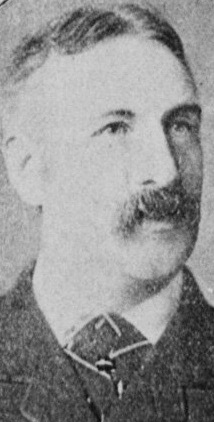
During the 87 days of the first siege of Lucknow, the garrison faced nearly constant bombardment from the guns outside their position and a galling fire from musketry, mostly directed from positions they could not reach but were frustratingly close to the parameter. One of these was Johannes House, formerly the home a merchant, Johannes. It was one of the houses Mr Gubbins had recommended blowing up well before the siege began, but Sir Henry had thought it imprudent to blast houses to pieces while Lucknow was still calm, for fear of terrorising the inhabitants of the city; after Chinhat, it was too late to begin any such extensive operations and the opportunity would be lost. Their mistake was a boon to the rebels. They quickly occupied the positions outside the walls, quickly loopholed the walls, set up batteries and started irritating the Residency, without pause.
On the 21st of August, after a failed attempt on the 7th of July to dislodge the rebels from Johannes House, another was planned and carried out, with a modicum of success. During the month, a mine was constructed, running from the compound and ending under Johannes House, while at the same time, two parties advanced from the Residency. One of these captured Johannes’ shop which adjoined the house, and the other party, led by Captain Gore-Browne, captured the nearby battery and with it, two guns. Unfortunately, the touchholes were so large that one could only be spiked most haphazardly and the other not at all. It scarcely took the rebels four hours to repair the damage and bring the guns back into service against the Residency.
“For conspicuous bravery in having, on the 21st of August, 1857, during the Siege of the Lucknow Residency, gallantly led a Sortie at great personal risk, for the purpose of spiking two heavy guns, which were doing considerable damage to the defences. It appears from the statements of the non-commissioned officers and men who accompanied Captain Browne on the occasion, that he was the first person who entered the Battery, which consisted of the two guns in question, protected by high palisades, the embrasures being closed with sliding shutters. On reaching the Battery, Captain Browne removed the shutters and jumped into the Battery. The result was, that the guns were spiked, and it is supposed that about one hundred of the enemy were killed.” (No. 22636, The London Gazette, 20 June 1862, p. 31)
Of course, nothing at Lucknow was quite that simple and a staff officer (T.F. Wilson) could not help adding a positive ring to the whole affair.
“At daybreak, all was well-prepared and ready for the blowing-up of our mine, and the simultaneous sortie of fifty Europeans under Captain McCabe and Lieutenant Browne (divided into two parties) for the purpose of spiking the enemy’s guns which fired into the mess house, and in order to hold Johannes’ House while the engineer officer blew it up. Precisely at 5 p.m. the mine, containing 400lbs of powder, was sprung, and as soon as the dust and smoke had in a measure subsided, the party ran out, drove the enemy (who were taken by surprise and made but a show of resistance) from their guns (two) and spiked them both and retained possession of Johannes’ House while the engineers made arrangements for blowing it up. These were soon completed, and the party withdrawn. A slow match was applied and the house laid in ruins. Our losses were one of the 84th killed, one sergeant (84th) dangerously wounded, one slightly wounded and a sergeant of the artillery killed. The operation was entirely successful and rid us of a house from which the enemy had, from the commencement of the siege, annoyed us greatly.” (T.F. Wilson)
In the confusion which followed the explosion, a detachment of 50 Europeans had filed out into the street, where they split into 2 parties. The first under Browne advanced the nearest battery where to his surprise, he found one of the artillerymen still asleep on his gun. Browne, who was the first to reach the battery, tried to shoot the man with his revolver but the gun misfired, the man woke up and ran off. As for the second party, under Captains Fulton and McCabe, they reached the shop behind Johannes’ House and found the door shut. The two officers, with their backs to the against the door and their feet on the veranda wall, heaved against the door until the frame broke and Fulton fell in, head of heels, to find himself tumbling into an eight-foot trench. McCabe and the others burst through the door after him, and as soon as the house was cleared, they brought in two barrels of powder. Fulton ordered the rest of the party back to the entrenchment and was about the light the hose when a cry went up there was still a wounded man in the lane. Fulton waited just long enough for the man to be carried back through the sally port before he fired the train and left the building, “happy to the last out and first in.”
This however leaves the question why did Gore-Browne win a VC when there were so many other men in the same sortie who would have deserved it?
It finally came down to a question of perspective.
Browne was the first man to enter the battery, which was protected by high palisades, with the embrasures closed off with sliding shutters. On his own, he had pulled open the shutters and leapt into the battery, where he found a napping gun crew. Four other officers certified that Browne had been the first to reach the battery and as such, it was enough to secure him a VC for which he was nominated by men of his regiment. Browne would subsequently be injured in three sorties, all ordered by Sir James Outram, which had Brigadier Inglis furious at the way Outram deliberately misused the men of the 32nd. Browne was slightly wounded on the 1st of October and again on the 8th of November, and barely recovered, he led another sortie on the 11th of November, which resulted in a serious wound in his leg. As he would survive the siege, Browne would wear his VC.
Born in Newtown, County Roscommon, Ireland, Henry George Gore-Browne was the son of Arthur Brown,, Esquire, and Anna Elizabeth Clements, the daughter of Captain Clements. He also happened to be the great-grandson of the 1st Earl of Altamont, MP and the great-grandson of the Right Honorable Arthur Browne, MP, of Leixip Castle in whose arms Wolfe had died at Quebec. Browne was educated at Trinity College in Dublin and only joined the 32nd Regiment of Foot at the late age of 25; he was commissioned into the regiment in 1855 and sent off to India. In 1856, he was promoted to lieutenant and barely 8 months later, to captain.
The mutiny was hardly the end of Browne’s soldiering days. As soon as he had recovered from his wound, he joined Maxwell’s Moveable Column and from August until October 1858 chased the rebels from one end of Oudh to the other end of Rohilkhand. In 1859, he returned with his regiment to England, and quickly transferred to the 100th Regiment (Prince of Wales’ Royal Canadian) which was stationed at Gibraltar. Although his VC recommendation was not submitted until 1862, almost too late, Browne still received his VC in a ceremony held in Gibraltar in the same year.
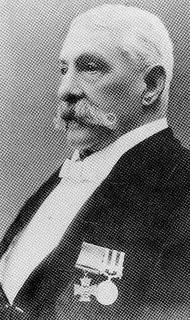
In 1867, now a major, Browne went on half-pay, and was made lieutenant-colonel in 1877, was unattached in 1881 (he married in 1882, to Jane Anne Seely, daughter of Charles Seely MP, and sister of Sir Charles Seely, 1st Baronet) and was finally received his discharge in 1888. He served as magistrate for Hampshire and as Deputy Governor of the Isle of Wight, where he died on the 15th of November in 1912, at Shanklin. He lies buried in St Mary the Virgin churchyard in Brook. His VC is held by the Duke of Cornwall’s Light Infantry Museum, The Keep, Bodmin, Cornwall.
Had Fulton and McCabe survived the siege, there would have undoubtedly been more redoubtable VCs for the Siege of Lucknow than that of Captain Henry Gore Browne.
 Mutiny Reflections
Engrossing read, thanks.
LikeLiked by 1 person