The Ridge Today
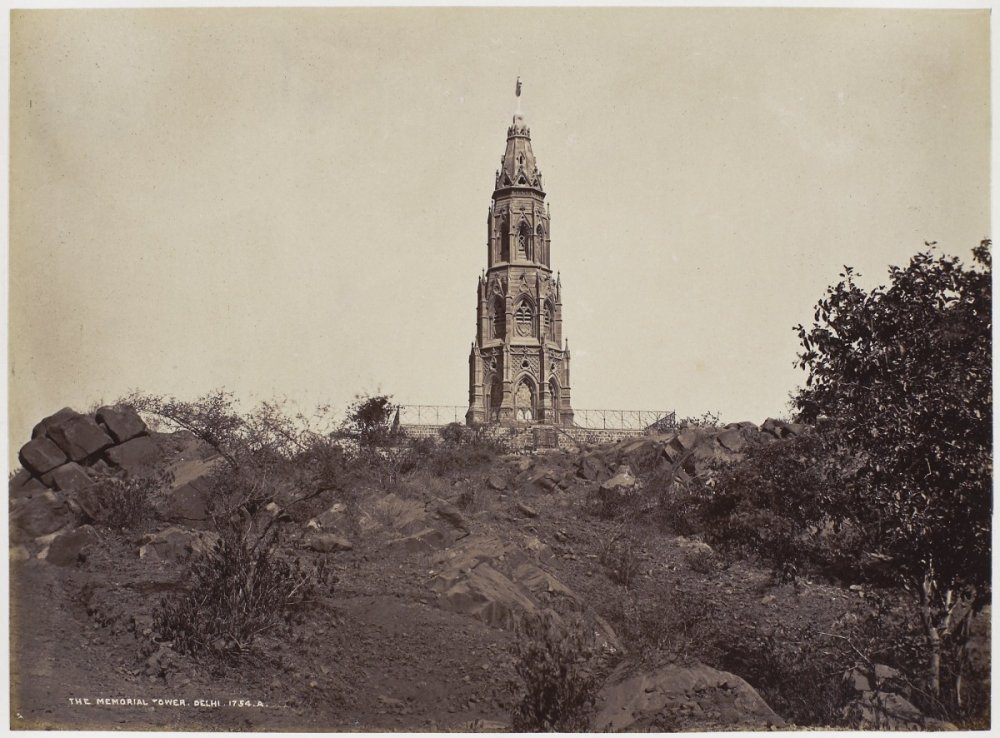
The Siege of Delhi concluded on the 14th of September 1857, when the British forces stormed the walled city. What followed will be related in another post – it can, however, be said that little remains today of the Ridge the Delhi Field Force took after Badli-ki-Serai. They left it a stripped, war-shattered ruin in September 1857, yet today, the Ridge itself is called the lungs of Delhi, a green forest which hides under its boughs all that is left of the siege. The Flagstaff Tower still stands, and Metcalfe House was rebuilt at great expense by Theophilus Metcalfe – today it is an off-limits military facility. Hindu Rao’s House has been swallowed up in the hospital that bears its name, Ludlow Castle was torn down in the 1960s, and Sammy House is gone. On the Ridge, the Mutiny Memorial still stands today, listing the names of all those who died in Delhi, a Gothic-style tower rising up over the place where the guns of Taylor’s Battery once roared.
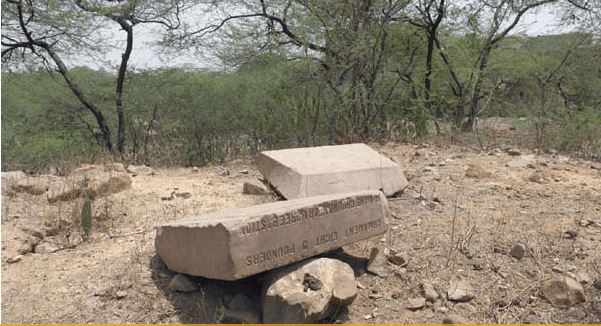
People say there are ghosts on the Ridge, even a headless horseman, which sounds a little too much like the story of Sleepy Hollow. Although over one hundred years have passed since the siege concluded, the spirit still lingers on, in legend at least.
Sources:
Anson, Brevet Major O. H. G. S. With H.M. 9th Lancers During the Indian Mutiny. Edited by Harcourt S. Anson. London: W. H. Allen & Co., 1896.
Atkinson, Captain George Francklin. The Campaign in India, 1857–58. London: Day & Son, 1859.
Barter, Richard. The Siege of Delhi: Mutiny Memories of an Old Officer. London: The Folio Society, 1984.
Cave-Browne, Rev. J. The Punjab and Delhi in 1857. Vol. 2. Edinburgh: William Blackwood and Sons, 1861; repr., London: Forgotten Books, 1911.
Greathed, H. H. Letters Written During the Siege of Delhi. Edited by Elisa Greathed. London: Longman, Brown, Green, Longmans & Roberts, 1858.
Griffiths, Charles John. A Narrative of the Siege of Delhi: With an Account of the Mutiny at Ferozepore in 1857. Edited by Henry John Yonge. London: John Murray, 1910.
Harris, Major-General J. T. “China Jim”: Being Incidents and Adventures in the Life of an Indian Mutiny Veteran. London: William Heinemann, 1912.
Hodson, Rev. George H., ed. Twelve Years of a Soldier’s Life in India: Being Extracts from the Letters of the Late Major W. S. R. Hodson, B.A. London: John W. Parker and Son, 1859.
Ireland, W. W. History of the Siege of Delhi by an Officer Who Served There. Edinburgh: Adam and Charles Black, 1861.
Leasor, James. The Red Fort: An Account of the Siege of Delhi. London: Werner Laurie, 1956.
Medley, Julius George. A Year’s Campaigning in India: From March, 1857, to March, 1858. London: W. Thacker and Co., 1858.
Norman, General Sir Henry Wylie, and Mrs. Keith Young, eds. Delhi-1857: The Siege, Assault, and Capture as Given in the Diary and Correspondence of the Late Colonel Keith Young. London: W. and R. Chambers, 1902.
Ouvry, Colonel H. A. Cavalry Experiences and Leaves from My Journal. London: Rawlinson and Hunter, 1892.
Reid, Sir Charles. Extracts from Letters and Notes Written During the Siege of Delhi in 1857. London: Henry S. King & Co., 1858.
Roberts, Field Marshal Lord. Forty-One Years in India: From Subaltern to Commander-in-Chief. Vol. 1. London: Richard Bentley and Son, 1897.
Rotton, John Edward Wharton. The Chaplain’s Narrative of the Siege of Delhi: From the Outbreak at Meerut to the Capture of Delhi. London: Smith, Elder and Co., 1858.
Seaton, Major-General Sir Thomas. From Cadet to Colonel: The Record of an Active Life. Vol. 2. London: Hurst and Blackett, 1866.
Turnbull, Brevet-Major J. R. Sketches of Delhi Taken During the Siege. London: McLean, 1858.
Tytler, Harriet. An Englishwoman in India: The Memoirs of Harriet Tytler, 1828–1858. Edited by Anthony Sattin. Oxford: Oxford University Press, 1986.
Vibart, Colonel Edward. The Sepoy Mutiny as Seen by a Subaltern: From Delhi to Lucknow. London: Smith, Elder and Co., 1898.
Walker, Colonel Thomas Nicholls. Through the Mutiny: Reminiscences of Thirty-One Years’ Service in India. London: Gibbings & Co., 1907.
Williamson, George. Notes on the Wounded from the Mutiny in India: With a Description of the Preparations of Gunshot Injuries Contained in the Museum at Fort Pitt. London: John Churchill, 1859.
Links:
Indira Gandhi National Center for the Arts https://ignca.gov.in/online-digital-resources/archaeological-sites/delhi/site-of-siege-battery-known-as-the-sammy-house-battery/
https://biblioasia.nlb.gov.sg/vol-16/issue-2/jul-sep-2020/cholera
http://www.natgould.org/charles_simeon_thomason_1833-1911
 Mutiny Reflections
Fascinating! Thanks for this informative, well-researched and superbly written piece!
LikeLiked by 1 person
Thank you so much!
LikeLiked by 1 person
Thank you! I am glad you found it interesting! Please do browse the rest of the site, there is quite a bit about Delhi.
LikeLike
Keep up the great work Eva!
Ryan
LikeLiked by 1 person
Fascinating. Learning a bit of the history of the place is quite neat. Excellent post.
Ryan
LikeLiked by 1 person
Thank you for this! Your research and eye for detail are extraordinary!!!
LikeLiked by 1 person
Thank you! This post has been a hard one to do and took far too long to complete; my list of notes just kept getting longer. I am pretty sure tomorrow I will find something to add to it! I hope you enjoy reading it!
LikeLiked by 1 person
I can well imagine!! The foort is clear. It is a great piece of work!
Haha, you can always slip something extra in if you do find something you had overlooked! ;-) I am guilty of doing that myself! ;-)
LikeLiked by 1 person