Entertainment
“On picquet yesterday, Evans caught a venomous snake which had bitten Hutchinson’s small dog. He made the reptile bite his cap and then seized it by the back of the neck and holding it tight, exposed its awfully sharp and venomous fangs most richly to view. The cool way in which he held it and poked its mouth about amused me much. He is fond of stalking musk-rats round the walls of the house, pouncing on their necks with his finger and thumb with great dexterity.” (Anson)
Fortunately, not everyone engaged in the same risky amusements as Evans. Anson himself was particularly fond of chess, playing when he could with his young cousin, whom he outmastered regularly, declaring that even his sister could beat most generals at the game. Football, cricket and quoits took up some of the leisure time to be had for the athletically minded. Fishing too was considered an enjoyable pastime – seated on camp stools, the men would hold a lottery as to who would catch the first fish, the prize being a bottle of beer. Others ventured down to the racket court at Metcalfe House to engage in a quick game with the added interest of being shot at in the process. Otherwise, there was still Evans, who, besides wrangling snakes, entertained the camp by standing chest deep in water, attempting to catch alligators by the nose. Anson marvelled that the man only caught a slight cold. At one point, there was even a horse race around the old parade ground.
To raise morale, particularly after the dreadful news of the Cawnpore massacre, Wilson ordered the regimental bands to play every evening – popular tunes to uplift the sagging spirits. In the evenings, off-duty men would turn out in their buggies and palki gharis, as they would have done had there been no war to fight. In August, the band of the 8th Regiment played in headquarters camp, causing a bigger turnout than usual; the street crowded with, as Young put it, “fashionables,” as if it were a regular matinee in a normal camp. In the background was the continued booming of the guns.
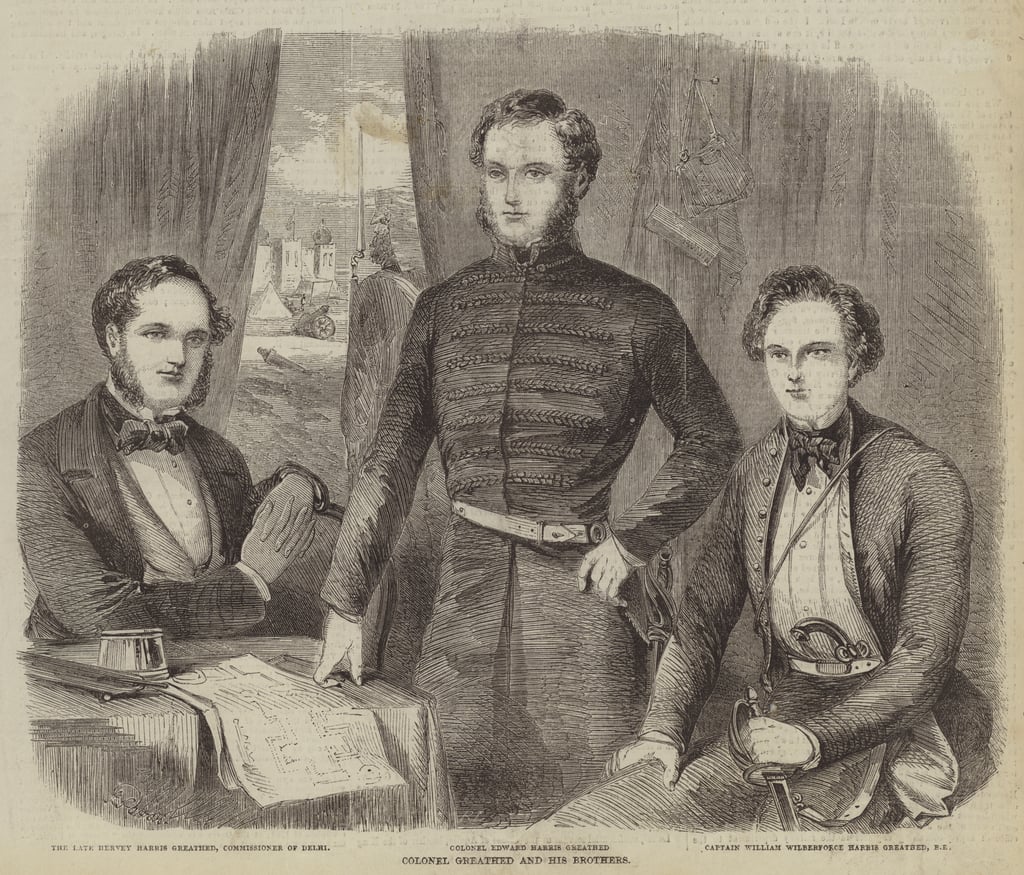
Nor was everyone busy during the siege. The “treasureless and powerless” district collectors and other civilians who had made their way to Delhi had precious little to do, while Hervey Greathed, the senior civilian, and his assistant, Sir Theophilus Metcalfe (brooding at the loss of his house), could not complain of being overworked. They filled their days as best they could – Greathed appears to have spent most of the siege writing letters, and Metcalfe, with his knowledge of Delhi and surroundings, led Nicholson’s force to Najafgarh.
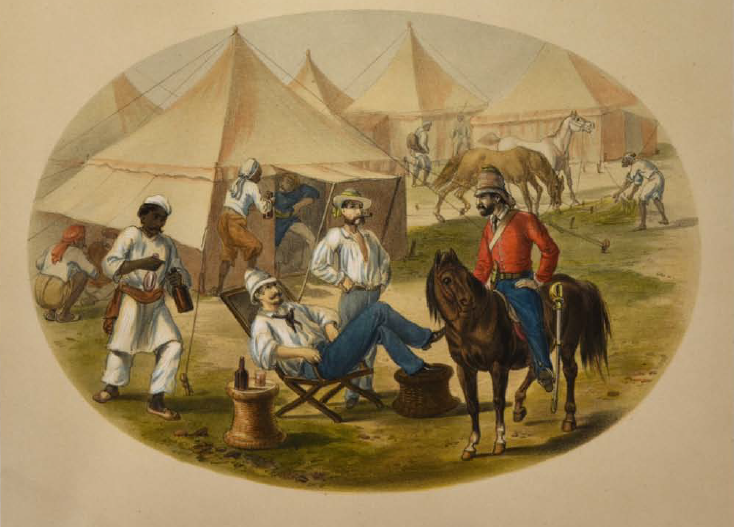
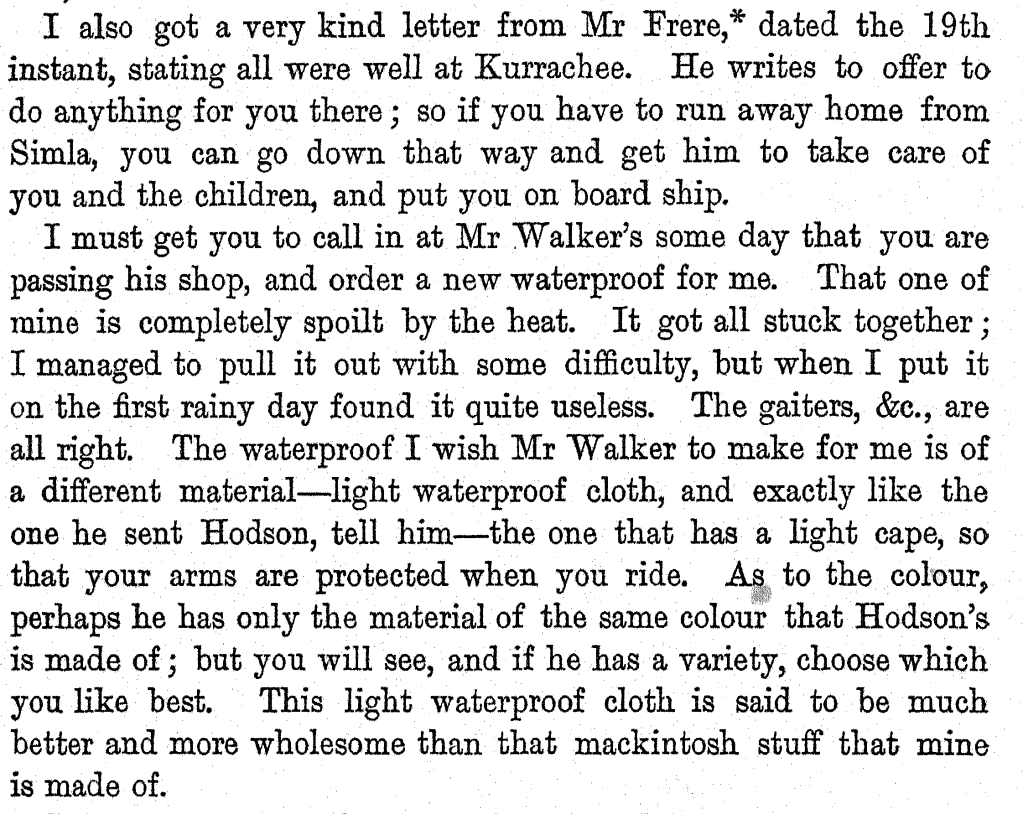
Letter-writing occupied the men in their off time. They wrote to their wives who were in the hills, in Ambala or in Meerut, to their parents and to their friends. As long as the post was working, they were not completely cut off from the world. Not all the letters are as chatty as that of Keith Young to his wife:
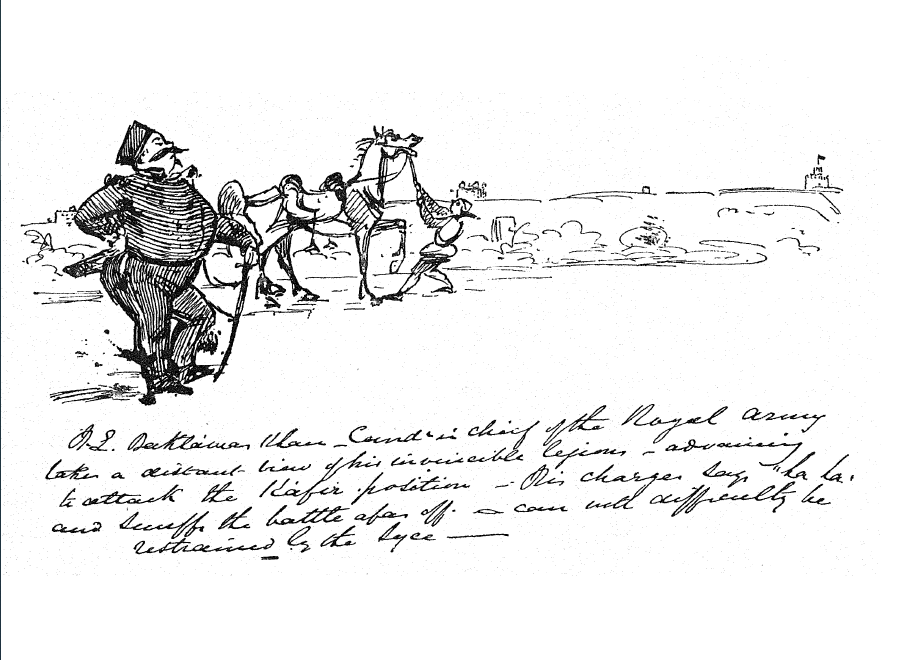
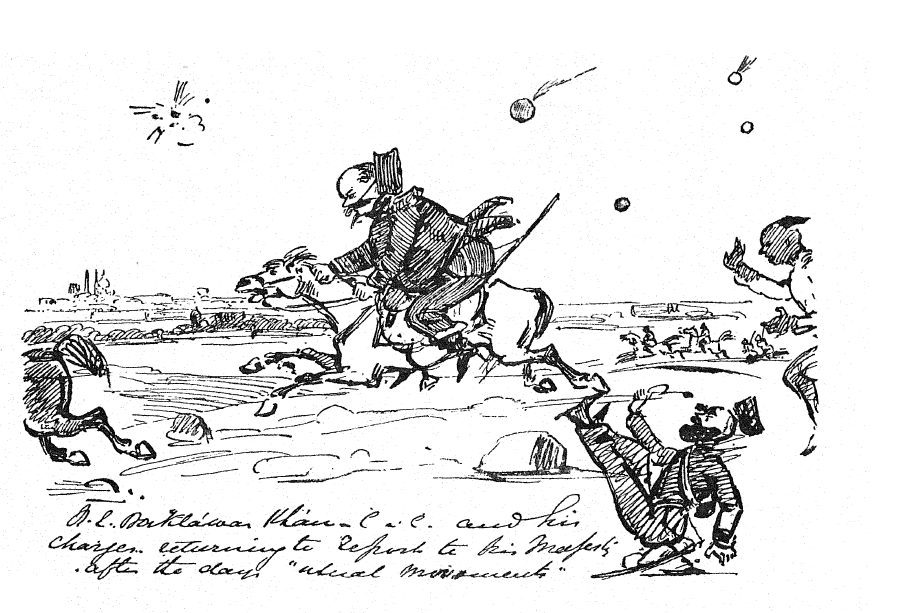
He also sent his wife two sketches of the rebel, General Bakht Khan, drawn by Captain Maisey.
Some men had brought books with them – Greathed amused himself with the “spicy” biography of Charles Napier, and others wiled away a little time with what sundry novels they could get their hands on. However, a finely decorated book of Hindu erotic drawings found in a house during an attack on the mutineer’s positions was promptly torn to pieces by Lieutenant Sanford. An officer lamented the loss of this valuable masterpiece; however, Sanford, young and probably less appreciative of art, found it so reprehensible he felt no one, much less his men, should get their hands on it. The Sikhs, in front of whom he destroyed the book, nodded in approval – however, one cannot help feeling that morality deprived the world of something most likely very beautiful. As for Henry Ouvry, he set himself the task of conjugating French verbs.
When it came to morality, the camp had options for both Protestants and Catholics – James Rotton served the former and Father Bertrand, a Frenchman, held the souls of the latter. Both men worked tirelessly in providing some comfort to the men in the hospitals, available day or night to reassure the dying and to bury the dead. Rotton appears to have been rather zealous in his work, holding regular sermons on Sundays, which he spent much time contemplating. He did his best to find the right chapters and the most uplifting verses he could think of. No one faulted his perseverance or doubted his abilities, but Greathed found him long-winded, and Young could not help thinking Rotton was boring. Even Anson, a religious man at heart, had a little trouble staying awake during some of the sermons. However, admirably, Rotton was in the habit of preaching from memory with the Bible closed before him, able to recite long verses extempore. Mr Ellis arrived from Ambala in August to take some of the work off of Rotton’s shoulders, but Father Bertrand continued to soldier on, alone.
A strange incident did occur, which shows how some men felt about the dead, particularly if it was one of their own.
Major Henry Ouvry had promised his wife that, before parting from her, he would do right by her brother, Captain John Weston Delamain (56th BNI), who had been killed at Badli-ki-Serai. Delamain was a young officer of some promise and as brave a soldier as any – after losing his arm (amputated at the shoulder) in the second Sikh War, he continued to serve in the army. After his regiment mutinied, he went to Delhi as a volunteer, attached to the 75th of Foot. At Badli-ki-Serai, while leading a party of the 75th, Delamain was shot in the mouth, and the bullet passed through his spine, killing him instantly. He was buried in a shallow grave later that day, together with a bandsman. Henry Ouvry moved heaven and quite physically earth to find Delamain, tracking down the man who had buried him and, a full six weeks later, rode out to Badli-ki-Serai and exhumed the body.
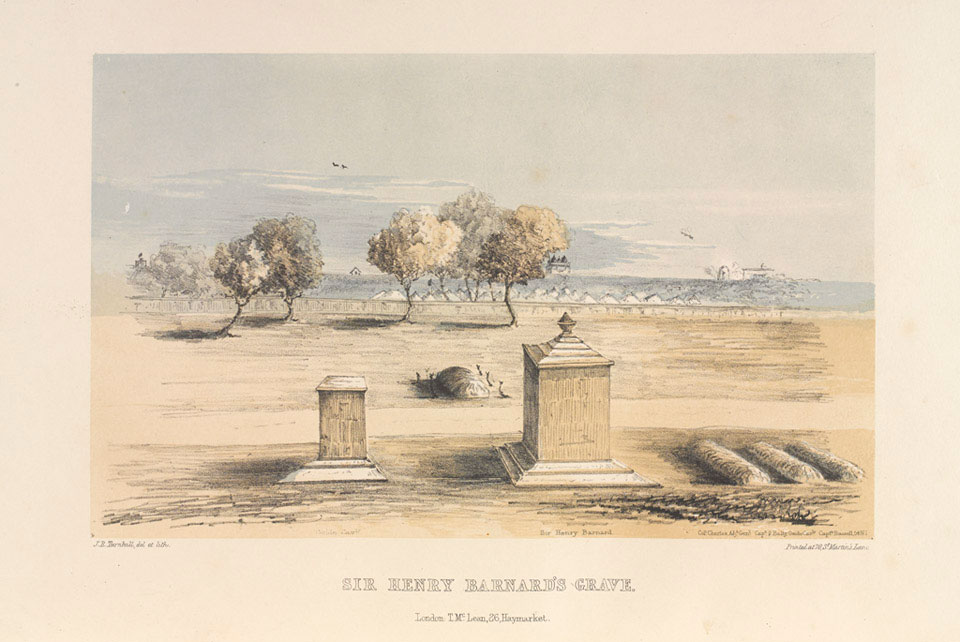
He then rode back to Delhi with the remains in a cart, where he “hunted up the chaplain, and the service for the dead was performed at 10.30 by the light of my lamp…” Two other officers attended the funeral. Ouvry managed to get a marble slab for Delamain’s grave, which he scrounged from the remains of Metcalfe House – when it is still there today, it is next to that of General Henry Barnard.
Some men engaged in less savoury occupations and would probably have been better off going to one of Rotton’s sermons. Looting dead mutineers was a practice engaged in by the Europeans, Sikhs, Gurkhas and camp followers alike – the officers found it reprehensible, but there was little they could do to stop it. The mutineers, on the other hand, behaved likewise. However, it was also common among European soldiers to beat and even kill innocent civilians for no reason at all. Captain Tytler had to stop some men from hanging an old man whom they proclaimed a spy; Ireland complains bitterly that the brutish behaviour of the soldiers was too often overlooked and seldom punished. It so appalled General Wilson that he finally ordered a court martial for one soldier who had murdered a camp follower. The man was set free – there were simply not enough soldiers to start putting them in jail – but the lesson stuck; Ireland notes that the incidents of violence, though not ceasing completely, certainly declined after the court-martial.
There were some men on the Ridge whose families had been killed either at Delhi, Meerut and even Cawnpore – for them, life had taken a different turn. Captain Chambers, though still a fine officer, seldom spoke and often visited Harriet Tytler, if nothing else, to see her infant son; his unborn child had been killed with his mother at Meerut. Harriet pitied the young man and felt it was wrong his fellow officers had prevented him from killing his wife’s murderer at Meerut – although the butcher was hung, Chambers had wanted to do it himself. Harriet felt that, had he been allowed that act of vengeance, it might have helped him assuage some of the guilt he felt at having failed to save her. Wigram Clifford cared little for life and certainly less for entertainment; his heart was fixed on avenging his sister’s murder. 19-year-old Edward Vibart, who had escaped from Delhi in May was apprised of the murder of his father, mother and his siblings at Cawnpore in July – heartbroken, he wasted no time in volunteering his services for Delhi, desperate for a chance against the mutineers. Another man, who had lost his family at Delhi, is reported as never speaking at all. He was killed in the assault on the city in September. It was a very personal war.
 Mutiny Reflections
Fascinating! Thanks for this informative, well-researched and superbly written piece!
LikeLiked by 1 person
Thank you so much!
LikeLiked by 1 person
Thank you! I am glad you found it interesting! Please do browse the rest of the site, there is quite a bit about Delhi.
LikeLike
Keep up the great work Eva!
Ryan
LikeLiked by 1 person
Fascinating. Learning a bit of the history of the place is quite neat. Excellent post.
Ryan
LikeLiked by 1 person
Thank you for this! Your research and eye for detail are extraordinary!!!
LikeLiked by 1 person
Thank you! This post has been a hard one to do and took far too long to complete; my list of notes just kept getting longer. I am pretty sure tomorrow I will find something to add to it! I hope you enjoy reading it!
LikeLiked by 1 person
I can well imagine!! The foort is clear. It is a great piece of work!
Haha, you can always slip something extra in if you do find something you had overlooked! ;-) I am guilty of doing that myself! ;-)
LikeLiked by 1 person