The Nagpur Plot
There was a popular prophecy circulating in the Bengal Army that the rule of the EICo was destined to last 100 years, and on the anniversary of the Battle of Plassey – June 16th – a series of events would bring it to an end. So, with this in mind, it was determined by the would-be mutineers that Nagpur would rise on 16 June. The vigilance of the British in Nagpur forced the conspirators to change the date to 13 June. As plots go, it was very elaborate.
The main unit to revolt was to be the Nagpur Irregular Cavalry and in their turn, they were to incite the native infantry units posted in Nagpur and Takali. The local population would, by force of events, take their part, and if all went well, Nagpur would be free of the British by midnight. The plot even determined which Englishman would be killed first, and it was determined that it was to be Lieutenant Johnston. His habit of visiting Reverend Hislop in the evenings was very well known, and accordingly, a set of assassins would be deployed to waylay Johnston, kidnap and then murder him. At the same time, a cavalry officer would approach the infantry lines and provoke them into mutiny by any means at his disposal. The ringleaders would simultaneously let loose three fire balloons (what we now call Chinese lanterns) as a signal for the local population to rise, not just in Nagpur but in the surrounding areas.

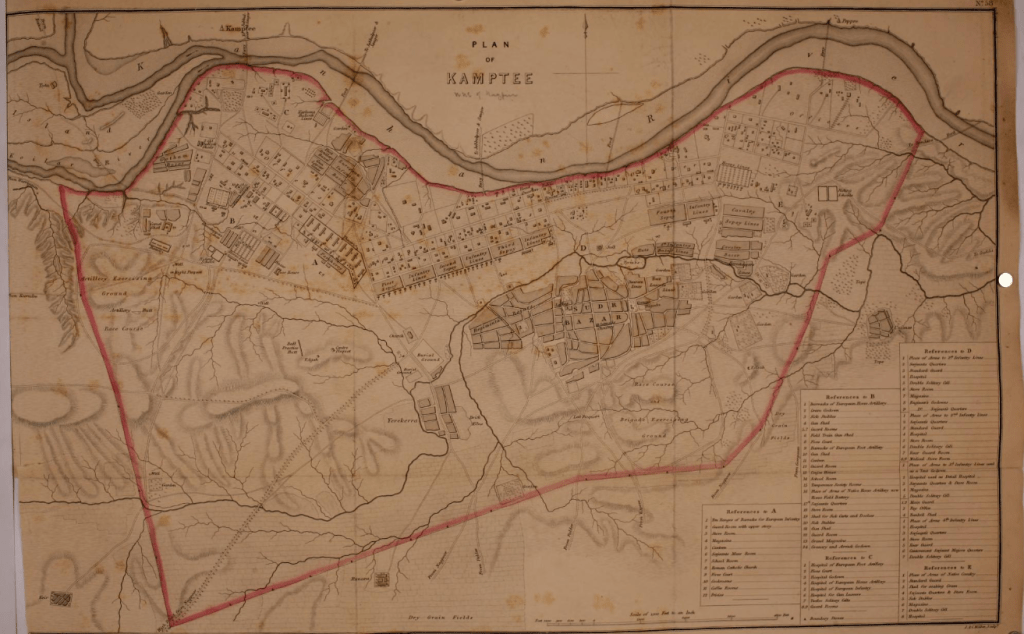
Arrangements were made to block the road from Sitabuldi to the Kamptee cantonment and they had even organised a relay of messengers on the road between Hydrabad and Mirzapur to inform the other stations of the revolt in Nagpur.
All the British civilians and military were to be killed without exception on the night of the 13th. The townspeople were charged with dispatching those who lived on the east side of the Sitabuldi Hills, while the cavalry and infantry would take care of those on the west and, at the same time, attack Plowden in his house. The cavalry would then ride to Kamathi and, on the morning of 14 June, would attack the British while they were in church. “The news of the attacks and its success was to be sent to Hyderabad and Jabalpur by express riders, and army units in these places were to join the revolt.” If the plot had succeeded, the history of 1857 in Central India might have been very different.
On 10 June, Lieutenant Johnston was sent to Sitabuldi Fort to take command. He had much to worry him – there were twenty tonnes of gunpowder in the two magazines, and the arsenal was full of all sorts of equipment, some dating back to the time of the Pindari War. He also had a rather full treasury to look after. He didn’t have too many men at his disposal – there was only a guard of eight men in the fort, one sentry over the treasure, and the rest of the men were 150 yards away from the fort itself, in their barracks. He had also been sanctioned to repair the fort and along with Major Bell, Commissary of Ordnance, Johnston was busy drawing up plans to fix it all up.
Although Nagpur remained outwardly calm, the British were suspicious. Not wanting to be caught unawares, a camel post was established between the Adjutant-General at Kamptee and Johnston at the fort, with a twice-daily exchange of news. Johnston sent 30 men to guard the arsenal at the foot of the hill and told off another 70 to sleep in the fort itself. He then shifted the treasury into the fort, thus ensuring it would remain in his immediate control. He then ordered all the cannons to be polished and the weather boxes adjoining each cannon to be likewise cleaned and stocked up with powder shots and shells. As his request for a company of British gunners from the Kamptee Artillery Unit was turned down, Johnston turned his attention to the infantrymen he had at his disposal and tried to train them as gunners instead.
In Jabalpur, Jamieson and Erskine, realising how precarious their position was in their hastily boarded-up residency building, requested reinforcements from Kamptee – this would lead to the formation of the Nagpur Moveable Column, to which we shall come later. Commanded by Colonel J. Millar, it would consist of the 32nd Regiment, Madras infantry, one squadron of 4th Light Cavalry, and three guns from the field artillery, two 9-pounders, and one 24-pounder howitzer. Naturally, the Indian officers of the Nagpur Irregular Cavalry jumped at the opportunity to join the column – the perfect ruse to convince the British of their fidelity once and for all. George Plowden thought this was all in good form. On the morning of 13 June, he rode into Takali to compliment the cavalry himself for the willingness to march against the rebels, and he wholeheartedly sanctioned their leaving Nagpur. As such, he ordered a squadron of them to leave that very night. Caught off guard, the officers of the Nagpur Irregular Cavalry backtracked their original offer, saying they would need one more day to make preparations – after all, as a mounted unit, catching up to Millar would not be difficult. With ease, Plowden agreed – unknowingly, he had pushed the day of the planned mutiny from the 16th to that very night. Hastily, messages were sent to the conspirators of Nagpur.
The conspirators had failed to consider a few things in their otherwise well-thought-out plan. Firstly, the widow of Raghuji II, Bakabai, was not in favour, and she had her network of spies watching them. Disgruntled as much of the population was, not all of them were in favour of wholesale slaughter and in consequence, the conspirators forgot the British had friends too.
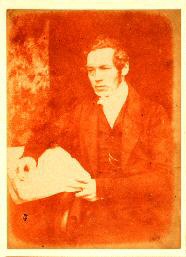
(salted paper print, ca. 1845)
For one, Reverend Stephen Hislop, even though he was suspected of converting people to Christianity, had good relations with many people in Nagpur, in particular with those whose children attended his school. Late on the night of 12 June, one Faiz Baksh arrived at Hislop’s house and entreated him in all earnestness to send his family away; he pleaded that the Reverend should without any further delay leave Nagpur – an uprising was in the works and within the next three days all the Europeans would be dead. Alarmed, Hislop sent a message to Rober Ellis, the Assistant Commissioner. Ellis accordingly sent for Faiz Baksh, and the three men met at Hislop’s house the following morning. It was not the only message Ellis had received. Puran Singh, the Jail Daroga, had spoken to Ellis barely hours before, telling him rumours were rife of an impending revolt. Plowden was not deaf: he had been hearing rumours for some days but realising the Residency was most probably being watched, put off fortifying the area around the building and laying in stocks and supplies until the morning of the 13th. He then went and told the Nagpur Irregular Cavalry they were free to join the moveable column that had just been told off to march to Seoni.
Nothing else happened until evening. Reverend Hislop, as usual, saddled up his horse and set off for Kamptee, ten miles away, where he usually read service on Saturday evening and took the Church service on Sunday, so there was nothing unusual in his departure. To keep up appearances, he left his family behind.
At the same time, Deputy Commissioner Ellis and Mr. Ross (Assistant Commissioner) went over to the house of Captain Wood (acting commander of the Nagpur Irregular Cavalry, in place of Major Henry Shakespear, who was on leave in England, writing his book “Wild Sports of India”). Here, they were apprised of the fact that for some unknown reason, the cavalry were saddling their horses. Wood immediately called on men of other units to surround the cavalry lines to prevent their leaving. To Johnston’s surprise, Mrs. McGrath, accompanied by her sick husband and her children, appeared at his door and told him she had been informed that the whole irregular force was about to attack the fort. As she was speaking to him, a flame shot up into the air – an outhouse at Plowden’s residency had been set on fire.
The whole of the European establishment was slowly coming to the realisation that Nagpur was about to mutiny. Plowden called for his carriage, but the driver, detained by would-be mutineers, was not to be found, so the quick-thinking commissioner piled his wife and four children into a buggy and drove with all haste out of Nagpur, not stopping until he had reached Kamptee. Brigadier Prior, who, after something of a struggle, managed to get a coherent story out of the excited Plowden, acted immediately. He sent a detachment of the 4th Bengal Native Cavalry and a company of Horse Artillery to Nagpur – the plucky Reverend Hislop requesting to accompany them – he did, riding the whole way on the limber of a horse-drawn gun.
At Sitabuldi Cantonment and elsewhere in Nagpur, the European families were given ample warning by officers, their servants and friends and told in no uncertain terms to make haste and go to the Residency. There, many still in their bedclothes, were told of the events happening around them, and subsequently, no time was wasted in bundling the women and children off to Kamptee, under an escort of civilian volunteers and men of the Madras Infantry.
The conspirator’s luck, in the meantime, went from bad to worse.
As planned they sent a man from the irregular cavalry, Dafadar Daud Khan to the lines of the Irregular Infantry to tell them plans had changed and the rising would be tonight and not on the 16th. Unfortunately for him, the units non-commissioned officer, a recently joined man from Madras, was not aware of any plot. As a result of him being on duty that very night, he ordered Daud to be arrested and then informed the European officers.
A man of the Mulki police, Dildar Khan, tried to incite riots on his own – he went to the Motibagh area of Nagpur where some 500 people had gathered, armed and waiting for the command to be given, but nothing happened. The Irregular Cavalry had already sent word that the plan had been abandoned. As for the fire balloons, well, the weather can be blamed for their downfall – there was no wind, and the balloons failed to rise to the occasion, thus, no signal was ever sent from Nagpur.
For the British, surrounding the cavalry in their lines proved a little trickier. The officers were unsure who they could trust and thus were quite convinced they would not return from this duty alive. However, personal loyalty played in their favour. Lieutenant Cumberlege, who had worked with the Irregular Infantry, was personally known to many of the men, and he volunteered to command it (its current commander, Captain Holland, had had a disagreement with a tiger some days previously and was hors de combat). Together with the second-in-command, they approached the infantry. To their surprise, instead of having their throats cut, they found the Indian NCOs had already assembled the men on the parade ground, where they stood quietly, in anticipation of orders. Further along, Lieutenant Playfair – who had raised the horse artillery unit himself in 1854 and had commanded them ever since – ordered the men to surround the cavalry lines. They did so without a single murmur of dissent.
The Nagpur Irregular Cavalry, who had by now realised that mutiny was indeed futile, quietly unsaddled their horses and retired to their lines without a fight. When ordered to present themselves on the parade ground, they had done so, leaving their arms behind. The artillery was positioned, flanking the cavalry on two sides, making it quite clear what would happen if they thought of disobeying orders now. Still, the sowars refused, when questioned, to give up the ringleaders of the failed mutiny in their ranks.
A company of the Madras Native Infantry was told off for duty in the city and, acting alongside the native police, held peace through the night – the next day, a strenuous curfew was put in place, forbidding not just gatherings but anyone from leaving their homes between nightfall and sunrise. From the fort, a gun loaded with a blank charge let the townspeople know when curfew started and when it ended. The police were detailed to extra duty on all the main roads in and out of Nagpur, ably assisted by units from the military.
The next day, Ellis ordered all weapons belonging to the residents of Nagpur and Kamptee to be handed in voluntarily and deposited with the police. In consequence, nearly 5000 weapons of all makes and kinds were duly deposited, and the citizens, probably frightened by the swiftness of events, did not put up any resistance.
Over at Kamptee, the British gathered together in what can only be called a war conference. They reviewed and argued over the various reports coming in from Nagpur and other stations – the column which had started off for Seoni was recalled, and it was decided, despite its rather dilapidated state, the Sitabuldi Fort should be provisioned for siege, amply to accommodate 10’000 people if need be. Johnston was told to make haste with the renovation of the fort – his first duty was to ensure the water supply, and he ordered the construction of new tanks, which were then rapidly filled with clean water.
The British were not worried about the Nagpur rebels anymore, but Gwalior was still uncertain and there had been mutterings from Indore that not all was well. Should Scindia and Holkar band together, those provisions could decide if they survived a siege at all.
On 15 June, the trial and execution of the ringleaders of the failed Nagpur mutiny started in earnest. Though not all were caught, four were betrayed by the very men they had promised to lead in mutiny.
Daud Khan, the unfortunate cavalry dafadar arrested by the officer from Madras, was the first to be hanged. The gibbet which soon held his lifeless body had been erected the night before on the east wall on the fort where it was clearly visible to all, whether they were on the hill or down in the city.
Soon after, four men, ringleaders all – two of the Irregular Cavalry- were handed over to Lieutenant Johnston by Risaldar Tafazzul Husain Khan of the same said unit. Overzealous in carrying out his duty, Johnston ordered the men shackled, thus changing their status from suspects to merely accused of mutiny – and had to be, under the law of the day, tried by Court Martial. Plowden was furious – he had been hoping to avoid any such displays, which could further upset the cavalry. The lesson of Meerut was at least not lost on Plowden. For his cooperation and further services during the mutiny, Risaldar Khan would be raised in rank to Kamindar, given a reward of Rs 1500 and a jagir of land in Farrukhnagar – but that was all in the future of the Rissaldar.
 Mutiny Reflections