What precipitated the rising in Gwalior was the news of the massacre at Jhansi on the 14th of June. All events of the mutiny are without exception linked to one another, and although signs had been rife in Gwalior throughout May, the leaders within the Contingent had managed to dupe the Brigadier into believing they would never rise. In their turn, the English officers had such confidence in their men that they believed Scindia and Macpherson were wrong to mistrust them. The scare on the 28th of May was shrugged off by Brigadier Ramsay as a misunderstanding, and until the 14th of June, he felt there was absolutely nothing to fear from the Gwalior Contingent.
Gwalior Before the Mutiny
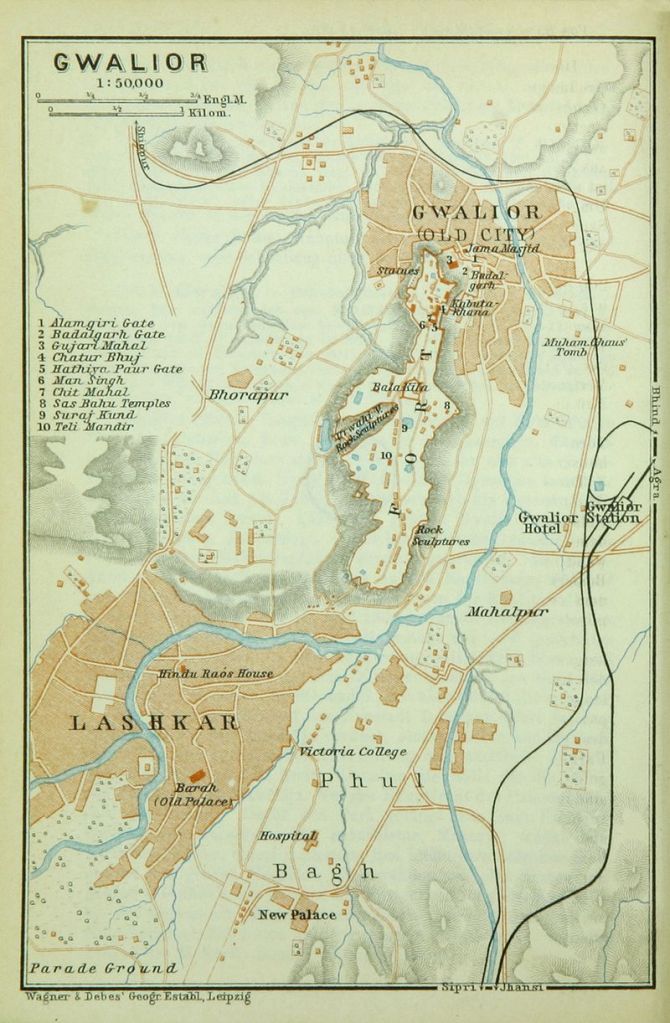
From Mrs Ruth Coopland, the young wife of the chaplain, we get some descriptions of the Europeans at Gwalior and of the station. The Cooplands arrived at the station on the 8th of January, 1857.
After arriving at the house of Captain Campbell at midnight, the Cooplands were shown to their guest room by the head servant, who also gave them some tea. Mrs Coopland laments she had not the comfort of smoking cigars, like her husband had, to stave off the cold! Early the next morning, her first sight was that of Mrs Campbell, “who had just returned from her drive, surrounded by about a hundred hens and cocks, fifty or sixty guinea fowls and ducks, geese, pigeons and turkeys in like proportion which she was feeding…” She also felt gratified by her husband’s first impressions of Gwalior, stating quite happily, it was “a pretty one.” She hoped sincerely they would find a nice house, like the ones the Campbells had, and she approved wholeheartedly of their English furniture, complemented by curiosities from Burma, very like those her husband had brought to England.
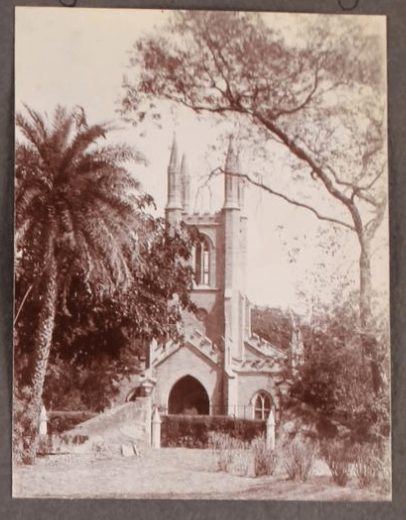
The next evening, Reverend Coopland took his wife for her first drive around Gwalior in a pretty carriage, and she could satisfy herself with her first view of the station; it was indeed a pleasing one. The cantonments were well laid out and consisted of a row of large thatched houses, each with its own compound, consisting of “pretty, gay gardens.” The wide road was lined with trees for an entire mile. Ruth was happy to see the road had an “English look” and all the people driving around looked pleasant, while their children looked healthy and all so pretty. Even the church reminded her of an English one – such comforts when one was truly so far away from home.
And things only got better.
Their first week in Gwalior passed happily. They were invited to a dinner in honour of the visiting Agent to the Governor-General, Sir Robert Hamilton, and Ruth discovered to her delight that many of the attendees were Scots, like herself. Some of them even knew her father’s family in faraway Dumfriesshire. A better beginning she could not have anticipated. There were further parties and dinners, and her husband was invited to a Darbar held by Scindia, from which he returned with ” a wreath of yellow jessamine, and some packets of sweetmeats and pan, and pieces of fine muslin scented with attar of roses…” Her husband reported he had seen many of the neighbouring chiefs and thought them “fine-looking men.”
Ruth was “astonished at the fine appearance of the sepoys whom I saw drilled and exercised every morning. They were tall, well-made and intelligent-looking men, many of them more than six feet high. They looked soldierly set in their gay regimentals.” Even their lines pleased her, with row upon row of neat, small houses on each side of a tree-lined road and kept scrupulously clean by an army of sweepers. Each regiment had its own lines and parade ground. She notes that their officers treated them with much kindness and were even seen actively participating in the various religious festivals of their men. Three times a day, the great gun atop the hill at Gwalior Fort was fired to mark sunrise, noon and sunset, followed by the beating of the tattoo, much bugling and artillery practice.
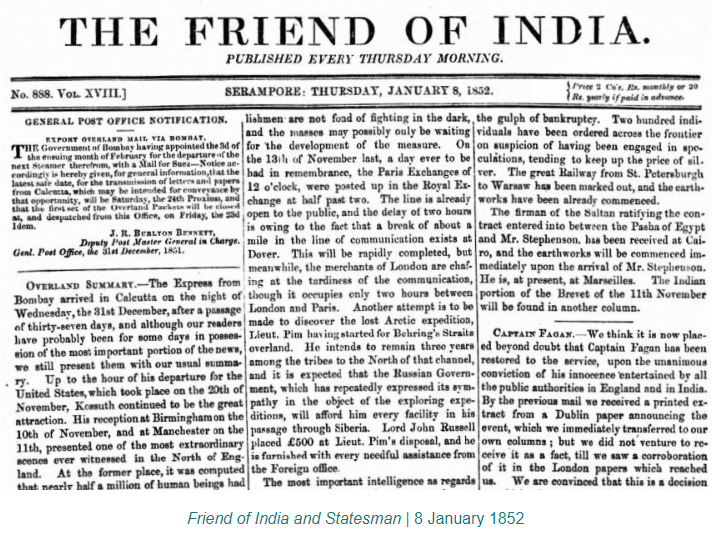
The Cooplands quickly settled into life in Gwalior’s Morar Cantonment, some six miles distant from the Scindia’s palace at Lashkar. They bought a share in the Mutton Club which ensured them a supply of mutton, and the Book Club, which considering the distance it was “the chief emporium of civilization” (Calcutta) was a good one, which kept them supplied with new publications of the latest issues of Blackwood’s Magazine and Frasers, and several Indian newspapers including The Delhi Gazette, The Friend of Indian and The Mofussilite. She objected to the Delhi Punch, calling it stupid and a bad imitation of the English original, being predominantly filled with “would-be witty sayings and pictures, which all referred to ‘griffs’ and their mistakes.“
The Cooplands further subscribed to all the funds to be had in India (some of them obligatory), including one for watering the roads to keep down the dust and another for the band. The officers were putting together their own band and were ordering new instruments from England – their intention was to teach the sepoys to play.
Gwalior was a delightful station, there was no doubt in Ruth Coopland’s mind. The rich flora thrilled her, and the trees were beautiful. The bungalows were perfectly white-washed, and many of their occupants had a perfect menagerie of pets, including deer and doves. When she wasn’t walking the four-mile-long Course with the other ladies, Ruth Coopland amused herself with a little archery and horse riding.
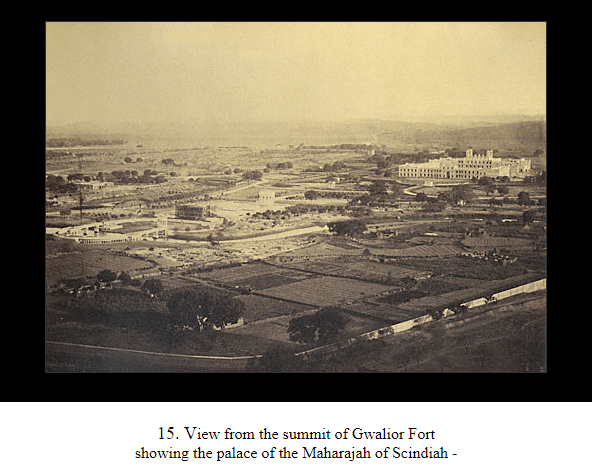
What impressed Ruth was how the English children were treated. They were kindly treated by servants and sepoys alike, and the children, in their turn, were very fond of their attendants, crying when they could not go with them. The officer’s sons were doted upon by the sepoys, who humorously saluted the little charges as they rode through the cantonments on their ponies and would join in the children’s games with delight. One of their favourites was a deaf man who amused the children by talking to them on his fingers, and it was considered a great treat to ask him to spend the day with them. Such happiness Ruth had not as yet encountered anywhere in India. Being pregnant with her first child, the scenes filled her with an honest contentment for her child’s future life.
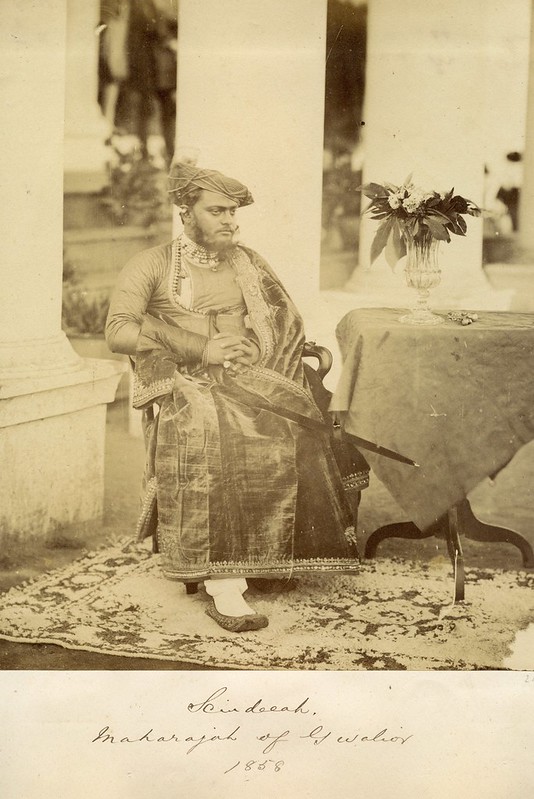
Photograph by Mr. Thurburn
As for Scindia himself, Ruth would only have seen him from afar, and her opinions were doubtlessly formed from what she heard rather than what she herself saw, calling him an “irascible, self-willed lad, very difficult to manage.” Unfortunately, she would have a bigger grudge to hold against him soon and the title “Saviour of India” with which he would be bestowed would be hard for her to stomach.
Taking advantage of the cold weather, the Meades and Murrays went out to live in tents some miles out of Gwalior. The ladies were relieved of their household cares, the men could shoot and fish, and the children could scamper about in the fresh air. It wasn’t exactly camping as Ruth knew from England (there would still have been a perfect squadron of servants, the tents would have been the size of small houses and filled with every article of furniture imaginable); it was “not a bad attempt at gypsying.”
As the hot weather approached, Mrs Alexander and her children went up to the hills, and she talked of going to England the following year as her children had reached the ages of eight and six, ready to start their schooling at home. Major Hennessey’s younger sons returned to their school in the hills, and Mrs Stewart started to make plans to head up there herself.
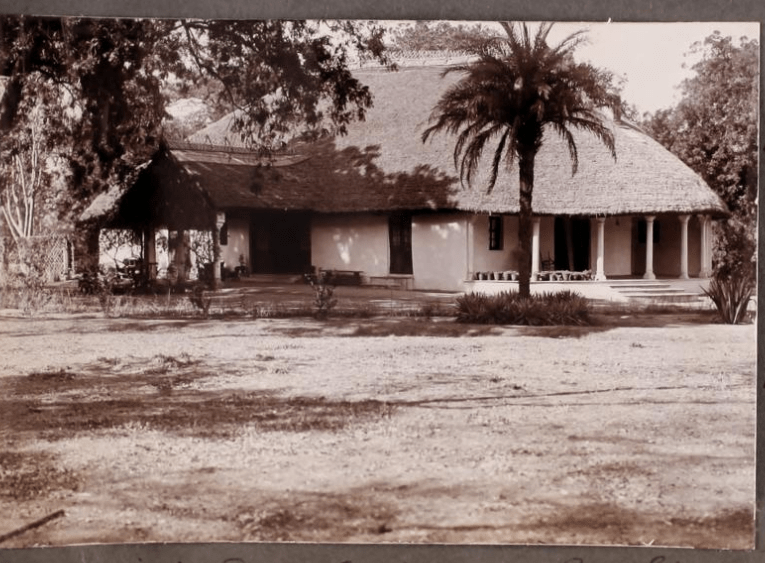
Ruth busied herself setting up their house – they were fortunate to find a vacant bungalow to rent within a month of arriving in Gwalior and finally move out of the Campbells’ home. The bungalow was a large one, though not as big as the Campbells’, but it had a broad gravel walk to protect against snakes, and it stood in the middle of a pretty compound, approached by a small avenue. The sitting rooms were divided by curtains hung up in archways, and the walls were painted light yellow with white trimmings. The garden was beautifully laid out and filled with flowers and trees, while the walk was sheltered by an arch of vines. Ruth quickly had the tailors make up the carpets she had brought from Agra (they had been woven by the prisoners of the Agra jail), and she was delighted when her piano arrived and their boxes of German and English books. When their English buggy arrived, everything was perfect.
In April, the first of the hot weather began, and Ruth noticed that everyone was looking a little less healthy, and more people complained of fever. The church service was changed to half-past six both morning and evening, but the evening service was soon moved to the mess-house, which was cooler. She soon gave up her morning walk due to the heat, but rose before dawn to make whatever use she could of the cooler hours before the sun rose. No one ventured out of their houses after 7am.
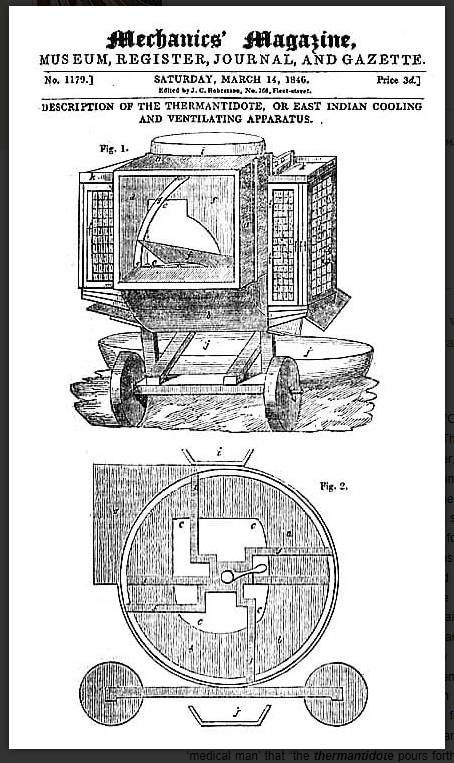
Those who could afford it had thermantidotes, a contraption very much like a winnowing machine, covered at the top and sides with a frame of wet, woven grass which cooled the hot air by evaporation. Those Campbells had a few of these devices made of brick, which, while they cooled the house down to 60°F when it was 120°F outside, quite spoiled the look of their house. Everyone made use of punkahs and added khus-khus tatties – woven grass mats would be placed over the windows, liberally doused in water. As the grass retained the water well, it could significantly drive down the indoor temperatures.
All the gaiety of Gwalior disappeared with the advent of the hot weather, when the temperatures soared so high that Ruth compared it to an iron foundry found in the bowels of Hell. And this was April – May, and June promised to be worse. Ruth found herself feeling dull and listless, sitting day after day in her darkened house, with not a sound from outside after 7 am. The very birds, she said, appeared to have been scared into silence. The only break in the heat came from the frequent dust storms that blew over Gwalior, filling the air with fine dust and plunging the world for a moment into impenetrable darkness while the wind shrieked and howled like so many fiends.
Yet the Cooplands had a great many friends in Gwalior – Major Sheriff would often come and see them and lend them newspapers; he was hoping to get home soon and spent much time talking to the Reverend as to which route he should take to get back to England, and delighted Ruth by his vast knowledge of Indian birds and plants. They dined with the Meades and the Murrays and with the Blakes. The Blakes had recently returned to Gwalior, much to the delight of the men of the 1st Regiment, which he had raised himself. “He was a kind, good man, tall and soldierly looking, with a very benevolent face, and a brave, excellent officer: he was a great favourite with his men, who, during his absence.
(on duty in Bundelkhand) used constantly to come to his brother officers to hear news of him; and even prayed for his safe and speedy return…” Ruth also enjoyed visiting with Captain Pearson, one of the few unmarried officers. His house was one of two “pucka houses” built, of all things, in the Elizabethan style by the architect of the church. Pearson was very musical, and the evenings were passed pleasantly with much singing, playing the piano, concertina, violin and flute. It was at his house that Ruth recollected their last happy evening in Gwalior before everything turned to gloom and misery.
Towards the end of April, with much fanfare, Scindia returned with Macpherson from Calcutta. Macpherson had with him his sister, Mrs. Innes, whose husband had gone on to Lucknow. Scindia’s arrival also brought about the last grand military display in Gwalior and Ruth’s first chance to see the man for herself. At the ceremonious blowing up of a disused mud fort, a most striking exhibition of military workings, she saw him, “plainly dressed and not very kingly looking, or in any way striking.” She can perhaps be forgiven her estimations.
Captain Pierson and his wife arrived in Gwalior six weeks before the mutiny, and shortly after, a man appeared from Calcutta with a photographic apparatus, amusing the residents greatly by taking their portraits. Captain Stewart and his family were taken in groups and sent their portraits home to England, where they arrived unscathed several months after the mutiny. Some of these were discovered after the mutiny and sent to Agra; sadly, others were found in the Bibighar.
The news of the mutiny in Meerut and the killings at Delhi served to cast a very sad feeling over the Europeans at Gwalior. Conversations were no longer about the dismal heat and where they planned to go to escape it, but consumed instead by studying the lists of the dead in the papers, hoping fervently that there was no one they knew. While dining with the Stewarts in a party of nine, Ruth would later recall that by June, only three of those guests would still be alive. Yet, at the beginning of May, as horrible as the news was, Gwalior was still safe.
Ruth watched as Captain Pearson, Lieutenant Cockburn and half the cavalry and artillery regiments, together with Captain Campbell in command of the Raja’s bodyguard, rode off to Agra. She would also finally meet Scindia in person – he had started spending much of his time with Macpherson in cantonments – but all she could recall was his hand, when it shook hers, was cold. Her husband, too, was filled with foreboding. He believed, as many chaplains and, indeed, civilians did, that the mutiny was “God’s punishment upon all the weak tampering with idolatry and flattering vile superstitions. The sepoys have been allowed to have their own way as to this, and that thing which they pretended was part of their religion, and so have been spoiled and allowed to see that we are frightened of them.” He thought the only way to crush mutiny was to act with decisive force and disband or destroy any regiment that showed even the slightest sign of a mutinous spirit, which was not an uncommon opinion at the time. The Reverend believed that they all should have hastened without delay to the safety of Agra, but it was too late for that now and sooner or later, they would be “cut up piecemeal.” He, for one, had no faith in the Contingent. He did not know what to do because now, there seemed to be nothing he could do.
Their very servants now began giving them “murderous looks”, and Ruth caught her maid going through her things, trying on her jewellery as if it already belonged to her. The Reverend slept at night with a loaded rifle at his side, and before he left, Captain Campbell gave his wife a brace of loaded pistols, not so much to use against the mutineers but to use on herself.
 Mutiny Reflections