“It was difficult to get him to speak of all that he had witnessed and gone through; he had a scared and unhappy look, and was perfectly listless…”
“Some Reminiscences of Three-Quarters of a Century in India”, -E.J. Churcher
For Trifling Services Rendered
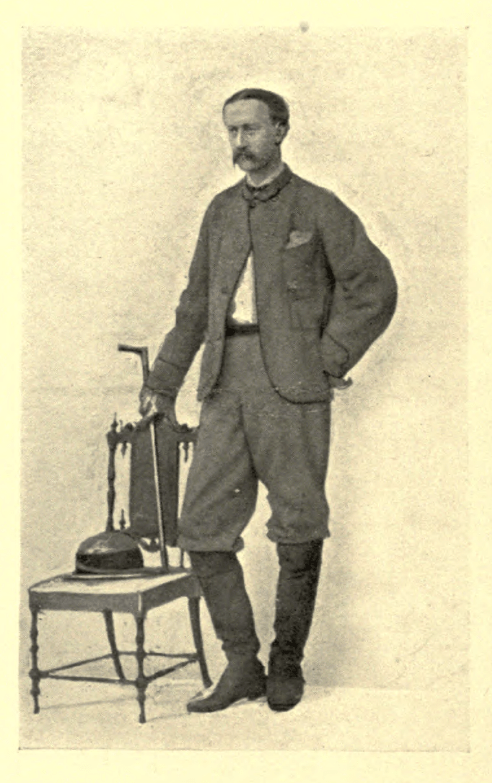
David Churcher
When Emery Churcher found out his brother David was alive, it was January 1858. Another brother had died defending the Bank in Delhi with the Beresfords. He already knew his older brother Thomas Churcher was dead, so it was with much joy he greeted this news.
Of all of the survivors of Fatehgarh, David had remained in hiding the longest, only a few miles outside of the city, so close, in fact, that he could hear the guns firing on the day of the Parade Ground Massacre. Yet he remained under the protection of the Luljoo Singh, a brother and rival of Hardeo Baksh, in Karhar village, one of only 2 to have survived the first disastrous boat journey, the siege of the Fort, the second flotilla and the massacre at Manpur where he saw his brother Thomas killed by a shot to the chest. When the massacre started, David had just gotten back on board the boat and had asked for a towel since he was soaked through, having been attempted to push the craft off; hence, when the attack started, he was unclothed.
He swam away from the massacre at Manpur, with a now wounded Major Robertson in tow (whom he had taken over from Kale Khan), holding onto an oar, after Colonel Smith’s boat, which when he finally sighted it, was still too far away, “Had I been alone I might have reached the boat with the aid of an oar, but I could not think of abandoning him. It was a terrible disappointment to me, as I felt that I was throwing away my only chance in life…”
No longer able to swim, Churcher made for the shore and crawled up onto the bank, leaving the Major half in the water, unable to move him any further. He then slept for the remainder of the night, completely exhausted. The next day, Churcher realised he needed to make a plan. They could not remain on the river bank, but due to the frightful injury suffered by Major Robertson, he also could not flee.
“..I saw at a distance a villager coming in our direction with a bundle of grass on his head. As he approached us, I stood up to meet him. The poor fellow – seeing a nude white figure – for I had nothing on but the towel round my loins – start up suddenly out of the earth, took me for an apparition and was so terrified that he threw down his load and bolted in mortal fear….Evidently, he took me for a ghost, and I to employ all my wits not to frighten him. It was some time before I succeeded in convincing him that I was no more than a mortal man, and after much talking, I proposed to him to guide us to Dharampur to Hardeo Buksh..“
Churcher offered him 100 rupees but could not give him the money straight away, promising he would have it in Dharampur. The man told David and the Major to stay hidden and he would come back in the evening with a buffalo to swim across the intervening channel. Soon after, another man appeared on the scene. He was a servant of Thakur Sahib of Karhar. The man refused to take them to Hardeo Buksh, saying if he did so, his master- Luljoo Singh -would murder him as he was not on friendly terms with the rival landlord, who also happened to be his master’s brother. He, however, said he would inform his master, which he did, and he returned shortly after with three other men, the zamindars of Karhar and Baramow villages.
Robertson was taken to Baramow and Churcher to Karhar. It transpired afterwards that the separation was necessary to better protect them and to “soothe the jealousy and distrust between our rival protectors..both desired to have the credit of having protected a sahib. And if ever the British Raj was restored, they could then hope for a reward as well pardon for complicity in looting, both villages being compromised in this manner…” Hardeo Buksh went a step further, threatening to expose his brother with complicity in plundering the boats and surrounding villages if he did not protect the two fugitives.
Now began a time of hardship and loneliness for David Churcher. Major Robertson did not stand much of a chance of recovery: “The musket ball had smashed his thigh bone close to the groin. Suffering terrible agonies, he was with difficulty removed to the village where he died after enduring a month’s most appalling torture…Mortification set in, and an attack of dysentery followed, his life quickly ebbed away…In skilful hands, in all human probability, his life might have been saved with the loss of the limb, for he was a powerfully built man in robust health, and the fact of his having lived so long, desperately wounded as he was, proved that he had a splendid constitution. No ordinary man could have held out so long, lying immovable in one position on his back from the time he was taken out of the river till death came to his relief.“
David buried Major Robertson at night and placed a marker over his grave for future identification. It was also another regret for David who, for the second time, felt he had missed his chance for life.
“The death of Major Robertson, though not unexpected, seemed to sever the last link that made life bearable for me, and cast a deep gloom over my spirits… While Robertson had lived, I used to visit him at every opportunity, doing what little I could to cheer his spirits. Death took even that consolation from me, making my life a doubly oppressive solitude. I now felt the loss of chance I had had to accompany Probyn, who had left Dharamapur in a boat for Cawnpore only a few days before, but I could not abandon Robertson while he lived.”
The news of the occupation of Cawmpore by General Havelock had been confirmed, and Hardeo Buksh, taking advantage of it and of the high flood of the river, arranged to send Probyn and his party down by boat, entrusting their safe convoy to a brother Thakur, Dhanna Singh. This man had deeply compromised himself in looting and desolating villages in the Doab, and he seized the opportunity to condone his guilt and reap a reward. He gladly accepted the charge; the voyage was safely accomplished, and the Thakur not only received a free pardon but the anticipated reward as well.
“Before leaving Dharampur, Probyn had written to Robertson informing him of the proposed arrangements and that dooly would, for his conveyance would be sent to fetch him. Poor Robertson was too far gone to attempt the journey. The dooly was, therefore, returned without him, and I refused to leave him. Soon after Robertson’s death, the sepoys crossed over from Fatehgarh in strong bodies to extort revenue from the zemindars. I could not help feeling what a mercy it was that Robertson had been delivered in time to escape being murdered. “
It is perhaps no wonder then that he stayed hidden, unwilling or unable to believe he was not the last Englishman left alive in India. Of the fate of Probyn and his party, David did not know, and although even Mrs. Sturt had written to him, asking him to join her on the road to Agra, David stayed where he was for many months to come. When Emery Churcher found his brother, he was unrecognizable. “He was sitting on the ground with his back to a wall, and a black blanket around him; his hair, beard and moustache were also much grown, and he was quite sunburned. He had been twice sun-struck and did not know me…”
David went back to Fatehgarh and, after a long convalescence, took up the Churcher business once again of planting indigo, but he never recovered the family fortunes and died a pauper in 1908, the last indigo planter in the district. He also never recovered his senses, and “was a wreck of his former self, and always glad to be left alone” (E.J. Churcher)
It was on Emery’s insistence that David was rewarded for his refusal to leave Major Robertson to his fate. He wrote to the Major’s family in Scotland, and they, in turn, to show their gratitude to David, took up the matter with Queen Victoria, who telegraphed the Governor-General with instructions to “reward my brother handsomely, in open Durbar, which his Excellency was pleased to do.” David himself was more modest, ” I have only to add that the friends of Major Robertson, in recognition of the trifling service I had rendered him, interested themselves on my behalf and obtained for me a grant of land. I was also awarded the Mutiny medal for my services during the siege of Fatehgarh.”
Of his funeral, his brother Emery writes, it was performed in Fatehgarh with full military honours. David had requested to be buried with a Bible and the towel which he had worn on his escape from Manpur – but on the day of the funeral, the towel could not be found.
 Mutiny Reflections