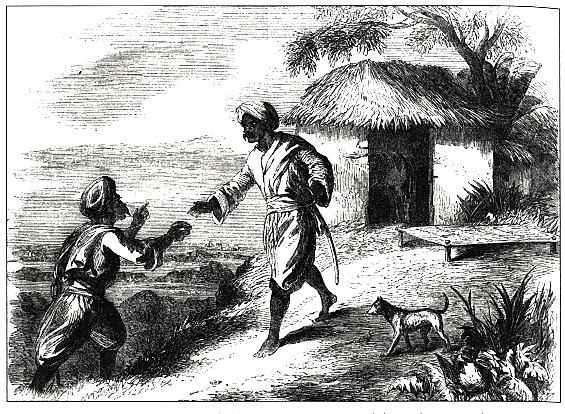
Thomas Churcher arrived in Fatehgarh in 1832, bought a bungalow on the bank of the river and set up an indigo factory, well in the days when indigo was a lucrative business. By 1857, he had retired with his wife Sarah to Omergarh, some 25 miles (ca. 40 km) from Agra, and had left the factory in the able hands of eldest son Thomas. One of their sons, Henry, was employed as a sub-deputy manager at Delhi Bank in that erstwhile city, while Emery, at 23, was living the life of a well-to-do man about the district, enjoying a life of hunting, fishing, and riding. David was in Fatehgarh, working in the family business.
Emery had been well out of touch with civilization for some time, spending the cooler winter months engaged in his favourite pastime, hunting. However, in March 1857, he was suddenly aware that things were not as they seemed. The villagers he passed, earlier polite and friendly, were now insolent and rude; and his gamekeeper told him disconcerting stories of travelling sadhus who were moving from place to place, distributing chapatis. The village watchmen were told to bake five more and send them to the next village; at one of these villages, the watchman brought the chapatis to Emery and asked him what it all meant, understanding as little of the meaning as Emery did. He told the watchman to ignore it; if the sadhus did not have sense enough to tell him what they were for, he had every right to disregard them; but after the second watchman brought chapatis to Emery, and again enquired what they were for, Emery became concerned. Soon after, a letter from his brother Thomas reached him which explained the chapatis were being followed by rumours of rebellion. The failed uprising at Barrackpore had only caused more concern for the Churchers, as it had had some consequence in the districts—reports of bloodshed and lawlessness were flying into Fatehgarh from everywhere, it seemed and he advised Emery to come home but he did not arrive until the middle of April. Bands of robbers in the meantime were reported roaming the countryside around the station — fearing the worst, the brothers gathered their silver coins and any valuables they possessed, locked it all in an iron safe. One night, the brothers took the safe outside and tossed it down a nearby well.

With their parents residing in Omergarh, in early May the brothers decided that one of them should go to their protection. The roads were unsafe for any other conveyance than by horseback, although all three brothers could ride, they could not decide who should go. Sending for their family servant, Chunia Lal, Thomas handed him a Bible. He then told him to go to the garden and place three straws of different lengths between the leaves with the ends sticking out and bring the book back. The brother who drew the longest straw would go to Omergarh and that happened to be Emery.
With 100 miles ahead of him, Emery decided to leave without any further delay. While Chunia Lal prepared chapatis for Emery and his horse, which he packed in a cloth, Emery ate dinner with his brothers. Just as he was preparing to depart, Chunia Lal tied a small tin pail and pan to Emery’s waist with a long string attached. He could then draw water for himself and his horse from any of the deep wells he passed, should there be no bucket. Bidding his brothers farewell, Emery set off into the dark night.
His first halt was at 2 in the morning at Thane Dariaganj in the Etah district, having come some 40 miles (ca. 64 km) — here Emery called in at an indigo factory whose owner was a family friend. The servants fed the horse and Emery; while he rested, the cook made a fresh batch of chapatis and tied them into the cloth; then he was on his way. At 7 in the morning, Emery stopped again, this time at a dak bungalow, just 20 miles (ca. 32 km) distant, where he once again halted to rest his horse. Two hours later, he was nearing Omergarh, but it was no longer an easy ride. He was chased by horsemen from villages near the road and shot at by men he presumed were bandits. His horse saved his life, outdistancing them all, and he arrived at his parents’ house, tired and unhurt.
If Emery was expecting a rest, he was wrong. On approaching the house, he saw it was surrounded by gangs of armed men. They were wandering about the grounds, others were lazily watching from the walls — the servants rushed out as Emery pushed his way through the crowd and said the Omergarh Raja had arrived in a “great state” with all of his retainers. The Raja himself had invaded the drawing room with his bodyguards and was taxing Emery’s parents.
“The Rajah, a horrid black pockmarked individual, was seated at a table, and his men on chairs and sofas round about the room. I asked the Rajah what he meant by taking so great a liberty…” The Raja replied he had heard the Churchers were planning to leave for Agra shortly, but he was determined they would not go unless he was paid Rs 5000.- (£500.-) first – by way of ‘ensuring’ their safety. Too tired to remonstrate with him just then, Emery went instead to find his father.
“Just before my arrival, the Rajah had sent word to my father that those were his terms. My father was an old man, with a very bad temper. I found him in a great state of excitement, with my mother holding him, to prevent his leaving the room, to confront the Rajah. Had it not been for my most opportune arrival he would have gone into the room and shot the Rajah.” With much difficulty, Emery persuaded the stubborn old man to desist from his desire to shoot the Raja and give him instead a cheque for the amount called for. Emery promised when peace was established again, he would get the money back. With some reluctance, his father agreed. Four days later, the Raja allowed them to leave. It would be another week before everything was ready for the departure – by then the mutinies in Meerut and Delhi had happened. Leaving the servants to guard the house, Emery packed his parents into palanquins, organised their luggage, and, with only their cook and one groom, set off for Agra. It was a wonder they arrived in one piece.

Along the road, they met an armed sepoy, simply sitting on the outskirts of a town. Emery told the bearers of the palanquins and the luggage coolies to make as much noise as they could, to give the impression at least, as they passed through the town, they were a large party; while expecting any moment to be shot in the back or hacked to bits, they made it through the town without incident. It was only a small scare, but at Agra, they would have a worse one.
The troops in Agra were disarmed on the 31st of May – and the Churchers arrived to find gangs of disbanded sepoys, some 1000 men of the two regiments, roaming around the city. “They were in a very excited state,” stopped the Churchers and demanded the bearers put down the palanquins. “My father, in his impetuous way, insisted upon knowing why they had been put down and shouted to the bearers to go on. This added to the danger and to my anxiety. I tried to explain our situation, but every moment was of importance. In my perplexity, I did not know what to do.”
Standing close to Emery’s horse was a ‘fine, stalwart sepoy, evidently a non-commissioned officer.’ who Emery recognised as a Brahmin, by the beads around his neck. Leaning down, Emery whispered to him that he would give him all the money he had if he would help get them to the fort. The man nodded and, calling on his comrades, said the party were his friends, that he lived near their estate, and if they were molested, “they would have to pass over his dead body to do so. The man was a high caste Brahmin, and they dared not hurt him, for any man killing a Brahmin was forever debarred from entering heaven.” Meanwhile, the bearers had formed up around the palanquins and were stopping the sepoys from robbing Churcher’s parents. The sepoy beckoned the party to move forward and, taking the lead, took them over the Bridge of Boats to the gates of Agra Fort. As they approached the gates, Emery gave him, as promised, all he had – Rs 60.-. The sepoy, with “many protestations of loyalty,” thanked him and departed. Emery never saw him again.
Inside the fort, the palanquins were set down and Mr. Churcher got out, as he said, to stretch his legs, while Emery scrambled about looking for a room for them. He finally found one in a large marble square, a corner of which was occupied by Lieutenant-Governor Colvin, the other rooms filled with the rest of the Agra Government. Emery took his parents to the room “and both before and after, had many a squabble with people trying to secure rooms for themselves. Once my father was in possession, nothing would have induced him to quit the place. I was sure of that and never hesitated to leave him to see to our requirements.”

Over the next few days, Emery organised furniture for his parents and left them in the care of the cook and the groom, who would from now on see to all their wants and needs. He then went to volunteer his services to the Agra establishment. Standing by his side was his father, no longer young who insisted on being enrolled – considering the temperament of Mr. Churcher, it unlikely the officials would have been able to resist his offer.
Emery Churcher remained in Agra for the time, taking part in the disastrous Battle of Sucheta. He was then one of the men to ride through Agra looking for survivors of the rampage and noted,
“After the battle of Shahgunge (Sacheta), the behaviour of the town people was somewhat reassuring.
No steps had been taken for the suppression of lawlessness in the district. The policy of Mr Drummond, the magistrate and collector of Agra, met with disapproval, and things became worse when a lot of men were seen, armed with lathies (long clubs), painted to represent muskets, patrolling the streets. They were the laughingstock of the place. Mr. Drummond was removed from his appointment and was made Sessions Judge of Banda, a district in the south, pertaining to the North West Provinces. Whenever there was any semblance of authority the people rose against it. The Mawaties, a Mahomedan sect, at Fatehpur Sikri, one of the palaces of the late Mogul emperors, a short distance from Agra, had to be driven out by a small force, which was commanded by Captain Patton. Here unfortunately I lost my cob; he was wounded severely in the chest and died soon after. I had him buried in the grounds of the palace.”
At the end of June, it occurred to Lieutenant Governor Colvin that an officer should be deputed to Etah, 70 miles from Agra to re-establish British authority.
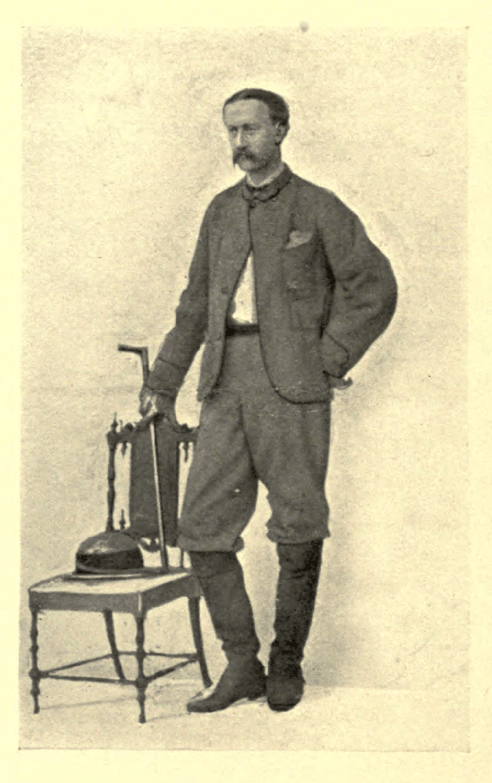
“There were upwards of twenty members of the Indian Civil Service, including Messrs. Phillips and Hall, the magistrate and joint magistrate of Etah itself, besides some numbers of the uncovenanted Civil Service, who were refugees in the fort of Agra. These men had their lucrative appointments to return to when peace was established; they, therefore, saw no reason why they should risk their lives upon, as they said, so foolhardy an expedition; nevertheless, it was imperative that the wishes of the Lieutenant-Governor should be obeyed. It was during a consultation amongst them, that it was decided to ask me to go out. The Governor was informed that with my knowledge of the language, and of the district, and also of the neighbouring districts, I was best fitted to carry out his commission.”
When Churcher asked with what force he was to carry out this seemingly impossible task, the civil government simply said they could spare any men but gave him instead Rs 5000.- from the treasury and assurances they would take very good care of his parents. “He gave me the order, and also authority in writing, arming me with powers of life and death, and granting me permission to raise a force of irregular troops.” Curiously, Mr Philips, who had fled Etah makes no mention of Churcher in his narrative, ‘Anecdotes and Reminiscences of Service in Bengal’ stating it would “be tedious to relate how by slow degrees the different stations were re-established, supported by armed levies but the officers even then only held them on sufferance as it were…”
Churcher managed to raise a reasonable force of irregulars, amounting to 140 men of foot and horse, enlisting more from the two well-to-do-landlords in the Etah district, who Churcher knew as personal friends. The landlords sent him 25 horsemen to act as his escorts, all Gujars, marauders at heart and by profession, “of fine physique, and regular dare-devils, but I had a dare-devil undertaking in hand, so they were just the men for me.” With the blessings from his parents, who very reluctantly let their son go as it seemed at the time he was the only one to have been spared, Churcher left Agra.
Omergarh
His first stop was at Omergarh to punish the Raja and Churcher wanted the money back.
“On arrival at his place, I ordered his men to produce him, which they reluctantly did. On his appearing, I made my men seize him, and told him to disgorge the Rs. 5,000 he had taken from my father. The man had the impudence to laugh in my face. I made my men strip him and tie him to a tree by his hands and feet, and whip him with their corahs (horsewhips) until he paid up the money. After a few strokes of the whip, he shouted for mercy, and then the money was produced and was weighed out to my Jamadar of Horse. The man was then released.”
Not satisfied with threatening Churcher’s parents, the same raja had put fear into the countryside over the past month, looting villages as he pleased, and firing those that did not comply with his demands. These villagers now came to Churcher with their list of complaints. Once again, Churcher went to the raja’s domicile, this time with the villagers in tow, and demanded he return their property or he would have him whipped again.
“It was astonishing to see the bales upon bales of cloth, and the large number of brass and iron utensils, and the coin and jewellery which was produced. All this was made over to the men who claimed them, and then I went on my way, hoping that I had seen the last of the scoundrel. Some time afterwards I heard that the man had turned over a new leaf, that he had been protecting native officials, and had sent daily reports of the state of the district to the magistrate of Agra. When peace was established he made his obeisance most humbly to all in authority who approached his place. At last, he was put down for a downright good subject of the Company Bahadoor, and to make the farce complete he was rewarded.”
As for Rs. 5000.-, Churcher distributed it amongst his men; not from any noble feelings, but because he knew that if he had kept it for himself, his chance of leaving Omergarh in one piece was very slim indeed. In return, his generosity bought the loyalty of his men who would, over the next months see him through thick and thin.
Before leaving, Emery stopped for a night at his parents’ house which had been thoroughly ransacked. Although everything the Raja had looted was returned, the servants said that soon after his parents had left, a body of rebel cavalry had arrived. They had rummaged through the place and tried to burn it down but being in a hurry, left without succeeding. He once again left the house and the property in charge of the servants and went on his way.
Awah and the Taking of Etah Fort

The next morning, Emery marched to Awah (Awagarh) halfway to Etah. Raja Prithviraj Singh was profuse in his offers of hospitality and did what he could for Churcher’s comfort. He said things in Etah were not good – Danbar Singh had pledged his allegiance to Bahadur Shah and had planted a green flag on the Grand Trunk Road, to display his loyalty and would undoubtedly oppose him. Realizing he might have to fight before he could take up his post in Etah, Churcher asked the raja to lend him a gun with bullocks, drivers and ammunition – it was more for show but he hoped it would have the desired effect.
Danbar Singh had set himself up, at the end of June as an independent raja in the south of the district and had begun “collecting” revenue – he was not particularly interested in Bahadur Shah or for that matter in rebellion; he had seen an opportunity to establish himself with an estate, a district and a title. His rule by chance would end in tragedy.
” As I approached Etah, I made the man in charge of the gun (“Golandag”) fire the gun occasionally, to make my approach known, and to give éclat to my arrival.” To test the veracity of Etah Raja’s claims, Churcher sent a letter to Danbar Singh, informing him of his arrival and, intimating he had been posted to Etah with powers of Commissioner by the Government, it would be thus impossible for him to carry out his work in a tent. All the houses in the station had been burned down, and he requested accommodation in the fort. “The Rajah sent word by my messenger that he had heard that the ramparts of the fort at Agra had been destroyed by the rebels from Namuch, and the garrison killed, and that having escaped, I had come to Etah and was trying to deceive him by making out I was a Commissioner, also that I had better betake myself elsewhere, as otherwise, he would soon make it too hot for me. I was not prepared for so much bluff.”
While Churcher pondered how to answer, one of his men ran up and said that some rebels had arrived and were preparing their camp on the parade ground. On further questioning, he found out the rebels were in fact Sikhs and there were only 20 of them. Churcher realized he could use them to his advantage, ” for the Sikhs are fine soldiers, and had done great things for us, and besides, with their assistance, I would be better able to take a little of the Rajah’s bluff out of him.” He called on his Jemadar to go to the Sikhs and try to persuade them to come for an audience. After half an hour, their leader arrived. Emery explained his situation and offered him Rs 100.- for each of his men if they would help him take the fort and take Danbar Singh prisoner. After some deliberation with his men, the 20 Sikhs arrived and grounded their arms at Churcher’s tent.
“I took them all aside and explained what I wished them to do. They were willing to help me in any way in their power. They received a sumptuous supply of food. At midnight they set to work, in a most businesslike manner, by cutting branches off the mango trees under which we were encamped. With horse’s heel ropes, they made three ladders. At 3 o’clock the ladders were carried, and put up against the walls of the fort.”
The Sikhs led the attack and Churcher with his men, followed. With the help of a spy who knew the grounds of the fort, they ran swiftly to the Raja’s apartment. The entrance was only a glass door, but it was locked, and they could see the room beyond was lit up. The Raja, a corpulent man, was seated on a platform, leaning against two pillows and on either side of him were two bodyguards. Due to the lights in the room, neither the Raja nor his men could see Churcher or the others, who were shielded by the darkness beyond. With some of his men instructed to spike the guns on the ramparts as noiselessly as possible and secure the fort, Churcher and the Sikhs prepared their attack on the unknowing Raja.
” As firing had begun I told the Sikh to burst open the door, which he promptly did, with the butt end of his musket. We rushed in, and I told the Rajah if he attempted to rise that I would shoot him. The two men sprang to their feet as soon as the door was burst open. They drew their swords. I ordered them to go, as otherwise myself and the Sikh would shoot them.” The two men were Nihal Singh and Rang Bahadur -relatives of Danbar Singh – sullenly, they dropped their swords to their sides and left the room, saying most ominously, they would come back better armed. Paying them no mind, Churcher took Danbar Singh to see what was happening in his fort.
Amid the incessant firing from the ramparts, the spy ran up to say that Churcher’s men were shooting at the entrance of the fort. There was a large wooden gateway and the wicket, which was usually left open to admit a single person. As soon as the Raja’s retainers had realized it was impossible to oppose the force now besieging them, they had all rushed for the wicket but as they could only get out one at a time, Churcher’s men were picking them off as they exited, leading to “sad havoc…After the fort had been cleared, between thirty and thirty-five dead and wounded were found at the wicket. They were put out of the fort, and their friends were told to take them away, which they did. The wicket was then closed.”
As the sun was rising, Churcher took Danbar Singh to the top of the gate. He was instructed to tell his people to disperse – if they did not, Churcher would turn the guns on the ramparts on the town and destroy it. Taking the threat as not an idle one, the men disappeared and Danbar Singh was taken back to his quarters.
As at Omergarh, the next day townspeople and villagers appeared and all had petitions. The Raja, they said, had stolen their property and had claimed it as revenue; they implored Churcher to help them claim it back. Churcher walked around the fort, through the storage rooms and the courts and found “great quantities of merchandise of all kinds.” There was no way for him to know what belonged to whom – to simplify the process, he let the petitioners into the fort to take away what they said belonged to them. After two days, the fort was clear and made to look ‘ship-shape.’ Unfortunately, Danbar Singh did not feel his position was at all guaranteed by this new, albeit, temporary commissioner. He was sure he would be hanged as evidence was mounting against him of a most egregious nature. Many of the owners of the property he had plundered had been killed by his people and it seemed everyone was now baying for his blood. To save himself from further humiliation, Danbar Singh committed suicide by taking poison. What Churcher had intended to do with the Raja he does not say but in these volatile times, the government was already lavishly brandishing nooses for the smallest charge – his foresight, although tragic, had indeed saved him from unwarranted indignity. As for the women of his household, Churcher allowed them to leave – their relations came and carted them away to their homes.
A Brush with Death
Meanwhile, he was keeping a lookout for Nihal Singh and Rang Bahadur. They had promised to return and take Churcher’s head for Danbar Singh’s death.
“I had returned, much fatigued after a skirmish with a small body of rebels, and was asleep at night
under some trees, with my guard around me, when I heard one of the guards challenge a man. The stranger rushed in and aimed a blow at my head, which was then on the pillow, with a hatchet. He missed me but cut a nasty gash on the side of the bed. He then ran, thinking evidently that he had killed me, but was followed by some of my men. One of my horses was always ready saddled near my bed, and I invariably slept with my pistols strapped to my waist. I jumped on the horse just as I was and gave chase to the man. Fortunately, it was not a very dark night. In some unaccountable way, the man disappeared. On returning, we passed a small temple under a tree. One of my men had the curiosity to peep into it and saw a cloth lying inside. Then another man shouted saying that he saw a man crouching behind a branch of the tree which overshadowed the temple. I called him to come down. After a little hesitation, he commenced to do so, but when about ten feet from the ground, he threw an open sheet on the three men who were standing below, ready to receive him, and jumped down and ran. I chased him and fortunately, with a pistol shot, broke his sword arm. The weapon dropped from his hand, and I rode him down. My men secured him: he was considerably hurt. He was placed on a charpoy and carried to camp, where, to my great relief, he was recognized. “ It was Nihal Singh. With as much insolence as he could muster in his injured state, Singh called out to the Churcher’s men to shoot him or put a sword in his hand and let him die fighting – Churcher rebuked him, saying that was the way for a brave man to die, not a coward who had attacked a defenceless man in his sleep. To rid him of any lasting delusions of bravery, Churcher hung him without further discussion from the nearest tree. If Rang Bahadur was nearby, he never made himself known – the last Churcher heard, he was plying the trade of a lawless freebooter in a distant district.
By the end of July, Churcher was still holding out, working out his days in excursions against refractory landlords and, for variation, skirmishes and desultory fights against bands of roving, disbanded sepoys. His was by no means a regular government, and Churcher found he was acting more as an enforcer of martial law rather than a civilian commissioner. Although he re-established police stations in the district, on more than one occasion, the officers were again put to flight, and he found, from the daily reports he received, the only decisions he could make were of the moment – the situation was so volatile, there was little point planning for the future. Some normalcy was returning – and by the end of August, the native revenue sub-collectors returned to their posts and agriculture, due to the heavy monsoon, started up again.
Prisoners and Skirmishes
When Delhi was retaken in September, Churcher suddenly found his district flooded with sepoys, all scrambling to get as far away from the city as possible – many were simply going home, others were up to mischief and moving towards Oudh and Lucknow. He resorted to making prisoners of those he could catch and as such, discovered that one of the reasons for their hurry was they were convinced the British planned to blow every single one of them from guns. They gave him thrilling accounts of the siege and of the discord that reigned between the different regiments. As for Bahadur Shah, no one really minded what he had to say or what he thought; leadership was scarce as it was, and they complained bitterly of “the utter demoralization which prevailed, and of the want of food, which alone would have driven them to capitulate.” The money they had been promised for their services was only doled out in small sums, leading the sepoys to believe the King was in fact hoarding it all and never had the intention of paying them at all. “The Hindu portion of my prisoners bewailed the mistake they had made and put the mutiny down to the machinations of the Mahomedan portion of the army. They used to entreat me to find some means for their reinstatement, but of course, that was impossible.” From the prisoners, he learned the Delhi Bank had been attacked on the 11th of May: while they believed the building was still standing, all those who had defended it, among them Churcher’s brother, Harry, had been killed. Emery had been expecting the worst and would later find out it was indeed true.
With his jails filled to bursting, Churcher finally let them go; the Hindus first and the Mohamedans later. He had no doubt they were heartily sick of fighting and would do as they promised and go home. Occasionally he seized mutineers in the fort itself who could be detected with some ease, by their stride. When walking ahead of him, Churcher would suddenly call out “TENTION!” and “down would go their arms to their sides and that betrayed them.” It would seem that their training had not been lost on them after all.
Churcher finally received a little relief from his harassing duties by the arrival of Captain Murray with the Jat Horse he was raising though when he came upon Churcher, Murray only had 150 men with him.
A considerable body of rebels had encamped across the river from Etah – Churcher and Murray, unable to take them on directly, used to ride out to the banks and fire into them; the rebels would them return the favour. One morning, however, they saw a body of 1000 infantry and 400 cavalry fording the river – as soon as they crossed, they formed up and made for Churcher and Murray. This was far more than either of their men could handle and they beat a hasty retreat. They retreated in the defile and called a halt, while Paddy Hennessy, with two men, were deputed to keep watch from the top of a ridge. There was not meant to be a fight, but nevertheless, it turned into one.

“All at once a partially blind old Jamadar of Murray’s horse, mistaking Paddy and the two men with him on the ridge for the enemy, threw his turban on the ground, drew his sword, and started at full gallop, shouting to the men to come on if they were not women. Away went the Jats by twos and threes after him, and when we joined in the melee they discovered their mistake. Paddy, thinking that Murray had given the order to charge, started at the head of the two men.
We decided to go after them. Paddy was not far from me. I saw him swerve off to the right, and foolishly
go at one of the enemy close by, who had been unhorsed. He cut at him, but missed him, not so the
man, for he gave Paddy a nasty cut on the elbow of his sword arm. I noticed that Paddy checked his
mare Ruby with difficulty. He then went at the man a second time, he missed him again, and again
the man cut him near the first wound. Ruby was then galloping towards me, with the man after her.
He evidently expected to see Paddy fall. After finishing him, if he only had the time for it, he would have
jumped on Ruby, and ridden off. Paddy was falling from faintness. The man cut at his head, but his
helmet had steel bars, and that saved him, and before he could use his sword again we killed the assailant.
We put Paddy on Ruby and sent him to the rear. We could do little with so large a body of the enemy,
but show them a bold front. They burnt two villages and then re-crossed the river. My men were somewhat accustomed to this sort of thing and came off scathless, but we lost about thirty of the Jats, including the ‘old Jamadar, who was more courageous than intelligent his loss was not regretted. The Jats had seen nothing of the kind before. Their horses simply ran away with them.”
For all their bravery, Murray still had his work cut out to turn the Jats into expert horsemen. They were mostly farmers and cartmen without formal training in horsemanship but the vote was unanimous; when truth be told, which Churcher concurred, the fledgling Jat Horse had behaved splendidly. Murray reported the skirmish and was instructed by return post to raise the Jats to 1000 strong.

https://www.batesandhindmarch.com/product/14th-bengal-lancers-murrays-jat-lancers/
Murray and his horsemen moved on and Churcher was once again left to his own work – collecting prisoners and to make a show of government. In December however, he was surprised to receive news that a gentleman, in disguise, was in a village, not too far from the Grand Trunk Road. Surprised that anyone would be venturing through the district alone, Churcher quickly rode out to find out who this odd person could possibly be. His informant said the gentleman was hiding on the roof of one of the houses and had been there through the night.

https://huguenotmuseum.org/about/news/huguenot_names/layard/
Churcher rode up to the house and called out for the man to come down; he was a friend he said, and he would protect him. The man cried out with delight and scrambled down off the roof. He was curiously dressed, partially as a native and had had darkened his complexion but he was undoubtedly a European. It was Austen Henry Layard, the renowned Assyriologist, traveller, cuneiformist, art historian, draughtsman, collector, politician and diplomat, best known as the excavator of Nimrud and Nineveh. He had been present in Crimea during the war and had tried his hand at politics shortly after but found his attempts defeated, leading him to set off to India to investigate the causes of the Indian Mutiny. Believing the road to Aligarh was safe, he had set off on his own in his punitive disguise only to find out he had gotten himself into something of a pickle. Churcher took him home and they shared Layard’s last bottle of beer.
Back to Fatehgarh and Finding David
Churcher was by no means devoid of news. He had heard that Sir Colin Campbell had raised the siege of Lucknow, had retaken Cawnpore and that a British force would shortly be moving towards Fatehgarh. Seaton’s Column had been making waves in the Etah District and Churcher now felt his services would be better realized with Seaton than in Etah. Making the necessary arrangements for an “absence of a few days,” he packed up Mr. Layard and raced off to join Seaton and fought with the column at their skirmishes.
Finally, in January 1858, he rode into Fatehgarh. Leaving Mr Layard with William Mansfield, Churcher rode off to find out what had happened to his family. The house, as he expected, was in ruins, except for two rooms; two servants appeared and told him his brother Thomas had been killed fleeing to Cawnpore but David was still alive and hiding in the lands of Hardeo Baksh in Oudh. He was under the direct protection of Lalju Singh, Baksh’s brother, in a village called Karhar. However, before he could set off to find him, Mansfield had a job for Churcher. He was by far the only man in Fatehgarh who could recognize the Nawab of Farrukhabad by sight, and intelligence received was that the Nawab had not absconded, but was hiding in the palace. Churcher, still shocked on hearing of Thomas’ death, was only too happy to oblige. With two companies of Europeans and a squadron of horse, they surrounded the palace and commenced the search. Churcher did not find the Nawab but hiding in an underground room, he discovered his brother, Nawab Gzaffar Hussein, “a most bloodthirsty individual,” who Churcher knew well. He further believed it was this brother and not the Nawab himself who had treated the European prisoners of Fatehgarh with such barbarity. He was handed over the John Power for trial and would subsequently be hung, in circumstances which shall shortly be related.
As for Churcher, he was now free to find David.
David had been hiding now for months, shifting his position every few days to avoid detection by the mutineers who, until the rout at Kala Nadi, were freely traversing through the Fatehgarh district. During the day, he lived hidden in the crops, and at night, he betook himself to some islands in the middle of a swamp. Chunia Lal had heard of David’s survival and sought him out. He could do nothing for him but brought him a blanket and engaged men to watch the river crossings to give timely warning of any rebels proceeding in David’s direction. The local thakurs, loyal to Hardeo Baksh, kept watch and moved David from field to field as necessary. No one, however, believed he would survive for long. During the day, he was plagued by the sun in the cane fields and took to plastering his head with mud to keep off the sun; at night, his only covering was the one blanket Chunia Lal had brought him. He was sunstruck, his skin was blistered, and he was covered in sores and vermin; all he had to eat was the little that could be safely smuggled to him. Chunia Lal contrived to bring him a musket with a little ammunition, which he bought from a villager who, in his turn, had looted it from a sepoy on the run. For David, it was a little salvation – if nothing else, he could blow his brains out before the sepoys caught him. He had heard the guns booming in Fatehgarh and was told by his friendly helpers that it was the execution of the last Europeans in Fatehgarh, the very people David had last seen at the Mandpur. Believing his own end was near, he began to doubt his own sanity, but human nature is for preservation, and David persevered.
While perched on a platform in the middle of a field in January, he was astonished to see an army of “over three thousand sepoys” running past him, barely within 50 yards and all armed. “I was in awful state of terror and perplexity. I did not dare to get down and run for dear life; and to be discovered, meant death.” David, wrapped in his blanket, “and in order not to attract attention,” began flapping his arms about, as if he was a farmer shooing away birds, imitating as best he could the cries he had heard them make since his childhood. The sepoys were moving, however, with such haste that no one paid heed to a solitary man on a platform, shouting insanely. What he had just witnessed would only become clear later – it was the rout of the mutineers from the Kala Nadi.
Still, David did not trust himself to leave the fields and in a lone hut, Emery found him. The Thakurs proclaimed anarchy was over and they prepared for him a new suit of clothing, a horse and an escort and presented him to Sir Colin Campbell himself. With the presentation over, Emery took David to the ruins of their old family home. He could not get him to speak, and he had a “scared and unhappy look and was perfectly listless.” David never fully recovered from his ordeal, but he would remain in Fatehgarh, the last, solitary indigo planter in the district, until his death.
As for Emery, he was still under the jurisdiction of Agra and, as such had to return to Etah where, for the next months, he would remain in charge. The district was quiet, and there was no more fighting, so Emery turned to collecting revenue. The coffers at Agra, as the administration explained most curtly, were quite empty, and it was now up to Emery to help refill them. As such, “The difficulty was to convince the landlords that it was imperative on them to pay up the revenue instalments then due, for seeing nothing more of the British Raj than what I represented and being persuaded in their minds that the rebels might return any day, and require money from them, they were very reluctant to pay up. A few strong measures, however convinced them that the matter could not be shirked, and then the revenue began to come in.” He finally sent a large sum, carried by elephants under a strong guard to Agra. He then turned his hand at disarming not just Etah but every village in its vicinity and collected a strange collection of weapons: antiquated matchlocks and cannons, swords and unusual guns, evidently homemade. It was his last service for the government.
Empty Thanks
With peace established and a regular commissioner now sent up to Etah, Emery was free to go his own way. He applied for leave and made his way to England. His parents returned to Omergarh and David somehow, restarted the family business. However, if Emery believed he was to be rewarded for his mutiny services, he was sorely mistaken. He obtained a position, on his return to India, in Etah as a barrister but found shortly after asking the government for some recompense for his efforts during the mutiny, he was out of a job. He would find other employment: for the next 48 years, he worked as a magistrate, first class and as a Justice of the Peace, at the request of the Government. Yet he continued to petition his case. In June 1907, he finally received, “…on the recommendation of the Viceroy of India, the Secretary of State was pleased to grant me a pension of £100 a year for the services I had rendered in the Mutiny.”
No one, not even the rather wordy Malleson, gives Emery Churcher the due returns he deserves; only Sir Evelyn Wood in his book, The Revolt in Hindustan” spares him a paragraph:
In July Mr. J. Colvin, Lieutenant-Governor, invited Mr. E. J. Churcher to proceed from Agra Fort
to Etah, 70 miles to the north-east, where the Rajah, hoisting a green flag, had proclaimed himself the
King of Delhi’s representative. Mr. Churcher was appointed a special magistrate and was authorized to
raise a small irregular force; he was well acquainted with the district, and acting with determined courage he made the Rajah a prisoner, and, unassisted by any European, he restored and maintained order, collected the revenue, and handed over the district in working order after the fall of Delhi.”
So what was the problem with Emery Churcher? Very likely, it was his background. The country-born son of an indigo planter had managed to make cowards out of the very men who should have gone to Etah instead of him. One of these men, Mr Phillips, was related by marriage to the Honourable Harrington and as such, had considerably more clout than Churcher would ever have. Emery had further acted of his own volition for months, without orders of any kind, nor had he asked the Agra government for permission. As such the talking heads at Agra believed, had the entire venture gone sour, they might have seen themselves taking the blame for Churcher’s actions. It was best to forget Emery Churcher as quickly as possible.
Sources:
Chaudhuri, Sashi Bhusan. Civil Rebellion in the Indian Mutinies, 1857–1859. Calcutta: World Press Private, 1957.
Churcher, E. J. Some Reminiscences of Three-Quarters of a Century in India. London: Published by the Author, 1909.
Cosens, F. R., and C. L. Wallace. Fatehgarh and the Mutiny. Lucknow: Newul Kishore Press, 1933.
Neave, E. R. Farrukhabad: A Gazetteer. Vol. IX of the District Gazetteers of the United Provinces of Agra and Oudh. Allahabad: Government Press, 1911.
Sen, Surendra Nath. Eighteen Fifty-Seven. Delhi: Publications Division, Ministry of Information and Broadcasting, 1957
 Mutiny Reflections