Back in Fatehgarh
The party, led by Mr. Probyn and Mr. Tucker, after two days of relentless towing, finally reached the protection of Hurdeo Baksh Singh and arrived at Dharampur Fort. To call it a fort was certainly an exaggeration. It was a low wall surrounding what could be best described as a farmyard. There was very little shelter to be had, and defence would have been impossible. So it was with more than some relief when news reached them later in the day that the 10th BNI had, in fact, not mutinied, but had returned to their duties after being given control of the government treasure. Not wanting to be caught out in another deception, Mr. Probyn, accompanied by Lieut. Fitzgerald and Ensign Byrne rode the eight miles back to Fatehgarh to see for themselves.
In Fatehgarh, nothing had happened over the past few days. Colonel Smith appointed Captain Edmund Vibart to take Probyn’s place. Smith had left the treasure in the hands of the 10th BNI, and besides beseeching them to remain faithful, squarely placing the blame on the new recruits and reassuring the troops he had absolute faith in them while forgiving them wholesale, Smith did nothing. He did so much of nothing that the remaining civilian population decided to hedge their bets with the Nawab and implored him for protection. In turn, the Nawab declared a proclamation that “the peaceably deposed people need be under no fear, that the wicked people attempting to make a disturbance would be apprehended and severely punished, and that this was the order of the English Government and the proclamation made by their orders.” However, the merchants were not having any of it – the only people who could have issued such a proclamation were now fleeing down the river and were nowhere to be seen. So, the Nawab issued a different version in which he said the same thing, but this time, he stated it was by his orders. On hearing this, Colonel Smith confronted the Nawab, demanding to know if this meant he had rebelled, but the Nawab answered he was keeping the peace. Smith let the matter drop.
A semblance of normalcy returned, and a few ladies even ventured out for their evening drive to at least show that not everyone had scarpered. But outside the city, police stations were increasingly being attacked, and the Indian Christians left behind at the Presbyterian Mission armed themselves with swords and muskets.
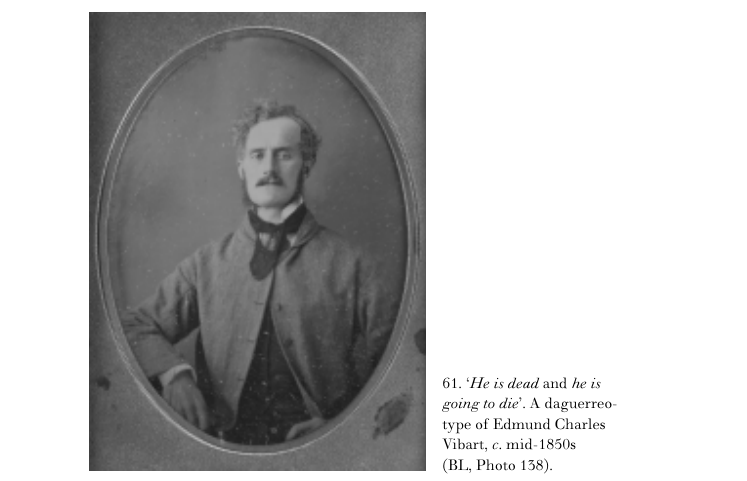
Edmund Vibart, in the meantime, had taken on Probyn’s work with some zeal, issuing orders and doing his best to acquaint himself with the absent Collector’s work. He proved himself up for the task when he received a report that the local jail was in riot. A capable officer, Vibart armed himself and went to the jail with the intent to stop the disturbance as quickly as possible – any uprising here would have had the effect of sparking the entire city. Prison riots were notorious for setting off entire towns into chaos.
The jail was located one mile outside of Fatehgarh and contained, at the time, some 650 prisoners. They had risen in a full-scale riot, beating the superintendent, and were starting to dig their way out of the prison wall. The guards of the 10th BNI watched and did nothing.
When Vibart entered the jail, he was met with a hail of stones and the disinterested guardsmen. One prisoner threw a well-aimed brick at the officer, striking him under the eye. Covered in blood, Vibart pulled out his sword and his pistol, and, by now furiously angry, he went outside and ordered the guard to assist him. He must have made the right impression – without questioning, the guard followed him back into the jail. He then ordered them to open fire on the prisoners – sixteen were killed, and the rest fled back into their cells. Their ringleader, Burriar Singh, a man who had been jailed by Probyn for a myriad of crimes, including murder, was dragged out into the courtyard and promptly executed. His body was left where it had fallen.
Vibart then ordered the prison wall fixed, organised a new guard, and took the remaining sepoys back to Fatehgarh. He reported back to Colonel Smith, whose response was to line up his men and give them yet another overlong and overly loud speech. This was to be the last time the 10th BNI would follow orders from an English officer.
Probyn and the two officers arrived back in Fatehgarh to face an outraged Colonel Smith. Furious that they had abandoned their posts, he informed Probyn he was no longer needed as martial law had been declared, and he immediately arrested the officers, charging them with desertion. Probyn remained in Fatehgarh for two days, but finally, disgusted with the colonel and rightly fearing that the outbreak was imminent, he returned to Dharampur. On arriving back at the enclosure, accompanied now by the Donalds and Mr. Edwards from Budaun, Probyn found his party of fugitives were anything but pleased. Many of them rued the day they had set foot here and regretted they had not gone to Cawnpore. They were further emboldened by messages from Colonel Smith, entreating them to return to Fatehgarh. His reassurances went so far as to say he had 150 men on whom he could rely, and if worse came to worst, they could fight their way to Allahabad.
Undoubtedly, the ferocious heat of an Indian June played no small part in their fateful decision. Missing the “punkahs, the mosquito nets, the soda water and bottled beer of their abandoned homes,” and, on the 12th of June, they upped and left, making their way back to Fatehgarh. Besides Mr. Probyn and his family, Mr. Edwards and four servants remained. Of the 19 children who had been given over to Probyn’s care, nothing is said. It can only be assumed they went back to Fatehgarh. The Donalds chose to go as well.
On arrival at the station, however, very few actually went back to their homes, choosing instead to sleep in an encampment by the river and close to the Fort, where 17 boats had been made ready by Colonel Smith, who still had no real intention of holding the Fort at all.
Over the next four days, nothing of note happened in Fatehgarh. Thornhill went back to his old post as District Judge – and in doing so, signed the warrant of execution for one of the prisoners in the jail. The 10th BNI refused to allow the Jail Superintendent to carry out the order. Again, Edmund Vibart was dispatched to the jail, this time accompanied by Thornhill and Doctor Maltby. This time, however, the sepoys stood their ground, demanding that the prisoner be released. Their will was done, and the prisoner Kesari was freed.
Then, the tide turned. The 41st BNI reached Fatehgarh on the 16th of June. Having murdered their officers at Sitapur on the 10th, they now turned their eyes to plunder. Welcomed in Allahganj by the local zamindar, Likha Singh, who, instead of turning them away, gave them provisions and transport for their journey to Fatehgarh. He then followed them with 200 of his own tenants, and they set about plundering the house of the absent Maharaja Duleep Singh.
A letter was sent by the Subadar commanding the 41st to the native officers of the 10th, ordering them to kill their officers. The messenger and the letter were brought to Colonel Smith, but his reply was never sent. Instead, a secret communication was sent to the 41st, inviting them to Fatehgarh and intimating that the 10th would not take part in any murder, but they would not prevent the 41st from doing so.
For the Nawab of Farrukhabad, the situation was becoming intolerable. Constantly pressed by his own people, who had lost their lands to the government and by his own coach driver, Wazir Khan, the Nawab waited patiently for Smith to actually do something. But all Smith would do to keep the 41st out of the city was sink a few boats on the river from the Bridge of Boats that Probyn had already cut earlier in May. Smith then asked the Nawab to provide him with men and ammunition, to which he could only reply that he had none. Finally, the Nawab relented and placed a few men to guard the gates and the police station.
To make matters worse for the Nawab, rebel landlords now began arriving and pledging their allegiance to him, and although he resisted being crowned their leader, he finally gave in. In a quickly organised coronation, he was declared emperor and a new regime was proclaimed. Whether he liked it or not, the Nawab of Farrukhabad was now up to his neck in the mutiny.
On the 17th of June, Smith was informed by his native officers that he should retire with haste to the fort and prepare to defend himself. The 41st had crossed the river in boats, and the prisoners in the jail had been freed. Anyone remaining in the town now fled to the Fort. Smith’s 150 staunch men melted away. Smith arrived at the Fort with only 4 of his truly loyal Indian officers, but he sent them away.
 Mutiny Reflections