The History of Sindh
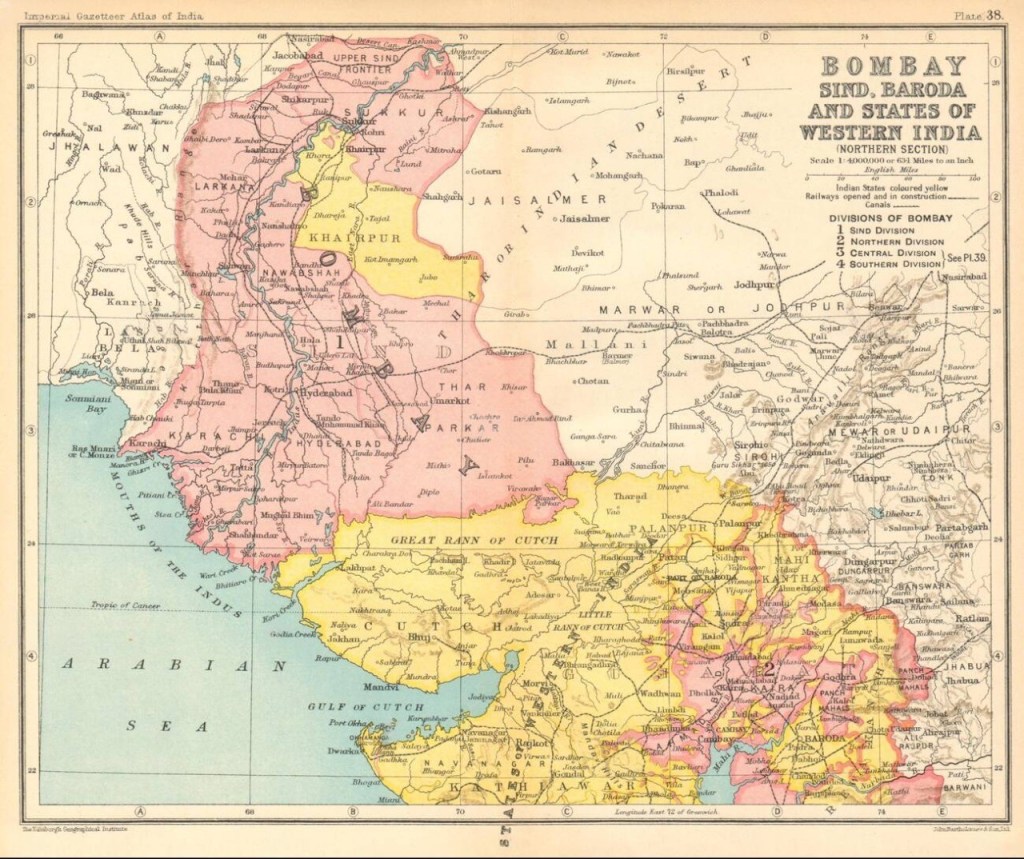
Located in the south-eastern region of today’s Pakistan, the province of Sindh is bounded by the Arabian Sea to the south and borders the provinces of Baluchistan to the west and Punjab to the north. In today’s geography, Sindh shares a border not only with the Indian state of Gujarat but also with Rajasthan. Its capital is the port city of Karachi.
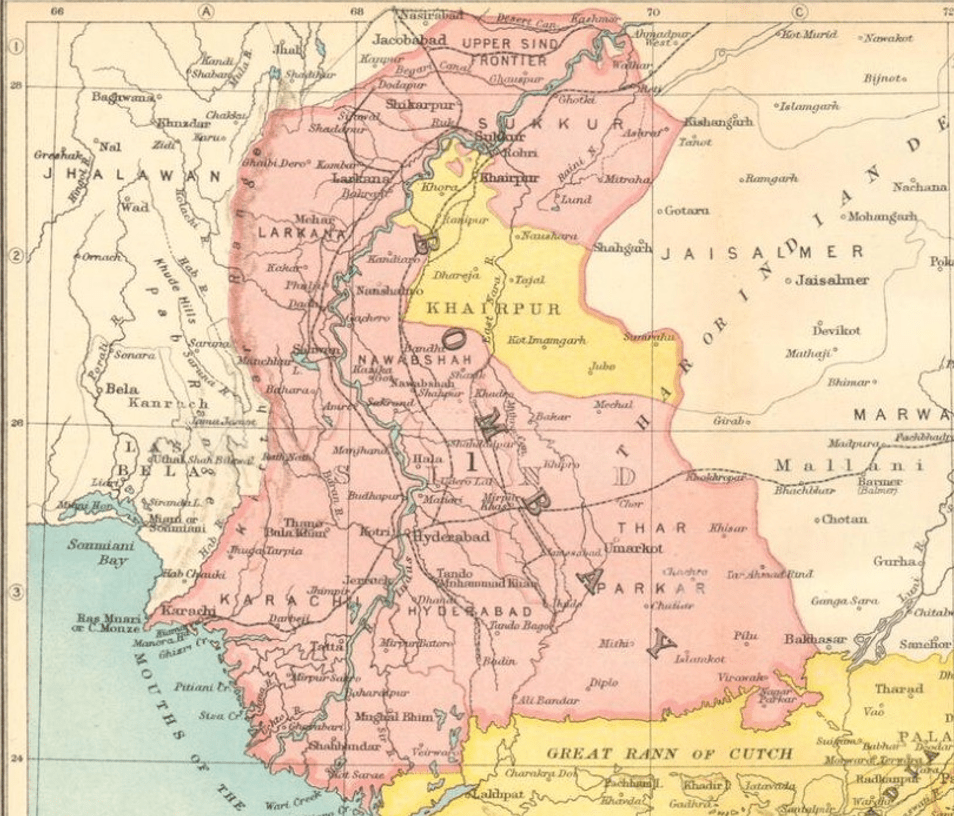
With a history going back as far as 9000 years ago to the Indus Valley Civilisation, the Sindh Province has seen its fair share of conquests and empires. Following the decline of the earliest established kingdom of Sindhu-Sauvīra (1000 BC – 518 BC), the history of Sindh reads like a handbook for invaders. The Achaemenids captured the region in 518 BC, and they were followed by the Macedonians, the Mauryans, the Indo-Greeks, the Indo-Scythians, and the Guptas, finally leading the Sasanian invasion of 3 AD, from which Sindh emerged as an independent kingdom under the Rai Dynasty, in 5 AD, only to be succeeded by the Chach Dynasty in 7 AD. Although the region was subjected to raids during the early Muslim conquests but would not fall under Muslim rule until the Arab invasion under the Umayyad Caliphate in 712 AD. This would begin centuries of Muslim rule, and a new series of dynasties would rise and fall, including the Habbaris, the Soomras, the Sammas, the Arghuns and the Tarkhans. It was not for nothing that Sindh was also known as Bab-ul-Islam (Gateway of Islam) for being one of the first regions on the Indian subcontinent to fall under Muslim rule. The Mughals took Sindh into their fold in 1595 and organised it an imperial division.
The Mughals ruled from their capital at Thatta, from whence they controlled lower Sindh; upper Sindh was in the hands of the Kalhoras. The Kalhoras were a tribe indigenous to Sindh, who had moved from a pastoral life to settling in the Sindh region.
“If their early history as recorded in the eighteenth century Persian sources is to be trusted, they were Arabs who came to Sindh through Makran.16 They married local Sindhi women from the families of local chiefs from the Abra and Samma tribes, which added to their political significance and could have also contributed in making them appear more Sindhi than Arab over the period of centuries. Gradually, within the context of the turbulent and fragmented nature of tribal polities in Sindh there arose a mutually beneficial relationship of dependence and reliance between the Mughal state, which nominally exerted sovereign power over the region, and the locally powerful Kalhora tribe.” (Verma)
They began their rule around the start of the 18th century when Yar Mohammad Kalhoro was appointed governor by royal decree by the Mughals (this is a simplistic explanation – for details, I have added links below). He received a grant from the Mughal emperor, Aurangzeb, a tract of land between the Indus and the Nara to found his capital, Khudabad and would later extend his rule to include Sehwan and Bukkur to become the sole ruler of Northern and central Sindh, with Thatta remaining under the administrative governance of the Mughals.
Unfortunately, the Kalhoras were unable to withstand the onslaught of that rather prolific invader, Nader Shah. Shah was well aware that the Mughal Empire was entering its twilight phase, plagued by disobedient nobles from their own ranks and increased opposition from the Sikhs. To add more misery to their problems, the Marathas were increasingly looking to expand their own empire. It did not bode well when Shah began making demands on the Mughals, who, unable to comply, were promptly attacked by Nader Shah. Following the capture of Ghazni, Kabul, Peshawar, Sindh and Lahore, he crushed the Mughal army at the Battle of Karnal in 1739, after which he proceeded to sack the imperial city of Delhi.
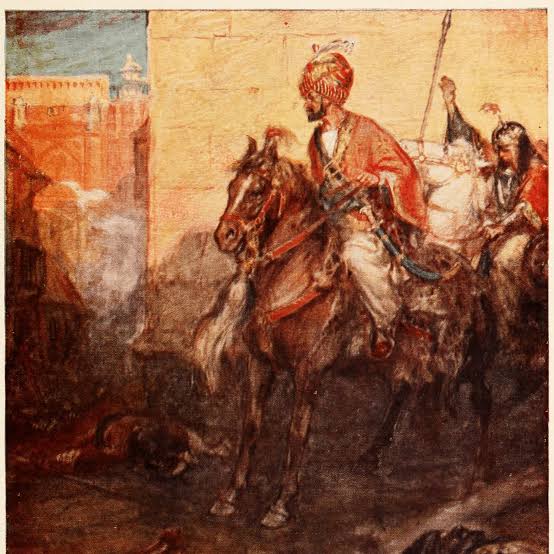
However, this is not a history of Nader Shah, and we return to Sindh.
The Kalhoras could not withstand Nader Shah and were equally unable to resist the conquest of Ahmad Shah Durrani between 1748 and 1750, which left the Sindh State a vassal under the suzerainty of the Afghani Durrani Empire. Likewise, this is not a history of the Durranis. As it goes, the Kalhoras would form a cooperation with the Durannis, but they would be overthrown by the Talpuras, a tribe from Baluchistan.
However, before we can let the Talpuras through the door, we shall take a more careful look at the declining years of the Kalhoras.
The final years of the Kalhoras were marred by conflict; the death of their ruler, Noor Muhammad, in 1754 had left a veritable power vacuum with his three sons squabbling for the throne; the Afghans had been quick to exploit the strife and found themselves to be invited guests to the rivalry, with the varying Kalhora factions seeking political sanction from the Durranis to claim the throne. The Durranis were not blind to their own advantage and began openly meddling in Sindh, demanding tributes for missions between Sindh and Afghanistan, which put tremendous strain on the Sindh coffers. With not only political chaos but civil unrest at hand, the Kalhoras needed to make money. Although their ruler, Murab Yab Khan, was hardly a fitting choice, as his knowledge of the very province he was ruling was limited, having spent much of his time away from it, he did understand that those odd Dutch traders (of the VOC) could be rather useful.
Now, the Dutch and their East India Company (VOC) had been present on the Indian scene since the mid 18th century. They had been busy establishing factories in various places, but Sindh, due to its rather disturbed politics and the propensity of pirates plying their trade off the Sindh coasts, had remained out of their grasp. However, this changed in 1757, when Murab Yab encouraged the Dutch to come ashore. This first exploratory mission was a success for the Dutch, who would soon begin trading with Sindh.
The English East India Company had hitherto, like the Dutch, avoided Sindh; however, seeing their competitors were doing a brisk trade, they too decided to try their luck. Knowing the Dutch were hardly likely to take this lightly, the English lowered their prices and then began offering the Sindh merchants very long lines of credit. The Dutch rightly assumed the English would practically stoop so low as to give away their products rather than allow the Dutch to have the upper hand in Sindh.
Sindh’s economy began to decline after the Kalhora state came under Afghan suzerainty; the drain of wealth to Qandahar was partly responsible for this. Dutch records show us that around the latter half of the eighteenth century the circulation of cash in Sindh was diminishing because of economic decline. Dutch traders were instructed by the VOC’s Supreme Council to start accepting payment in products such as chankos (shells), cattoen (linen cloth or flax) and other textiles, and poetiock (a kind of Himalayan fragrant root). The Dutch record tells us that many Sindhi traders were troubled by the unrest caused by the rival groups in Sindh wanting to overthrow Murad Yab Khan Kalhora as ruler. Many of them also complained to the Dutch trading team about the oppression suffered by many people in Sindh under the reign of Murad Yab Khan.” (Verma)
With increasing pressure from the underhanded tactics of the British and disputes within their own company as to how best to go forward, the Dutch eventually conceded that Sindh was not as profitable as it should have been for them and on 20 April 1757, they turned their backs on the whole thing and left the British as the sole traders, free to open a factory in Sindh in 1758. By 1761, recognising the British were rather a good boost to his faltering economy, they were granted with favourable concessions and in 1761, declared that no other foreign agency would be allowed to trade in Sindh, effectively closing the ports to other traders; the English acquired what they wanted: a monopoly on the saltpetre trade, which was sweetened by the exemption of transit duties for transports on the Indus River.
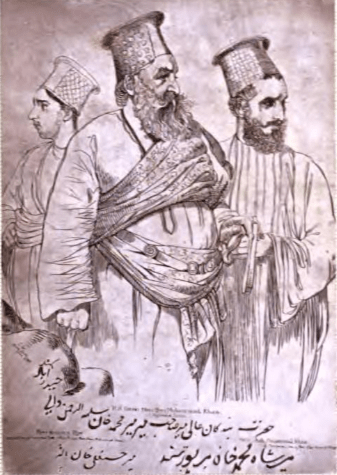
However, the Kalhoras were not destined to remain forever. Although Ghulam Shah had attempted to rule Sindh as independently of the Afghan court as possible, his successor, Sarfaraz Khan, was a meeker sort of individual who asked the Afghanis for permission for all his doings, allowing them to gain stronger control over Sindh. Under Khan, the Kalhoras gradually dwindled. Each succession to the throne had been marred by infighting between aspirants, gradually pushing them further down the road to ruin. The Talpurs from Baluchistan eventually ousted the Kalhoras at the Battle of Halani, establishing their rule in 1783. Under their rule, Sindh was divided into several semi-autonomous states, and the dynasty governed through a system of divided authority among the different branches of the family. Their rule was marked by some significant changes, one of them being their form of governance. Gone now were the days of one prince, a subject of a different court, ruling over many; the Talpur court was presided over by four men who shared power and ruled jointly in Hyderabad. They were colloquially known as the Four Friends; however, the British would know them better by their title, the Mirs.
In turn, they were subordinate to the Khanate of Kalat, also known as the Brahui Confederacy. This confederacy had been formed at Kalat in Baluchistan during the time of the Mughal expansion in the region in the 17th century, and would control most of Baluchistan throughout the 18th century from Kerman in the west to Sindh in the east, and from the Helmand River to the Arabian Sea. The advent of the Talpurs had also spelt the end of Durrani suzerainty in Sindh – following the Battle of Halani and the end of Kalhoras, the Talpurs were able to establish independent rule. Although they did continue to pay a nominal tribute to the Durranis, the time of the Afghans in Sindh had also drawn to a close.
Now the history of Sindh is indeed lengthy – the Sindh Gazetteer devotes 68 pages to it alone, and while it is interesting and full of intrigues, overthrown princes, kidnaps and skulduggery, it does not warrant us spending much more time on it. So, to push the narrative along, let us turn our attention to why we are here in the first place – the Honourable East India Company.
 Mutiny Reflections