The Good Works
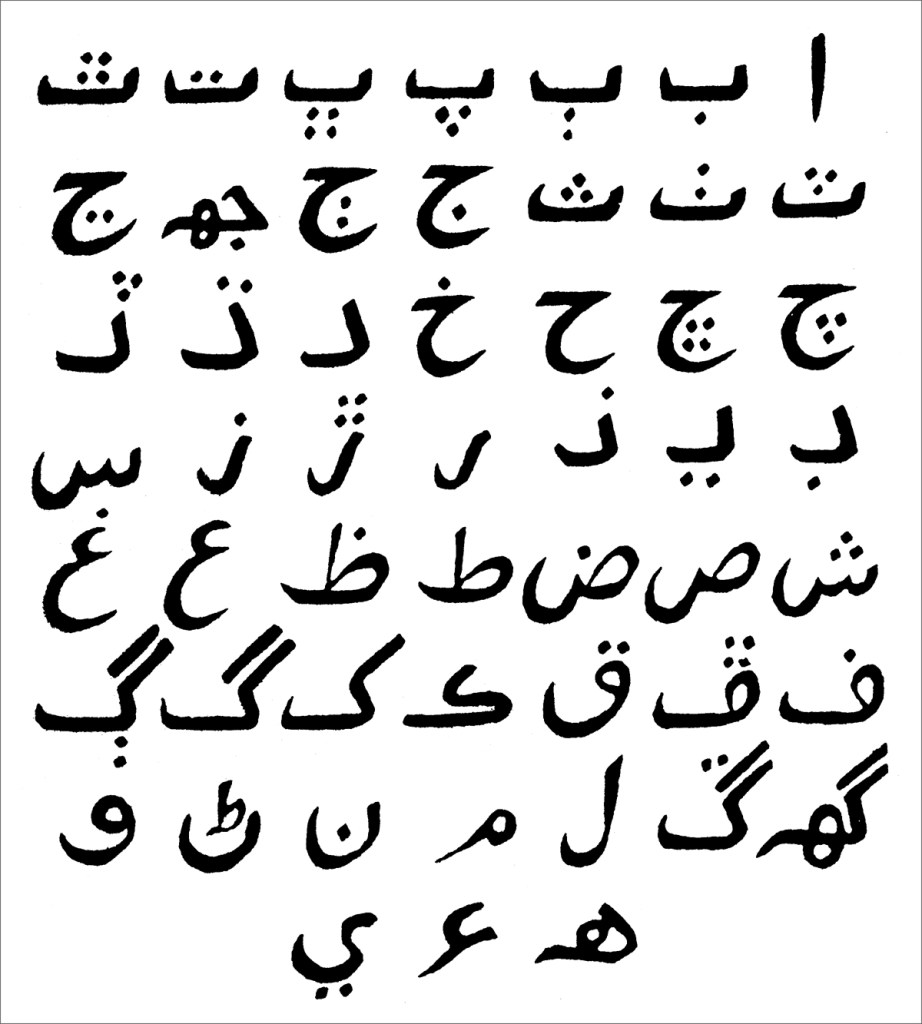
While it is misleading to say that Sindh did not have a language, for indeed it did, but what Bartle Frere wanted was a unifying script. Vernacular Sindhi was not a written language, and local merchants used a script that resembled a cypher rather than an actual alphabet when they wrote; numerous variations existed in every town, and even the different castes had their own writing form. While it was possible to master the spoken language to some extent, Frere found only two Europeans in his service who spoke it tolerably well and a further two who could not speak it but understood it. As there was no standardised written language, Sindhi could not be used officially in courts, and the usual process “…in all official proceedings before Europeans was that the Sindi parties and witnesses spoke Sindi, a Moonshee interpreted between them and the European officer in Hindustani, and all was written down in bastard Persian.”
Captain Richard Burton, who had served in Sindh for two years between 1847 and 1849 and spoke Sindhi fluently, advocated the adoption of the Arabic alphabet, with the addition of dots and signs that would be necessary to indicate peculiar Sindhi phonetics. Captain George Stack, the only one on par with Sir Burton’s knowledge of Sindhi language, was for adopting the script already in use among traders, a variation of Devanagari with modifications. Stack thus wrote the first Sindhi grammar and dictionary based on his own unique system, utilising characters in common use. Through thorough research and study of the language and its structure, with the help of Sindhi munshis, Stack prepared his first work, a grammar and dictionary of the Sindhi language, but unfortunately, he died before he could complete it. Undaunted, Frere proposed that for now, until a written language could be settled on, the government should implement the learning of Sindhi as an official, colloquial language, with two grades of examinations for all aspiring officials, “and the other—a more difficult one—for an interpreter’s knowledge, including reading and writing, for passing which a premium of one hundred rupees should be given. He also recommended that the Government should offer to bear the expense of printing any books that should be written in Sindhi, in any character.”
It would finally be Mr Barrow Ellis who completed Captain Stack’s work. He invented characters to express sounds which had no letters at all, thus making it possible to write in Sindhi in the Devanagari script. However, as valiant and approved as his method was, with three-quarters of the population being Mohammedan who were already acquainted with the Arabic script, it made sense to adopt that written form instead. In 1853, the court of directors of the East India Company decided that the Arabic alphabet script should be tried out and sanctioned an annual expenditure of ` 10,000/- for the purpose. Ellis, with the assistance of several native scholars (Rai Bahadur Narain Jagannath Vaidya, Diwan Pribhdas Ramchandani, Diwan Udhara Mirchandani, Diwan Nandiram Mirani, Khan Bahadur Mirza Sadiq Ali Beg, Mian Mohd., Qazi Ghulam Ali and Mian Ghulam Hussain), devised an Arabic alphabet script and extended it from the existing 29 letters to 52 letters. Frere openly published Sindhi books related to various streams of literature, encouraging Sindhi writers to move quickly with literacy.
“Text-books were therefore prepared in that character also and introduced into the country schools; the native officials soon learned to use it; and before long it was found practicable to issue a circular making Sandhi the exclusive language of record for native proceedings in all judicial cases, civil as well as military. Writing in April 1855, within four years of his first report on the subject, Frere was able to state that all the twenty-five European officers in the three Collectorates had a more or less perfect acquaintance with the language and always employed it in their courts.”
Sindhi is today written in the Perso-Arabic script, the sole official script for the language in Pakistan; while in India, both the Perso-Arabic and the Devanagari script are used among the Hindu Sindhi communities. With over 37 million native speakers, Sindhi is a major South-Asian language with 23 million speakers in Pakistan alone.
It was now possible to establish schools in Sindh, taught in either English or Sindhi, subsidised by the government, with the entire educational department overseen by Mr Ellis. The first Government English School was opened in Karachi in 1853, and subsequently divided into two, with the upper school students having access to the Bombay University. With the establishment of a library and museum, Frere further encouraged not only scientific but also archaeological research in Sindh, with both institutes open for the general public from the end of 1851.
Frere Goes on Tour
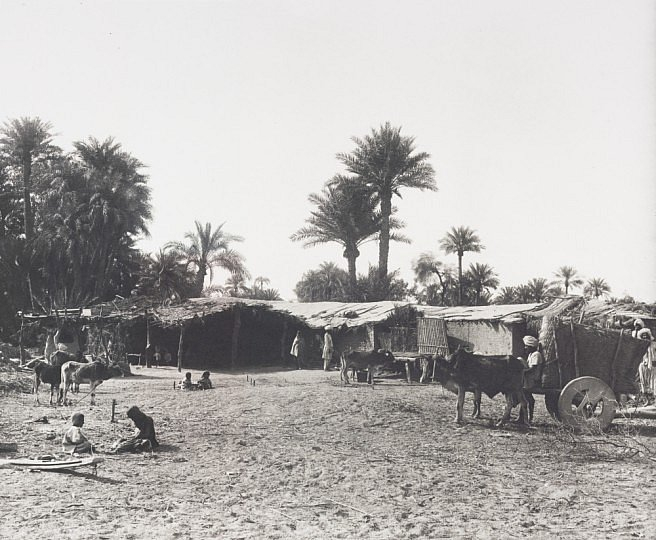
Unlike Napier, who rode through Sindh with the sword, and Pringle, who never left Karachi at all, Frere was determined to leave no corner of the province unseen or unheard. He ensured he was accessible to both Europeans and to the local population, his doors open to anyone who needed his attention; his residence was never without a bevvy of visitors or petitioners.
“Sir Bartle’s kind temper and judicious patience has won him universal respect and admiration. Every petitioner, whether high or low, received a patient hearing; and where he perceived that people out of their ignorance of law did not understand things, he would show them that there was actually no grievance where they imagined one.. It is a common saying in Sind that there never came such a ‘ Sahib-lok ’ here before, and none such has come since.“
Within four months of arriving in Sindh, he had visited every district except one, and every year, until he left in 1859, he would make a “cold-weather tour” to personally evaluate public works, agricultural conditions, and communication routes. met with local headmen, landowners, and his European subordinates, establishing the decentralised framework that would define his administration. He took time to inspect local manufacture and artistic work, such as the famous Hyderabadi silver and gold enamelling, Sindh embroidery, carpet weaving, tile making, woodwork and stone work. He encouraged reviving old traditions, with specimens sent yearly to the Karachi Fair. Until 1854 (when his wife returned to England with the children), Frere took his family with him on these tours, which encompassed the entire cold season.
Frere insisted that all newly arrived officers and civilians accompany him. As Sindh was still an unattractive province for young civilians, he was not given the cream of the ICS crop, but rather the men no one was sure what they were good for, without distinction or, for that matter, without great experience in anything at all. During the tours, Frere would gently figure out who they were.
“There was, when he arrived, but one member of the covenanted service in all the province. But he found good raw material in the young officers of the army who were employed there, and his insight into character and discernment of how the qualities of each man could be turned to the best account in the public service, his minute knowledge of the details of their several duties, his tact and sympathy and hearty appreciation of good work, won from them zealous and faithful service in their different spheres of action, and gradually trained and drew round him a band of able, energetic, and attached fellow-workers whose several careers, both when under him and afterwards, he watched with constant and friendly interest. He was ever ready with advice and assistance when it was asked for, and many a local officer’s report to Government was suggested, or even sketched out by him. But, true to his cardinal principle of promoting personal and individual responsibility, he would seldom give hard and fast instructions, but would leave a wide discretion for contingencies, thus training his officers to court rather than to avoid responsibility.”
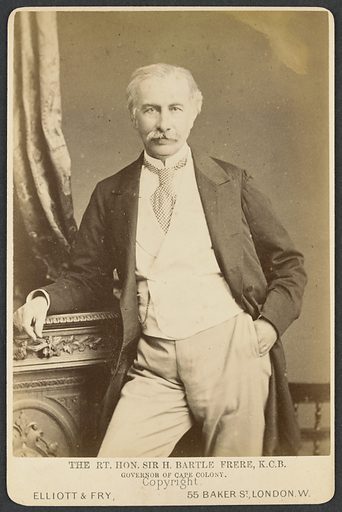
Between wrangling with the Bombay Government and implementing works for the betterment of Sindh, Frere was also Chief Commissioner of Sindh, an office which carried its own weight and responsibility. Although he had a regular fleet of assistance, ultimately it was on him to see that Sindh ran efficiently and above all, economically, but at a profit, and he performed all of his duties with such diligence that it left little for recreation. After his family returned to England in 1854 for the sake of the childrens’ education, Frere pushed himself harder, finding a way through the loneliness he now felt in Government House with more work. Even the most robust constitution eventually reaches its limits, and in 1856, worn out and ill, Frere was obliged to take sick leave, and he sailed for England. He left Major Jacob as Acting-Commissioner in his place, but in April 1857, due to the Persia War, Jacob was given command of the cavalry for the duration of the expedition, and Barrow Ellis replaced him. As for Frere, who was supposed to be recovering his health, Sindh remained his chief preoccupation.
“He was sending out designs and plans to Colonel Turner for bridges, taking measures for the improvement of the breed of sheep in Upper Sind, urging the India Directors to push on the works for the Sind Railway, speaking at the Sind Railway meeting, and so on. He was invited to a quarterly dinner of the India Directors—one of the last ever held—and treated as one who had earned distinction.”
When Frere returned to India in May 1857, the unthinkable had already happened – the Bengal sepoys had mutinied. Action would now be required of him in a very different capacity — the civilian would now have to think like a soldier.
Page 5/5
Sources:
Aitken, E.H. Gazetteer of the Province of Sind. Karachi: Mercantile Steam Press, 1907.
Burton, Richard F. Sind Revisited. 1877
Eastwick, J.B. Dry Leaves from Young Egypt, being a Glance at Sindh before the Arrival of Sir Charles Napier. London: James Madder, 1843
Edwards, William. Sketches in Scind. London: Henry Graves, 1846
Hughes, Albert William. A Gazetteer of the Province of Sindh. London: George Bell & Sons. 1876
Martineau, John. The Life and Correspondence of Sir Bartle Frere, in Two Volumes. London: John Murray, 1895
Postans, Thomas. Personal Observations on Sindh: the Manners and Customs of its Inhabitants and its Productive Capabilities. London: Longman, Brown, Green & Longman, 1843.
Links:
https://ajuntament.barcelona.cat/gabinetpostal/the-scinde-dawk-el-primer-segell-asiatic/?lang=en
https://sindhishaan.com/gallery/karachi.html
https://khudabadisonara.in/bombay-presidency-sindh-sindhis/
https://www.sahapedia.org/the-sindhworkis-unique-global-diaspora
 Mutiny Reflections