Onwards, to Sindh
Considering that a man with the capability for office work like Mr Pringle had not been able to manage in Sindh, Lord Falkland initially offered the position to Colonel Melvill. As military secretary to the Bombay Government, Melvill fell between an administrator and a military man, not unlike Napier’s soldier-civilians were supposed to be. Still, Melvill had been moulded by the Bombay Government, and readily accepted the nomination, but would never have the chance to pack his bags. The Board of Directors, still smarting at the very thought of Sindh being administered by a military man, baulked and told Falkland to choose a civilian instead. Falkland chose Bartle Frere.
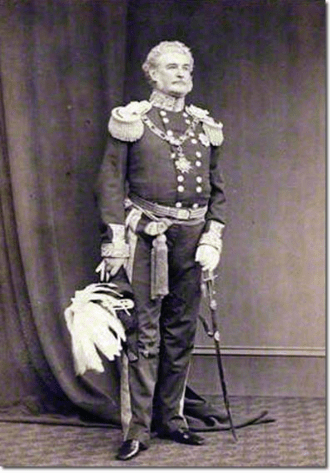
Governor of Bombay, February 1848 – December 1853
This time, the Board of Directors collectively shuddered and told Falkland the nomination was impossible. Frere was 35 years old, and there were at least 60 men in the service who ranked higher than him who deserved consideration, if not for their rank, then certainly out of respect for their age. Falkland retorted that if Frere was not accepted, he would resign the governorship of Bombay. The matter was referred to England, and after some huffing, Frere was given the appointment; it was further decreed that in the future the governors of the erstwhile presidencies would have a free hand to appoint whomever they chose for commissionerships.
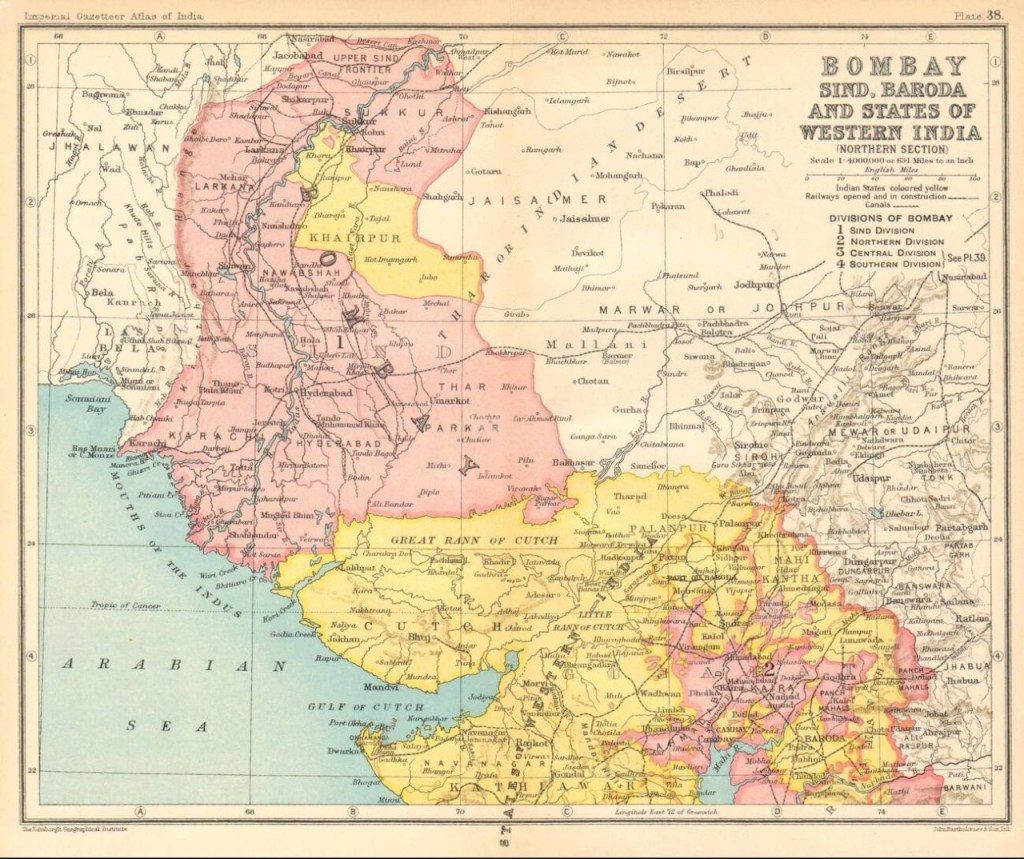
Frere and his wife packed their bags and set sail for Karachi. While it would be the first time he would set foot in the province, Sindh was not unknown to Frere. As secretary to Sir George Arthur, he had witnessed the annexation, albeit distantly, and in the background, he had heard of the fights between Outram, Napier and Ellenborough, and as it was, Frere’s sympathies were with Outram’s viewpoint. Yet he retained some sympathy for Napier, although this would not be voiced until many years later, well after the principal players in that game were either retired or dead.
One of the first men Frere met in Karachi that January day was Sir Charles Napier himself, travelling with a retinue of relatives, which included his daughter, her husband and his brother William. Public and parliamentary alarm over British casualties under General Hugh Gough had prompted the Duke of Wellington and the British government to dispatch Napier from England. Appointed Commander-in-Chief to replace Gough, Napier, travelling with all haste, would find when he arrived, the Battle of Gujrat had been fought, and all hostilities with the Sikhs had ceased. The Second Anglo-Sikh War was over, and no one needed Napier now for that particular work.
Napier officially took over the mantle of Commander-in-Chief of the Indian Army from Lord Gough. Because the Punjab had just been annexed, he was tasked with securing the new frontier and organising the garrisoning forces, but he immediately entered into a fierce, ongoing political conflict with Governor-General Lord Dalhousie. They disagreed heavily on the civil management of the newly conquered Punjab and the overall limits of military authority. Furthermore, Napier, recognising systemic issues within the East India Company’s Bengal Army, tried to implement widespread reforms to enforce discipline, improve soldier welfare, and counter growing insubordination. He dealt aggressively with small-scale mutinies and unrest among native sepoy regiments over cuts to their allowances. Napier temporarily altered the compensation to appease disgruntled troops without Dalhousie’s approval to prevent the problem from spreading, but this issue would add to the growing list of problems the Bengal Army saw with their employers. Finally, unable to reconcile his authority with Dalhousie’s restrictions, Napier resigned prematurely in December 1850 and left India in 1851. His warnings regarding widespread indiscipline in the Bengal Army were ignored, only to prove prophetic during the Indian Rebellion of 1857.
So here he was, a guest of the Freres at Government House in Karachi, the very house he had built for himself during his tenure in Sindh. It must have been a strange return. Napier, who famously abhorred civil servants, could find no fault with Frere’s appointments and admitted that there was “…no one equal to the duties, or in whose hands he would sooner see the administration of the Province of Sind.” It was a short visit and after four days, the Napiers were on their way, leaving Frere to examine his new posting. What he found was both encouraging and disheartening in the same turn.
There was no open rebellion; the people were not ill-disposed towards the British, and the province, as Frere could see, was quiet. Away from the cities of Hyderabad and Karachi, the people lived in the rough and ready conditions, very much the way they had done for many years, regardless of who was ruling them, but there was no trace of an actual village system, unlike in India. There were no village councils (panchayats), the headmen were leaders of only their tribes. If there ever had been a village structure at all, Frere believed it had well and truly been obliterated long before the Mirs had taken power. He found that the people who had migrated to Sindh since the annexation to work as skilled labourers, servants and artisans were only happy to stay as long as their wages remained high (at the time, the pay was double that to be found anywhere in India), but they complained of the “uncivilised, unimproved place, difficult to get at and difficult to get away from.” They baulked at bringing their families to Sindh and, for the most part, refused to settle down in the province.
After eight years of annexation, the people of Sindh had yet to reap any benefits the British were busy implementing in other parts of India. Frere found there was, “not a mile of bridged or of metalled road, not a masonry bridge of any kind – in fact, no five miles of any cleared road – only one set of barracks (for a troop of horse artillery) of higher class than ‘temporary’, not a single permanent shed for an arsenal, and only one masonry magazine in Fort Bukkur for gunpowder; not a dock of any kind – even the river steamers went to Bombay for repairs, in seven years, three of them were lost or damaged beyond repair at sea in the process. There was not a single dak bungalow, serai or durumsala, or district cutcherry; but one market place and not a courthouse, lock up or police station or office of any kind; no church, but what Sir C. Napier called ‘an ecclesiastical convenience’, built of reeds, mats and mud; not a schoolroom or hospital In fact, except some temporary barracks, we were encamped in the country.” In Frere’s opinion, Sindh was being treated as the “stepchild alike of Bombay and of the Government of India.”
 Mutiny Reflections