Shikarpur – 24 September 1857
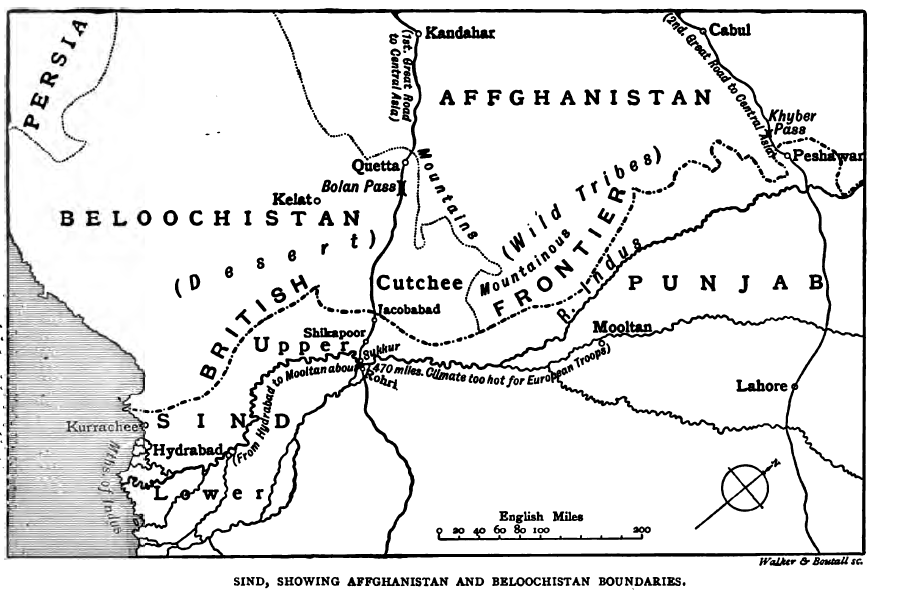
There would be one more mutiny in Sindh involving men of the Bombay Army, and like at Hyderabad, it was once again a company of artillery, namely the 3rd Company, 4th Battalion Native Artillery. Of the 145 men in the regiment, 61 were from the Bengal Presidency.
Rumours of the disaffection of the artillery had been circulating since June. Captain Merewether had his hands full guarding the north-west frontier with only a single regiment of Sindh Horse, who next to their regular duties, were also deputed to keep an eye on the 6th Bengal Cavalry. There were no European troops within 200 miles of Shikarpur. Located in the Sukkur District of Upper Sindh, it was bound on the north by the Upper Sindh Frontier District, a portion of the Bahawalpur State to the north-east, Jaisalmer on the south-east, the Khairpur State to the south-west, while the Indus River split the district for a full 25 miles from Larkana and the Upper Sindh Frontier Districts to the west.
For centuries, the district was traversed by caravans from Central and West Asia through the Bolan Pass into Afghanistan. Until well into the 20th century, Shikarpur kept hold of trade in silk and precious stones, and the town was well known for its gem merchants. “It is certain that pearls from the Persian Gulf, rubies from Burma and other gems of all kinds are sold at Shikarpur and that their reputation for quality and cheapness is not undeserved.” When the railway finally reached Shikarpur, the caravan trade dwindled away and died. During Merewether’s time, Shikarpur hosted the district prison, which had originally been a fort built by the Afghans before the Talpur reign and modified for the purpose in 1847. As one of the strongest buildings and the most defensible in Shikarpur, it was designated as the collection point for Europeans in 1857.
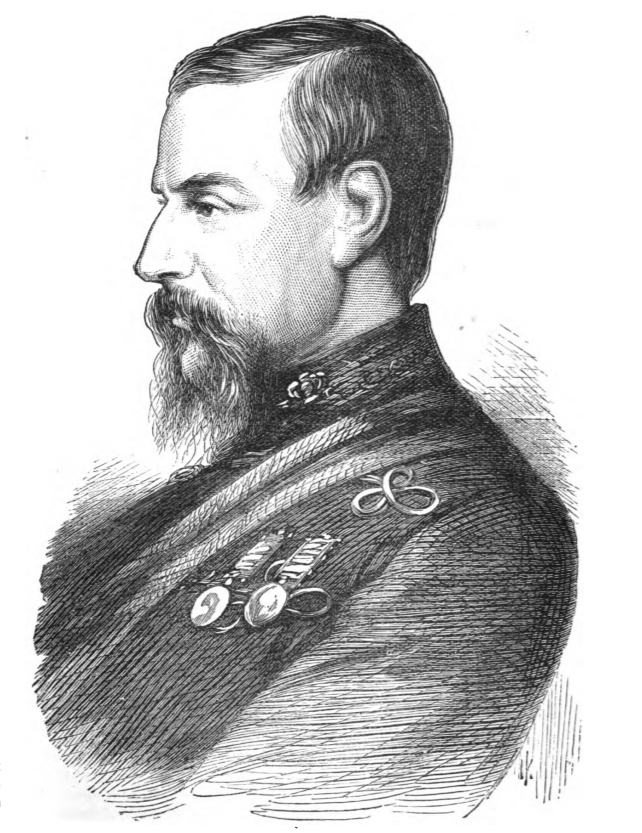
With Colonel John Jacob in Persia, the responsibility of commanding the Sindh Horse had fallen on William Lockyer Merewether. Like Jacob himself, Merewether had been in Sindh before the annexation; he had served with the 21st Regiment, Bombay Native Infantry under Napier at Hyderabad, and since 1846, had been patrolling the north-west border of Sindh. He had served as second-in-command of Sir George Malcolm’s detachment of Sindh Horse during the Second Anglo-Sikh War (1848-49) and had been present at the siege and surrender of Multan, at the battle of Gujrat and the occupation of Peshawar. Although only 32 years old, Merewether had proved himself in battle; he had traversed the Sindh frontier, was intimately acquainted not only with the people and the tribes but was thoroughly ingrained in the Sindh Horse, sharing many of the same ideals as Jacob. Unlike Jacob, who would fall foul of Dalhousie and the EICo for his loud opinions, Merewether would, in 1867, be appointed Chief Commissioner of Sindh.
In June 1857, among Merewether’s problems were two Baluch chieftains, Dil Murad and Duriah Khan, both of whom were suspected of sowing discontent among the troops in Shikarpur and in Jacobabad. Both were well known to the British – in 1844, Dil Murad had fled Sindh and joined a robber band in Kutch; he was apprehended a year later, and Napier wanted to hang him, but common sense prevailed, and he was released. For a time, he was given work as a guide for Colonel Jacob, but he was found to be intriguing with various chieftains of the wild tribes, some of whom were quite hostile to the British, and Jacob dismissed him. Since then, a close eye had been kept on him as he continued to live up to his reputation as an “inveterate intriguer, prompting others to mischief while keeping himself in the background.” Duriah Khan shared many of Murad’s inclinations, and it was an open secret that they were holding meetings at Murad’s residence in Janadeyra on the Sindh Frontier to stir up the Baluch tribes against the British. However, Murad had been somewhat lax in paying his revenues to the government, and when he fell into arrears, Merewether had him arrested, putting an end for a time to the conspiracy. By the end of August, Duriah Khan started his intrigues again and was visiting the frontier tribes to induce them to join in an uprising. When he returned from his lengthy travels, he assembled his followers under the “pretence of consulting about matters of cultivation, to communicate what he considered the success of his tour, and to propose the immediate carrying out of his scheme…” which was in plain terms, to ride to Jacobabad on 20 September, go to the Darbar that was taking place on the 21st, and kill the Europeans.
Merewether, however, had his friends too in the tribes and was informed well in advance what Khan was planning. As soon as Khan set foot in the city, Merewether had him arrested and, for good measure, rounded up Dil Murad and likewise, placed him in the gaol, clapping both of them in irons. It was just as well he acted with such promptness, for his spies, attached to the police force, brought him some disconcerting news. A subedar, a havildar and some sepoys of the 16th Regiment (Bombay) Infantry had held a meeting with the artillery; the spies had heard “seditious language” and Merewether, deciding it was best to err on the side of caution, had four men arrested.
However, the focus was still on the 6th Irregular Bengal Cavalry. Two years previously, Jacob had banned the more rowdy aspects of the Moharram festivities among the troops (including the beating of drums and processions by religious mendicants), calling them “unmilitary” and bad for discipline. Faithfully, the Muslims of the Sindh Horse had desisted, but in early September 1857, on the eve of the Moharram, some men of the 6th approached an old Rissaldar of the Sindh Horse and demanded to know why these festivities had been prohibited. One man wanted to know, “What kind of order is this…” to which the Rissaldar replied, “It is the order, and it was a very good one, and it must be obeyed.” Merewether, who had seen the 6th making preparations for the Moharram, which, had they been allowed to go through with it, would have included a procession, made a call at the police station to remind them of Jacob’s order. Although they prepared for the worst, the 6th decided it was better after all to call the whole thing off, and the Moharram passed without any incident. However, he was somewhat disappointed to learn that many men of the Sindh Horse thought that, had the 6th decided to use the Moharram as an excuse to cause mischief, they would not have been averse to joining in. He suspected that some of them knew of Khan and Morad’s plan, and as many of the sowars were Muslims from the Delhi provinces and from Bengal, he was not surprised that they had not stepped forward to tell him what was afoot, nor that mutiny was indeed about to visit Shikarpur.
At midnight on 24 September, Merewether and indeed the rest of the town were startled awake by the booming of the artillery guns. As it turned out, the gunners had seized four guns, loaded them with grapeshot and were firing at barracks and the gun sheds. They had chosen a night so dark that it was impossible to tell a “waggon from a gun” or for anyone else to ascertain what exactly was going on. Within minutes, the officers were accosted by men from not only the Sindh Horse but the 6th Cavalry, including the pay havildars of both regiments and the native officers, who came to report that the artillery had taken the guns and were in open mutiny. There was no time to be lost.
The 16th Native Infantry, the remainder of the artillery who had not joined in and the police (under Captain Montgomery) were turned out, and they opened fire on the mutineers, but as it was impossible to actually see anything, the two parties exchanged shots for two hours without hitting each other. The gun sheds were the only casualties and were so riddled with shot that the walls were on the brink of collapse. Merewether ordered the troops and the police to rush the gunners, which they did with some success, killing three mutineers, but the rest fled in the darkness.
As it turned out, their intention was to fire off the guns, which they knew could be heard in Jacobabad, 25 miles away, to signal their readiness to mutiny, hoping that anyone who heard them would rise up and kill the officers as Khan and Morad had planned, and then join them in the general mayhem. However, the whole plot died out as quickly as it had started. As it turned out, the entire plot had been carried out by ten men – three Brahmins and a Chatri who were the ringleaders and six Aheers. In all five of the ten were shot, three when the troops took back the guns and two more when they attempted to escape, four were subsequently captured by the police and one drowned in the river. A further two were suspected of having been part of the plot, but due to a lack of evidence, they were discharged from service. The four who remained were blown from guns.
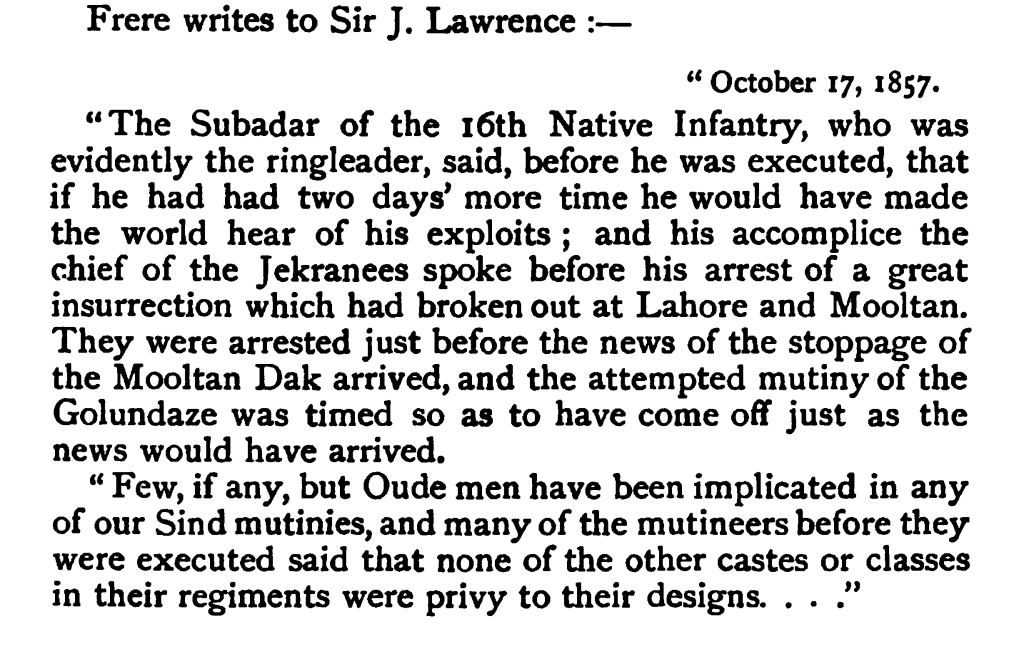
For Frere, it was clear, as soon as he was informed of the mutiny in Shikarpur, that the problem lay not with the regiments themselves but with only certain elements within them. He was unhappy that the 21st Regiment (43 of whom had mutinied in Karachi) was being punished for the actions of so few; he found the attitudes of the European officers distasteful, for as they had been unable to discover what lay at the bottom of each of the uprisings, they had simply decided to distrust the troops who were now sitting about, idle and disarmed, piecemeal, refusing to listen to apologies and angry at men who had done them no harm.
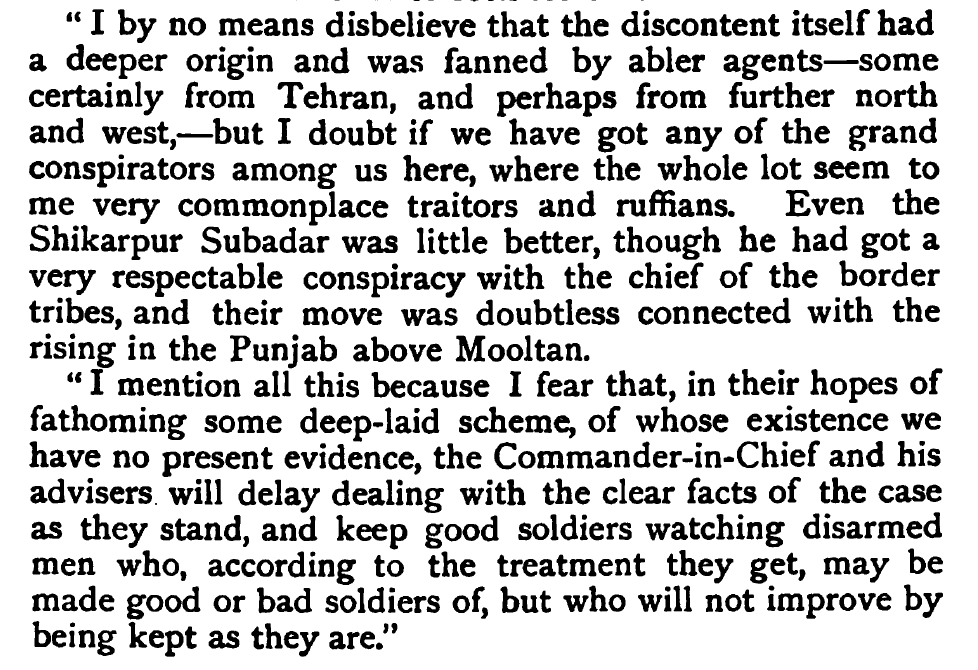
The 6th Cavalry continued to be a matter of contention – in 1858, Frere was still unsure what to do about them, the very regiment that had, besides showing some signs of insubordination, done nothing at all to warrant mistrust. Frere saw them as “useless and liable to become dangerous,” but was hesitant to disarm or dismount them as he felt such measures would cause them to mutiny. Unfortunately, they were a Bengal regiment and considering what had happened in the Bengal Presidency, besides the fact that none of the cavalry regiments had remained loyal, Frere wanted to pay them off and send them out of Sindh. As it turned out, they would be one of the few cavalry units that did not mutiny and in 1861 they filled the gaps left by the disbanded mutinous units, stepping up in seniority to become the 4th Regiment of Bengal Cavalry.
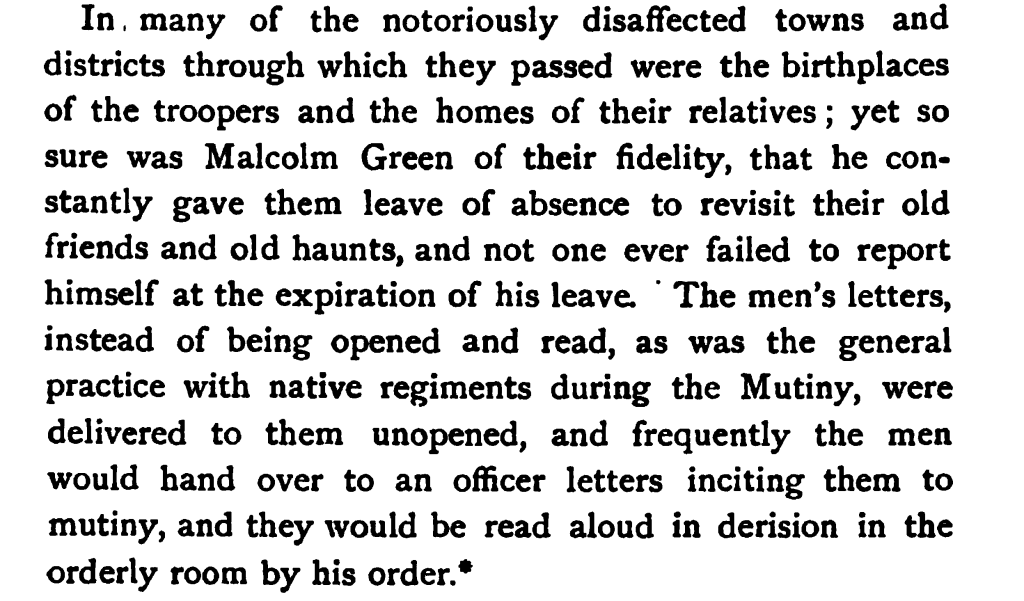
Shikarpur was the end of the mutinies in Sindh. In November 1857, the regiment of the Sindh Horse that had returned from Persia would be dispatched to the Southern Maratha Country, and subsequently, the Central India Campaign. Further detachments, under Major Malcolm Green, would be sent to Upper Sindh. Green would later cooperate with the Nasirabad Field Force in Rajputana and subsequently be present at the capture of Auwa. A detachment of 200 sabres would find themselves with Major-General Rajpootana Field Force at not only Kotah, but on the hunt for Tantya Tope. It was, however, a dicey business.
At the behest of George Lawrence, Frere and Jacob would raise an additional battalion of cavalry, known as the Border Belooch Horse, for service on the Sindh-Rajputana border. However, they were ultimately called to serve under Roberts in the Rajpootana Field Force.
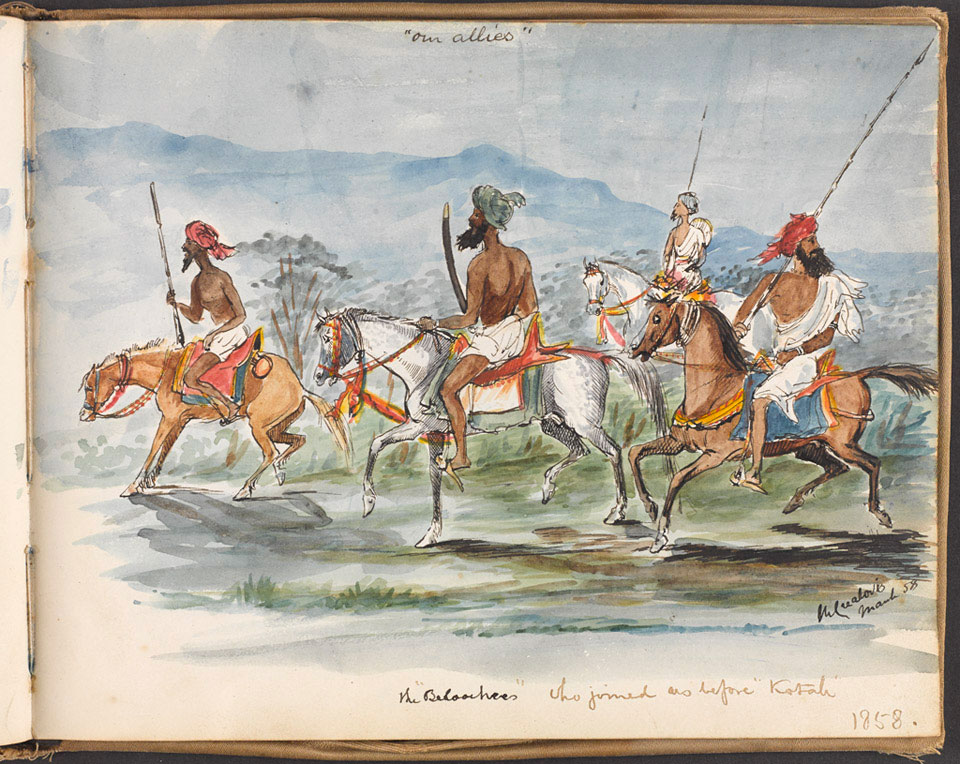
The Baloochis Whojoined us before Kotah, 1858- J.N. Crealock
The recruits were mostly from the wild Baluch tribes, who had been encouraged to enlist by promises of good plunder and pay. They were assembled on 12 February 1858 and made their first march to Shikarpur of 26 miles, the next day to Sukkur (24 miles) and then crossed the Indus to Rori, where they were able to increase their numbers to 505 of all ranks. Led by Lieutenant Macauley, the nucleus of the battalion was a Risaldar, four Jemadars and 25 sowars of the guides attached to the Sindh Horse, but the rank and file were exclusively Baluchis.
They halted a week in Rori to collect supplies, and then Macauley took them across the desert, a distance of 480 miles, to Nasirabad. They joined Roberts for his campaign and, during the siege of Kotah, furnished him with pickets, patrols, and guards. As they were unused to the military discipline of the regular army, it was thought best to let Macauley manage them according to their fashion. When left in his hands, they were worked steadily and without reproach, but it was clear from the start that Macauley was the only man they would follow. Macauley had a “supreme powers over his men and the very existence and coherence of the force depended on his single personal control and authority.” For Macauley, the responsibility was worrying. If anything happened to him, he wrote, “it is impossible to guess what mischief some of these wild Borderers would have perpetrated; none but those who have been in my position can understand what it is to work five hundred such wild creatures.” He lived in his saddle and visited his pickets twice a night; it was particularly irksome that his men, who could withstand the heat, were suffering intensely under the monsoon rains of which they had had no experience, and it was all Macauley could do to stop them from throwing it all in as they took objection to being constantly wet. When the rebels were finally chased out of Rajputana, Macauley took his wild men back to Sindh. Peace-time garrison work was not for men like these, and the Border Belooch Horse was formally disbanded in September 1858. They had, most remarkably, marched 2523 miles in eight and a half months.
While the career of Bartle Frere would continue to rise in Sindh and beyond in India, we shall now close this chapter on the mutiny here, a province held together, not only by the wise policies of a fledgling government, but by the fidelity of a handful of men who had turned their backs on mutiny, thus preventing uprisings in three stations. Had Frere been unable to hold Sindh, those communication lines he had established would have been lost, and the Indus River transit route would have been crippled. Potentially, this would have painted a very different outcome for the Siege of Delhi, and ultimately the mutiny itself. In the case of Sindh, the British had much to be thankful for the Indians who had chosen to remain true to their salt.
Sources:
Great Britain. Parliament. House of Commons. Accounts and Papers. 1859. Vol. XVIII.
Aitken, E.H. Gazetteer of the Province of Sind. Karachi: Mercantile Steam Press, 1907.
Hughes, Albert William. A Gazetteer of the Province of Sindh. London: George Bell & Sons. 1876
Martineau, John. The Life and Correspondence of Sir Bartle Frere, in Two Volumes. London: John Murray, 1895
Nabi, Aftab. “The 1857 Army Revolt in India: Sind Incidents and Impact on Policing in India.” Pakistan Horizon 70, no. 3 (2017): 37–47. http://www.jstor.org/stable/44988336.
 Mutiny Reflections