As it turned out, the 6th Bengal Irregular Cavalry would turn out to be one of the few regiments that stayed loyal during the mutiny. Neither wing – the one in Jacobabad nor the one in Multan – ever staged an uprising, and for their loyalty, they would become the 4th Regiment, Bengal Cavalry in 1861. However, the very fact that they had been raised as a cavalry regiment of the Oudh Auxiliary Force in 1838, and their ranks were exclusively filled with men from that province, had been enough to terrify the Bengal Government and guarantee their exile to the Sindh Frontier.
The real mutineers in Sindh would be found, to everyone’s surprise, in the 21st Regiment, Bombay Native Infantry. The regiment consisted of 653 sepoys from the Bengal Presidency, many of whom were new recruits, and 289 sepoys from the Bombay Presidency. In 1857, they were stationed in Karachi, very much under Frere’s nose. However, trouble first showed itself on 8 September 1857, in Hyderabad.
5th Company 4th Battalion Artillery with
No. 7 Light Field Battery attached (1/1/129)
13th Regiment Native Infantry (11/0/859)
Depot 1st belooch Battalion (0/0/15)
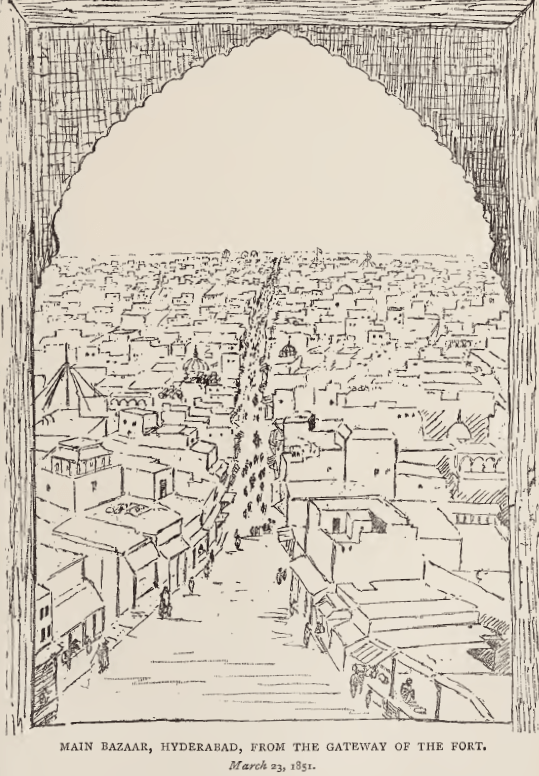
Stationed at Hyderabad was the 13th Regiment, Bombay Native Infantry (11 officers, 859 men) and the 5th Company, 4th Battalion Artillery with No. 7 Light Field Battery attached (1 European officer, 1 European NCO, four native officers, five havildars, 59 privates, five lascars and 59 drivers) and a depot of the 1st Belooch Battalion (15 men) and a detachment of the 1st Bombay (European) Fusiliers. No suspicion was attached to any of them; the Belooch Battalion was beyond reproach, and on the face of it, the Bombay sepoys did not show any outward signs of dissatisfaction. That is, until the night of 8 September, when a very worried subedar major of the artillery reported to Lieutenant Battiscombe that some men in the lines had been holding secret meetings. As far as he could ascertain, they were planning to seize the artillery guns, plunder the treasury and if all went well, take control of the fort. They would then raise their own standard and use Hyderabad as a rallying point for other mutineers. This particular battalion of artillery was divided very much on recruiting lines, with 36 men from Bengal and 26 from Bombay. It was no surprise as to who was behind the plot. Battiscombe wisely did not ignore the subedar major but immediately went to find Brigadier Morris. Morris questioned the subedar major and, upon hearing the report directly from him, decided to act.
As the mutiny itself was scheduled for the next day, Morris used the remaining hours of the night to organise himself. He had at his disposal a detachment of the Fusiliers and the 13th Bombay Native Infantry, from which he personally selected 100 men, as well as a score of mounted and foot police. It was hardly enough to launch a campaign, but Morris was hoping for a surprise; it would be enough to overawe, so he hoped, 127 men. Battiscombe was not informed of Morris’ plans just to ensure that he could look as surprised as everyone else the next day. Morris wrote to Frere, telling him what had happened and what he intended to do and then went back to his plans.
The next morning, Morris called a “foot and saddle” parade of the artillery. As soon as they were assembled on the parade ground, they found themselves surrounded by the First Bombay Regiment, a detachment of the 13th, with the mounted police lowering in the background. Caught entirely off guard, the men complied with orders to lay down their weapons without firing a shot. The guns were taken to the fort, and the sepoy guard was replaced by Europeans from the Ordinance Department. As for the disarmed men, they were ordered back to their lines, and a strong guard was placed over them to prevent any mischief.
As soon as Frere received Morris’ message, he wasted no time in waking Colonel Hutt, who was more than a little surprised to find Frere sitting on the end of his bed at 2 in the morning. Frere was already bursting with plans, and Hutt had little choice but to shake the sleep out of his eyes and get to work. By morning, Hutt had organised, under Lieutenant Harris, 60 newly enrolled artillerymen, 55 men of the 1st Bombay European Fusiliers for immediate departure to Hyderabad. To avoid panic, Hutt changed the embarkation point to one four miles out of Karachi, and from there they departed the next day. When they arrived, Morris set them to work. He had been busy court-martialling the mutineers. The primary punishment had been the disbandment of the 5th Company; they were stripped of their uniforms and kept prisoner in the lines; the ringleaders were sentenced to rigorous prison terms. The non-combatant drivers were kept under strict watch, and the Europeans took over the artillery work. Although there were murmurs of disaffection in the 13th Regiment, Bombay Army, they held their peace so much so that detachments would be sent to serve under Sir Hugh Rose and his Central India Campaign.
While the events in Hyderabad were a cause for concern, Karachi had a much larger garrison to contend with:
3rd Troop Horse Artillery
1st Company 2nd Battalion Artillery with No. 2 Light Field Battery attached
14th Regiment Native Infantry (915 sepoys)
21st Regiment Native Infantry (850 sepoys)
Depot 2nd Belooch Battalion (14 sepoys)
However, Frere could afford to send European troops to Hyderabad as he had not only a depot of the 1st Bombay (European) Fusilier but also the 2nd European Regiment of Light Infantry, which consisted of 33 officers and 934 men. However, he also did not expect a mutiny.
 Mutiny Reflections