Karachi – 13 September 1857
The 21st Regiment Native Infantry, Bombay Army, was another one of those regiments that was heavily divided by its demographics. 653 sepoys hailed from Bengal, primarily Oudh, and the remaining 289 had been recruited in the Bombay Presidency. The regiment was, in many respects, devoid of a long history; they had been raised as the 2nd Extra Battalion in 1820 and became the 21st Regiment of Bombay Native Infantry in 1824. There were no battle honours attached to their name, and many of the recruits were young men who had not as yet experienced the fervour of military tradition.
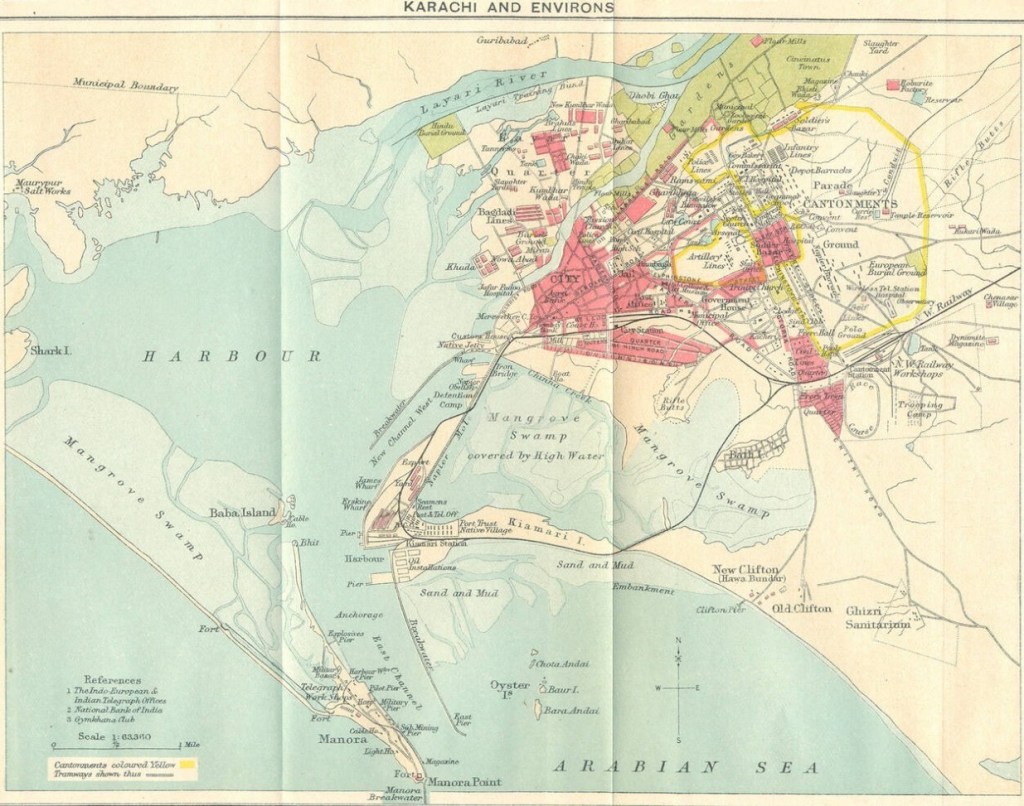
Bartle Frere had left Government House earlier in the month and shifted his residence to a bungalow at Clifton, where he could take in the sea breezes, only 2 miles from the city. He had taken with him his brother-in-law, John Arthur and Captain Goldsmid.
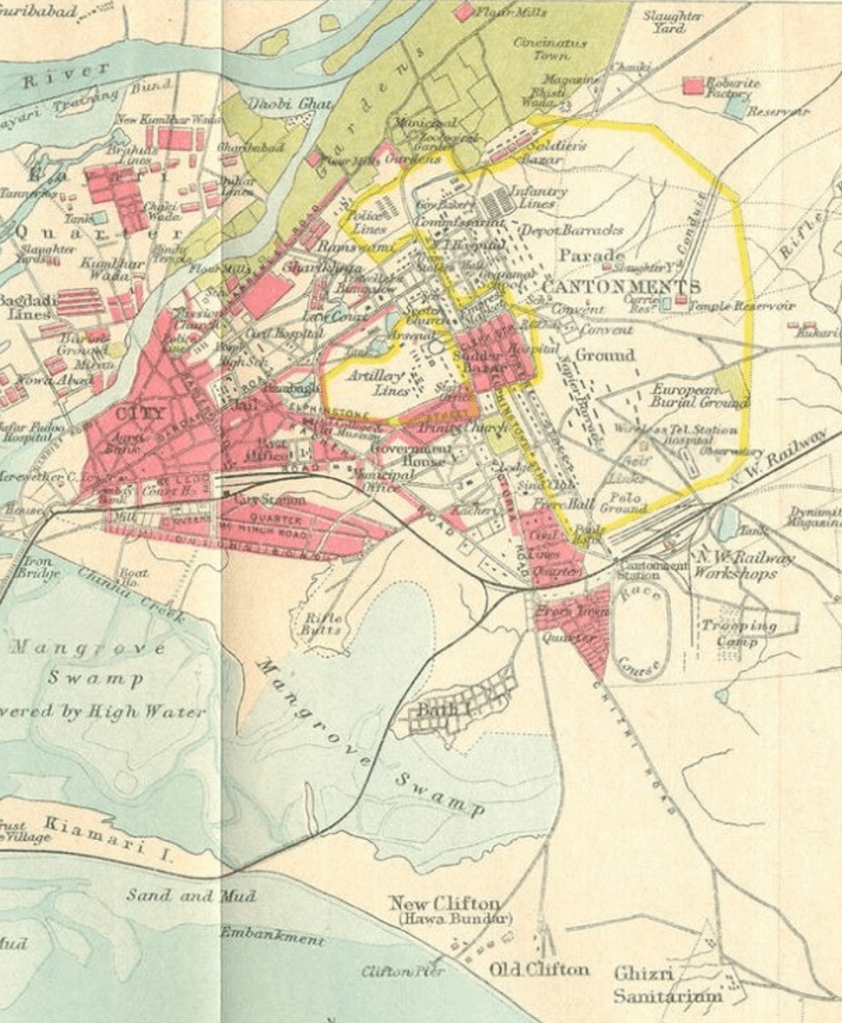
The men were asleep when, at 2 in the morning, Captain Bob Johnstone entered Frere’s bedroom. Startled awake, Johnstone made “a trivial remark” before bending low and whispering in Frere’s ear, “The 21st Regiment has mutinied.” Frere sent Johnstone to tell Goldsmid and Arthur, who roused, came to Frere’s room.
The story Johnstone told them was fantastical.
At 11 pm the previous evening, on the 13th, Subedar Ram Sahir Misser and Jemadar Luximon Guddaria of the 21st had arrived at Major McGregor’s bungalow and insisted on seeing him. Fortunately, McGregor was an officer who took such visits seriously and ordered his manservant to allow the men to enter the house. Obviously distressed, they reported that a Havildar had come to see them, and after asking “how long they would wait to be blown from guns as was now done in Hindustan, informed them that the whole regiment was prepared to rise at 2 in the morning.” He added that a man had been sent to the lines of the 14th to wake them and solicit their cooperation, another was making his way to the Mohamedan quarter of the town, and he believed both would soon follow the 21st in mutiny. The plan, as far as he knew it, was to kill the Europeans and any native officers who opposed them, break open the treasury and make for Delhi.
McGregor’s first instinct was to saddle his horse and ride to the lines, thinking he could talk sense to the men of the 21st. The Subedar, gripping his hand, implored him to stay where he was – they could not protect him against so many, and if he went to the lines, he would undoubtedly be killed. Realising that at this point, he was the only man in Karachi who knew of the proposed mutiny, he opted instead to seek out Brigadier Louth.
Louth assembled three companies of the 2nd Europeans (commanded by Colonel Stiles) and four guns under Major Blake. By the time the Arsenal bell had rung quarter to twelve, the Artillery was harnessed and ready, and the 2nd Europeans had fallen in without a bugle call. They furnished a guard from their ranks over the treasury and followed on after the Artillery.
Captain Leith, of the 14th Bombay Native Infantry, heard the bell, but he also received a warning from McGregor. He went at once to his regiment, but before he could turn them out, he heard the Artillery rumbling by, heading for the parade ground of the 21st. Just as they arrived on the parade ground, the Europeans quickly wheeled into line, with the guns on their flanks, loaded with grape. The 14th now fell in, but Leith, flustered, had ordered them to fall in without their arms. He was lucky it was dark; the men were puzzled, and for the moment, no one seemed to realise what was happening. As the Europeans formed line, the assembly was sounded, for the 21st to fall in. Unlike the Bengal Army, where arms were kept in the regimental bell of arms, in the Bombay Army, the men kept not only their muskets but also their ammunition with them at all times, making disarming something of a difficult enterprise.
“McGregor paraded the men in quarter distance column, with their flank towards the Europeans; the rolls were called and the order given to ‘pile arms’, which was complied without a murmur; the lines also were strictly examined, and all arms found there were at once removed to the arsenal.”
At roll call, one havildar, one naik and 23 privates were found to have absconded, taking their arms with them. A young recruit, quite oblivious to what was happening, wandered onto the parade ground, stating he had stayed away as the assembly, being sounded out of regular hours, had frightened him, and he had hidden himself instead of falling in; six men were on leave. Fourteen muskets were found to be loaded, and all of their owners happened to be on the parade ground. To McGregor’s disappointment, all 43 men were from Bengal.
Johnstone was now deputed to bring the news to Frere.
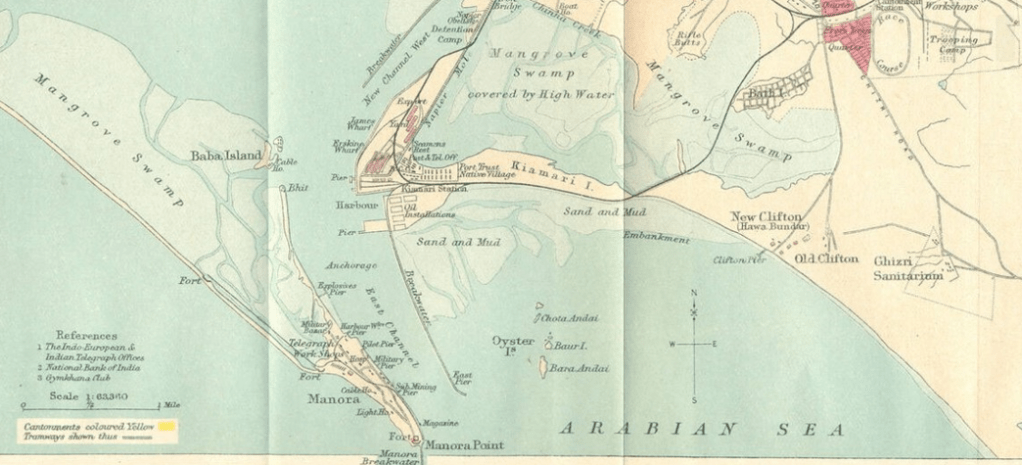
By the time Frere received the news, the mutiny in Karachi was basically over. However, neither he, his companions, nor Lieutenant Johnstone could know that, for anything might have happened in the interval. Goldsmid and Arthur rushed off in a carriage, followed by Johnstone, while Frere, on horseback, put in a quick call at a bungalow near his own, which he knew was occupied by several ladies and a dozen children. He insisted on waking Mrs Merewether (whose husband was in command of the Sindh Horse and currently in Jacobabad), and he placed her in command of the ladies. Like her husband, Mrs Merewether was not prone to nervousness, and Frere recommended she gather them all up and make their way to the mess house of the 2nd Europeans, which had been designated as a meeting point. He reminded her, however, that there might well be mutineers in that direction, and advised her to stay put. She placed two Baluch horsemen of her husband’s regiment as guards by the gates of the house, and a further two to act as sentinels to patrol in the direction of the camp – should they see anyone coming, they were to report back immediately. Mrs Merewether had another trick up her sleeve – Frere had told her there was a boat docked in a creek, barely five minutes away, and at the first sign of trouble, they could escape across the harbour to Manora Point.
Frere and the others arrived on the parade ground of the 21st, and it was quickly decided that the men, now disarmed, could be dismissed from parade. However, Frere decided he needed to give them something of a talking-to first. With Goldsmid acting as interpreter, Frere “told them the disarming was a precaution caused by the misconduct of a few, and that when the bad men had been weeded out and brought to justice, he hoped to be able again to place in the regiment the confidence which was due to their former good conduct.” He then visited the lines of the 14th, to find everything was quiet.
Not so, however, to his consternation, in the Mess House of the 2nd Europeans. Here, the ladies, children and the non-combatants of Karachi had gathered. They had crammed themselves into the building, 70 children and their weeping mothers, some near hysterics, others wailing they would be murdered, like in Cawnpore. General Scott’s daughter frantically weaved her way through the crowds, trying to give them courage, but she was failing – one lady, freshly arrived from Bengal, had placed herself in the middle of the room with her two Oudh servants, armed to the teeth and both with muskets over their shoulders, holding sentry on either side of her. Miss Scott remonstrated, saying these men would most likely be the first to cut their throats and wanted them gone; the lady refused, retorting they were many years in her service. In an attempt to call the ladies, messengers scurried in and out of the pandemonium, bringing reports of the doings on the parade ground; however, the wailing only stopped when finally the exhausted ladies were ordered to return to their own homes.
At six in the morning, Frere was back in Government House. The events of the night had passed off with so little commotion that most of the city’s inhabitants had no idea what had occurred. If an emissary had been sent to the Mohamedan quarter, no one could say for sure, as it was, they were none the wiser the next day that they had been called to mutiny.
The immediate problem with the 21st Regiment, disarmed and a number of the sepoys missing, was ensuring the safety of Karachi. With no cavalry to fall back on, Frere detached parties of the mounted police to give chase to the missing men and allowed for the formation of a small volunteer corps, made up of anyone who could sit on a horse and not serving in any military capacity. Mr Dalzell of the Naval Volunteers offered to guard the treasury, and some “armed French seamen from two ships in the harbour also offered their services…” but Frere decided he had enough volunteers and declined, thanking the Frenchmen for their most noble offer.
As to the mutineers, no one could quite say where they had gone. They had fled Karachi, that was for certain, but their direction was a mystery. Orders were sent to keep watch on the ferries, and small parties, no more than four sowars of the mounted police, were sent out into the countryside to alert the villagers.
Nine were discovered on a rocky outcrop, which they had scaled to avoid the road as they made their way north and their position given up to the police by local inhabitants. The police set watches on all the roads surrounding it, but during the night, they managed to evade them. By dawn, however, the police were on their tracks and caught them off guard as they slept under the shelter of a thicket. They were apprehended and brought back to Karachi.
Another eight would be found a few days later, some 50 miles from Karachi in the western hills, where they put up a good fight, defending themselves for most of the day against attacks from the police, “with desperate courage”, until nearly all of them were killed. Within three weeks, of the 31 mutineers who had fled Karachi, only four were missing, three were dead, and one had drowned, and 24 had been captured. While undoubtedly much of this was down to the sterling work of the police, it was very much down to the local people who had no interest in harbouring or aiding fugitives from Bengal.
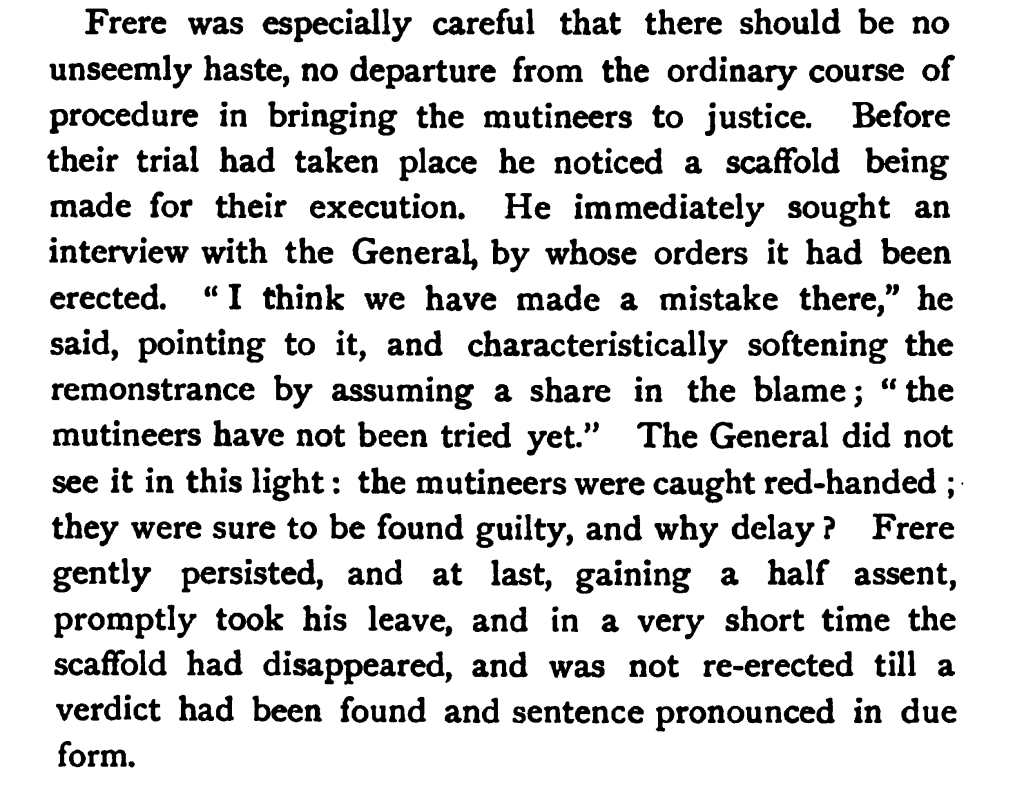
Had Frere left it to Scott, the mutineers would have received no trial at all or at the very most, would have been tried in a kangaroo court by their angry English officers. Frere pressed on him to have the men tried by Indian officers, and if he was unhappy with any particular sentence, he could overturn it or revise it. He further felt that no blame for the outcome should be attached to any of the Europeans. After the first trial, Scott finally admitted that the trials should be handled by Indian officers as he found the European officers too reluctant for his liking. As soon as he handed it over to the Indian officers, he was surprised to find the trials not only moved forward swiftly but with harsher outcomes, as can be seen by the table included in the dispatch:
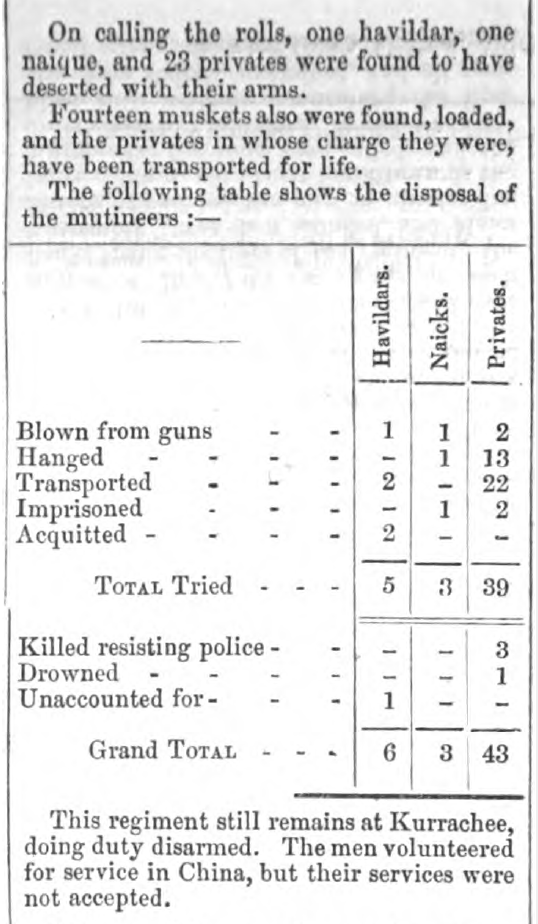
The actions of 43 men doomed the 21st to complete disbandment – by December 1857, the regiment had ceased to exist. In 1861, the designation was given to the Marine Battalion, Bombay Native Infantry, who became the 21st Regiment of Bombay Native Infantry (The Marine Battalion).
 Mutiny Reflections