The Sacking of Hyderabad
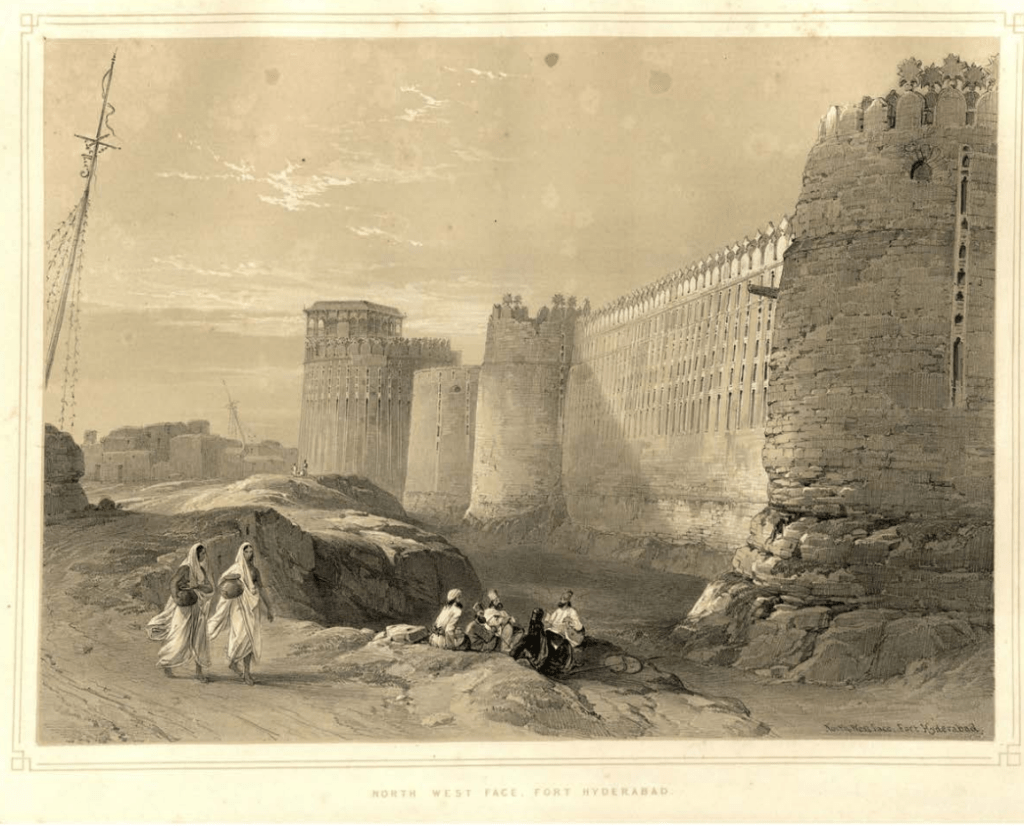
Following the Battle of Miani, the fort of Hyderabad surrendered to Napier; the soldiers put up no resistance, and not a single shot was fired. Napier then evicted everyone who was in it, including the ladies from the zenana, servants and attendants, with little regard to insult and with obvious no interest in the behaviour of his men. Prize Agents were appointed to weigh out and assess the plunder “acquired”; no one bothered to control the sepoys or indeed the British soldiers who were helping themselves to anything they found, nor how they obtained their ill-got wealth. It was a terrible, ugly affair, with Napier asserting (when the Mirs complained through their petitions) that no one plundered anything; however, the Mirs correctly stated that they had been deprived of everything as no distinction was drawn between the personal possessions of the Mirs and their Treasury. To understand the scale of the looting, we can turn again to Outram’s scathing commentary and a note from one Captain Bazett:
“The treasure, (with one exception, when Meer Sobdar sent Colonel Pattle to me, then waiting outside his zenana gate, to go to him and see that he sent out all his treasure, when he produced only about a lakh of rupees) was received by me outside the zenana gates), generally in presence of one or more of the junior Meers; and I refer to Meer Hoossein Ali, from whom I received by far the greater sum—I think nearly twenty-six lakhs of rupees; but that the jewels found with other State property in the Toska Khama, these being entirely detached from the zenanas, were considered as State jewels, and as such retained by me, as also the jewelled swords and matchlocks found in them.”
Napier would claim the zenanas were not looted or at least not while the ladies – the wives and relatives of the Mirs – were still inside. Once they were gone, he saw nothing wrong with sending in his men to defile their private spaces and rob them of everything they had been unable to carry.
Through the petitions tendered by the Mirs after their captivity, we begin to understand the scale of the indignities visited upon them and in the background looms Napier, discrediting their every word and calling them liars. It began with the sacking of the fort. For the Mirs, who were honourable men, they could not understand why the British, who had neither taken the fort by force nor attacked it, had then sacked it. Mir Nasir Khan stated,
Had a single shot been fired from the fort of Hyderabad, there would have been reason for sacking it; but on what principles of justice or equity was the fort plundered, when it was neither besieged nor taken by storm?”
And Napier replied, in all arrogance:
“The Ameer is right, when he says the fort was neither besieged nor taken by storm; but it would have been, had not the terrors of the battle frightened its owners.”
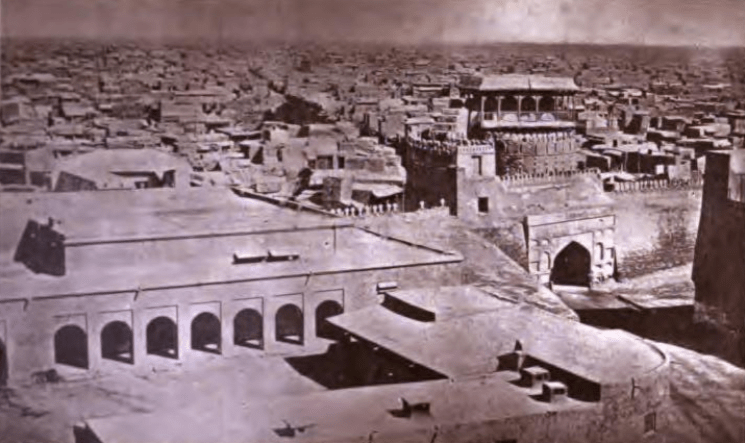
At this point, Napier was blustering. Had the Mirs not surrendered the fort, he would have been unable to take it, as he was undermanned and did not possess any siege artillery. Instead of thanking his lucky stars that the 12,000 Baluchi soldiers who garrisoned it at the time had been told to stand down, he instead resorts to insulting the owners.
As it was forbidden for men to enter the zenana, or the rooms of the ladies, the British devised a dastardly plan to overcome this particular hindrance by employing a woman, who was a concubine of an officer in one of the regiments, to search the ladies before they left the Fort. The woman’s methods were indecent, and her manner was sneering and grossly insulting. For the sheltered ladies of the zenana, it was only the start of the indignities they would have to bear.
To make matters worse, the Mirs accused Napier’s men of insulting their ladies. The sepoys who guarded the gates forcibly took the jewellery they were wearing, as Mir Nasir Khan asserts:
“My ladies, who had never left the house, went out of the Fort, throwing away their ear and their nose-rings, in fear of their lives, and dreading to be seen by strangers.”
Mir Sobdar made the same claim:
“The sepoys stationed at the gate of the Fort plundered every female they found with ornaments; the ladies threw away their ear and nose-rings, and went barefooted out of the Fort, for fear of their lives and being seen by strangers.”
As did Mir Mahomed Khan:
“The ladies, who had never gone out of the house, (i. e., the privacy of the harem had never been broken,) throwing away their ear-rings and nose-rings, went out of the Fort, and for fear of being seen by strangers.”
However, in their usual style, the British tried to deflect the charges, merely stating that they themselves had not taken the ladies’ ornaments, had never seen any lady walking about barefoot, nor had they offered the ladies any insult. However, what the British are ignoring in this case, the Mirs were not complaining of the treatment of the ladies while they were in the fort, but after they left it
The zenanas were ransacked down to the last stick of furniture – even their beds were not spared; all personal items belonging to the ladies, from their clothes and shoes to the smallest trinket was seized by the Prize Agents to be sold at a public auction. In despair, one of the ladies sent a servant to beg the prize agents to return her bed to her – the servant was laughed at and sent off with the request denied. It was a horrible situation; when the ladies were evicted from the Fort, the British left them to shift for themselves, providing them with nothing, not even food. They had lost anything of value they could have sold and were left in absolute destitution with nowhere to go and no one to protect them. This did not interest Napier, and he refused to take any responsibility or address the accusations. The ladies did not accompany the Mirs into exile but chose to remain in Hyderabad as symbols of the Mirs’ eventual return. As long as they remained, the people could be assured the Mirs had not abandoned them. The Mirs also refused to subject them or their children to the indignities of captivity. When the matter was broached again in the coming years, and an offer was made to transport their families to Calcutta, the Mirs refused. Likewise, the ladies would not be removed. In 1845, they were living in a walled village, three miles from Hyderabad.
The Mirs further made several accusations of ill-treatment, not of their personal servants and confidants.
Meer Nasir Khan writes:
” Afterwards, the houses of Akhoond Brikal Moonshee, Bale Ram, and Moonshee Moolram, who are my subjects, were plundered; they themselves were seized, and still continue prisoners.
Outram: Meerza Khoosroo, whom former Ameers treated as their child, was beaten and disgraced; his house, and that of Bushee, was plundered.”
Mir Sobdar :—
“The house of my servant Gera was plundered of all the property in it. I would say nothing to the plunder of my property, but why should my servants be plundered?”
And Mir Mahommed. similarly complains:—
” The house of my servant Meerza Dadoo, who is one of my subjects, was plundered of every thing in it.”
Outram in his turn, asserts:
“None of the prize agents reply to these complaints, and Major M‘pherson makes no mention of the assault on him by Meerza Khoosroo, a venerable old man, most highly respected by all the Ameers, as having been the confidential friend of their grandfather the late Meer Kurreem Ali ; an assault thus alluded to by Sir Charles Napier : “Meerza Khoosroo was not beaten, nor was any body else, but, being in a passion, he seized Major M’Pherson by the throat, and was, of course, instantly made a prisoner.”
The letters found in the houses of the Munshis could not be viewed as seditious. The munshis were in the employ of the Mirs and, as their private secretaries, it was not unusual that the correspondence found would have been addressed to the Mirs. It was as absurd as stating that any letter written by the Duke of Wellington to Windsor Castle could be considered seditious. The officers again sided with Napier, asserting that Akhoond Buchal was found to have weapons in his house; the munshis Meetram and Mulram were in possession of seditious letters (to which we shall come shortly), and Mir Khoosroo’s attack on Macpherson was completely unprovoked. Macpherson himself never commented on the situation.
In 1843, shortly after their imprisonment, the Mirs complained of their treatment under Napier. Napier wrote them a letter on 8 March 1843, laced with hatred and vitriol.
“I am much surprised by the falsehoods which you tell—I will no longer bear this conduct; and if you give me any more trouble by stating gross falsehoods, as you have done, in your two letters, I will cast you into prison as you deserve; you are prisoners, and though I will not kill you as you ordered your people to do to the English
. I will put you in irons on board a ship. Shere Mahomed is a very weak man, and will soon cause himself to be destroyed, and so will you unless you submit more quietly to the fate which your own rash folly has brought upon you. I will answer no more of your letters, which are only repetitions of gross falsehoods, which I will not submit to.
“ (Ashley, address to the House of Commons, 1844)
And what of the Mirs?
Mir Nasir Khan and his nephews, Mirs Shahdad Khan and Husain Ali Khan, Mirs Muhammad and Sobdar of Hyderabad, along with Mirs Rustum Khan, his nephew and Wali Muhammad Khan of Khairpur, had been sent off to Bombay in April as state prisoners. They were then taken to Poona and a year later brought to Calcutta, to live out their days in exile. Mir Nasir Khan died in Calcutta in 1845 – he wished to be buried in Karbala (in Iraq), but the request was denied, and his body was eventually interred in the Talpur necropolis, the Cubbas in Hyderabad. In 1854, Lord Dalhousie finally relented and allowed them to return to Sindh with permission to reside in Hyderabad, and they gradually returned between 1858 and 1863. The government “generously” allotted them 230 acres of land. The last rulers of Sindh would live out their days in golden cages. Their trials and tribulations are outlined in The Accusations Against the Mirs.
 Mutiny Reflections