The Army of Oudh is Broken Up
Sir Colin Campbell could not take the entire Army of Oudh with him to Bareilly as there were still other places of interest that required attention – as he could not personally attend to everything, all at once, he entrusted the clearing of Bihar to Brigadier Lugard; he ordered Lucknow to be put into order and stay on the defensive with Major-General Sir James Hope Grant in military charge, to not only garrison Lucknow but organise moveable columns for district operations. Sir Colin Campbell planned the advance on Rohilkhand in the following stages.
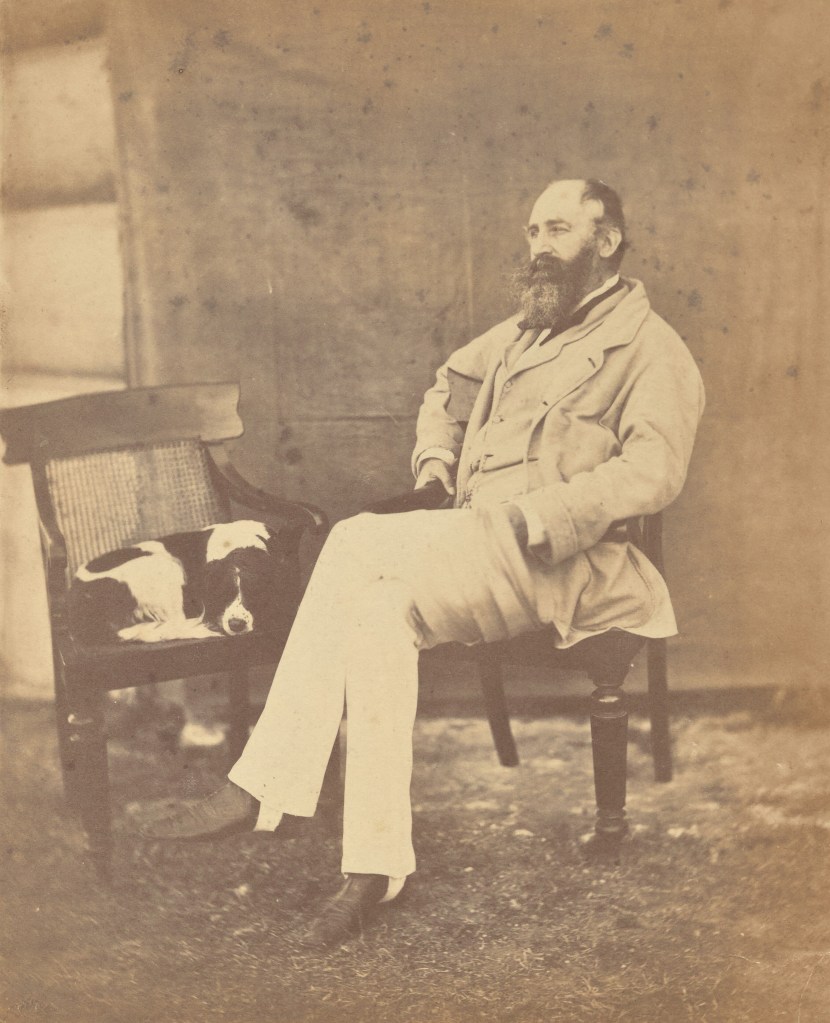
Brigadier Robert Walpole was to advance from Lucknow and “sweep the left bank of the Ganges up to the frontier of Rohilkhand.”
Major General N. Penny was to move his force from Meerut and form a juncture with Walpole.
The newly formed Roorkee Brigade under Brigadier J. Jones was to march from Roorkee into Rohilkhand.
At the same time, a siege train was to march from Cawnpore to Fatehgarh and take up a position at Aliganj.
All the troops that could be spared from not only Cawnpore but Lucknow were ordered to join Walpole near Aliganj and then march under his command into Rohilkhand from the south with Penny’s force and the siege train, while Jones would attack from the north.
There would also be changes in the Lucknow administration. Sir James Outram, understandably, no longer felt he could continue effectively in a civilian position as Chief Commissioner and requested to return to Calcutta. On April 3, 1858, Robert Montgomery arrived to take his place. Outram left the next day.
Having staid the crisis in the Punjab, Montgomery was more than equal to what lay ahead of him in Oudh. However, William Russell, that astute correspondent, was all in his favour.
“He is a man of particular smoothness of manner and appearance — a large vigorous head, a clear, good eye, and great firmness of mouth and lip. He is understood to have obtained permission from Lord Canning to modify the menaces of the Proclamation and to offer considerable concessions to the rebels in Oude. Indeed, it is felt by all who know anything of the country and of the circumstances of the case, that the zamindars of Oude require more consideration than the chiefs in other parts of India who have revolted against us. Mr Montgomery has a grand task before him, but he is believed to be suited to the work, and the glory of accomplishing it will be great as the labour.” (Russell)
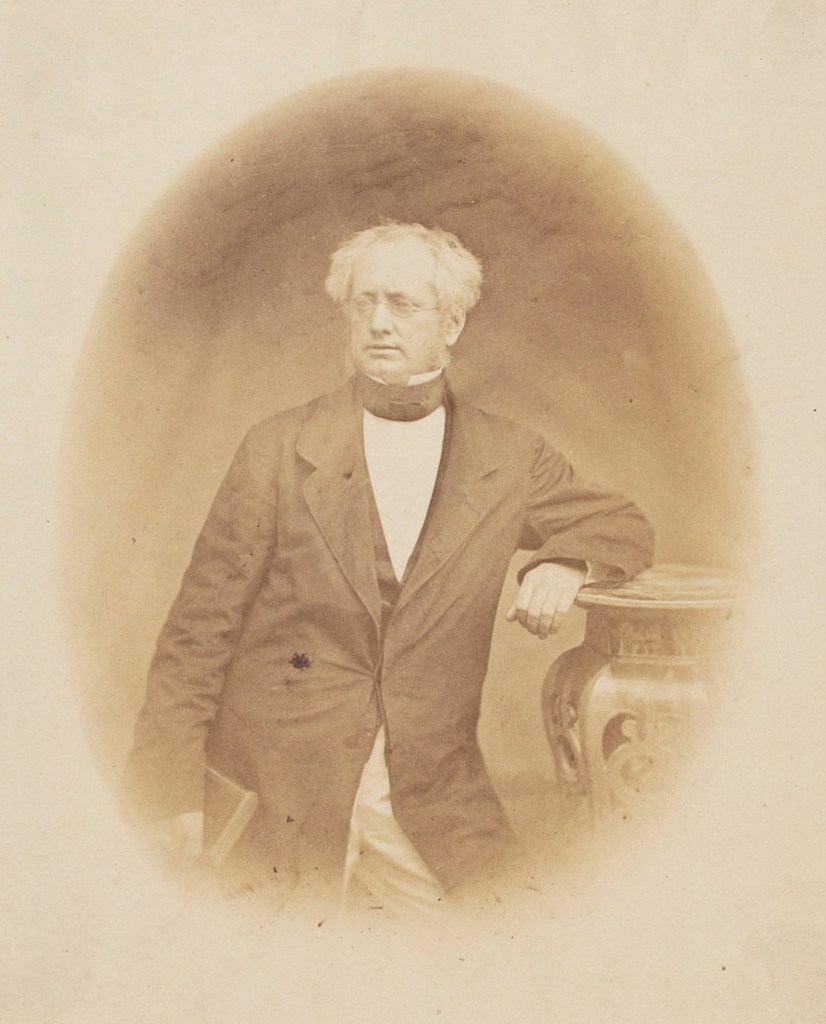
Montgomery was no stranger to India nor to Indian politics, or the machinations of the company he served. Born in 1809 into an Ulster-Scots family, his early ambitions appear to have been military as he completed his education at Addiscombe Military Seminary in 1825; however, when he sailed for India in 1828, Montgomery was already destined for the Bengal Civil Service, working his way up from writer to magistrate collector at desultory posts all around the North-Western Provinces, including Azamgarh, Cawnpore and Mirzapore, until finally ending up in Allahabad, where he remained for two years. In 1839, he transferred to the Punjab. Here he remained – in 1851, Montgomery succeeded Mr C.G. Mansel as Member of the Punjab Board of Administration; in 1851, he was nominated Judicial Commissioner, the role he still maintained in 1857. It was due to Montgomery’s quick thinking and Lawrence’s definite action that prevented an all-out uprising in the Punjab; Montgomery was instrumental in not only the disarming of several of the Bengal regiments but for the warnings he sent to Kangra, Multan and Ferozepore, actions which secured him a knighthood.
On 8 April, Sir Colin Campbell made a flying visit to meet with Lord Canning, who had judiciously disentangled himself from his Calcutta advisors and set himself up in Allahabad, where he was closer to the scene of war and could view the situation with more clarity. For Campbell, it was a last-ditch effort to persuade Canning that Rohilkhand could wait. His efforts failed, and a general order issued just at Lucknow on 10 April directed the forces who would remain with his brigade to march to Cawnpore without delay. The same day, Hope Grant left Lucknow with his column, which was bound for Bitowli, one of his first expeditions into Oudh and mixed success. Robert Walpole, too, had set off from Lucknow towards his subsequent misfortune. Of Brigadier Lugard, we shall see later. Victory now would be mixed with disasters, and the Rohilkhand Campaign opened for Sir Colin Campbell, under very mixed stars.
Sources:
Campbell, Sir George. Memoirs of My Indian Career. Edited by Sir Charles E. Bernard. Vol. 1. London: Macmillan & Co., 1893.
Forrest, George William. A History of the Indian Mutiny. Vol. 3. Edinburgh: William Blackwood & Co., 1912.
Hunter, William Wilson. The Imperial Gazetteer of India. Vol. 1, Abar to Benares. London: Trübner & Co., 1881.
Jocelyn, Julian R. J. The History of the Royal and Indian Artillery in the Mutiny of 1857. London: John Murray, 1915.
Kaye, John William. A History of the Sepoy War in India. Vol. 3. London: Longmans, Green & Co., 1896.
Malleson, George Bruce. History of the Indian Mutiny. Vol. 1. London: William H. Allen & Co., 1878.
Malleson, George Bruce. History of the Indian Mutiny. Vol. 2. London: William H. Allen & Co., 1879.
Russell, William Howard. My Diary in India. Vol. 1. London: Routledge, Warne & Routledge, 1860.
Links:
https://www.peepultree.world/livehistoryindia/story/places/bareilly-taming-a-provincial-capital
 Mutiny Reflections