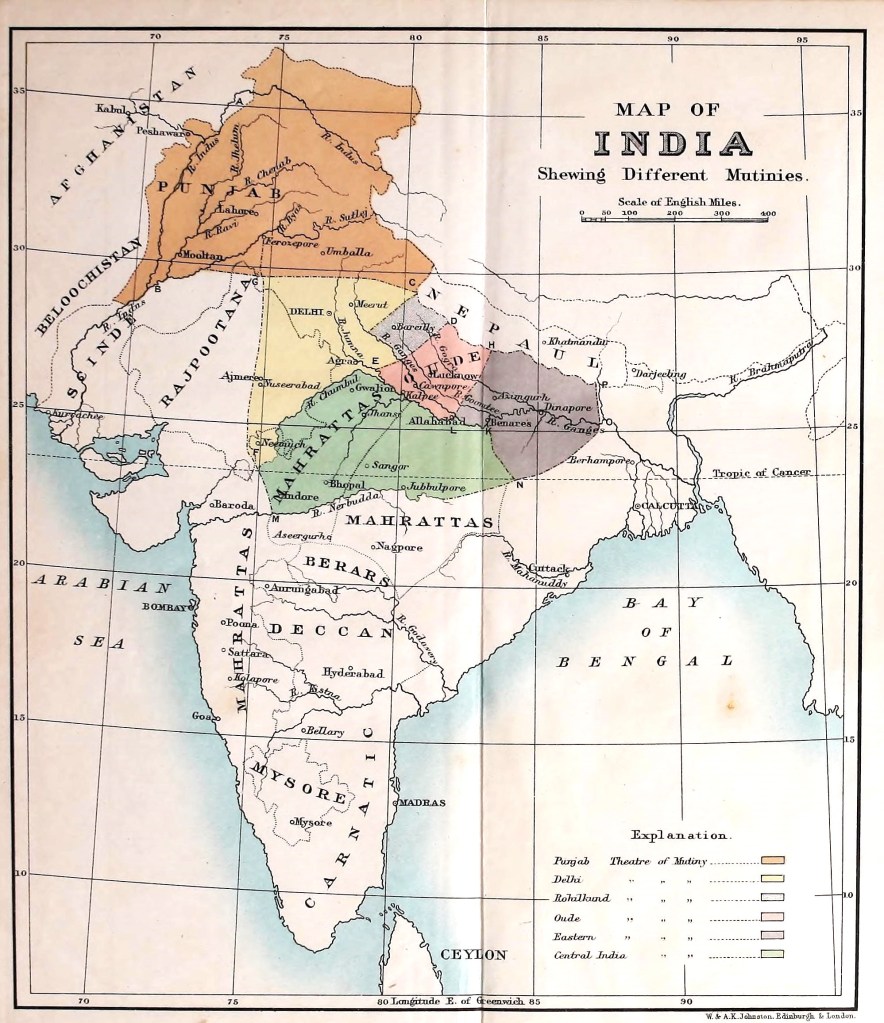
It was hoped that March 1858 would be the end of the rebellion; however, this was far from the case. While Lucknow was back in British hands, the actual fall of the city had not solved their problems. Thousands of mutineers had been allowed to flee the city – injudicious minds believed Sir Colin Campbell had let them go to secure for himself some future glory – the Oudh Talukdars were reluctant to put down their swords, faced with choosing between rebellion and ruin. Canning’s proclamation was viewed by many as intolerable, and now, for the first time, many would rise in true rebellion. They would put to use their mud forts and jungle strongholds, and their armed followers would swell the ranks of the mutineers for months to come.
Some of the leaders of the mutiny, thus far, were facing mixed results. The Nana Sahib, for all of his posturing in 1857, was making sure he did not personally come in contact with the British and was spending an inordinate amount of time galloping hither and tither to avoid them. His brother, Bala Rao, had taken to the field with a sizeable army at his beck and call; Tantya Tope, after his singular defeat at Cawnpore in December, was now rumoured to be in Central India, attempting to rally up discontent and put to the test old friendships – he would shortly meet Sir Hugh Rose. The Moulvie of Fyzabad, too, was still on the move, surrounded by hordes of fanatics, and Begum Hazrat Mahal was trying to breathe new life into her chaotic army. While all of this was a cause for concern, the entire province of Rohilkhand had until now escaped British pacification, and rebellion still reigned triumphant. While Sir Colin Campbell was busy flattening Lucknow, flames of mutiny rekindled in Bihar with the reappearance of Kunwar Singh.
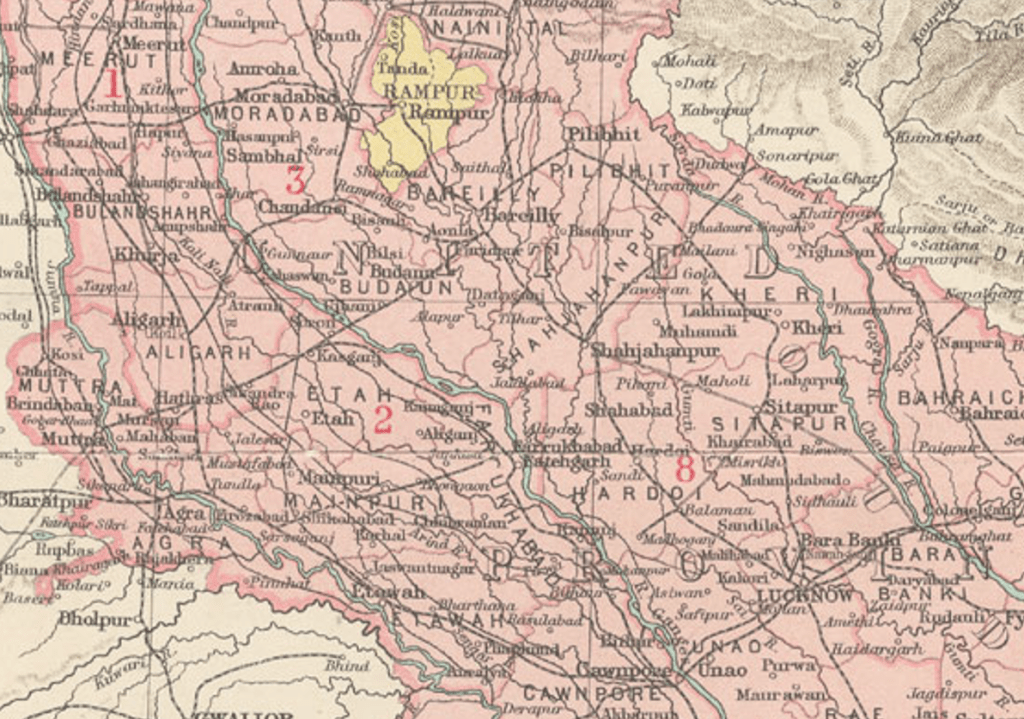
Sir Colin Campbell, of course, had a plan, but he had very much lost the entire winter season with his delay in Fatehgarh; Lucknow had taken the last two weeks of decent weather, and now, he was faced with pre-monsoon India when day temperatures, which could crawl over 40°C in the shade, would wreak havoc on his men and their constitutions. However, loath to take anyone’s advice but his own and utterly convinced of his actions, Sir Colin Campbell remained at Lucknow for nearly three weeks after the fall of the city, considering his next move. Lord Canning, for his part, refused to stay out of Campbell’s business, which he believed was the pacification of Oudh. Canning’s concern, however, was with Rohilkhand, a project Campbell had planned to undertake at the start of the next cold weather, in November. Canning saw in Rohilkhand two parties – on the one hand, fanatical Mohammedans who were mostly hostile and Hindus who were mostly friendly to the British. His worry was that those fragile friendships would be too sorely tried the longer Campbell kept his army in Oudh. Canning wanted decisive action from a man the press were now openly calling Sir Crawling Camel, and Canning believed the next blow Campbell should strike must be at Bareilly.
 Mutiny Reflections