Musa Bagh -19th March
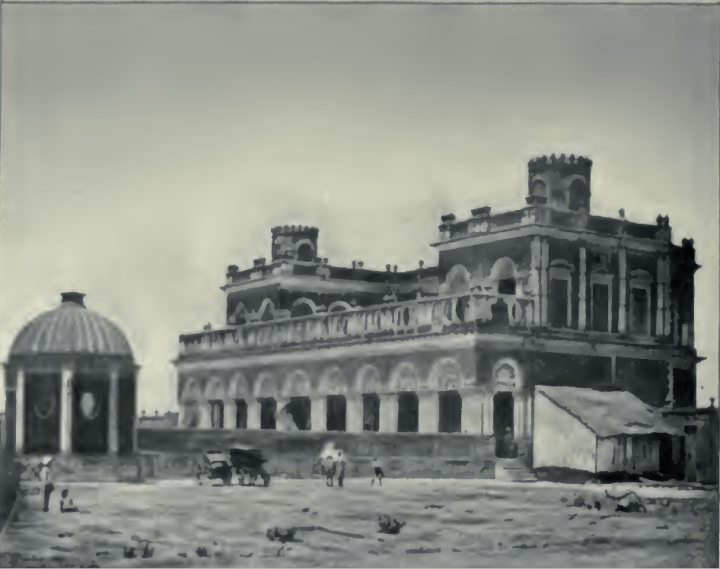
As soon as it was clear that Lucknow would fall, Begum Hazrat Mahal, her son, her courtiers and 8000 of her loyal soldiery fled the city. Her intention was not to abandon the city just yet but to consolidate her position and see what the British were planning to do. Surrender had never been on her agenda, and still now, she remained determined to follow a defiant course. The British would not, under any circumstances, allow her to return to Lucknow; and if she believed for a moment they would allow her to remain within breathing distance of it, she was sorely mistaken. Sir Colin Campbell knew very well where to find the recalcitrant Begum – she was at the Musa Bagh, barely five miles from the city.
The Musa Bagh palace, like those in Lucknow, had numerous, intricate courtyards and garden complexes within a large enclosure.
Once again, Sir James Outram was called to the fore. He was to take a strong force along the main road running up the right bank of the river and attack the Musa Bagh from the front, while Brigadier Campbell with a brigade of infantry, some guns and 1500 cavalry was to take the left front and charge any rebels who attempted to retreat. Hope Grant was to remain on the left bank of the river to take on anyone who attempted to cross the river, while Jung Bahadur and his men were to enter the city from the Char Bagh line of the road, to assist Sir James Outram.
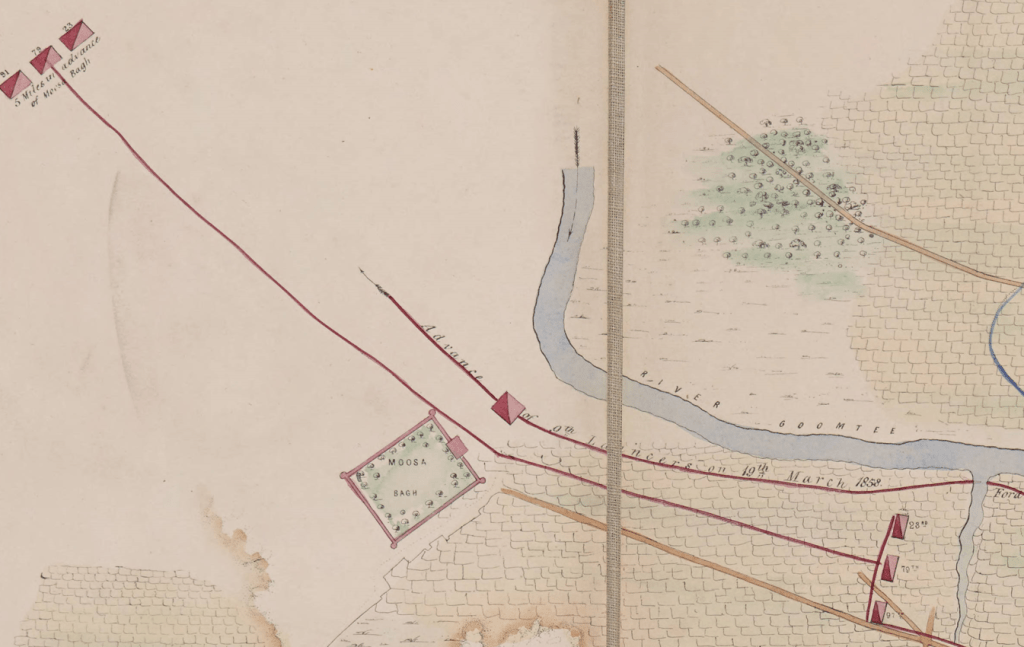
The force for this expedition under the command of Sir James Outram consisted of:
Two squadrons, 9th Lancers.
One company, Royal Engineers.
One company, Native Sappers.
One Field Battery, Captain Middleton’s.
Two 18- pounders, two 8-inch Two 8-inch howitzers, four 8-inch mortars under Captain Carleton, Bengal Artillery.
Three companies, 20th Regiment
Seven companies, 23rd Regiment
79th Highlanders
2nd Punjab Infantry
At half past six in the morning, Outram crossed the river at Gao Ghat and proceeded towards the Musa Bagh. The insurgents were ready for him, and a sharp fire of musketry from the house of Ali Nuki (one-time prime minister of the Lucknow court) situated on the approach to the palace commenced on the head of the column. Two companies of the 79th under Lieutenant Evereth were ordered to advance quickly, cleared the house, but instead the manoeuvre was delayed as the engineers first had to blow open a section of thick wall before any effective entrance could be made. The house was then cleared, and the Bengal Fusiliers were ordered to occupy it. Outram then proceeded through the suburbs without encountering any further opposition until he reached the open ground in front of the Musa Bagh. Waiting for him was Hope Grant, who had, two hours previously, brought his guns into place and was playing at long bowls with the rebel gunners from across the river. His cavalry had been standing at the ready, chafing at the insults, but the order was not to advance until a simultaneous attack was made by all the troops under Sir James Outram.
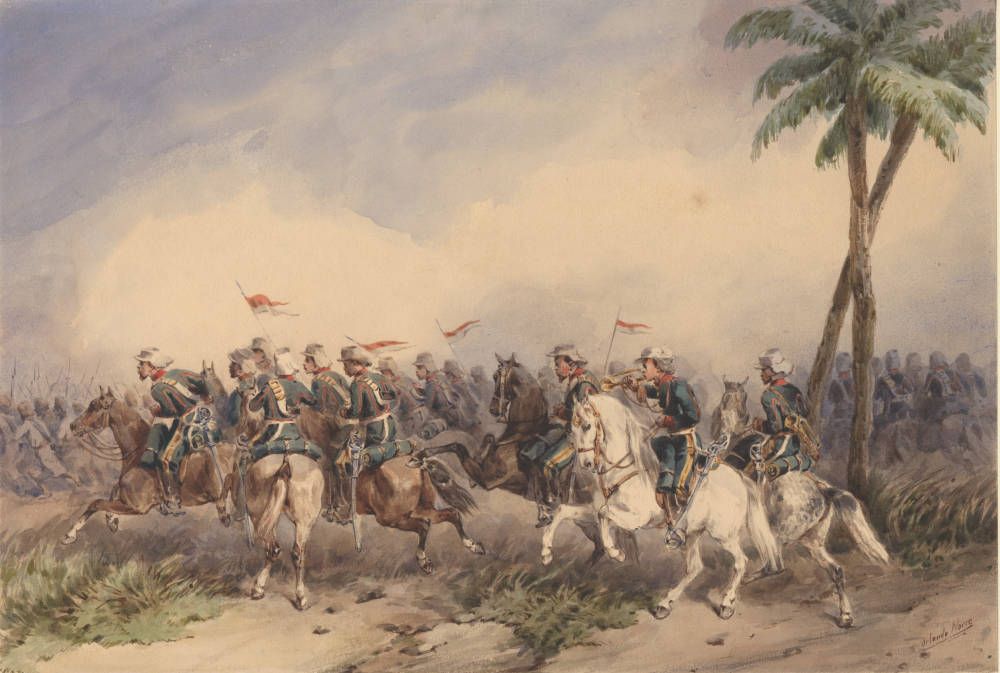
As soon as Outram came into sight, the rebel guns, of which it was said they had 13 at their disposal, opened up on the column. Then, with unaccustomed alacrity, they pushed forward their infantry onto the road. Outram immediately ordered out skirmishers from the 79th and the 23rd, while Captain Middleton’s Battery rushed to the front. At the same time, the 9th Lancers made a flank movement down the rebel left, and Outram ordered his force to advance. His men had scarcely started their dash to the Musa Bagh when the rebels thought better of the whole affair and decided to bolt, with the 9th Lancers at their heels, who swiftly captured 12 guns. The rebels, however, dashed down a nullah, too steep for the Lancers’ horses, and for a moment, things took an unexpected turn. As the Lancers fought with their horses, a fire of grapeshot was unleashed from a nearby village – it was only luck that the gun was elevated too high and the shot went straight over their heads, touching no one. Some of the Lancers became entangled in the nullah, and the rebels quickly rushed forward and opened fire on them from the higher bank, mortally wounding Captain Hutchinson. They were brought out of their predicament by the field artillery and infantry, who quickly took up the invitation for a fight and soon sent the rebels running. Captain Coles with his squadron of Lancers pursued the rebels for another four miles, overtook them on the open field and killed 100 of their number. With six more guns captured, Coles recalled his men and turned back. Meanwhile, Outram occupied the Musa Bagh with the 2nd Punjab Infantry and withdrew the rest of the troops to the city. Of the Begum, her son and retinue, there was no sign – they had taken the hint many hours earlier and were long gone.
If things had gone according to plan, Brigadier Campbell should now have taken up the pursuit, but he was nowhere to be seen. Lieutenant-Colonel James Hagart takes up the story here:
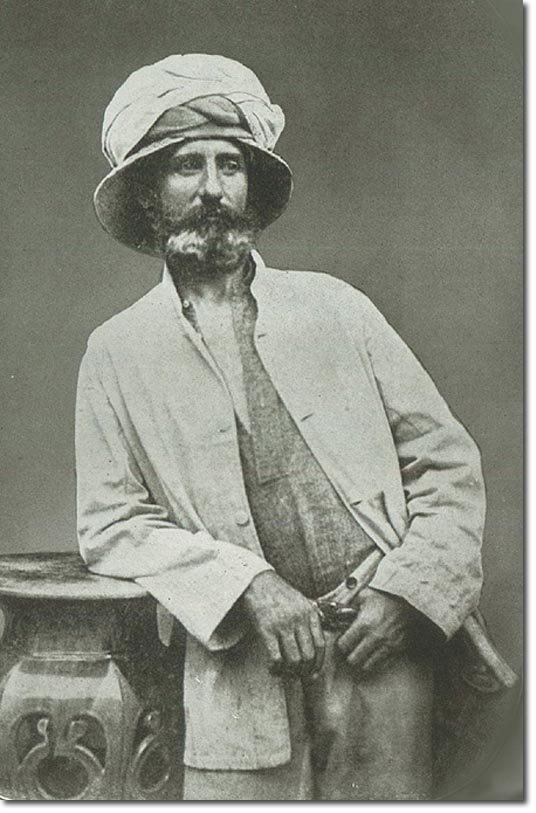
A strong force of cavalry, horse-artillery, and some infantry, under Brigadier Campbell, left their encampment near the Alum Bagh at about 2 A.M. for the Moosa Bagh to prevent the enemy escaping on that side of Lucknow. We had a little skirmishing here and there, as we passed by villages and wooded and broken ground in this neighbourhood. At about 1pm, we halted to eat and rest. A vedette, approaching too near a small mud fort, apparently unoccupied, was fired on. I went, by Campbell’s orders, with a troop— in point of numbers not more than half a troop— of the 7th Hussars, some of Hodson’s Horse, a few men of the 78th Highlanders, and two of Major Tombs’ guns, to see about it. After a couple of shells, the enemy made a rush and came down upon the guns. I ordered the 7th to charge. Captain Slade and Cornet Bankes were at once cut down; and Lieutenant Wilkin nearly had his foot cut through; and partly losing command of his horse— a stallion— which would not leave the ranks, was unable to give his men another lead, who were, so to say, a little put out at so suddenly losing their officers. Luckily, I was all right, looking on; so I rode in at once to where a lot were hacking at poor Banks on the ground, followed by Wilkin and some of the men, and saved Bankes, for the time at least. He was dreadfully mutilated and died fifteen or sixteen days after. We then set to work and killed every one of our opponents. They seemed to have no idea of giving way, but fought desperately. I was told they were fanatics maddened with bhang. During this, Brigadier Campbell marched on in the direction of the Moosa Bagh, fired, I was told, a few rounds at it, and returned.”
This, though a thrilling tale, hardly explains Campbell’s conduct. An officer who happened to be with Campbell at the time gave his explanation for the fiasco in an article in the Calcutta Review. According to him, Campbell had lost his way and thus arrived too late, but there was more to the story “But his errors appear to have partaken of wilfulness. He moved his force in utter disregard of the statement of his guides, in opposition to the protestations and explanations of all to whose information and advice he was bound to listen.”
The rebels, some 9000 in number, fled by the way where Campbell should have intercepted them, a task which, with his large force of cavalry and artillery, should not have presented a problem, but Campbell made no attempt to cut them off – he simply fired a few rounds at their retreating backs. Only after they were a few miles out in the country could he be persuaded to allow at least the cavalry to take up the chase.
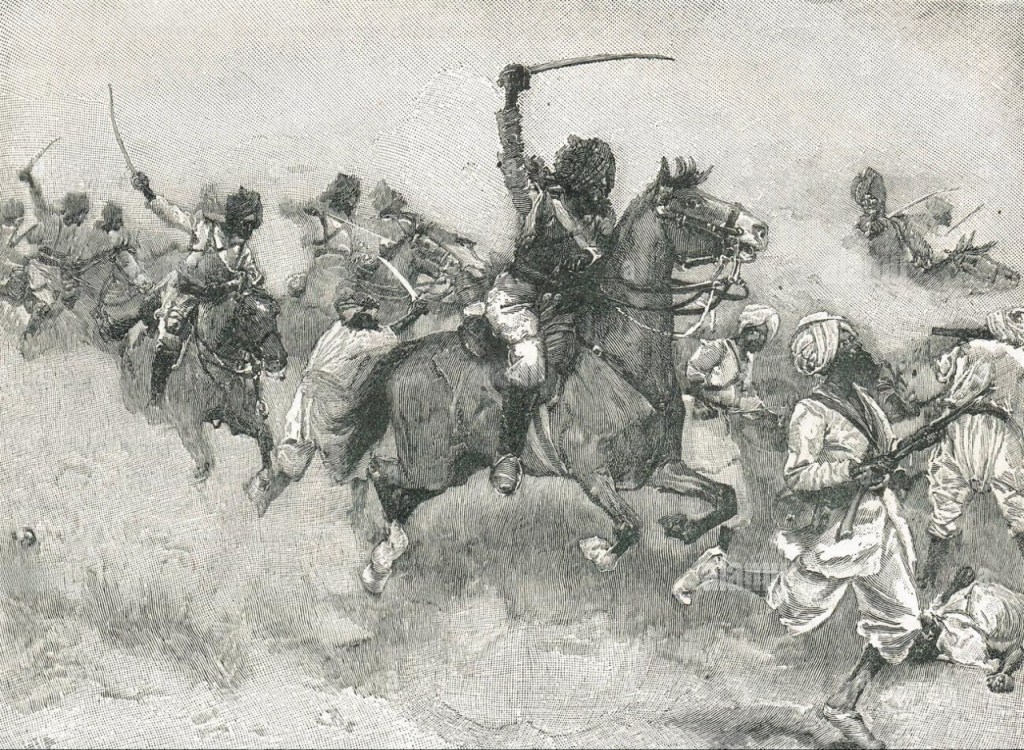
The 1st Sikh Irregulars were first in the pursuit under Captain, the Honourable Hugh Chichester, accompanied by Lieutenant Sandeman and Lieutenant A..D. Mackenzie. After a chase of several miles, they finally overtook the sepoy infantry, but there was no sign of their cavalry, who left them completely unsupported in the face of the Irregulars’ onslaught. Mackenzie was surprised at first by just how few insurgents there were, and except for a few, who were obviously men of rank and settled on elephants, the rest were on foot. Without warning, however, untold numbers of insurgents suddenly appeared, and what had started as a rout turned into an all-out scrimmage. The sepoys quickly broke off into small groups and single individuals forcing the cavalry to break their formation and all around, short but fierce combat ensued.
Mackenzie picked his man – a dismounted cavalry sowar, who was proceeding on his way, with his musket over his shoulder. As he was not running nor appearing particularly concerned about the state of anything, Mackenzie felt this would be an easy dispatch. He was wrong. Upon approaching the man, he turned and, at a few yards, with “forcible terms of abuse and defiance”, presented his musket at Mackenzie. “This uncompromising attitude” made Mackenzie think it would, on second thought, be better to shoot him rather than sabre him, so he wheeled off to the left and circled around to the right, sheathed his sword and pulled out his revolver.
“All this time, he held his ground, slowly turning on his pivot, and never ceasing to follow my movements with his aim, but he reserved his fire, for no doubt he coolly reflected that, if he missed me, he would be at my mercy.”
Mackenzie emptied his revolver at the turning figure but missed him every time. The bullets flew, “between his legs, under his arms, past his head” until there was nothing left to do but for Mackenzie to retreat, reload and try again or repeat the experiment and charge him with his sword.
“I dare say, that if there had been no witnesses about I would have chosen the former alternative, but there were many men of my regiment close by and sheer shame prevented me…”
So Mackenzie returned his revolver to its holster and took up his sword.
“With my heart in my mouth, went straight at him at full speed. As I raised my arm to smite, he pulled the trigger. Bending myself half out of my saddle on the near side, I escaped his bullet and delivered on his head with all my force a cut which dropped him to the ground. Though mortally wounded, he was not dead; and he fumbled in his cummerbund for a revolver which was sticking out of it; so I dismounted, and as he – dazed and blinded – pulled the pistol out of his waist cloth, I seized his wrist and directed his aim harmlessly into the air. I then wrenched the weapon from his grasp and used another barrel of it to put him out of his pain.” The revolver was subsequently identified as belonging to Lieutenant Thackwell, who had been killed in Lucknow a few days previously.
The remainder of the 1st Sikhs, the 7th Hussars and the Military Train came up, and the pursuit which had been proceeding with increasing ferocity now stepped up. The main road, the lanes and fields were “…covered with bands of fugitives, running for their lives. Some stalked along with their muskets on their shoulders, disdaining to run, and, when assailed by their foes, died fighting hard.” The chase continued for several more miles, when, with blown horses and exhausted riders, Captain Frederick Wale gave the order to halt.
“Then from the far side of a ravine, a solitary figure fired his musket at a group of officers. He must have aimed at the one who, from his full brown beard and apparent age, seemed to him to be the most important and most likely to be the commander. That shot cost us the life of our brave commanding officer. The gallant Captain Wale fell, mortally wounded by two slugs, one of which passed through his beard into his throat, the other into his mouth. He was instantly avenged, for as the rebel sepoy turned to fly, he also fell dead, hit in the spine by a bullet from the revolver of Captain Chichester. Sandeman, who was by his side, carried him in his arms to a place of shelter. In a few minutes, to the deep grief of his officers and men, by whom he was loved as few commanding officers are ever loved, poor Wale breathed his last.”
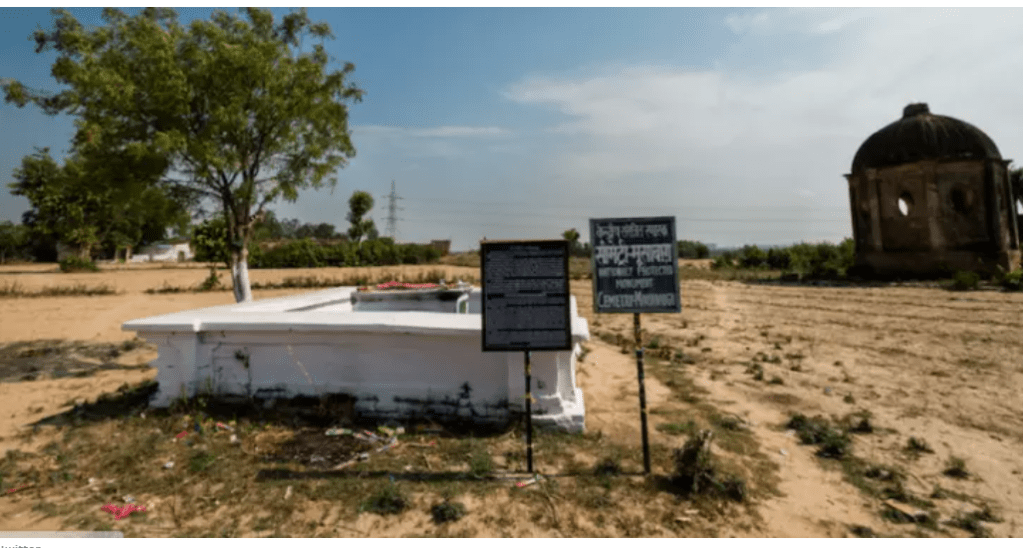
Wale’s body was taken back to the Musa Bagh, where he was buried in the garden under “spreading arms of an old mango tree.” His friend, Captain L.B. Jones, ordered a solitary tomb placed over his grave. Wale’s grave remains there today, in the ruins of the Musa Bagh, but he is not forgotten. Local legend sprang up around his grave, which, for some reason unknown to anyone, has been converted to a shrine. Offerings of cigarettes are brought to “Cigarette Wale Baba” along with tributes of meat, liquor and small sums of money are left on his grave to request his blessings in marital disputes, business difficulties and even disease. It is custom, too, for married couples who had faced difficulties during their courtship and had sought his blessings, to return to Wale’s grave with cigarettes following their betrothal. According to Ram Awadh, a local resident, “Baba used to smoke, so we offer him cigarettes.” Another devotee Sonali Singh, adds, “When your wish is fulfilled, then you have to complete the formality of offering cigarettes.”The worshippers are aware that Wale was a British officer, but regardless of how the story started, Wale is Kaptan Shah Baba, a saint who fulfils wishes.
Lieutenant Mackenzie returned to the scene where he had met the unhorsed sowar the same day to look for the body of his orderly. He had discovered the man had been hard on his heels when the sowar had taken his shot, and instead of it hitting the lieutenant, it slammed into the chest of his orderly, killing him instantly. He found him, lying on his back, his rifle underneath him with a hole through the leather sling at the point where it crossed over the heart. Mackenzie ordered the doolie bearers to bring him back to camp and place it in front of his tent. No sooner had they done so, than the father of the dead man, who was also a sowar in the 1st Sikh Irregulars, appeared. He had not taken part in the battle and was unaware of what had occurred. With a “smile on his handsome old face,” he asked Mackenzie about his son.
“My heart was too full to speak. I could only point to the doolie, the curtains of which were closed. Lifting up one of them, he looked in and knew his bereavement. The proud old soldier set his face hard, drew himself up, saluted me, and said,
‘My son’s nokri (service) is over. Let me take his place. I will be your orderly now, Sahib.’
I am not ashamed to say that this touching act of simple, unaffected Spartan fortitude completely unmanned me.”
 Mutiny Reflections