Hodson’s Last Hours
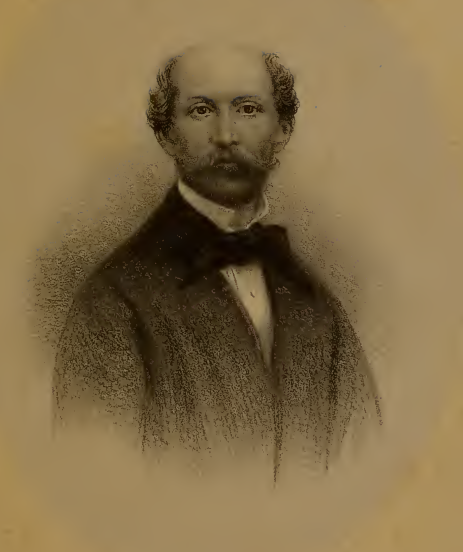
As soon as Hodson arrived in the headquarters camp, his first thought was to find Robert Napier. He walked into the engineer’s tent and asked Captain Hutchison where Napier was. Hutchinson replied that he was probably supervising the breaches at the Begum Kothi and asked Hodson to stay for lunch.
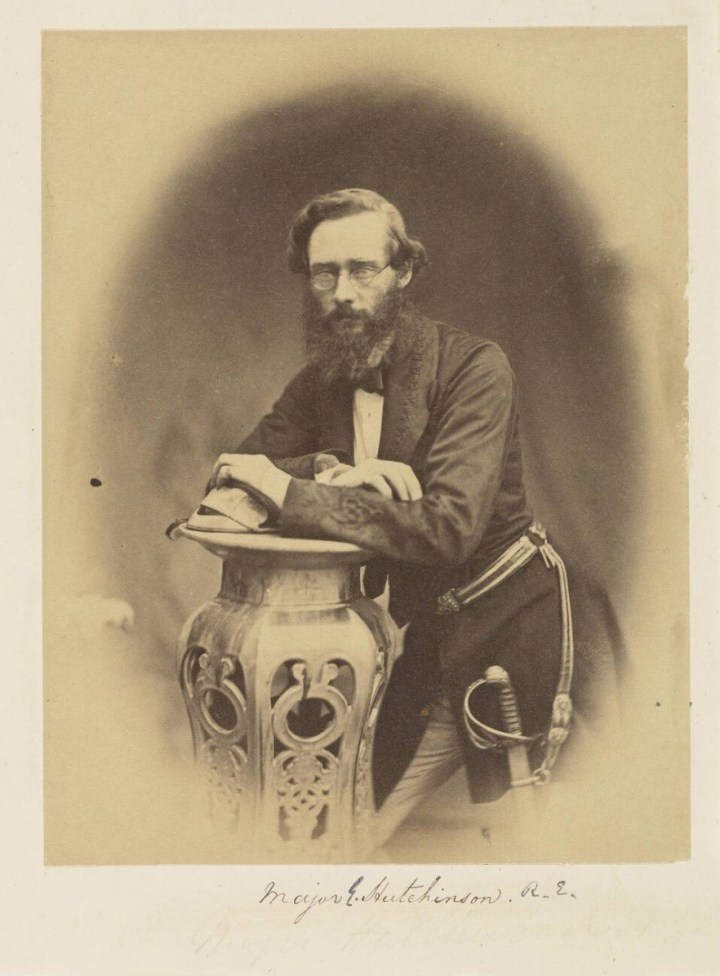
“I well recollect,” writes his host, “the deeply interesting account I led him into of his hand-to-hand
conflicts. Noticing his large pistol (revolver), I asked him if he could trust it (it was a Colt, I think), and told him how a revolver had twice failed me, once in a cavalry charge with Forbes when the military police mutinied in Oudh in 1857, and once in a mine in Lucknow. He said No, the bullet does not always give sufficient shock to the system to stop a man, and mentioned one case in which, though he had shot an assailant through the throat, yet he had, after that, a stiff sword-fight with him before he could kill him. He left me after luncheon to see Napier.”
Hodson did not go alone. He rode along with Donald Stuart, who had been sitting with Hodson at the headquarters camp. Stuart had been ordered by Sir Colin Campbell to send reports back to him regarding the assault’s progress, and stopped for a moment to speak to the officer in charge of Peel’s guns and lost sight of Hodson who continued onwards towards the mortar batteries, where he found Robert Napier, reconnoitring the left breach.
Napier was still waiting for the moment when he could send word for the troops to advance, when suddenly, standing beside him was Hodson.
“Hodson said laughingly, ‘I am come to take care of you.’ The signal was given for the troops to advance,” writes Napier, “and we watched their progress and entry into the building. All serious opposition soon ceased, and we followed through the breach into the palace.” They were seen, at least for a moment, by Lieutenant Alexander of the 93rd, who was having some troubles.
“Believing that this lane was bordered by rooms harbouring desperate fellows in concealment, similar to those at the gateway we were then dealing with, I called to a man of my company below to run towards these two officers, one of whom I had just recognised as Hodson, of Hodson’s Horse, and warn them to be careful. As I was descending the ladder to terra firma, a tremendous explosion made me pause and turn round to witness what was evidently the explosion of the large mine at the breach where the right wing had entered.”
Once inside, owing to the general confusion, Napier lost sight of both Hodson and Captain Taylor, who had accompanied them through the breach. Private Dougherty, who had been sent by Alexander to warn them off, arrived too late. By the time Napier returned to Lugard, both Hodson and Taylor had been wounded.
The Fatal Shot
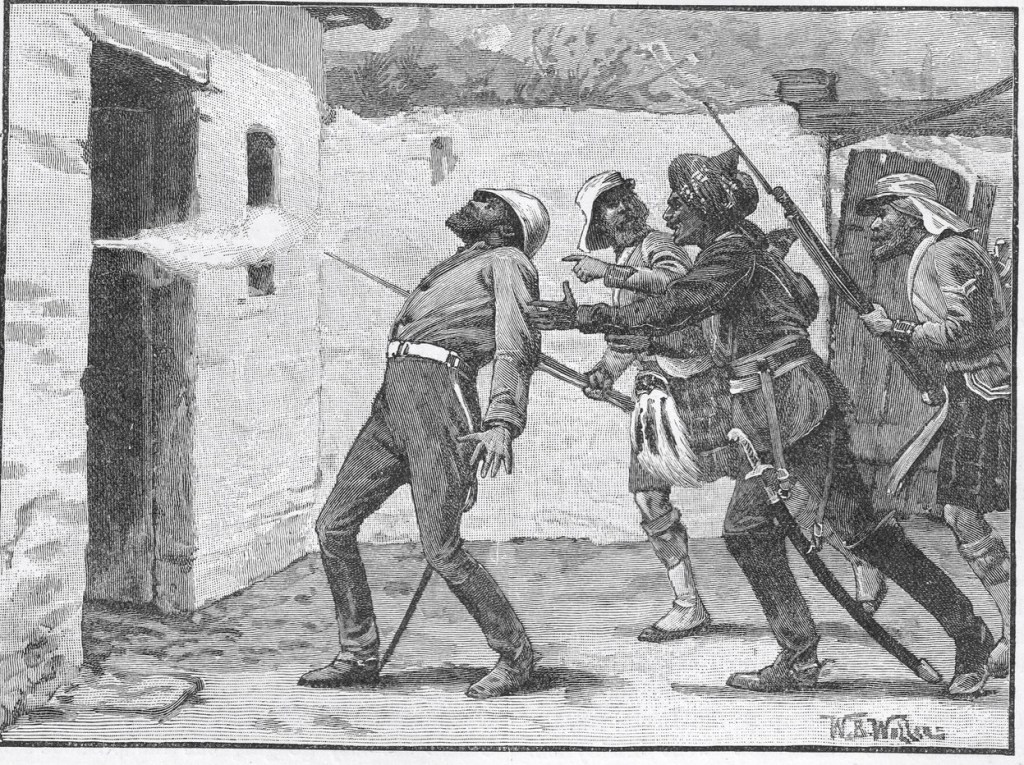
The situation in the Begum Kothi had by now devolved into small, separate fights, scattered all over the different detached buildings of the complex. Forbes-Mitchell had joined a party in breaking open a door of a room, when, as the door fell in, a man close by his side was shot dead. Forbes-Mitchell managed to take a quick look into the room and found it was filled with a large number of men, armed with swords, spears and a collection of firearms. They were not going to come out, and Forbes-Mitchell decided none of his men were going in. He quickly divided his party into two groups on each side of the door, with the orders to shoot anyone who showed his face outside the room. He then sent two men to find Napier and bring back two bags of powder with slow-matches fixed, which he would then light and throw into the room. However, the two men found Hodson before they came up to Napier, and he came running up, sword in hand, ready for a fight.
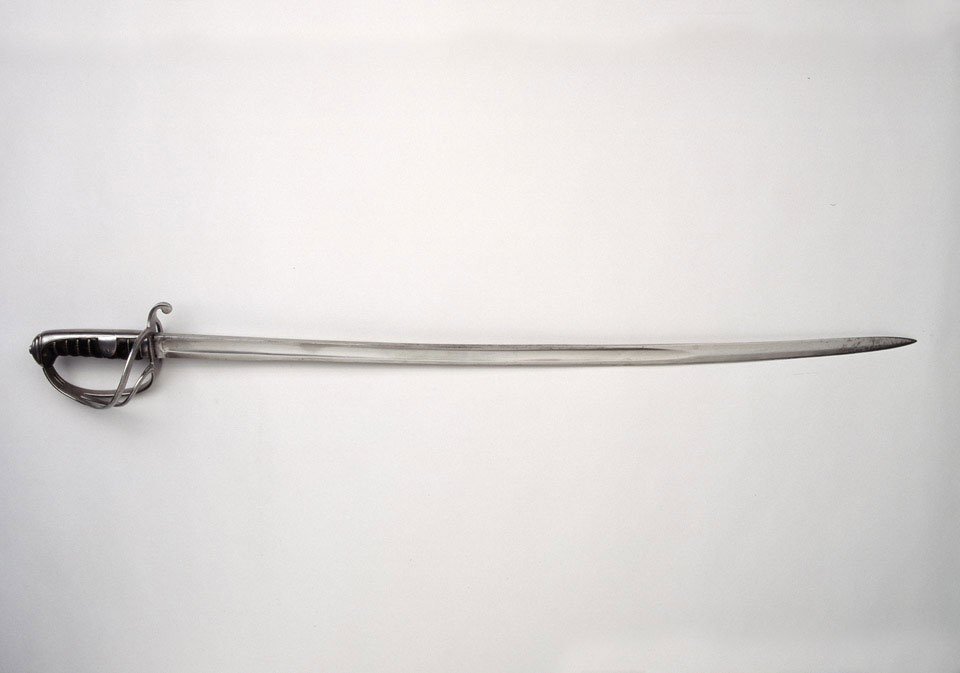
NAM. 1951-09-15-1 National Army Museum Copyright
“Where are the rebels?” he said, and Forbes-Mitchell pointed to the door. Hodson now shouted, “Come on!” and was about to rush in, but Forbes-Mitchell implored him to wait for the powder.
“Hodson made a step forward, and I put out my hand to seize him by the shoulder to pull him out of the line of the doorway, when he fell back, shot through the chest. He gasped out a few words, either ‘Oh, my wife!’ or ‘Oh, my mother!’ —I cannot now rightly remember—but was immediately choked by blood.
Private Dougherty had not stopped running after Hodson, but he was too late: as the major fell, the private dashed forward and bayonetted the man who had shot him before he had time to reload. Coming up, just a moment too late, was Nihal Singh, who picked up his fallen leader off the ground and carried him away from the doorway. With the help of Forbes-Mitchell, Hodson was placed in a doolie and carted away.
Unfortunately, late, the two men with the powder bags came up, passing Hodson in his doolie on their way. Forbes-Mitchell ignited the slow matches and, as planned, pitched them into the room. This was a little too much for the men within, who now rushed outside, only to be shot as they crossed the threshold. One young man, named Rule and then in service with the Light Company, might have met the same fate as Hodson, for he threw himself at the rebels, sword in hand and shouting, “Revenge for the death of Hodson!” proceeded to slash the men where they stood.
 Mutiny Reflections