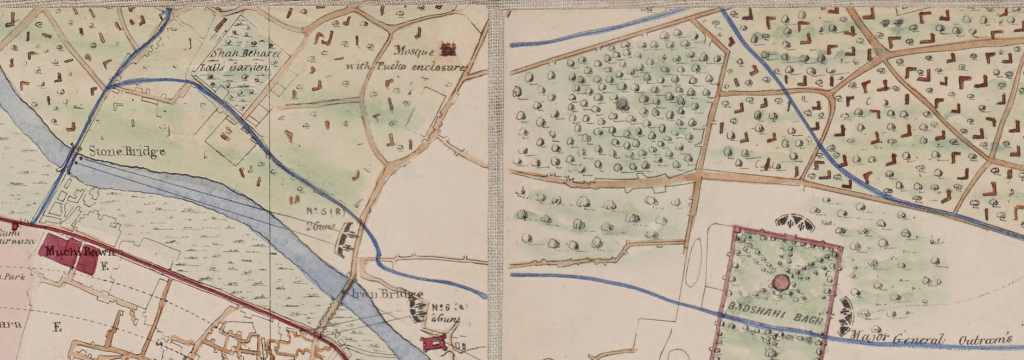
Outram, likewise, was not sitting idle. During the night of the 10th, the sappers had built another slew of batteries to play upon the buildings in the second line of defence and on the morning of the 11th, he attacked the positions that covered the Iron Bridge, leading to the Residency, and those covering the Stone Bridge, leading to the Macchi Bhawan. Between the two bridges, he surprised the camp of Hashmat Ali, who appeared to be quite oblivious of Outram’s advance. It was a bad day for Ali but a worse one for the mutinous 15th Irregulars, who now found themselves trapped, unable to flee. They stood their ground for what it was worth, but many fell to Outram’s onslaught, and they lost not only their Colours but two of their guns.
Now Outram found himself in a quandary. His left column had succeeded in taking all the houses right down the riverbank and the head of the Iron Bridge, but it had cost him in officers and men, so much so, he now decided it was better to wait for the outcome of the Campbell’s attack before proceeding further. He held the head of both bridges and quickly established batteries on both sides of the Iron Bridge and in front of the Badshah Bagh – with the new battery ready for work just outside the Martiniere Park, and on its left flank, the morning air was filled with the roar of heavy guns from all sides.
While Sir Colin Campbell’s divisions were bombarding the Begum Kothi, on the other side of the river, Sir James Outram was hardly less busy on the left bank of the Gumti.
During the night of the 10th, the sappers had constructed another battery, this time for four 24-pounders, two 8-inch howitzers and five mortars in the garden in front of the Badshah Bagh. In the morning, with everything in place, it opened fire on the Kaiser Bagh. Simultaneously, his men were ordered to begin their attack on the suburbs located between the two bridges – the Iron Bridge and the Stone Bridge.
Outram divided his force into two columns: the left column, under Brigadier Walpole, consisting of:
79th Highlanders
2nd & 3rd Battalion, Rifle Brigade
1st Bengal Fusiliers
Captain Gibbon’s Light Field Battery (two 24-pounders)
and the right under Colonel Pratt
23rd Royal Welsh Fusiliers
2nd Punjab Infantry
Two 24-pounders
Three field battery guns of the Royal Artillery
The cavalry and horse artillery were positioned further to the right to cut off any stragglers escaping from either side of the river, to cover the flank and otherwise provide assistance where needed.
The day began with the Pratt and the right Column forming up on the Fyzabad Road to work their way through a densely wooded jungle to capture a mosque that commanded the approach to the Stone Bridge, along with its extensive walled garden. Walpole with the Left Column, was to proceed along the lower road, just skirting the river towards the Iron Bridge.
The approach Pratt’s Column would take was along a narrow road that led directly into the jungle. Hidden among the trees were small tenements, each surrounded by low mud walls, and as the men soon found out, bristling with insurgents. Without a moment’s hesitation, they opened fire on the advancing column. Walpole quickly pushed the skirmishers forward while the two guns were brought abreast on the road, loaded with case shot and opened fire on the jungle. Within minutes, pandemonium reigned supreme.
“What noise and wild confusion and excitement that prevailed, what a smell of gunpowder, and what a hurrying about of skirmishers, and bursting of shells and the like…the flitting of Pandies, as they dodged about among the trees, their while garments making them visible for a brief moment and then they were gone; the loud ear-splitting boom of the guns as round after round of case shot went tearing through the brushwood; the hot and dusty skirmishers leaning against trees in order to steady their aim; the constant crack of rifles a sor of running accompaniment to the noisy guns; the whistling of bullets which came thick and fast among us; the contorted form of a dead Sepoy lying out there on the road in front, ghastly enough; next a burly gunner, while in the act of sponging out a gun, with a sudden start, would turn white and giddy, and stagger, wounded, to the rear.
‘Man hit sir.’
‘Badly?’
‘No, sir, through the leg.’
‘Put another man in his place and blaze away!’
Ping! Ping! Bang! right royally on all sides, while, and then a sharp cry would proclaim that a bullet had found its billet in some unfortunate, who would bleeding past; a minute ago that man was the best runner, or the best jumper, or cricketer it may be of his regiment, and now he is a cripple for life. Quick work, is it not?”
It was, by far, also gruesome work. Some of the insurgents attempted to shield themselves by hiding in a dry drain, where they crouched, huddled up one behind the other, with some hope they would remain unseen. The soldiers were not forgiving and sent volley after volley of bullets into them until the drain reverberated with the groans and shrieks of the dying. Others tried to hide under the corpses of their comrades but were mercilessly bayonetted.
Amid the horror of the fighting, men, women and children, forced out of the hovels they were hiding in, and although the order was “to spare the women and children,” it was only in passing adhered to. Here in Lucknow, the soldiers often only noticed their “mistake” in passing; others, men too old and infirm to even hold a gun, were slung up on the branches of trees – impromptu gallows for anyone who appeared to the less discerning Tom Atkins to be a “Pandy”. Those who could fled in front of the advancing army, their fates uncertain, their livelihoods destroyed.
Worse was to come.
The mosque was taken with no opposition – the gate was blown open and the soldiers rushed in, expecting to find the enclosure filled to the brim with insurgents, but found no one. They had made their escape through the rear, over the walls, and out into the open countryside beyond. Outram, as ever on the scene and negotiating his way between both columns, ordered the 1st Bengal Fusiliers to guard the post; they were to take care of the four crossroads and finish clearing the surrounding houses. The rest of the force continued onwards, moving again through a patch of wood towards the Fyzabad Road, and across a small plain of hot sand, occasionally firing at rebels who returned the compliment at every opportunity allowed them, but unable to rally, they could only flee.
What beggars belief, is on the advance, which had until now proceeded relatively unopposed, the troops stumbled upon a rebel camp in the jungle – the sepoys were still cooking their meals when the soldiers fell on them, shooting and bayoneting those not quick enough on their feet to flee. “An order to push on quickly was given, while companies were detached from the main body to assist the skirmishers, who were unable to kill fast enough, so numerous were the foe!” The dreadful work continued. As the sepoys fled, they threw away their arms, but the cheering army shot them down in their dozens.
“Kill! kill! kill! was still the burden of the cry; ‘bring forward the guns!’ and away we roll in hot pursuit after the scattered fugitives – away, jolting and bumping at a mad gallop, leaving infantry and supports far behind – away, over a country which, though level to look at – away, over some two miles of ground, strewn with clothes, brass pots, matchlocks, tulwars, rags, powder-horns and other emblems of a flight – away, over drains and mounds and dried-up water courses, rugged bits, half-broken walls, till the wretched gunners, seated on the limbers, must have cursed the day they were born, and yet more bitterly, the day on which they enlisted.”
Between the two bridges, however, the column surprised the camp of Hashmat Ali, who appeared to be quite oblivious of their advance. It was a bad day for Ali but a worse one for the mutinous 15th Irregulars, who now found themselves trapped, unable to flee. They stood their ground for what it was worth, but many fell to Outram’s onslaught, and they lost not only their Colours but two of their guns. The remainder fled towards the old Mariaon Cavalry, with Hope Grant’s cavalry hard on their heels.
The advance continued through the suburbs until they reached the Stone Bridge. Here, Outram found the rebels were stronger than anticipated. They commanded the bridge not only with their guns but with musketry. Their shooters were positioned on the roofs of several tall stone houses on the opposite side of the river. Attempts to take the bridge were ineffective, and Outram withdrew to the mosque. His advance had been covered by Hope Grant’s cavalry and artillery, but they had to keep well to the extreme right to avoid the houses, narrow lanes and loopholed garden enclosures. Soon after crossing the Sitapur Road, the cavalry, they could hear guns off to their left – proceeding at a smart trot, they came up to the column, then preparing to attack a large body of rebels. These had jammed themselves into a very awkward position, with the river in the rear and the Iron Bridge held – they made a momentary resistance and then fled.
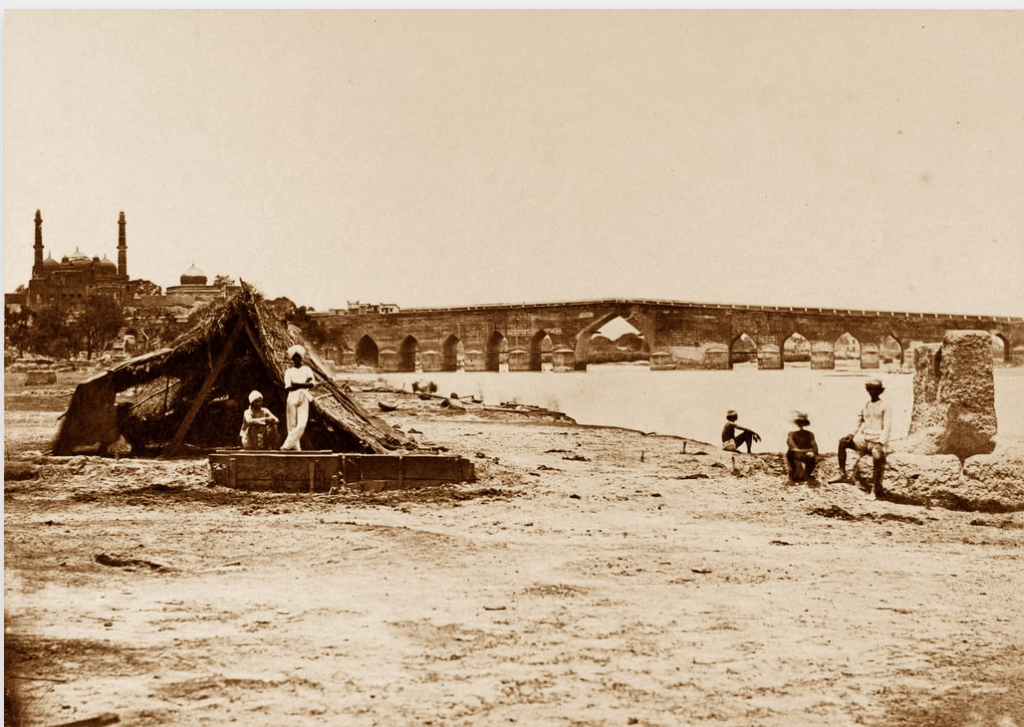
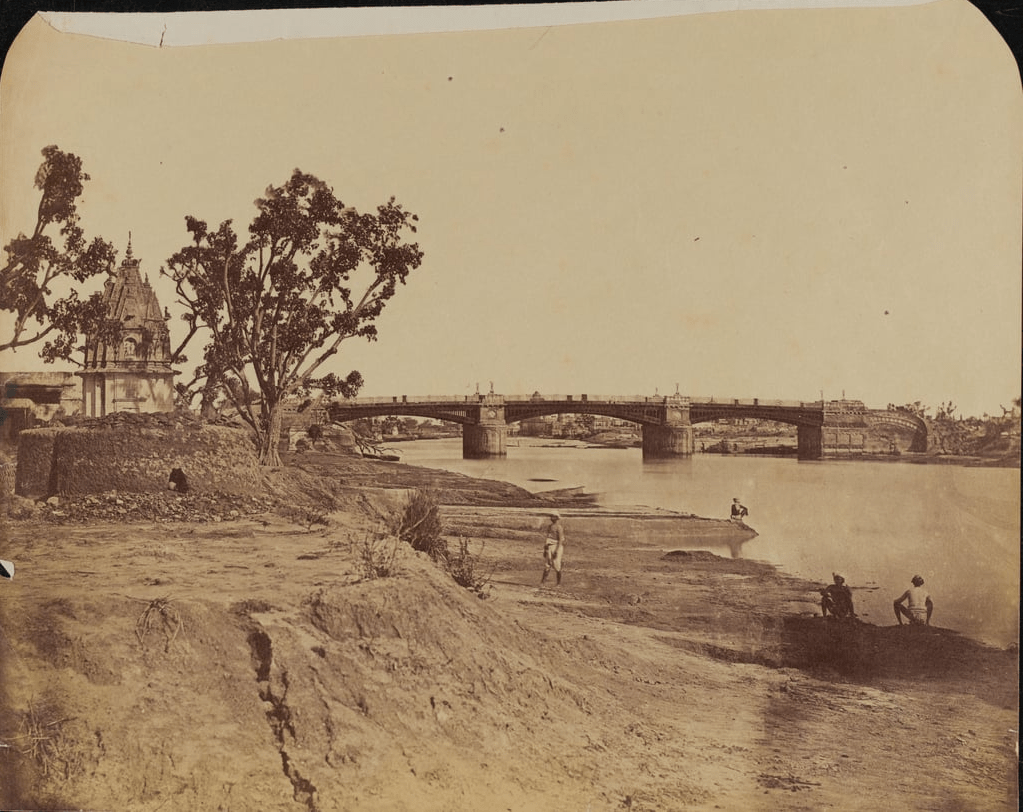
The left column was having a fight of its own. After leaving the Badshah Bagh, they advanced towards the Iron Bridge. The rebels, on seeing movement on the other side of the river, opened fire from their guns, sending shot and shell whistling through the air. They also held the ground directly in front of the skirmishers, but after a stiff resistance, beat a retreat in the face of the oncoming 2nd Punjabis. The column now fought its way through a series of narrow streets; here and there, they faced pockets of resistance, small garrisons, grimly determined to sell their lives dearly. It was heavy, dirty work, flushing out house after house and occupying them all along the route down to the riverbank. However, they finally seized the head of the Iron Bridge. Outram swiftly occupied the bridgehead and brought forward two 24-pounders. Before nightfall, two batteries would be set up, one on either side of the bridgehead. Unfortunately, the column was deprived of Lieutenant Moorsom, the same young man who had drawn up a plan for the first relief of Lucknow, had fought his way through the subsequent blockade of the Residency and ably assisted the retreat in November. Now, while leading the column as their guide, he was shot in the head and died instantly.
As the fall of the Begum Kothi drew near, Hope Grant now sent strong cavalry parties down the Sitapur Road, firstly to prevent any supplies from entering Lucknow and to cut off any rebels attempting to flee in that direction. Brigadier James Hagart’s patrol overtook a number of sepoys and cut them down in their flight, and pursued a party of sowars to a village, which, after a fight, Hagart’s men set the huts on fire. They then returned and reported back to Hagart. Unfortunately, Captain Sanford, attached to the 9th Lancers, was missing. The news was troubling.
Hagart immediately halted the column and deputed Lieutenant Campbell of Probyn’s Horse with an escort to look for him. Campbell first found Sanford’s horse, his orderly holding the reins – the captain, the orderly reported, had proceeded on foot to the village and had not returned. With three men, Campbell continued his search. Not long after, he found Sandford’s helmet on the ground, with a bullet hole through it, but no body. Close by was a loopholed wall, belonging to a small mud fort, and as the men approached it, the inhabitants opened fire, shooting one of the Sikhs in the arm and thigh. Calling out for his officer to save him, Campbell, indifferent to his own safety and amid a shower of bullets, ran forward and carried away the wounded man. He then gathered up the helmet and rushed off to report to Hagart.
As it was insupportable to allow a mud fort to give forth such a resistance, Hagart dismounted a party of 2nd Dragoons to keep down the fire from the fort, and Dighton Probyn volunteered to take a party of his men into the village and continue searching for Sandford’s body. Campbell went with him, as did Risaldar Punjab Singh, a long-trusted companion of Probyn’s. With the Dragoons keeping the fort busy, the men made it to the wall where Sandford’s helmet had been found. Hardby, they found a hole through which the men crawled, still undetected. To their surprise, they found Sandford’s body, but it was on the roof of a house. Who had dragged it up there was anyone’s guess, but the problem now was how to get it down. The Sikhs, led by the Risaldar, scrambled up onto the roof and, crawling along on their stomachs, managed to drag it towards the edge, and dragged it, bit by bit, to the edge of the roof and dropped it over the wall below. Then, with speed, they leapt to their feet and rushed back the way they had come, scrambling through the hole before anyone could aim at their retreating figures.
Loot and Looters
The retreat back to the mosque was not as simple as anticipated. The rebels decided to give them a warm send-off and brought out two guns, treating the troops to long shots as soon as their backs were turned. They then peppered them with musketry until they were out of range. Outram decided it was foolhardy to take the same route back and sent the men on the direct road to the mosque instead. On their way, they fell upon a large village, which by the looks of it had been used as a magazine and a small foundry. Large quantities of powder and ball were quickly sequestered, but the half-finished gun carriages were destroyed. To their surprise, it was also full of loot. Much of it consisted of personal things pilfered from the European bungalows at the start of the mutiny in Lucknow; other items had been plundered from shops. The soldiers quickly availed themselves of large quantities of tobacco, but did not turn up their noses to glass, lamp shades, books, bales of silk, scent bottles, plates, brass pots and other sundry kitchen utensils. They also found cages of birds, including pigeons and chickens destined for the pot and green parrots, some of whom were released, but many found their way into the pockets and onto the shoulders of men who still carried bloodied bayonets. Abandoned on the road, and still in his cage, was a large leopard. This poor animal was quickly dispatched, and the regiments fell to arguing as to who would take his skin as a prize.
However, they were mistaken in thinking the village was thoroughly abandoned. The few insurgents who had not managed to escape hid themselves behind doors and in dark corners of unlit rooms; they crept under bales of cloth and piles of rags. More than one looter found his life shortened by a blow from a tulwar or a shot from a matchlock. Although the man who delivered the death blow was certain never to see another day on this earth, he at least died knowing he had taken an invader with him to discuss the futility of their lives in front of a higher power.
Among the prizes, certainly a boon for the artillery, were several gun bullocks; however, these strenuously opposed their new masters with a vigour that only an irate bullock is capable of. “Never were their likes seen for stubbornness and headlong obstinacy, never in this world did prisoners of war prove so refractory as these horned gentlemen, so deaf to reason or cajolery. Unanimously and strenuously, they refused to have anything to do with drawing the guns after they had fallen into our hands, vigorously opposing us in every possible way, and baffling the efforts of some score of men who tried to yoke them in and bring them into subjugation.”
They finally managed, after a hard struggle, to convince the animals that this was their only option and with much reluctance, the bullocks started off. Yet, after a short distance, two made a bid for freedom, shook off their yokes and dashed off ,” head down, tail erect…” and charged a party of the 79th Highlanders, some of whom tumbled over in the dirt, their kilts veritably flying over their heads.
The Engineers Make a Discovery
The rebels had been hasty, over the past few days, in giving up their positions in their lines of defence to the oncoming British. They had abandoned the Sikandar Bagh already on the 10th, and it was swift work for a party of engineers, consisting of lieutenants Lang, Carnegie and Medley with 100 sappers to occupy it, along with a further 100 men of the 53rd.
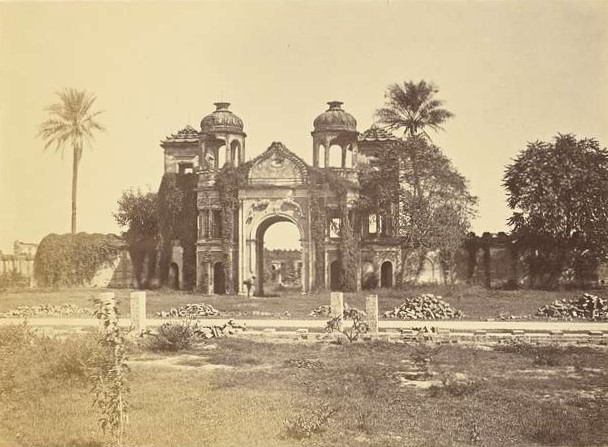
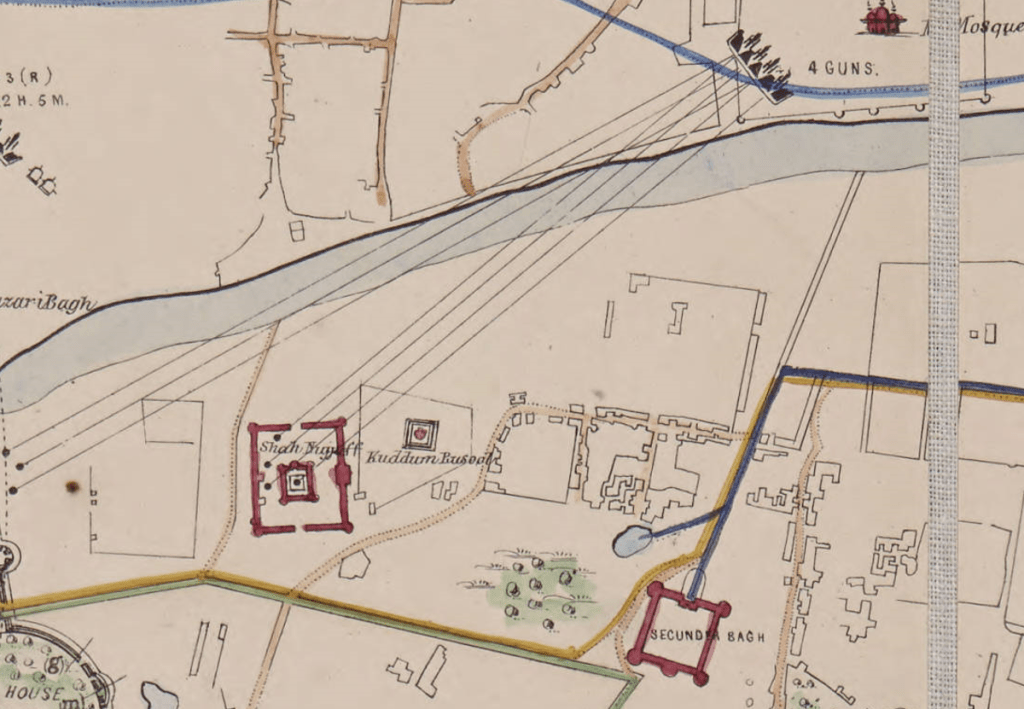
The Sikandar Bagh had been the site of fearful slaughter back in November, and even now, four months later, the odour of over 1000 corpses, only half-buried, gave the air about the place a pestilential quality and was nearly unbearable. It would appear the rebels had not given any thought to the enclosure at all, nor indeed seriously occupied it after November: the breach had been left unrepaired, and the damaged gates swung open. Lang, Carnegie and Medley, from the roof of the gatehouse, had a perfect vantage point into the surrounding buildings and found, to their surprise, that the Kadam Rasul, too, had been abandoned. With three sappers, they cautiously reconnoitred the position and found their suspicions were correct. They crept up to the roof to then to take a better look at the Shah Najaf, which appeared, likewise, quite empty.
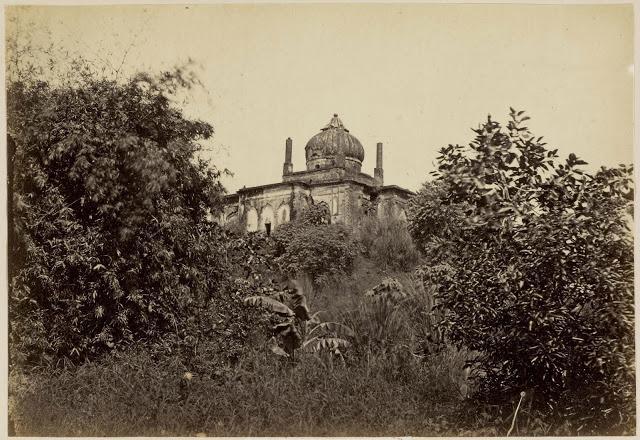
Leaving the three sappers to guard the place, Lieutenant Medley went back to the Sikandar Bagh to ask for permission to occupy the Shah Najaf, but the colonel there decided this was well out of his scope and sent him to find Brigadier Lugard, who happened to be at Banks’ House. At the same time, Lang rode over to the Bridge of Boats that had been moved along the canal to warn the artillery and the Rifles not to shoot at anyone they saw emerging from the Sikandar Bagh. The warning was not without reason – the Rifles had sent a shower of bullets at the three officers and the sappers when they had crossed over to the Kadam Rasul, quite unaware they were shooting at their own men.
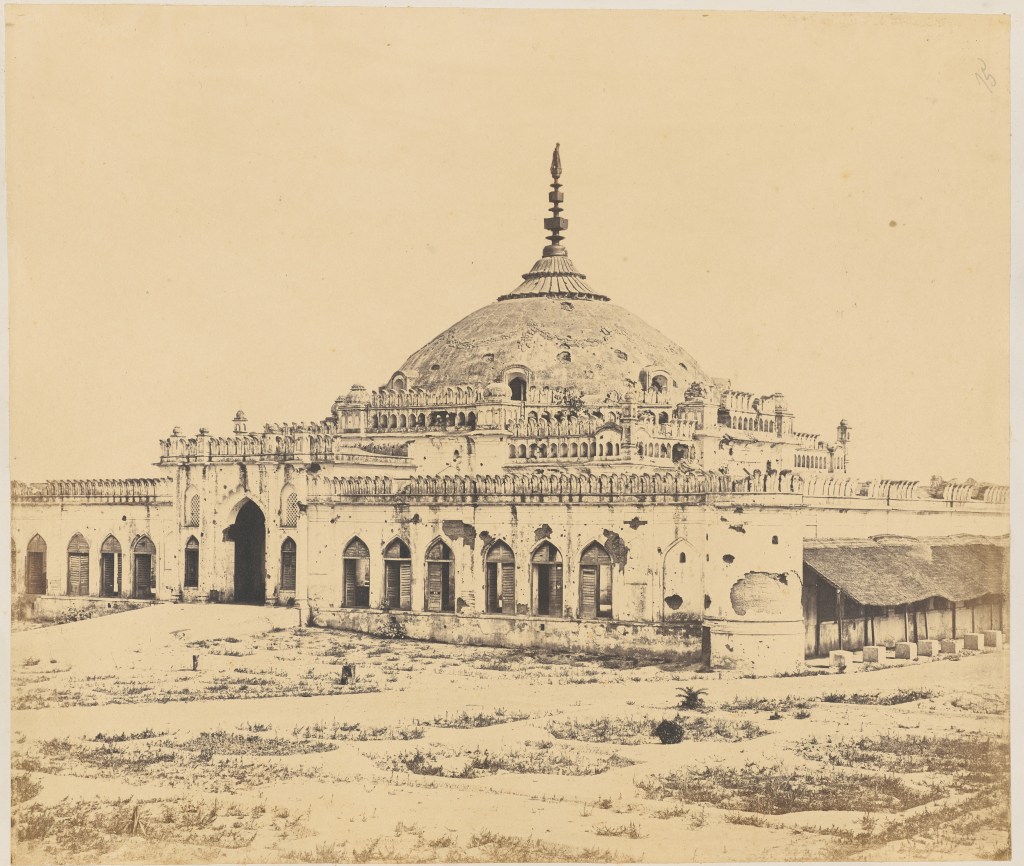
Lugard found Medley’s idea a good one and sent instructions back to the reluctant colonel to occupy the Shah Najaf. With some blustering, he sent 100 men, of which 50 were sappers, to accompany Medley to the Shah Najaf. Without hesitation, the sappers broke open the two doors leading into the enclosure and found the building was, as suspected, empty. There was little work for the sappers to do as the fortifications had been done by the rebels themselves, but the rebels, rather discomfited by the idea that the British had taken the Shah Najaf, quickly opened up a sharp musket fire on the men, wounding an officer and one man of the 53rd. If it was not bad enough to be peppered by the rebels, Outram’s guns too were in play, sending shot over their heads into the 32nd Mess House and the Moti Mahal. As if this was not bad enough, a badly aimed 8-inch shell “pitched right amongst the guard at one of our gateways; it ran down the sentry’s musket, twisting the iron barrel into a most extraordinary shape, and sheared off the poor fellow’s arm completely as if it had been cut off with an axe. The man ran forward nearly 200 yards, and then cried, ‘Oh, where is my arm?’ Fortunately, the shell did not burst or the consequences would have been disastrous.”
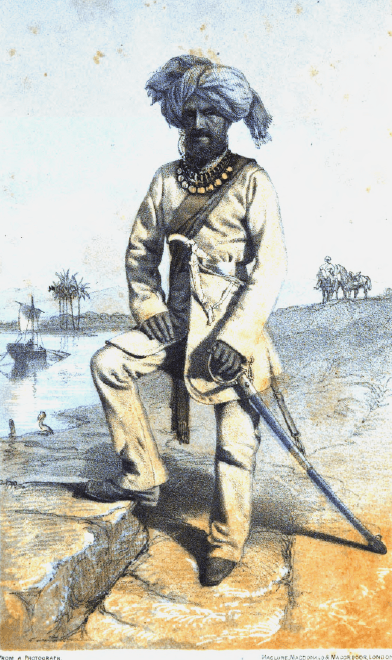
As they sat in the Shah Najaf, they listened to the heavy musketry fire from the direction of the Begum Kothi and watched as thousands of rebels poured out of their second line of defence and rushed to the building, only to be repulsed and sent running back out, into their own entrenchments. Shortly after, they learned the Begum Kothi had fallen.
Relieved by Lieutenant Chalmers, Lang and Carnegie returned to camp, leaving Medley, who would not be relieved until morning. As the two men settled down to the dinner that Chalmers had brought with him, “an officer commanding a European detachment,” came into the Shah Najaf. He told the engineers he had orders from headquarters – they were to withdraw back to the Sikandar Bagh and be quick about it. Medley indignantly asked him why, but the officer had no reply. As Medley had had no orders from his commander to retire, he and Chalmers determined to remain where they were, with only the 50 sappers. However, the 53rd had their orders and they duly marched off. The engineers posted their sentries as best they could and visited them every 30 minutes to ensure they were in their place. Many of them were Poorbeahs and thus men of Oudh – Medley was hoping the temptation to run off home would not get the better of them.
Although within 200 yards of the rebel position, the night passed off peacefully, although the very idea that they were holding this rambling building with 50 men did not lend to a quiet rest. Medley was not sorry when, the following morning, orders came, this time directly from Sir Colin Campbell, that they were to withdraw.
 Mutiny Reflections