The 12th and the 13th of March
There remained one final hurdle to be conquered in the seemingly unending plan drawn up by Robert Napier – it was the taking of the Kaiser Bagh and, eventually, the Musa Bagh. However, first, some restructuring was necessary.
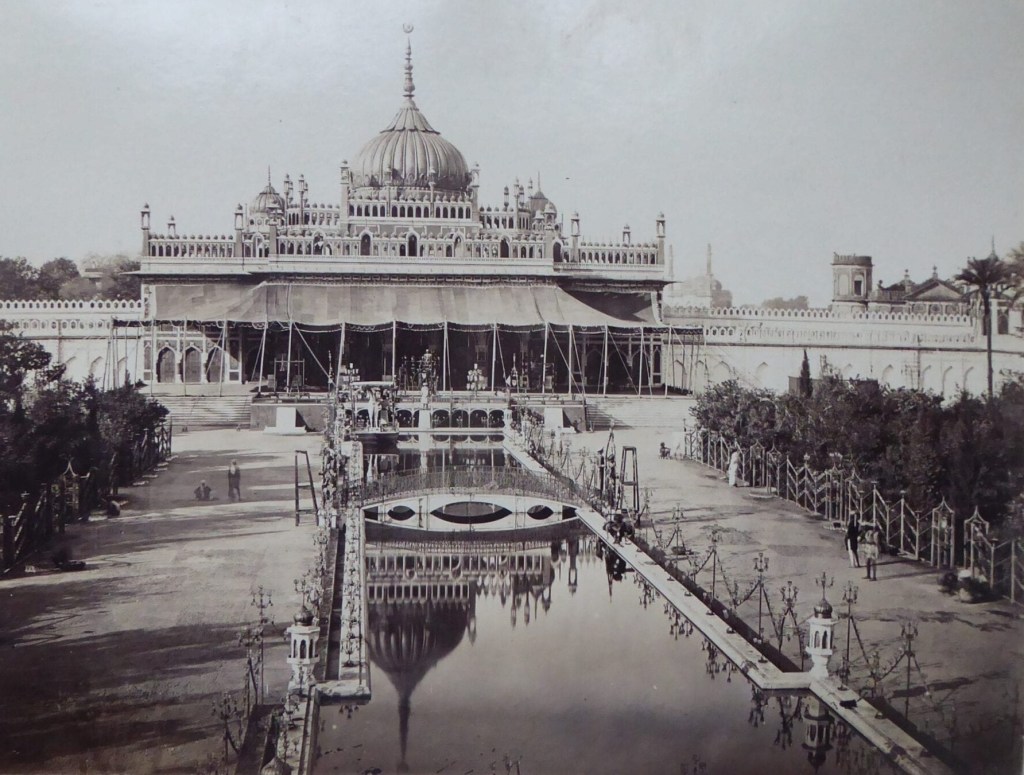
Jung Bahadur, with a force of 9000 Gurkhas with 25 field-guns, drawn not by bullocks, but men, took their positions in the British lines and the next day, the 13th, moved closer to the canal. On the night of the 12th, Sir James Outram received a number of heavy guns and mortars with which he would throw shells not only into the city but also knock away at the Bara Imambara. Meanwhile, Napier, avoiding the well-defended main road, pushed his approach through the enclosures which lay between the Begum Kothi and the Chota Imambara, which was next in line to be taken by storm. Heavy guns smashed a breach in the wall, allowing the sappers, supported by infantry, to press forward, opening up further communications to allow support from the rear as soon as it was needed. Working under a hot fire of musketry, they worked their way through the adjoining houses. By the evening of the 13th, they had sapped their way through and taken possession of all the buildings on the left as far as the Chota Imambara, which would be taken the next morning.
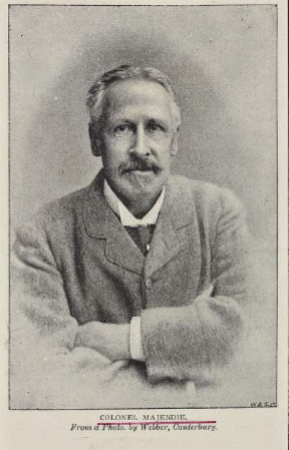
As for Vivien Dering Majendie, he and his compatriots were settling down in the picket established at the Iron Bridge. They were keeping their heads down, as the rebels were apt to fire on anything that moved, with the occasional cannon shot for good measure. Either their aim was off or they were not trying too hard, since they did not manage to hit anyone. Their objective was not Majendie but Outram’s guns on the left and right sides of the bridge, leaving the Brigadier General little choice but to select the best shots of his infantry, “picked men” to keep down the fire enough to allow the gunners to do their work.
From the Iron Bridge ran a wide street, up which came a constant fire of case shot and bullets, making crossing precarious and no less so for the men who took cover in the sheds that lined it. While the firing was irksome and the cannonballs unpleasant, the men found they had landed in Aladdin’s cave of treasures. Although some plunder was left in plain sight, much of it had been buried beneath the dirt floors, probably by some fleeing merchant unable to cart away his wares. It was not long before the soldiers, armed with pick axes and spades, were digging up the floors looking for anything that might be buried beneath. They found copper and earthenware vessels crammed with goods and everything from silks, boots, lace, cloth, turbans, pieces of carpet, attar of rose in decorated scent bottles, and drinking vessels came to light. Not everything was quite so wholesome as one shed was found to be full of half-made gunpowder. However, the wonders refused to cease. An old brass pot containing the pendants of some long-lost chandelier had the men quarrelling as if they had unearthed diamonds; others were quite surprised that the crockery of the 32nd Regiment Mess, packed neatly in boxes, was still in one piece. In another shed, they stumbled across a shop of clay figurines, along with toy models of guns, swords and shields.
The Sikhs, however, were not interested in clothes or whatever useless trinkets the British found. They systematically rummaged through the pockets and dhotis of the innumerable corpses Lucknow now had to offer, carrying away the dead man’s last savings of gold mohurs and his final pay of rupees. They also broke into abandoned bungalows, smashed chests and tore their way through walls, all in their hunt for treasure. However, the real loot of Lucknow was still just out of their grasp, in the Kaiser Bagh.
For the servants, many of whom had followed their employers from the Siege of Delhi to Lucknow and back again, their lives were not improved by what was yet another trial in running the gauntlet to bring food and refreshments to the hungry officers. Burdened by their baskets and unable to stoop too low, they crossed the street at the appointed hour, one after the other, evading, as they had done in Delhi, the incessant musket fire and any succession of rolling cannon balls, to arrive at their destination, out of breath, but with dinner intact. These regiments of cooks, khidmatgars, khansamas, syces and bhistis were never mentioned in dispatches and only rarely in the journals of their own employers, but without them, Sir Colin Campbell could never have waged a war.
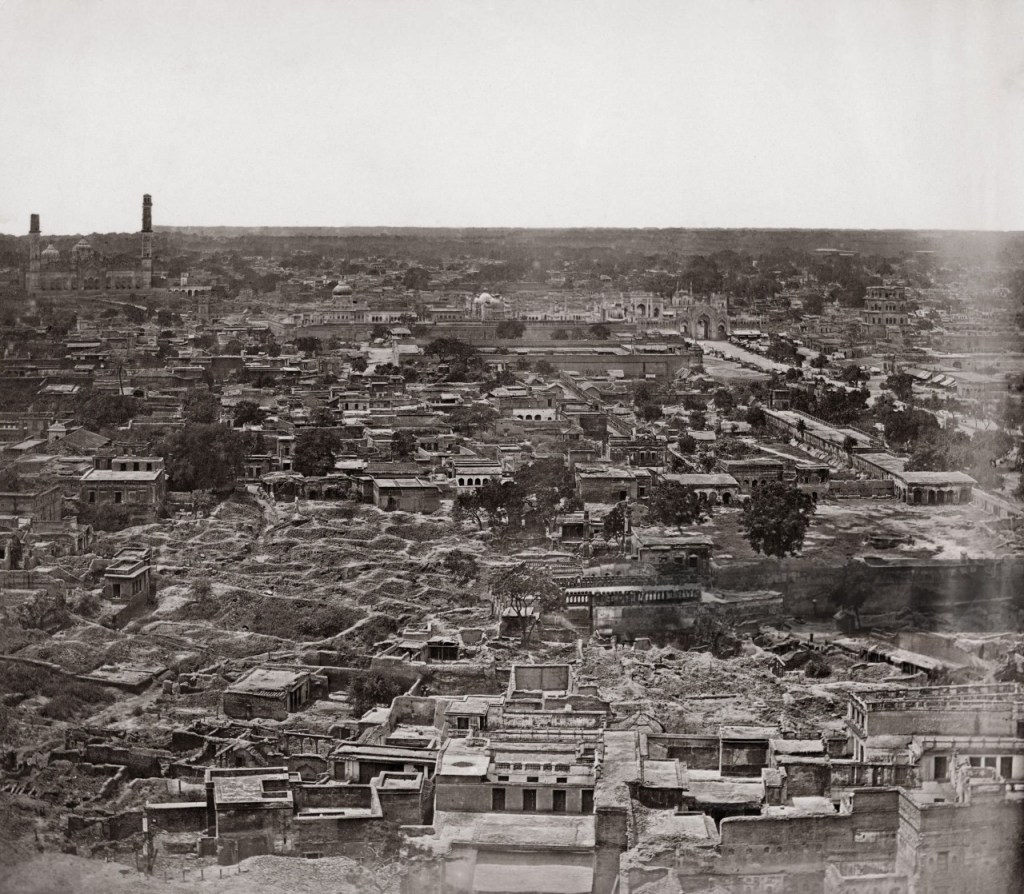
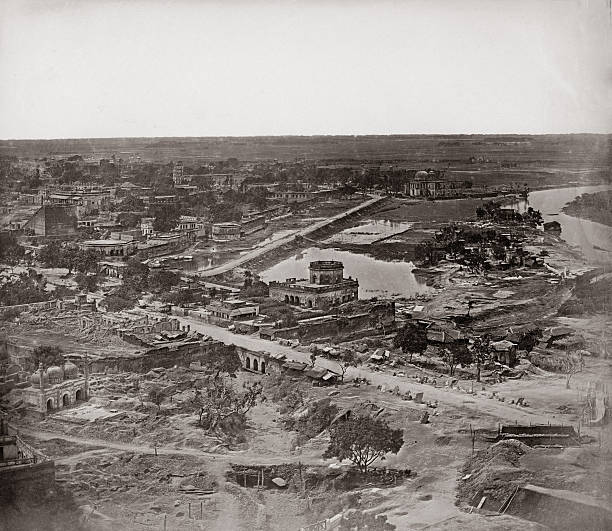
Meanwhile, the constant bombardment was taking its toll on Lucknow as the City of Palaces slowly vanished in the dust.
Sources:
Forrest, G. W. A History of the Indian Mutiny. Vol. 2. Edinburgh & London: William Blackwood & Sons Ltd., 1904.
Jocelyn, Julian R. J. The History of the Royal and Indian Artillery in the Mutiny of 1857. London: John Murray, 1915.
Knollys, Henry, comp. Incidents in the Sepoy War, Compiled from the Private Journals of General Sir Hope Grant. Edinburgh & London: William Blackwood & Sons, 1873.
Lang, Arthur Moffatt. Lahore to Lucknow: The Indian Mutiny Journal of Arthur Moffatt Lang. Edited by David Blomfield. London: Leo Cooper, 1992.
Lieutenant-General Sir James Outram’s Campaign in India, Comprising General Orders and Despatches. London: Smith, Elder & Co., 1860.
Majendie, Vivian Dering. Up Among the Pandies: A Year’s Service in India. London: Routledge, Warne & Routledge, 1859.
Medley, Julius George. A Year’s Campaigning in India. London: W. Thacker & Co., 1858.
 Mutiny Reflections