Rumours and Actions
The 30th of May should have been disheartening when the pay-havildar of the artillery made his report to Second-Lieutenant Townsend around 5 pm, after having woken up from his sleep, he had heard men of the company conversing about mutiny. Some of the Sikhs of the 12th were with them. Townsend immediately reported to Major Kirke.
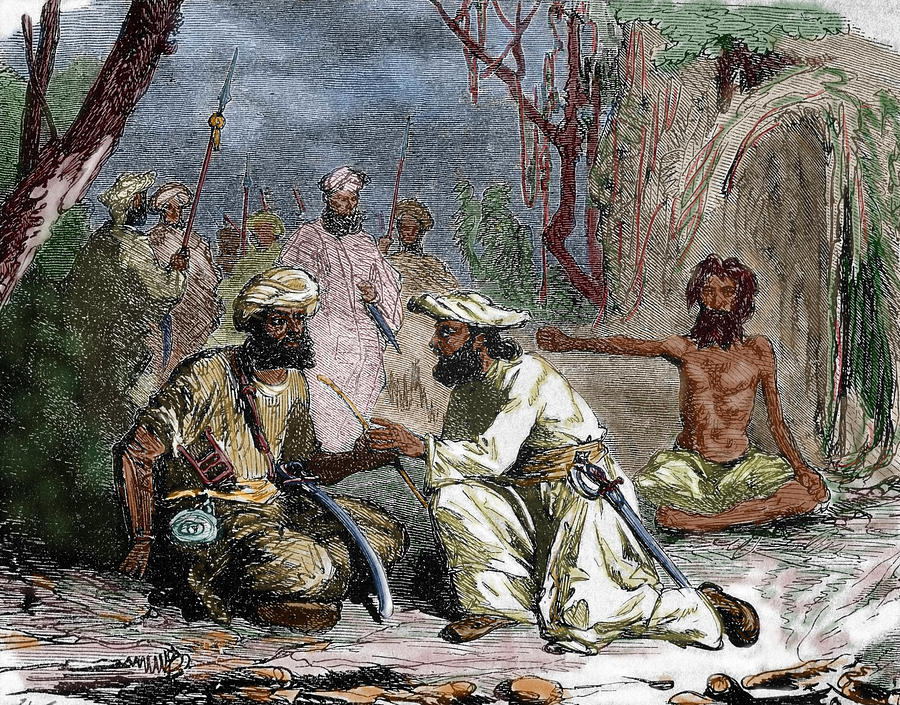
The next morning, the officers were informed from multiple sources that mutiny had been openly plotted the day before in the artillery lines – the only thing that was preventing them from rebelling was the simple fact the 12th wouldn’t have anything to do with it. The same havildar spoke out more fully as to what he had heard. He was backed up by a private employed as store-keeper in the battery and Subadar Byjnath, a fine old man who had just been invalided out after 50 years of service. He was but one of the many invalided officers that Major Kirke had obliged to keep at their posts; only two had refused to return to duty.
The plot to mutiny, although brought forward by a strong party of men, was still opposed by the most senior men of the company.
“The strongest abuse had been applied to the old subadar, and the havildar had been told he would be shot because they were faithful to Government. Four men were named by the subadar as the worst of the mutineers; they were sent for quietly, with other men who could be trusted. They were told that as they were ill-pleased with the Company’s service, they were discharged from it. They were paid up; a guard was ready, and they were sent off at once to Chutterpoor, to be kept there till further orders, from access to anyone, lest they should work some mischief in the lines if merely told to go home.”
Major Kirke thus dispensed with a court-martial which he felt could have put a match to the tinders, so to speak. The move was supposed to intimidate the men who were mutinous and encourage the faithful. Although Scot believed the Sikhs were probably more involved than surmised, their officers trusted them so implicitly that no one dared speak up against them. To drive the point home, Major Kirke moved the whole of the guns of the battery that night in front of the quarter-guard of the 12th BNI. Thus cowed and doubtlessly humiliated by this move, the artillery, at least for now, gave up their mutinous intentions. Even the sowars suddenly appeared more solicitous, leading Scot to believe that perhaps the suspicions he had had of their fidelity had been wrong after all.
The men of the 12th, following the example of other regiments, sent word to their company officers that they were most anxious to serve against the mutineers. Four of the five companies of the wing signed a petition which was delivered to Major Kirke. The fifth company sent in their petition somewhat later.
The native officers of the 12th and the 14th Irregulars were summoned to meeting at the Mess House – the petition was discussed, praise was meted out and they were allowed to “expend all their professions of loyalty and attachment.” Major Kirke expressed his pleasure and said he would report it to the Governor-General himself.
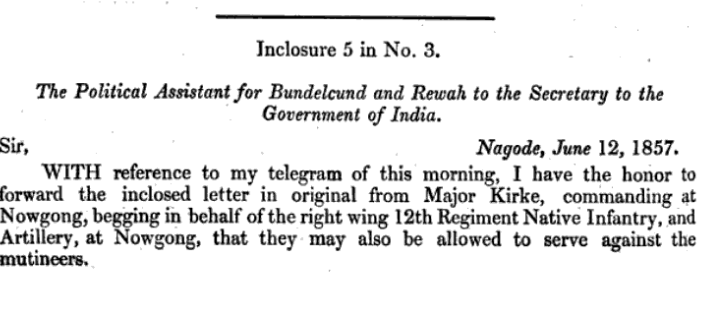
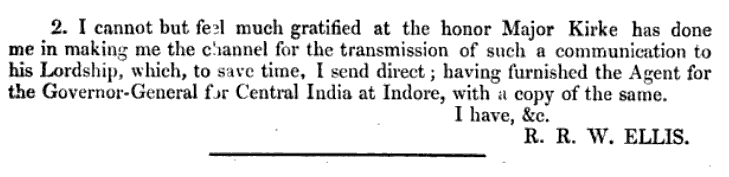
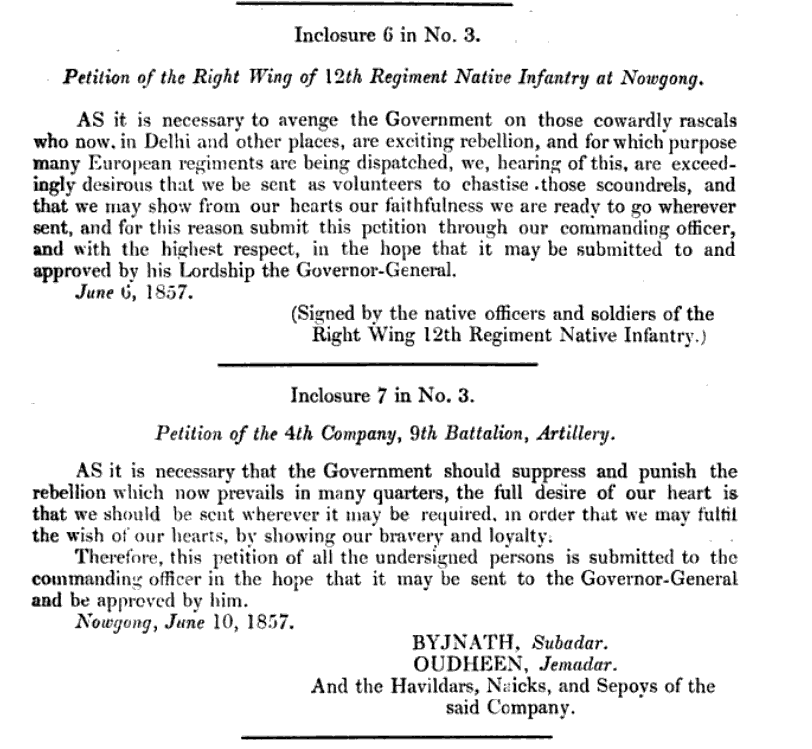
While so engaged, a messenger arrived from Jhansi bearing the following note.
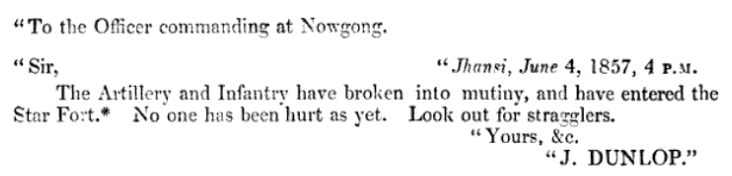
Much dismayed and sincerely distressed by the news, the natives officers “..set to work at once, and drew up a letter to the left wing at Jhansi, telling them of the right wing’s offer to serve against the rebels; that they done very wrong in mutinying, and should at once undo what they had done. The letter was at once dispatched by an express.”
Major Kirke ordered an undress parade, and when all were assembled, he told them of what had happened at Jhansi. He then asked all who meant to be true to their salt and faithful to the Colours to come to the front and gather around those very Colours. To a man, they all rushed forward and seized the Colours; their countenance and gestures were those of honourable men. The Artillerymen embraced their guns and the Irregular cavalry seemed taken aback that Major Kirke even had to ask such a strange question. In the evening, Captain Scot rode through the bazaar, his heart brimming with pride, “I got ten salaams for one I ever got before, and all were profound.”
Two of the most influential men in the corps intimated to Captain Scot, as the wish of the whole, that he should ride over to Jhansi – 100 miles away – and speak to the men of the 12th Regiment who were in the fort. Not particularly thrilled with this idea, Scot ran it by the Major who, fortunately for Scot, was decidedly against it. Scot suddenly felt that if their native allies – the princes, the zamindars and the Rani of Jhansi herself – turned, there would be no stopping a mutiny in Bundelkhand. He could not rid himself of the feeling there was worse to come.
On the 5th of June, two parties of the 14th Irregulars consisting of 40 sowars each commanded by a native sowar, were dispatched to Jhansi and Lalitpur, on request from the superintendent of Jhansi who was acting under the orders of the Lieutenant-Governor at Agra. The Jhansi party was required to relieve one of similar strength under the command of Lieutenant Ryves, 12th Native Infantry.
Two days later, a report was received from the native officer commanding the Jhansi party that upon halting at Mowranipur some 30 miles from Nowgong, which stated all the Europeans at Jhansi had been murdered. He brought the information back to Nowgong in the form of a letter from the tehsildar of Mowranipur, Tewari Hossein, who in the same instance mentioned he had with him a naick and four sepoys of the right wing of the 12th with some magazine stores. They were to have delivered these to Jhansi – musket ammunition and buff-belts from Allahabad – but the news of the mutiny had caused them to turn back some 10 miles outside Jhansi. Major Kirke sent word back – his written orders were quite clear. If the cavalry had mutinied at Jhansi, then they should all return; if not, then the order was to push on.
In Nowgong the rissaldar of the 14th was most distressed of all at the news from Jhansi. Although there had been no word that the cavalry had mutinied, he very much feared they would – and with so few European officers and the men all young and impressionable, the mutiny was, in his opinion, but a stone’s throw away.
Another two days passed.
On the 9th a shepherd of the left-wing mess arrived in Nowgong. He reported Captain Dunlop and Ensign Taylor had been killed on the parade ground at Jhansi on the 5th by the men of the 12th. The right-wing at Nowgong was horrified, and that very night, men of the artillery stepped forward, volunteering to serve against the rebels. In the bazaar, people were anxiously trying to send away their families, something Major Kirke would not allow, worried it would start an all-out panic. Rumours were rife: one of these was that the treasury, it was said, was being emptied out in small sums, all of which were being sent to the care of the Raja of Gurowli. Captain Scot put it down to the same nameless troublemakers who had burned down the bungalows and were spreading the story about bone dust in the flour in May.
On the 10th, Tewari Hossein of Mowranpuri sent a letter – he had received a missive that all the Europeans in Jhansi were dead. The Rani was now on the throne and he had been ordered by the new regime to carry on business as usual. What he intended to do however was to flee at the next opportunity, (which he did).
All the mail sent towards Jhansi from Nowgong on the 5th and on subsequent days came back in one bag the same afternoon – the dak runners had been too afraid to enter the city.
 Mutiny Reflections