
In Nowgong, a dusty town in the Bundelkhand, some 100 miles from Jhansi, there was a reasonably large force. Comprising of Artillery – 4th Company, 9th Battalion, 66 men, No. 18 Light Field Battery attached, bullocks, the infantry with the right-wing and headquarters of the 12th BNI with 400 bayonets and the 14th Irregular Cavalry, 219 men. The left-wing of the 12th was in Jhansi. Their officers were men of some standing and others were young with much promise. It was perhaps not the most comfortable station, but as things went, by far not the worst.
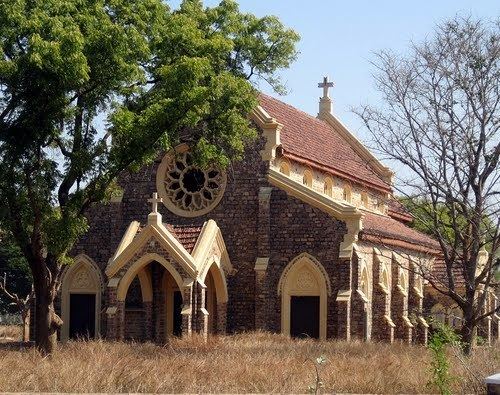
Major Henry Kirke felt he had nothing to worry about. The men of the 12th BNI had been holding up their part well; even as the news of mutiny spread around them, they appeared to be true to their salt. No one really trusted the Irregular Cavalry but the Artillery had not given anyone reason to worry.
The chapattis had circulated in and around Nowgong for most of April but with no ill effect. Between the 23rd of April and the 4th of May, 6 bungalows were burned to the ground; the owners were absent or unknown, and the roofs being thatched caught at the smallest spark. Guards were posted but to no avail. The incendiarism continued. The men of the 12th Regiment did not assist in attempts to put out the flames and when they could be induced to do so, put on their feeblest attempts. Nor would they give any information as to who was behind the fires. In the bazaar, wild rumours spread – bone dust had been mixed with the Government flour; the story of the greased paper on the new cartridges was readily believed, and as if it wasn’t enough, a story spread that it was the government distributing the chapattis through the hands of the very lowest caste men, with the intention- either by bribes or by force – to make the headmen eat them and thus lose their caste. All this aside, Major Kirke had nothing but praise for his men.


On the 23rd of May, the news of the massacre of the Christians in Delhi elicited some excitement. Major Kirke and Captain Scot, with some astonishment, heard of the killings from the Rissaldar of the 14th. He, in his turn, was terribly surprised the officers knew nothing of affairs at Delhi and very openly told them his men were in constant communication with their brethren in the Red Fort. A few hours after, he deliberately neglected his duties, something Scot eyed with some suspicion but didn’t know what he could rightly do without causing undue alarm. Even the doctor of the station reported to him that the very patients he was treating had suddenly become exceptionally insolent. Erring on the side of caution, Major Kirke took some measures – that night he planted two guns under an Artillery sergeant on a long straight road traversing the cantonments from the rear, which, if needed could sweep the expanse of the roads leading to the lines and the bazaar. Two more guns were placed on the left of the 12th’s lines on the parade ground, thus commanding the road leading out of the cantonments. The remaining two guns were at the gun shed, between the lines of the Infantry and the Cavalry, Second-Lieutenant Townsend commanding. Since the fear was the Cavalry might attempt to take the guns, they were placed on picket duty all around the station, thus keeping the men divided and unable to communicate with each other. The suspicion was on the Cavalry alone, and as such, should they revolt, the guns could all be brought to bear on them.
Meerut had risen, Delhi was in flames, and other stations were facing their troubles, but from Nowgong, the reports continued to be favourable. Yet the clouds continued gathering, albeit slowly.
On the 30th of May, a letter was received from Captain Gordon, Deputy-Superintendant of Jhansi, that 400 Bundelkhand men had been discharged from the late 34th BNI, and it was thought likely they would, on their return to the district, try to get a hold of the treasure. The number of men was rather overblown, and Scot rightly surmised it would not have been possible for them to be anywhere near Nowgong in such a short time, but the cavalry could hardly contain their joy at the thought of rebellion. They obeyed all their orders, but when the officers visited their pickets and later went to the lines, they were met with a “freezing politeness.”
As for the artillery and the infantry, on the other hand, they showed their pleasure in the positioning of the guns and the picketing of the cavalry, they were most gratified that their officers slept amongst the lines to show their confidence in them. It gave the officers an opportunity to socialise with their men and as much as possible, form as close a bond as they could with those they commanded. The policy was thought to be the best in such troubled times.
Major Kirke relayed his trust in his men and the arrangements he had made, to General Sir Henry Wheeler at Cawnpore, who in turn replied that the report met with his complete satisfaction. Kirke was pleased with himself.
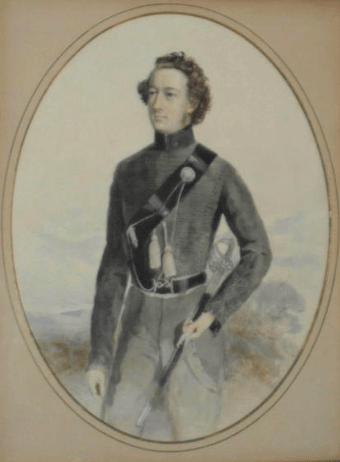
Major Henry Kirke was, at 49, an experienced officer and had served his army well. He was for all intentions, content with his life in India. A keen gardener, he actively collected seeds for the Agricultural Society of India and grew sugar cane on his holding in Dehra Dun. Henry was happily married to Margaret née Blair who had thrown over another man she was engaged to, when she met Henry on the ship that was taking her out to India in 1830. They started life together in Meerut and had six children, one of whom, was 17-year-old Henry Philip who was serving with his father in Nowgong.
Nor was Captain P.G. Scot any less experienced than Kirke himself. He had come out to India in 1841, served with the Army of the Sutlej in 1846 and had been present at the action of Ferozeshur. By 1857, he had been serving with the 12th BNI for 12 years.
 Mutiny Reflections