Some Doings of the Moolkee Horse
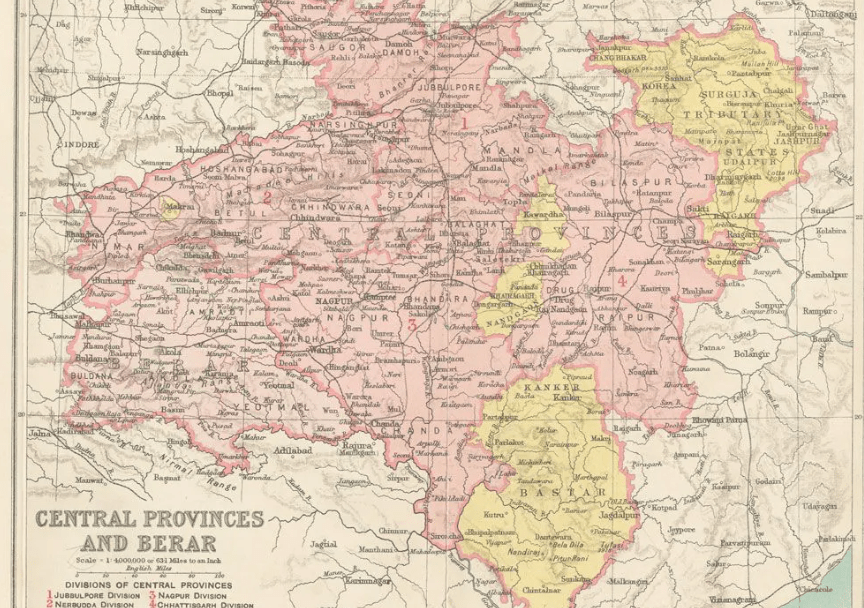
The affair in which the Moolkee Horse was involved was an unfortunately typical scenario which cropped up in the latter days of the mutiny; In this particular case, the officiating Deputy Commissioner of Chanda, Captain William Hindley Crichton (Madras Army), utilised the force to quell disturbances in the Ghote and Arpeilee Zamindari. Things did not start well, as Mr Crichton notes in his despatch:
“The party who manned the guns deserve especial mention; they reached Tarsa, a distance of 48 miles, on the 3rd day after leaving Chanda; the bullocks, like the men, were unaccustomed to moving a gun about, and, to make matters worse, all the drivers had absconded; however, from the zeal and activity of the Sepoys, who took the place of the drivers, feeding and taking care of the bullocks, &c., &c., the gun and ammunition waggon were moved about from place to place over bad loads, with a steady regularity which did the men much credit.
Lieutenant Nuttall joined Crichton at Tarsa on 26 April 1858. He had with him:
3 subadars, 3 jemadars, 18 havildars. 18 naiques, 3 drummers, 3 fifers, and 300 privates and established pickets at Crichton’s request at:
Dhabba: 1 havildar, 1 naique, and 12 privates.
Seonee: 1 naique and 6 privates.
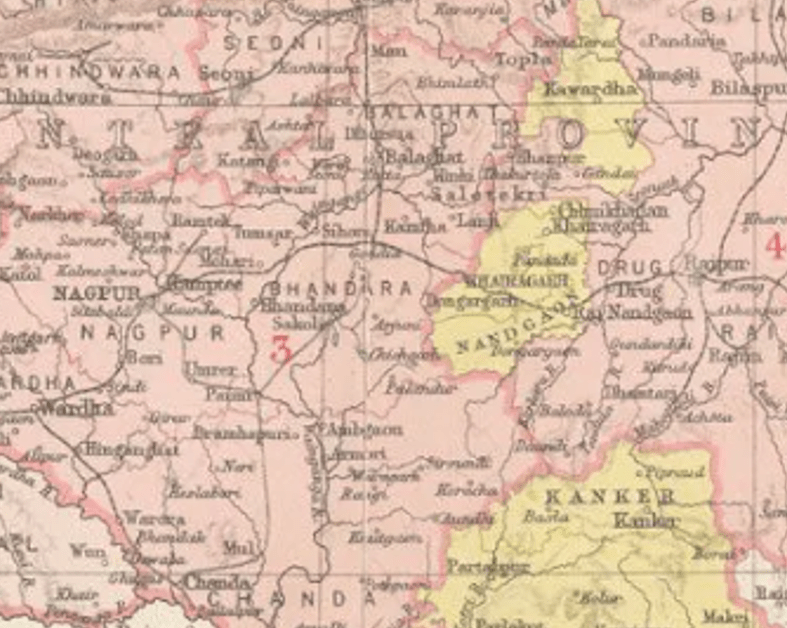
Nandgaon: 1 havildar, 1 naique, and 12 privates.
He included in his force a “small hospital and bazar establishment.”
The same evening when he arrived, he moved his camp, along with Crichton’s, to the village of Ashti, on the eastern bank of the Wyngunga River.
“…at daylight, on the following morning, I started along with you en route to the village of Arpeillee, with the rifle company as an advanced guard, leaving the Grenadier Company to escort the baggage a short distance in rear, as also No. 6 Company as the rear guard. After proceeding about 6 miles, and close to the village of Bemunpett, 4 sowars, who were riding about 30 yards at the head of the detachment, came suddenly on a band of 200 armed men, lying down behind the wooded bund of a tank; they opened fire on the sowars, who galloped back to me, and reported the circumstance. On this, I halted the Rifle Company to allow of the Grenadier Company joining us, which it did almost immediately. I then extended the right sub-division of the Rifle Company as skirmishers, and, with the left sub-division and Grenadier Company as supports, advanced on the bund; on our nearing the bund of the tank, a smart fire was opened on the skirmishers by the insurgents, who were under cover of the trees on the bund of the tank; on getting within about 20 yards of the bund, I charged the same with the skirmishers, who topped it with a cheer; the insurgents fled in every direction, leaving behind them a bag of gunpowder, 2 daggers, 3 spears, some clothes, cooking utensils, as also a packet of letters. I followed them up for some distance through the dense jungle bordering the tank, but they broke and dispersed in every direction, and, although we scoured the jungle, yet could find no trace of them, so 1 closed the skirmishers on the supports and, bringing all the things they had abandoned with me, I rejoined you at the village of Bemunpett.“
Nuttall brought the bundle of letters to Crichton and waited for further orders. Crichton had, in the meantime, received information that there were two or three other “strong” parties in the vicinity; instead of confronting them, the entire force moved back to Tarsa so that Crichton could better protect the frontier of his districts. By now, Nuttall’s men had been under arms for more than 10 hours, but they obliged the captain and returned to Tarsa.
Nuttall was now completely at the mercy and whim of Crichton. The Deputy Commissioner, in his turned was relying on local spies who now told him that a force of no less than 12oo men had holed themselves up in two mud forts, one at Arpeillee and the other at Ghote. They further stated that the insurgents had several wall pieces. Nuttall, realising the venture would be ridiculous without artillery support and reinforcements, requested Crichton to bring out a gun from Chanda and a company of infantry. He could then “establish such a strong line of posts along the frontier, that it would be impossible for the rebels to enter your district.” On 23 April, Nuttall started with two full companies, at four in the morning, firstly visiting not just Nandgaon but Kownserrie and Kurrowlie, to find there wasn’t a rebel in sight. To establish his defensive line, Nuttall detached the following men:
Nandgaon: 1 jemadar, 2 havildars, 2 naiques, 30 privates.
Dhabba: 1 jemadar, 1 havildar, 2 naiques, 30 privates.
Tarsa: 1 jemadar, 4 havildars, 3 naiques, 52 privates.
Chammoorsee: 1 subadar, 1 jemadar, 5 havildars, 4 naiques, 70 privates.
Between 30 April and 2 May, there was no sign of any insurgents. Nuttall sent patrols up and down the river. On the evening of the 2nd, he crossed the river with Crichton’s gun, the remainder of his detachment and Crichton’s camp.
“Shortly after the men had piled arms, a very severe storm of wind and rain came on, which, in a quarter of an hour, had turned the black cotton soil into a sea of mud; as the men had no tents, and as the old encamping ground was only a coss distant, we both of us thought it the best plan to return to our old encamping ground at Tarsa, which I did; but, although it was only a coss, yet I did not get in with the gun until quarter past 1 o’clock a.m., it having continued raining the whole time. The men were on this occasion, upwards of nine hours under arms.”
Nuttall rested his men until 4 May, and early on the 5th, they moved across the river again to the village of Ashti, along with Crichton’s camp. On the 6th they moved again, this time to Kowserrie. Leaving the camps under a strong guard, Nuttall and Crichton now moved on the 7th to Arpeillie, the home of one of the recalcitrant zamindars.
On nearing the village, expecting opposition, I threw the grenadier company out in skirmishing order, and with the ride company as supports, and gun in the centre, advanced on the village, passed through the village and mud fort, the other side of which came in view of the bund of a tank distant from the village about 500 yards. Several armed men were seen evidently watching our movements. On seeing this, I doubled down with the grenadier company to the right corner of the bund, intending to take them in flank. On their seeing me do this, they retreated in a body through the dense jungles.”
At the start of the affair, Nuttall had instructed the Quartermaster Sergeant, who was with the gun, to open fire, without hesitation, on any armed men he happened to see, at his own discretion. The Quartermaster- Sergeant, upon seeing just such a body, and seeing they were some 100 strong and coming at him from the left, opened fire at 400 yards and gave them four rounds. The shots, however, had no effect, and the men disappeared into the jungle. As for Nuttall,
“As I was advancing with the skirmishers at the double, 1 observed a man making the best of his way for the thick jungle, galloped up with four or five sepoys and made him prisoner, and, on handing him over to you (Crichton), he proved to be one of the dewans of the rebel zemindar, Yenkut Rao. This man, after being seized, pointed out two ghurries in the jungle, which he said contained his property; in one of these, a matchlock with some powder was found.”
Unable to enter the jungle, Nuttall and his men scoured the area just outside it, circumventing a large tank and getting as close as they dared to the jungle itself; had they entered they would have been at a disadvantage, with horses and sepoys becoming tangled up in the undergrowth; with no map and no road to follow, the men hiding in the jungle could simply had picked them off. After a few hours, Nuttall called in the skirmishers and returned to Arpeillie, which he proceeded to burn to the ground. He then made to return to Kownserrie – no sooner was his back turned, than several shots rang out. He wheeled the company forward into line to the flank where the shots had come from, and this time, pushed into the jungle itself. It was a useless venture; the jungle was so dense that after a short distance, Nuttall called his men back. They could not see where the shots had come from nor who had fired them – rather than risk his men, Nuttall returned to Kownserrie. His men had been under arms for 14 hours; they had traversed some 30 miles of jungle tract and had done so with scarcely any water to drink.
On the 8th, they halted at Kownserrie, and on the following morning, both camps moved to the village of Jamri. At daylight on the 10th, they now carried onwards to Ghote, the residence of the other zamindar. According to Crichton’s reports, here there was bound to be resistance, and Nuttall was not taking any chances. He sent an advanced guard of the grenadier company along with 30 men of the Rifle company, followed by the gun and the baggage, escorted by 60 Rifles. Bringing up the rear was a further guard of 60 Rifles under an Indian NCO. This time, Crichton’s reports were not wrong.
When within 200 yards of the village, “fire was opened on the detachment from a hill a short distance off the road, on our right flank, in which hill the insurgents had a small wall-piece in position, as also a large body of matchlock-men, posted amongst the rocks and jungle, whilst at the same time a heavy fire of matchlocks was kept up from the village to our front, in one corner of which was a large mud fort; on my getting clear of the jungle, and seeing the positions the insurgents occupied, I determined first to attack and gain possession of the fort.”
Nuttall extended the Grenadiers into skirmishing order and at the same time, directed the Quartermaster-Sergeant to open fire, with roundshot, on the hill. Taking the lead, Nuttall advanced on the fort and, with the Grenadiers, carried it in a “rush”, sending the insurgents “flying in every direction.” Nuttall chased after them, this time through the jungle, but “they would not stand, and dispersed in every direction amongst the jungle.” Of course, things now had to go wrong for on the second round of firing, the gun carriage broke down, rendering the gun useless.
“On this occurring, Subadar Ali Mahomed mounted the hill to the right of the road with a subdivision of No. 6 company, the insurgents fleeing and dispersing in every direction. The affair altogether lasted for about an hour; no one killed on our side; only a horse of the Moolkee Rissallah wounded. On the side of the insurgents, three men killed, and others reported wounded.“
That so few of the insurgents were killed, Nuttall put down to the fact they had well under cover and their retreat had been fast, “as it was a case, after they were driven from the fort and village, of their firing and retiring through dense jungles, every foot of which they were acquainted with.” He then searched the village and found a decent stockpile of swords, matchlocks, spears, bows and arrows, as well as ammunition. The insurgents had amounted to 700 men, but he had driven them from two strong positions. Before the day was done, Nuttall had pushed his men for nine hours under arms and after a march of 10 miles, after which they had still managed to take Ghote. That evening, with 100 men serving as his escort, Nuttall visited several villages in the vicinity only to find they were mostly deserted. Where the few shots had come from that had been directed at his men late in the afternoon, Nuttall was unable to ascertain.
“Halted on the 11th May, to get the gun repaired. Early in the morning, taking 150 men with me, I searched several villages, but found them entirely deserted. During the course of the day, two prisoners were brought in, who were found to have arms in their possession, and I accordingly handed them over to you for punishment, having burned the villages of Ghote to the ground, and, as you urged the necessity of making a demonstration in the Chummoorsee direction. I accordingly marched with your camp to that place, on the morning of the 12th May, and halted there for five days; again, on the evening of the 18th May, marched to Ghote, halted there the 19th May, and, on the following morning, was joined by Captain Shakespear, and was that same day brought on the strength of his force. I cannot close this without bearing testimony to the willingness, endurance, and gallantry of the infantry under my command, a party of which served the gun in the most able manner; as also to the gallant conduct of the party of Moolkee Horse, who accompanied me throughout these operations, and who made themselves useful in many ways.”
And so ends the story of the Moolkee Horse. It is their only appearance in despatches, and as they were then taken in on the strength of Shakespear’s force, they disappear into the ranks.
The question, however, remains, who exactly was Nuttall fighting?
 Mutiny Reflections