Jung Bahadur Makes an Offer – The Nepal Contingent
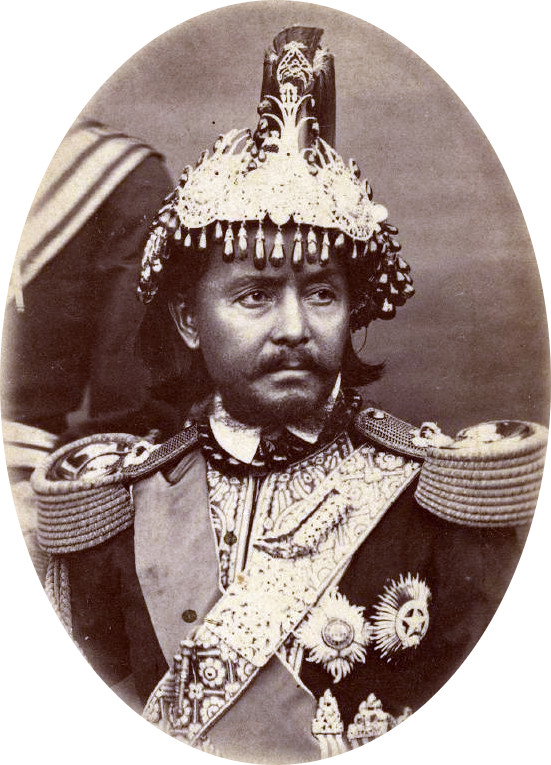
In the early days of the revolt, assistance would come from one unexpected source – Nepal. Jung Bahadur, the virtual ruler of Nepal, placed his entire military resources at the disposal of Governor-General Canning.
After defeating his rivals through various intrigues in September 1846, Jung Bahadur and his siblings executed approximately 40 members of the Nepalese palace court, including the Prime Minister and a relative of the King, Chautariya Fateh Jung Shah, at the palace armoury known as the Kot in Kathmandu. This incident left King Rajendra Bikram Shah and Surendra Bikram Shah devoid of power and signified the onset of the Rana autocracy. By 1850, Jung Bahadur had successfully eliminated his primary adversaries, placed his chosen candidate on the throne, appointed his brothers and associates to key positions, and ensured that he held the office of Prime Minister, thereby controlling all significant administrative decisions. Jung Bahadur held a firm conviction that the Resident and the Governor-General should refrain from any direct engagement in the affairs of Nepal. He aimed to create a direct connection between the Government of Nepal and the Queen and the Prime Minister of Great Britain. Furthermore, he was eager to comprehend the actual scope of British authority, which motivated an interest in visiting Europe. Lord Canning sent Jung Bahadur’s proposal to Britain, where the request was accepted. In return, James Broun-Ramsay, 1st Marquess of Dalhousie, sent a letter of acceptance.
Jung Bahadur Rana’s diplomatic tour would mark the first visit by a high-ranking person from the subcontinent to Europe, and his trip concluded with Nepal being recognised as a sovereign nation. His meeting with Queen Victoria was a success, and his time in Britain was greeted with much fanfare. A composer, Isaac Strauss, even wrote a polka in his honour – the Nepaulese Polka to commemorate his visit to Britain. He took part in the Epsom Races, attended a regatta on the Thames and was greeted during his stop in Plymouth by four regiments and a 19-gun salute. He also took the time to open an account for purchasing guns.
In France, he was escorted by Prince Bacchicochi, first cousin, once removed from Louis Napoleon, whom he met on 30 August. Napoleon presented Jung Bahadur with a parade of 50’000 troops and a gun salute. He returned triumphant to Nepal in January 1851. Convinced that the only way for Nepal to maintain its independence was to maintain a friendly relationship with the British while keeping Nepal aloof from external influences. The British, for their part, left well alone.
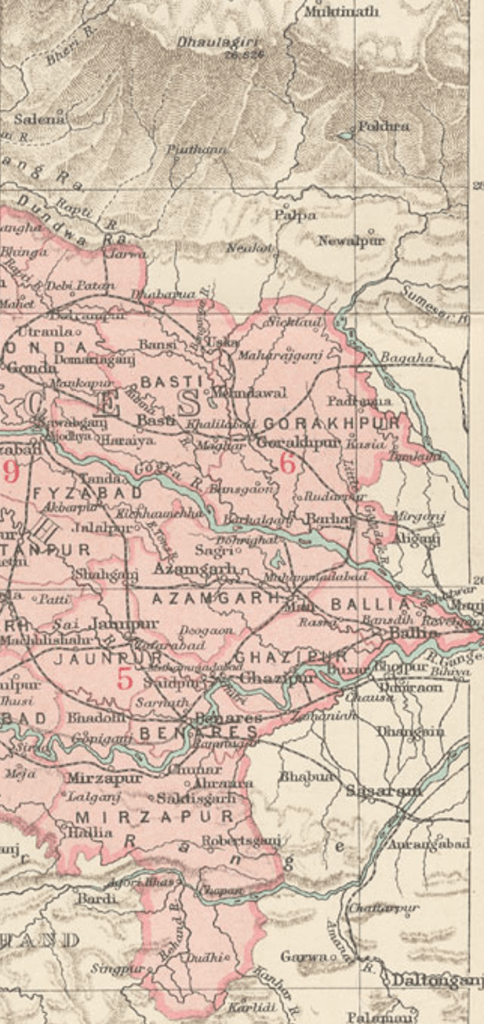
Initially, Canning refused Jung Bahadur’s offer, but by June, with the mutiny at its bleakest, he changed his mind. An agreement was drawn up, and shortly after, 3000 Gurkhas of Jung Bahadur’s army entered British territory north of Gorakhpur. Their arrival at the station at the end of July signalled the disarming of the sepoys there and then continued on their mission to restore order to Azamgarh and Jaunpur. To ensure a concerted effort between Jung Bahadur’s force and the British, the government instructed the Benares authorities to assign four officers to the Nepal Contingent – Captain Boileau, Lieutenants Miles, Hall, and Campbell were chosen, all of whom had been left unemployed by the mutinies of their regiments. They joined the Nepalese at Jaunpore.
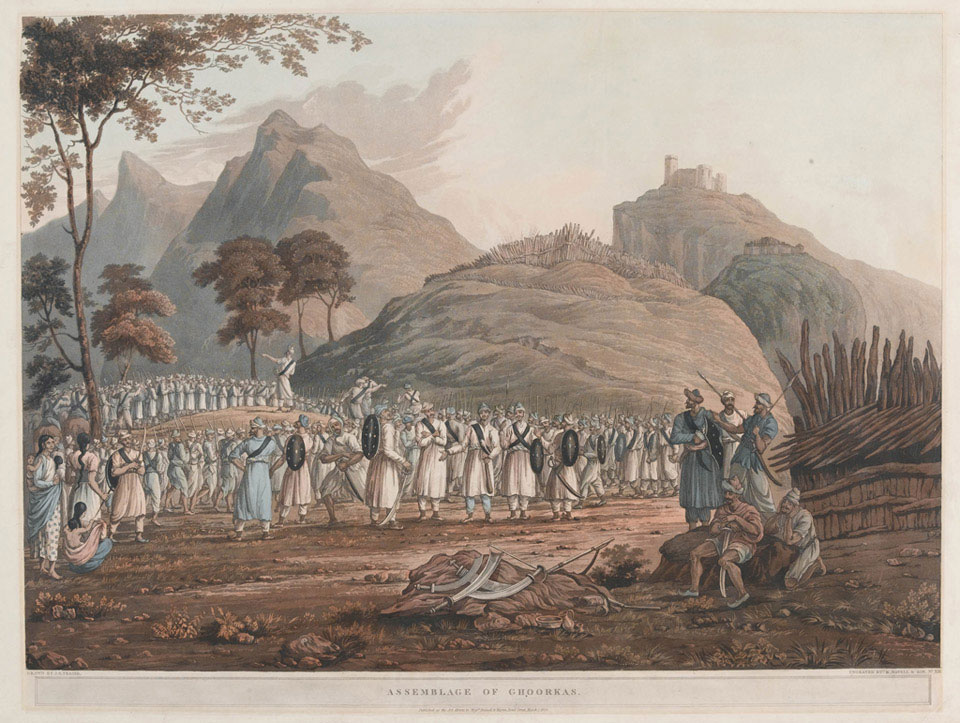
The rebels, for their part, were not interested in giving up their interests in Azamgarh and, in the third week of September, decided to take it back. The station had been held valiantly by one Mr Venables, an indigo planter by trade and a rag-tag band of irregular cavalry. However, he stood little chance of meeting an organised rebel force in the open. From Jaunpore, Lieutenant-Colonel Wroughton sent a detachment of the Sher Regiment of Nepalese under their colonel, Shamsher Singh, 1200 strong, with two guns to reinforce Azamgarh. They left on 18 September and, marching 40 miles on that day alone, reached the station by sundown. The rebels, in the meantime, had been gathering at Manduri, 10 miles from Azamgarh, wholly ignorant of the Nepali reinforcements. With barely 7 hours to rest, at one in the morning, the Sher Regiment set off again, accompanied by Captain Boileau, three other officers, the judge Mr Wynyard and Mr Venables to give the rebels a surprise. Shortly before sunrise, they reached Manduri. The rebels had taken advantage of the position, covering their centre with the village and their flanks by the fields of tall sugar cane. Colonel Shamsher Singh, who was not daunted seemingly by anything, quickly formed up his men in five columns and dashed straight at the rebel position. Within ten minutes, the ferocious onslaught had the rebels in full flight. They left behind three brass guns and 200 men killed and wounded.
“This victory had an excellent effect. Up to that time, the British authorities had felt some hesitation in employing their allies against the rebels, but with the victory of Manduri, all uncertainty vanished. To march fifty miles in two days and then to win a battle in an unknown country would have reflected credit on veteran soldiers. The success obtained on this occasion not only filled the English officers with confidence, it also emboldened them to follow up the step already taken.” (Malleson)
On 27 September, Colonel Wroughton, with the civil officers of the Jaunpore district, marched with another detachment of Nepali troops against the stronghold of the rebellious raja, Iradat Khan, who was holding Mubarakpur. Mubarakpur was quickly occupied, and Khan was hanged. They then took Atraolia, the stronghold of the rebel leader Beni Madhu. Although Wroughton occupied the town and destroyed the fortifications, Madhu escaped and fled the district. Azamgarh was taken on the 29th, and thus the area up to the borders of Oudh was, for a time, rendered controlled.
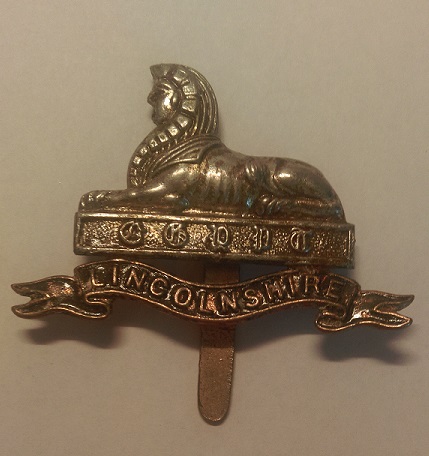
The men of H.M.’s 10th Regiment of Foot had been sitting in Dinapore ever since Major Eyre took Kunwar Singh at Jagdispur. On 12th October, they were ordered to march to Benares, where, after two weeks of hard marching, they were joined by a small detachment of European Artillery and 17 men of the 17th Madras Native Infantry, with two 9-pounders, all under Lt. Colonel Henry Errington Longden (10th Foot). Before Longden and his men marched up to join the Gurkhas, they had beaten the rebels at Kudya (12 miles west of Azamgarh) on 19 October and at Chanda (36 miles from Jaunpur) on the 30th.
“The rebels, numbering from four to five thousand men, were strongly posted and had seven guns. The Nipal troops counted only eleven hundred men with two guns. The battle, obstinately contested, terminated in the complete defeat of the rebels, with a loss on their side of three hundred killed. Four of their guns were taken. But the victory was dearly purchased. Lieutenant-Colonel Madan Man Singh and eleven men were killed, and fifty-nine were wounded. The gallantry of the Nipal troops had been conspicuous. Of one of them, Lieutenant Gambhir Singh, it is related in the official account of the action that, ‘single-handed, he took a gun, cutting down five of the artillerymen, and wounding and driving away two others.’ This gallant ally was covered with wounds but eventually recovered.”
Longden arrived in Jaunpore one day after the victory at Chanda. Three days later, the obstinate Oudh rebels, 1000 strong with two guns, crossed the frontier and seized Atraolia Fort. They were not prepared for the united forces of Longden and the Nepalese – they marched out to Atraolia.
“We marched from Benares on the 29th, and on the 4th or 5th of November expected to engage the enemy, but on our coming within one day’s march of them, they retired and took possession of the fort of Attrowlea. We followed them up, and on the morning of the 9th November we came in sight of the fort. Within a mile of the fort we caught two Sepoy spies. On one we found a lady’s gold watch and three hundred rupees. This scoundrel was one of the actors in the horrid tragedy committed at Cawnpore. We hanged them both that night. The men could with difficulty be kept from tearing them to pieces.” (Malcolm)
The force however, was too small to take the strong force by storm so it was decide to bombard it with such ferocity the rebels would think twice about showing their heads of over the walls.
“The enemy opened fire upon us about half- past nine in the morning, and about ten we got our guns in position and opened fire on them. Our position was well wooded, and we had a good cover behind the trees . Our big guns played on the fort until sunset without being able to make a breach or an entrance of any kind . All this time we were out skirmishing, firing on them whenever we got a chance . On night setting in , our Colonel , with great caution and skill , would not allow us to storm the place . We retired and pitched camp, and left some native troops round the fort. In the morning to our great surprise the fort was forsaken!”
When they entered the fort the next morning, it was well and truly empty – the rebels had escaped under cover of darkness, leaving all their stores behind. It was not lost on the British, however, that while the contingent and Longden’s troops could hold off isolated attacks, they were hardly equipped to defend the frontier with Oudh in its entirety – should they at any point be beaten, they would undoubtedly be forced to fall back on Benares. With this in mind, Canning decided a new arrangement needed to be made with Nepal. When negotiations were completed, Jung Bahadur took to the field himself, leading 9000 hand-picked troops. Attached to his force was Colonel MacGregor with the rank of Brigadier General.
Over the next months, with the Nepal Contingent, the Sarun Field and the Jaunpore Field Force would clear the districts north of Benares and east of Oudh; when the aim was achieved, one corps would remain behind to keep an eye on things, and two would be brought under the direct command of Sir Colin Campbell, who would soon make his final move on Lucknow.
Sources:
Caine, Caesar, ed. Barracks and Battlefields in India: The Experiences of a Soldier of the 10th Foot (North Lincoln) in the Sikh Wars and Sepoy Mutiny. London: C.H. Kelly, 1891.
Holmes, T. R. E. A History of the Indian Mutiny. London: W.H. Allen, 1891.
Malleson, G. B., ed. Kaye’s and Malleson’s History of the Indian Mutiny of 1857-58. London: W.H. Allen & Co., 1889.
Williams, E. A. The Cruise of the Pearl Round the World. London: Richard Bentley, 1859.
Wood, Evelyn. The Revolt in Hindustan, 1857-59. London: Methuen & Co., 1908.
 Mutiny Reflections
Good History! Well written! 👏
LikeLiked by 1 person