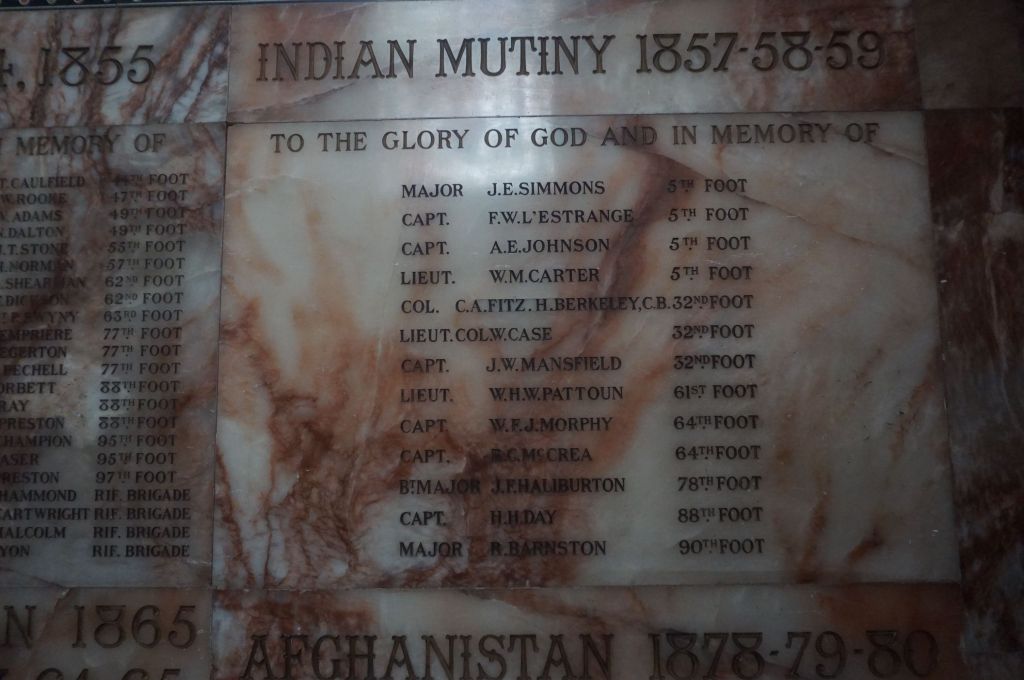
26th November – Action at Pandu Naddi
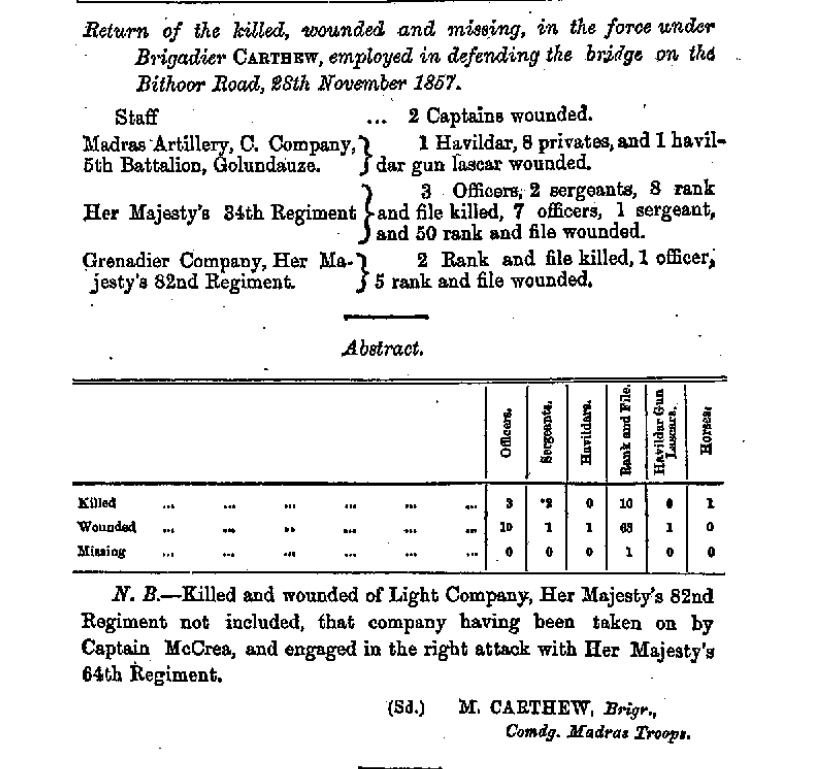
Return of Killed, Wounded, and Missing, of the under-mentioned Corps, in Action, near Cawn- pore, on the 26th of November, 1857.
Her Majesty’s 34th Regiment—1 drummer, and 3 privates, killed; 3 serjeants, 2 corporals, and 20 privates wounded.
Her Majestys 82nd Regiment—1 private killed; 1 subaltern, and 5 privates, wounded.
Her Majesty’s 88th C. R.—1 captain, and 7 privates killed ; 4 subalterns, 3 drummers, and 32 privates wounded.
Rifle Battery—1 private killed; 1 serjeant, 1 corporal, and 6 privates, wounded.
Total—I captain, 1 drummer, and 12 privates, killed;
5 subalterns, 4 serjeants, 3 corporals, 3 drummers, 63 privates, wounded.
C. A. WINDHAM, Major-General, Commanding Cawnpore Division.
ELLIS CUNLIFFE, Captain,
Acting Brigade-Major.
34th Regiment of Foot
Drummer Edward Weale – killed in action
Privates
Bradshaw, Richard – killed in action
Causer, William – killed in action
Doyle, Owen – severely wounded. Aged 24. Wounded by musket ball to the chest. The ball fractured two ribs. He was admitted to Fort Pitt Hospital in August 1858, directly after his arrival from India. The wounds healed but he continued to complain of shortness of breath. He was discharged to St. Mary’s Barracks to wait for his invalid papers but was soon readmitted. Over the next months, Doyle’s condition did not improve. He died on the 15th of October 1859, 1 year and 11 months after he was wounded. The autopsy revealed he died of gangrene in his lung.
Long, Thomas – wounded on the left temple by a piece of shell which lacerated the scalp and fractured the outer table of the parietal bone; necrosis ensued; and two small pieces of bone came away. He was invalided on the 6th of August 1858 however his skull showed a deep depression, “capable of holding a finger” about 3 inches long.
Reilly, Edward – killed in action
82nd Regiment of Foot
Lieutenant C.J. East – severely wounded in the foot, a portion of which would be amputated
Lieutenant J. Cecil – killed in action
Privates
Boocock, Benjamin – killed in action
Bowers, John – dangerously wounded. Died of wounds
88th Regiment of Foot (88th Connaught Rangers)
The regiment was new to India – they had only just arrived when orders came for them to proceed to Cawnpore – they arrived on the 21st of November. Not a man of them spoke the local language, their kit was bereft of suitable clothing and they had been given tents that no one knew how to pitch. Windham marched them out to the Kalpi road three days after they arrived and the action at Pandu Naddi would be their first engagement in this theatre.
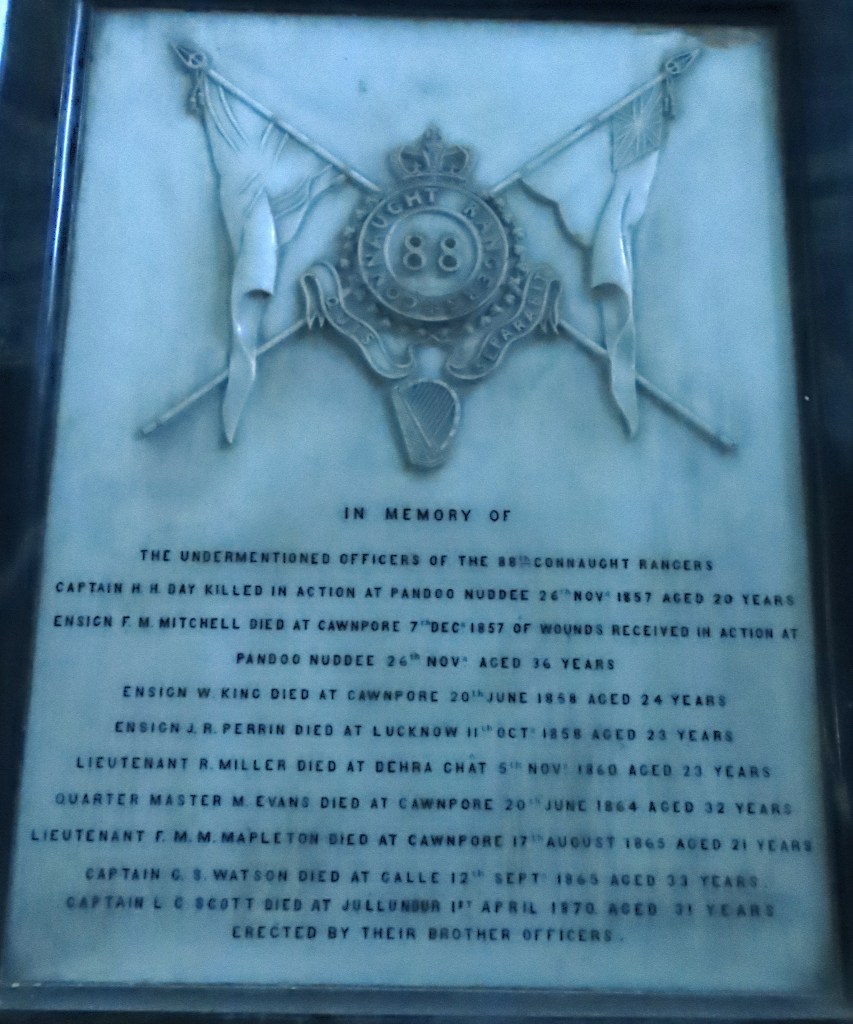
Captain Henry Hooper Day – killed in action, aged 22.
Ref. The Times: ‘He was previously wounded in the arm, but refused to retire and continued gallantly leading his men when he fell shot through the head.’
The son of David John Day and his wife, Mary Elizabeth Day, Captain Hooper was born on the 3rd of March 1836 in Rochester. Aged 15, he He was enrolled as a “gentleman cadet” at the Royal Military College, Sandhurst. Commissioned into the 88th Foot in 1854, promoted to lieutenant on the 27th of October 1854 and captain on the 8th of June 1855.
During the charge at Pandu Naddi, Day was at the front of his men when he was hit. His body was retrieved some months later by Mowbray Thomson shortly before the commencement of the Lucknow operations in March 1858. Brigadier Inglis had taken a small column towards Pandu Naddi, accompanied by J.W. Sherer and Mowbray Thomson. Before setting out, the Connaught Rangers asked Thomson, if he could, retrieve the body of their captain. He had not been found after the battle and it was believed he had fallen into a well. Thomson promised to find out what he could. At first, the villagers were reluctant to talk but finally relented and showed Thomson a disused well on the plain hardby the battlefield. Sherer organised some coolies who descended with ropes, into the depths and finally brought up Day’s body. The surgeon, who inspected the remains, after seeing the fatal injury, could say it had been most likely caused by round shot.
“He must have been standing on the edge of the well to look ahead, when a round-shot caught him, and down he went It was probably a chilly morning, and he had slipped on a mackintosh. His watch was there, and other little personal equipments and his rings still encircled the bony fingers. We had him reverently laid on a charpoy and covered him up, and it was a consolation to his fellow-officers to place him in a grave, and to have the last words of hope read over him. “
Day is also commemorated at St John the Divine Church, Chatham on the memorial to his father.
Lieutenants
Birch, W. – wounded
Burke, T. – slightly wounded
Gilby, H.M. – wounded
Ensign Fitzgerald Massy Mitchell – dangerously wounded. Died of wounds on the 7th of December, aged 36.
Colour Sergeant Thomas O’Shaughnessy – dangerously wounded. Died of wounds
Privates
Buchanan, Robert – severely wounded in the arm. Aged 20. A musket ball shattered his forearm and damaged the nerves. By the 11th of July 1858 he had lost all motion and sensation in his hand – he was invalided on the 31st of July.
Ford, Martin – severely wounded, grapeshot to the hip. He would only be able to begin modified duty in November 1858.
William Smith – wounded by a spent musket ball, “which caused a bruise over the symphysis of the pubis and outer side of the left thigh,” causing him to lose control over his bladder. On the 16th of August 1858 he was supplied with a “patent urinal” and although in good health, still complained of weak loins.
2nd Battalion, Rifle Brigade
1 private killed ; 1 serjeant, 1 corporal, and 6 privates, wounded.
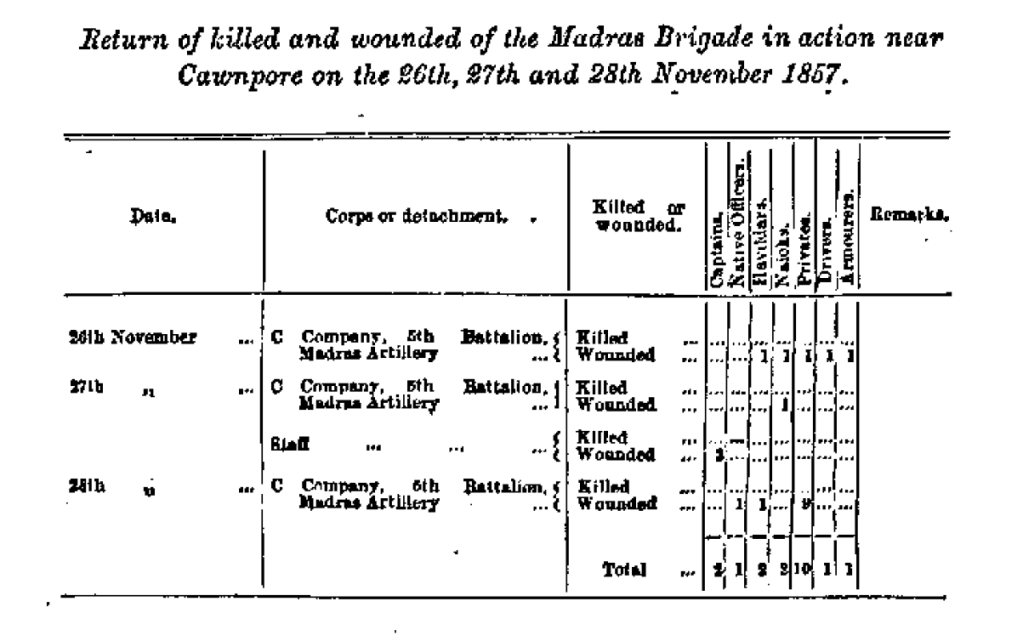
27th of November
Return of Killed, Wounded, and Missing, of the under-mentioned Regiments, in Action, near Cawnpore, on the 27th of November, 1857.
Her Majesty’s 34th Regiment—1 field officer, 5 privates, wounded.
Her Majesty’s 82nd Regiment — 2 privates wounded.
Her Majesty’s 88th Regiment—3 privates killed; 1 captain, 1 subaltern, 1 staff, 19 privates, wounded.
Her-Majesty’s 64th Regiment—1 serjeant, 1 private, wounded.
Rifle Brigade—2 subalterns, 2 serjeants, 2 privates, wounded.
Total—3 privates killed; 1 field officer, 1 captain, 3 subalterns, 1 staff, 3 serjeants, 29 privates, wounded.
C. A. WINDHAM, Major-General,
Commanding Cawnpore Division.
ELLIS CUNLIFFE, Captain,
Acting Brigade-Major
1st Battalion, 5th Foot
Private W. Baldry – killed in action
34th Regiment of Foot
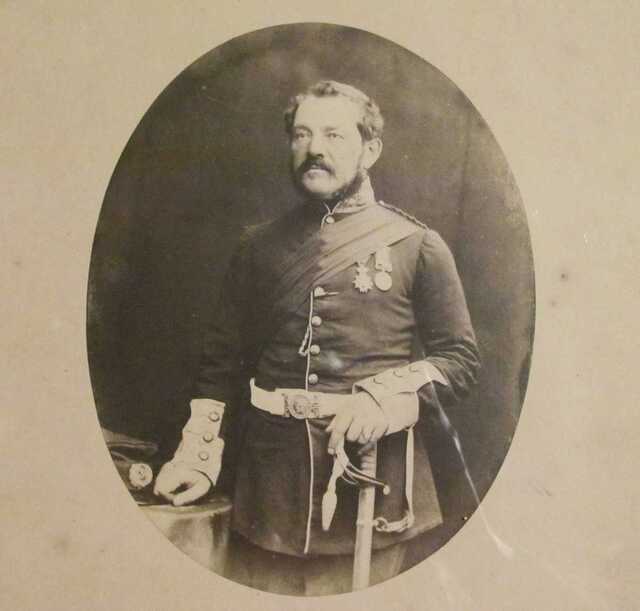
Lieutenant-Colonel Richard D. Kelly — wounded. He was born in Ceylon in 1815. Commissioned into the 49th (Royal Berkshire) Regiment of Foot in 1834 and became the commanding officer of the 34th (Cumberland) Regiment of Foot and served with the regiment in Crimea. He was wounded and taken prisoner at the Siege of Sevastopol.
“‘[Kelly] had gone but a little way further, when – standing together in the trench – he saw a group of seven or eight soldiers whom he took in the darkness to be men of his own regiment – the 34th. So, going close up to them, he directed these men to ‘fall in’ with the other men under Jordan. He was met by an uproar of outlandish cries, and found that he had been accosting the enemy. He brought out his revolver, and pointing it at the head of the nearest foe, pulled hard, though in vain, at a trigger held fast by the safety catch. Whilst lowering his weapon in order to push back the bolt, he was felled by numbers of blows… and when on the ground was bayoneted in the right shoulder, in the left hand, and in the right leg…” (Alexander Kinglake, official chronicler to the Expedition to the Crimea)
Privates
Coward, Joseph – dangerously wounded. Died of wounds, 1st of December
Duffy, James – dangerously wounded. Died of wounds, 28th of November
Williams, William – died of wounds
82nd Regiment of Foot
Privates
Charles Collins – dangerously wounded. Died of wounds
Wharwood, John – severely wounded
88th Regiment of Foot (88th Connaught Rangers)
In two days of fighting – the 26th and 27th of November, – the 88th lost one officer killed, five officers wounded and 100 non-commissioned officers and men, killed and wounded.
Captain John Evans – wounded. Died of wounds, 5th of October, 1861
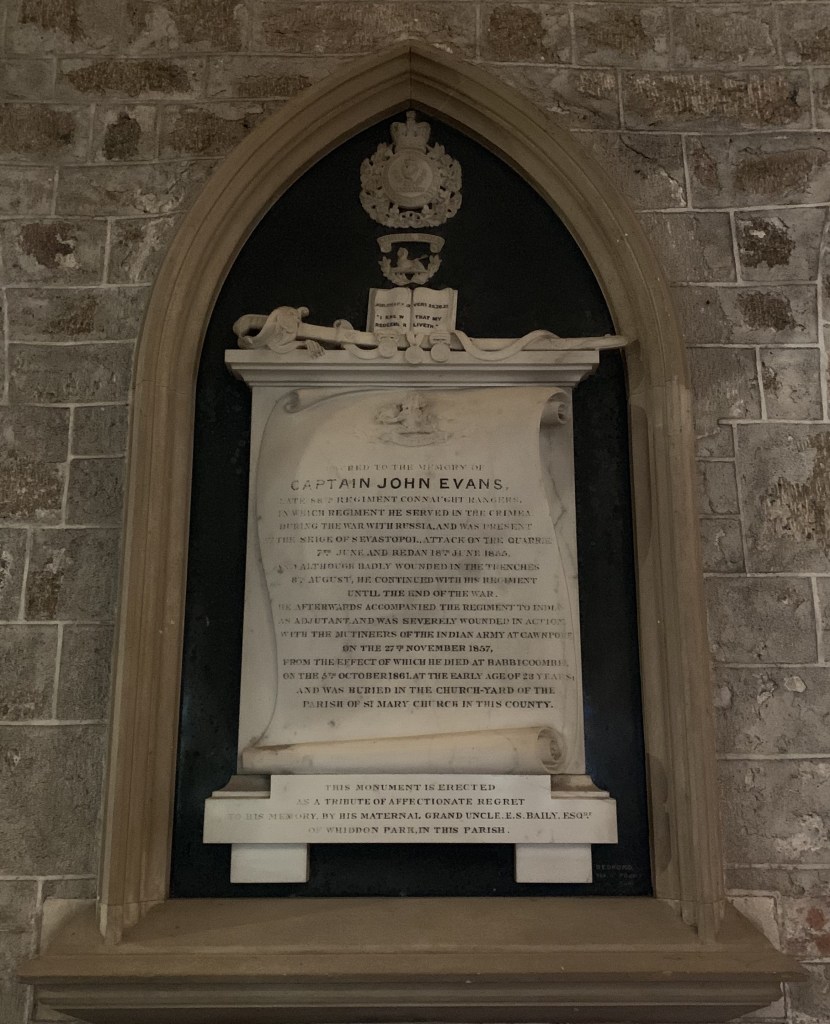
Memorial at Chagford church, Devonshire –
“Dedicated to the memory of Captain John Evans late 88th Regiment Connaught Rangers, in which regiment he served in the Crimea during the war with Russia, and was present at the siege of Sebastopol attack on the quarries 7th June and Redan 18th June 1855 and although badly wounded in the trenches 8th August, he continued with his regiment to India as adjutant, and was severely wounded in action with the mutineers of the Indian Army at Cawnpore on the 27th November 1857, from the effect of which he died at Babbicombe on the 5th October 1861 at the early age of 23 years and was buried in the churchyard of the parish of St. Mary church in this county. This monument is erected as a tribute of affectionate regret to his memory by his maternal grand uncle E.S. Baily, Esq. of Whiddon Park, in this parish.”
Lieutenants
Austin, E.E. – wounded
Lieutenant R. Vernor -grazed on the head – “One rebel sepoy at one place ran out of a house from a few yards distance and fired at Lieutenant Vernor, who was riding in rear. Luckily the bullet only grazed the officer’s head and then the sepoy was bayoneted. In defending himself, he cut off the left thumb of the private who bayoneted him”.
Clark, Campbell (attached from the 2nd Bengal European Fusiliers as interpreter) wounded in the stomach.
Born on the 16th of June 1827, the 4th son of Matthew Clark and his wife Catherine (née Squibb).
Campbell went out as a cadet to the Bengal Establishment in 1845 and obtained a commission to the 2nd European Regiment, Bengal Fusiliers.
Clark had been on leave in England when the mutiny broke up. Eager to return to service, he returned to India but was unable to join his regiment which was at Delhi so he was attached to the 88th at Cawnpore. His younger brother, Lieutenant Edgar Gibson Clark of the 21st NI was serving at Gonda in a staff position. He managed to send his pregnant wife and infant son to Lucknow for safety, while he remained with Assistant Surgeon Robert Batrum until they were forced to flee. Both men escaped and Bartrum Havelock’s Force for the 1st Relief of Lucknow while Clark joined the Gurkhas. Sadly his wife, son and newborn baby daughter died during the Siege. A memorial tablet exists to their memory at Christchurch, Lucknow.
As for Campbell Clark, he had been declared mortally wounded, but by some miracle, he survived. The wound, however, did not heal and on the 4th of January 1858 he wrote to his brother from Cawnpore,
“Now I will tell you about myself – I am rapidly recovering from my wound and am enabled to sit up in a chair – I hope to be able to get about again and have both wounds i.e. the one made by the entrance and that by the exit of the bullet, quite healed up in another fortnight, and when I regain sufficient strength I think I shall just dâk31 down to Benares, so that Ted [Edgar] and I may have a meeting, as I do not see why we should not see each other before we get shot and as there is lots of fear of that kind going on just now why one of us may get rather too hard a knock though I hope we may both escape – I have only one fear about my wound, and that is that there may be still some flannel shirt or red flannel of which my coat was made or merino under waistcoat, or dyed blue trouser in my stomach and that may trouble me after the wound has healed up.”
When Campbell Clark returned home, the wound was once again examined and it was found that fragments of his gold watch chain had gone into it with the musket ball; when the pieces, and the lead that stuck to them, was removed, the wound healed. He would go on to have a successful career in India with the 2nd Bengal European Fusiliers. He retired in 1879, as a colonel, and died of stomach cancer at home in Suffolk, on the 28th of March 1896, just aged 69.
2nd Battalion, Rifle Brigade
Lieutenants Travers and Pemberton – wounded
27th Madras Infantry
Captains
Drury, C.H. – severely wounded
Howlett, A. slightly wounded
28th of November
Return of Killed, Wounded, and Missing, of the under-mentioned Regiments, in action near Cawnpore, on the 28th of November, 1857.
Her Majesty’s 34th—3 subalterns, 2 serjeants, 1 corporal, 5 privates, killed ; 1 field officer,
3 captains, 3 subalterns, 2 serjeants, 1 corporal, 33 privates, wounded.
Her Majesty’s 82nd—1 corporal, 7 privates, killed;
1 field officer, 1 captain, 2 serjeants, 1 corporal, 24 privates, wounded; 1 private missing.
Her Majesty’s 88th, C. R.—2 privates, wounded.
Her Majesty’s 64th—2 field officers, 2 captains, 2 serjeants, 15 privates, killed ; 1 subaltern, 2 drummers, 13 privates, wounded ; 2 subalterns, missing.
Her Majesty’s Rifle Brigade— 1 field officer, 4 privates, killed; 2 captains, 3 subalterns,
1 drummer, 18 privates, wounded ; 1 private, missing.
Artillery—2 serjeants, 8 privates, wounded.
Total—3 field officers, 2 captains, 3 subalterns, 4 serjeants, 2 corporals, 31 privates, killed;
2 field officers, 6 captains, 7 subalterns, 6 serjeants, 2 corporals, 3 drummers, 98 privates, wounded; 2 subalterns, 2 privates, missing,
C. A. WINDHAM, Major-General, Commanding Cawnpore Division.
ELLIS CUNLIFFE, Captain,
Acting Brigade-Major
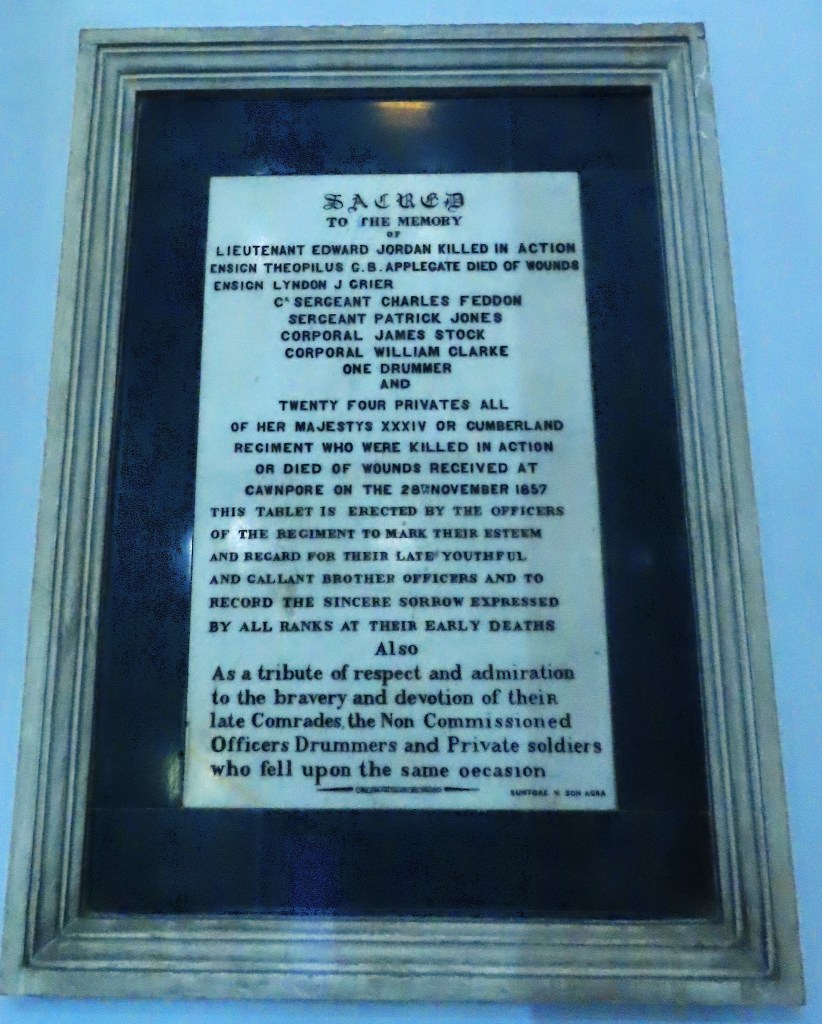
34th Regiment of Foot
Major James Maxwell – slightly wounded
Brevet Major Jordan Joseph – slightly wounded
Captains
Cassidy, Francis D. – wounded
Stewart, David – wounded
Lieutenants
Cochrane, Rupert J. – wounded
Holroyd, T- wounded
Jordan, Edward -killed in action. Aged 21. Son of Revd. Gibbes Walker Jordan, of Waterstock, Oxon.
Lampden, Henry – wounded
Ensigns
Applegate, Theodore George – dangerously wounded. Died of wounds
Grier, Lyndon John – dangerously wounded. Died of wounds. Aged 19. Son of Revd. John W. Grier, of Amblecote, Stourbridge.
Colour Sergeant Charles Feddon – killed in action
Sergeant Patrick Jones – killed in action.
Drummer Eward Weale – killed in action.
Corporals
Clarke, William- dangerously wounded. Died of wounds
Stock, James – killed in action
Privates
Bennett, Samuel – dangerously wounded. Died of wounds, 19th of December
Crook, Joseph – dangerously wounded. Died of wounds, 24th of December
Freeman, George- dangerously wounded. Died of wounds, 10th of December
Jones, Edwin – killed in action
Logue, John – dangerously wounded. Died of wounds, 21st of December
McAlleer, John – dangerously wounded. Died of wounds, 11th of December
Matchett, Samuel – killed in action
Murphy, John – killed in action
Smith, Edward – killed in action
Traynor, Terrance – killed in action
Tuckey, George – dangerously wounded. Died of wounds, 27th of December
64th Regiment of Foot
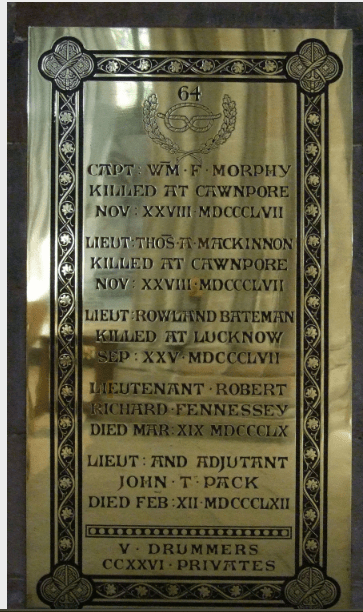
Memorial at Lichfield Cathedral, Staffordshire
MORPHY William Fletcher, Captain killed at Cawnpore during the Indian Mutiny 28th November 1857
MACKINNON (McKinnon) Thomas A, Lieutenant, 28th November 1857
BATEMAN Rowland, Lieutenant, killed at Lucknow, 25th September 1857
FENNESSEY Robert Richard, Lieutenant, died 19th March 1860
PACK John R, Lieutenant, Adjutant died 12th February 1862
Lieutenant Colonel Nicholas Wilson – killed in action. Born 31st of March 1795, at Sledagh, Co. Wexford, Ireland. Husband of Anne Holcombe.
Major Thomas Stirling – dangerously wounded. Died of wounds.
Captains
McCrae, Richard Charles – killed in action, aged 31. Son of Robert Coutart McCrea and Charlotte Dobrée. Husband of Anne de la Combe Bell. His father was a naval officer.
Morphy, William Fletcher J – killed in action. Aged 32. The son of Captain James Morphy of the 70th Foot and his wife Sophia. Born in 1825, he was a cadet at Sandhurst and commissioned into the 64th in 1842.
Lieutenants
McKinnon, Thomas Archibald – listed as “missing, “in the official returns. McKinnon was severely wounded, taken prisoner and subsequently murdered.
Gibbons – (attached, 52nd Regiment) – missing
These two officers were most likely the two men hung by the rebels at the Assembly Rooms (Kavanagh)
Parsons, N.T. – (attached) severely wounded – arm shattered by a musketball. He was lucky to keep his arm. According to Sherer, Parsons lived on for another “thirty-eight years.” He and Campbell Clark died within a month or two of each other.
Colour Sergeants
Finn, Onslow – killed in action
Nowlan, William – severely wounded
Sergeants
Donoghue, Timothy – killed in action
Kitchen, Edward – killed in action
Corporals
Castledine, James – killed in action
Neal, Patrick – severely wounded
Ostler, Joseph – killed in action
Quirk, Thomas – killed in action
Drummer Martin Laracey – dangerously wounded. Died of wounds
Privates
Brett, John – killed in action
Callaghan, Thomas – dangerously wounded. Died of wounds
Callinan, Thomas – killed in action
Cantwell, Redmond – dangerously wounded. Died of wounds
Faloon, James – severely wounded. The musket ball entered his right side, and passed behind his ribs. By August 1858, the wound had healed and he was back on duty.
Fisher, George – dangerously wounded
Fitzpatrick, Bernard – killed in action
Hunter, John – dangerously wounded. Died of wounds
Lindsay, John – dangerously wounded. Died of wounds
Muir, Daniel – dangerously wounded
Neil, Lawrence – dangerously wounded. Died of wounds
O’Connell, Thomas – dangerously wounded. Died of wounds
O’Neil, Patrick – dangerously wounded. Died of wounds
Pickering, John – killed in action
Russell, John – dangerously wounded. Died of wounds
Silbourne, John – dangerously wounded. Died of wounds
Wright, Robert – killed in action
82nd Regiment of Foot
Lieutenant-Colonel David Watson – wounded
Major Charles Thomas Vesey Bunbury Isaac – severely wounded when a musketball hit his elbow, leading to the amputation of his right arm.
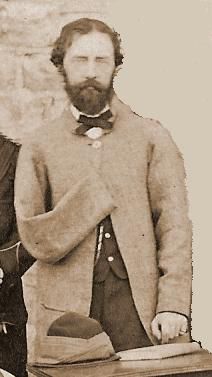
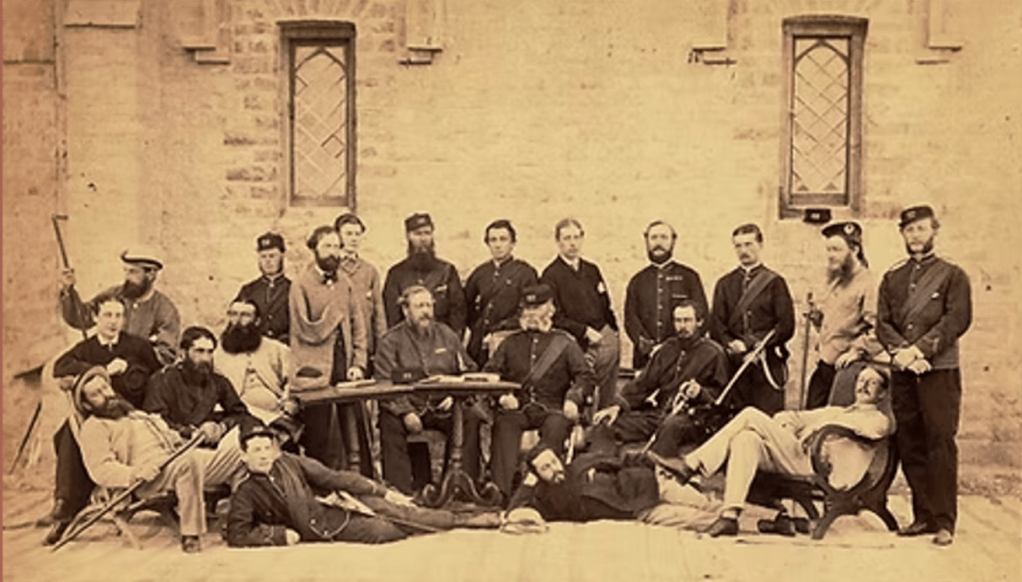
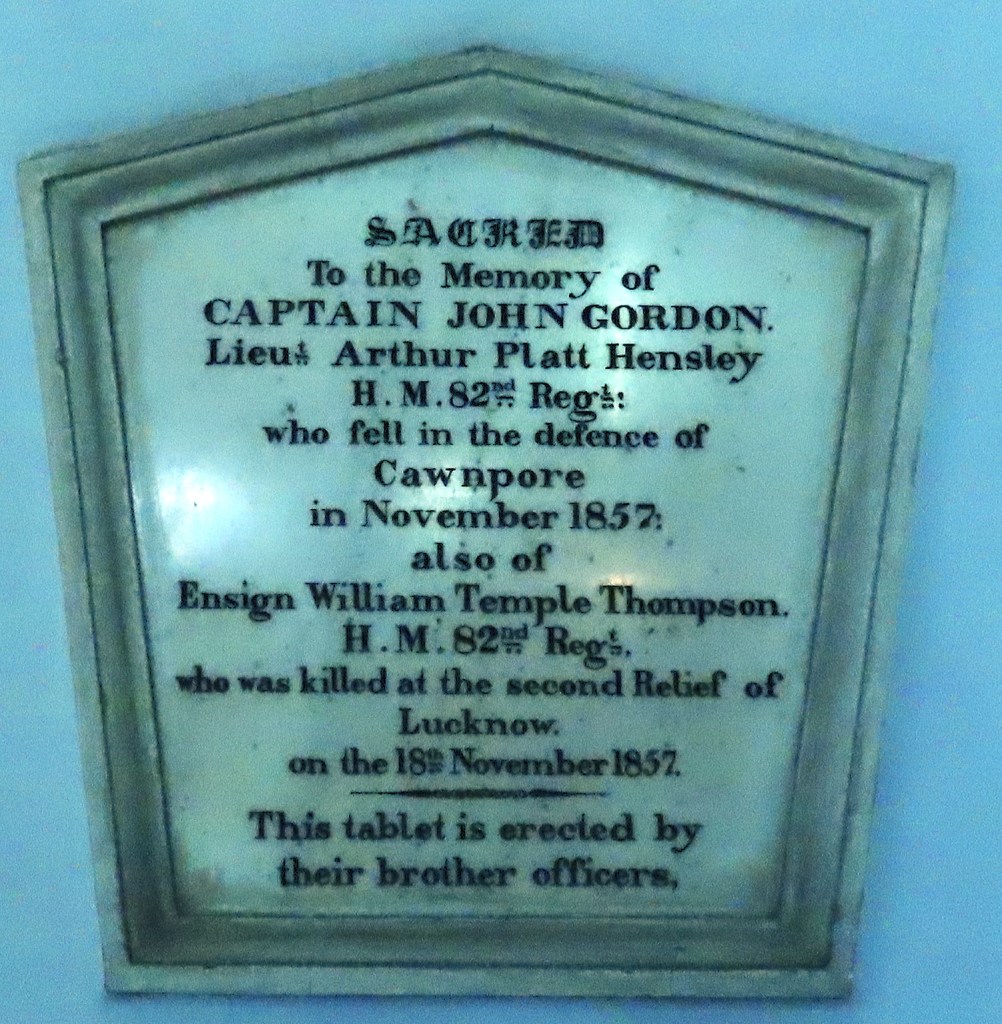
Captain John Gordon – wounded in the ankle. Aged 27, son of Captain Robert Gordon, late 45th Foot. He died of his wound on the 8th of January 1858.
Memorial in Farnham Parish Church – “Capt. John Gordon 82nd Regiment wounded 28 Nov. 1857 at Cawnpore died of his wound 08 Jan. 58 born at Ashridge House, Aldershot, on 14th March 1830.”
Ensign W. Thompson – killed in action
Colour-Sergeant Daniel Laughlan – wounded
Sergeants
Barrow, Christopher – dangerously wounded. Died of wounds
Court, Leonard – wounded
Godfrey, Charles – wounded
Corporal Samuel Morgan – killed in action
Privates
Addis, Thomas – dangerously wounded. Died of wounds
Best, William – wounded
Bourne, Thomas – killed in action
Brady, James – wounded
Burke, Thomas – killed in action
Cain, John – wounded
Clear, Peter – severely wounded. A musket ball entered his right shoulder and caused a partial fracture of the scapula. The ball was removed and the wound healed. However he never regained use of his arm and was invalided on the 23rd of November 1858.
Cochrane, Thomas – wounded
Dakin, Henry – wounded
Davis, Levi – killed in action
Dunlop, Robert – wounded
Godfrey, Charles – wounded
Guy, John – killed in action
Leonard, Stephen – killed in action
Lyons, John – killed in action
McCrohan, Jeremiah – dangerously wounded. Died of wounds
McGoldrick, Michael – wounded
McLaughlin, Daniel – dangerously wounded
Maxwell, Hugh – killed in action
Pegram, Joseph – killed in action
Perry, John – wounded
Reardon, Daniel – wounded
Stewart, James – killed in action
Windows, John – wounded
2nd Battalion, Rifle Brigade
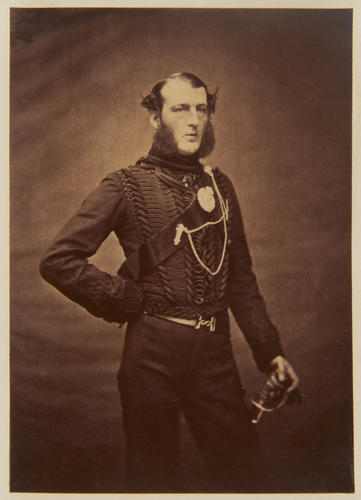
https://www.rct.uk/collection/2500091/lieutenant-colonel-charles-john-woodford-1823-57
Major & Brevet-Colonel Charles John Woodford – killed in action. Aged 34, son of General Sir Alexander Woodford. He had served in the Crimean War and was wounded at the Siege of Sevastopol.
Captains
Dillon, Martin- severely wounded. (General Sir Martin Dillon, K.C.B., G.C.B., C.S.I.) He served in the 2nd Sikh War, in Crimea after the fall of Sevastopol. Dillon joined the China Expedition in 1860, where he received clasps for Taku Forts and Pekin. Also served in Abyssinia. Placed on the retired list in 1893.
Milles, Hon. Lewis Richard Watson – severely wounded. Born on the 5th of August 1829. Son of George John Milles, 4th Baron Sondes and Elizabeth Knatchbull. He died on the 7th of June 1871, a lieutenant-colonel of the Rifle Brigade.
Ensigns
(Cadet) Dyce – wounded
Lawton. H – wounded
(Cadet) Madden T.D. (attached from the 64th NI) – wounded.
Travers, William Steward – severely wounded. Gained the rank of lieutenant on the 11th of May 1858 but retired from the service on the 12th of June 1863. He died at Anglesey, Gosport on the 6th of December 1865.
Colour-Sergeant Charles Marsh – wounded
Privates
Buckley, William – wounded
Burton, William – wounded. Died of wounds, 1st of December
Clarke, John – severely wounded
Gayler, James – severely wounded. His arm was shattered by grapeshot. It was amputated, at the shoulder joint and under chloroform, 3 hours after the injury was sustained. He would be allowed modified duty from the 3rd of September 1858.
Gosney, William – severely wounded
Haley, Miles – severely wounded
Hanbury, John- severely wounded
Harding, William – killed in action
Hutchinson, John – severely wounded
Kent, Edward – severely wounded
Ludditt, John – killed in action
Mack, James – wounded
Milligan, Willian – wounded
Moore, William – wounded. Aged 37. Wounded by a musket ball which penetrated the left side of the chest. The bullet, as it exited his body, injured a rib. He was sent back to England – by July 1858, the entrance wound had healed but the exit one had not and “a piece of diseased bone” could be felt. He was released for duty on the 30th of September 1858.
Painter, Samuel – severely wounded
Phipps, Edward – killed in action
Pritchard, Edward – killed in action
Reid, John – killed in action
Sheen, Owen – wounded
Smith, George – dangerously wounded. Died of wounds
Sole, John – severely wounded. Aged 24. Wounded by grapeshot to the right leg; the leg was amputated almost immediately, at the middle of the thigh. He was sent home and admitted directly upon landing at Gravesend to Detachment Hospital. His wound never healed properly and was severely infected onboard ship. While there was some slight improvement, he died on the 11th of September 1858.
Sutherland, William – killed in action.
Thorogood, Thomas – wounded.
Watts, Henry – killed in action
Woolf, Samuel – killed in action
Royal Artillery
Gunner and Driver J. Jones – slightly wounded
Naval Brigade
Private Thomas Newington (Shannon) – killed in action
29th of November
Return of Killed, Wounded, and Missing, of the under-mentioned Regiments, on the 29th of November, 1857, in Action near Cawnpore.
Her Majesty’s 82nd—1 subaltern killed.
Her Majesty’s 88th—1 serjeant, 2 privates, wounded.
Rifles—1 private killed; 1 staff, 4 privates, wounded; 1 private missing.
Total—1 subaltern, 1 private, killed; 1 staff, 1 serjeant, 6 privates, wounded; 1 private, missing.
C. A. WINDHAM, Major-General, Commanding Cawnpore Division.
ELLIS CUNLIFFE, Captain,
Acting Brigade-Major
82nd Regiment of Foot
Lieutenant Arthur Platt Hensley – killed in action, “while standing within the entrenchment, was killed by a musket bullet, which came in over the parapet and entered his brain.”
84th Regiment of Foot
Privates
Beckwith, Samuel – killed in action
2nd Battalion, Rifle Brigade
Lieutenant C. Armstrong (Interpreter) – wounded
Royal Artillery
Sergeant W. Crosier – severely wounded
Sources:
Boyle, Gerald Edmund. The Rifle Brigade Century from 1800 to 1905. London: William Clowes and Sons, 1905.
Jervis, Arthur John Leeson. Historical Record of the Eighty-Second Regiment or Prince of Wales’s Volunteers. London: W. O. Mitchell, 1866.
Jourdain, H. F. N. The Connaught Rangers. Vol. 1, 1st Battalion, Formerly 88th Foot. London: Royal United Service Institution, 1924.
Sherer, J. W. Daily Life During the Indian Mutiny: Personal Experiences of 1857. London: S. Sonnenschein & Co., 1910.
Tavender, I. T., comp. Casualty Roll for the Indian Mutiny, 1857-59. Polstead, Suffolk: J. B. Hayward & Son, 1983
Links:
Berridge, A. L. “‘From the Horse’s Mouth.'” The History Girls (blog), July 20, 2014. https://the-history-girls.blogspot.com/2014/07/from-horses-mouth-by-l-berridge.html.
Clark, Campbell, and Edgar Clark. Letters from India from Campbell Clark and Edgar Clark to Their Brother Gordon Wyatt Clark. Transcribed by Charles Gordon Clark, 2012. Families in British India Society (FIBIS) Archives. https://fibis.ourarchives.online/bin/aps_browse_sources.php?mode=download&fid=5505.
Friends of Hastings Cemetery. “MacKinnon.” Accessed May 27, 2026. https://friendsofhastingscemetery.org.uk/mackinnont.html.
Jackson, Linda. “McCrea, Robert Barlow.” Epsom & Ewell History Explorer. Published 2014. Accessed May 27, 2026. https://eehe.org.uk/25630/mccrea/.
National Army Museum. “Tunic Worn by Lieutenant Campbell Clark, 2nd Bengal European Fusiliers, 1857.” Online Collection. Accession Number: NAM. 2012-02-1-1. https://collection.nam.ac.uk/detail.php?acc=2012-02-1-1.
Percival, Allan. “The 82nd (Prince of Wales’s Volunteers) Regiment.” Lancashire Infantry Museum. Accessed May 27, 2026. https://www.lancashireinfantrymuseum.org.uk/82nd-regiment.
“A Soldier of the Indian Mutiny [Major-General William Roberts Farmar].” The Elizabethan [Elizabeth College, Guernsey] 3, no. 5 (June 1892): 99–103. https://elizabethcollege-heritage.daisy.websds.net/Filename.ashx?tableName=ta_elizabethan&columnName=filename&recordId=51.
 Mutiny Reflections