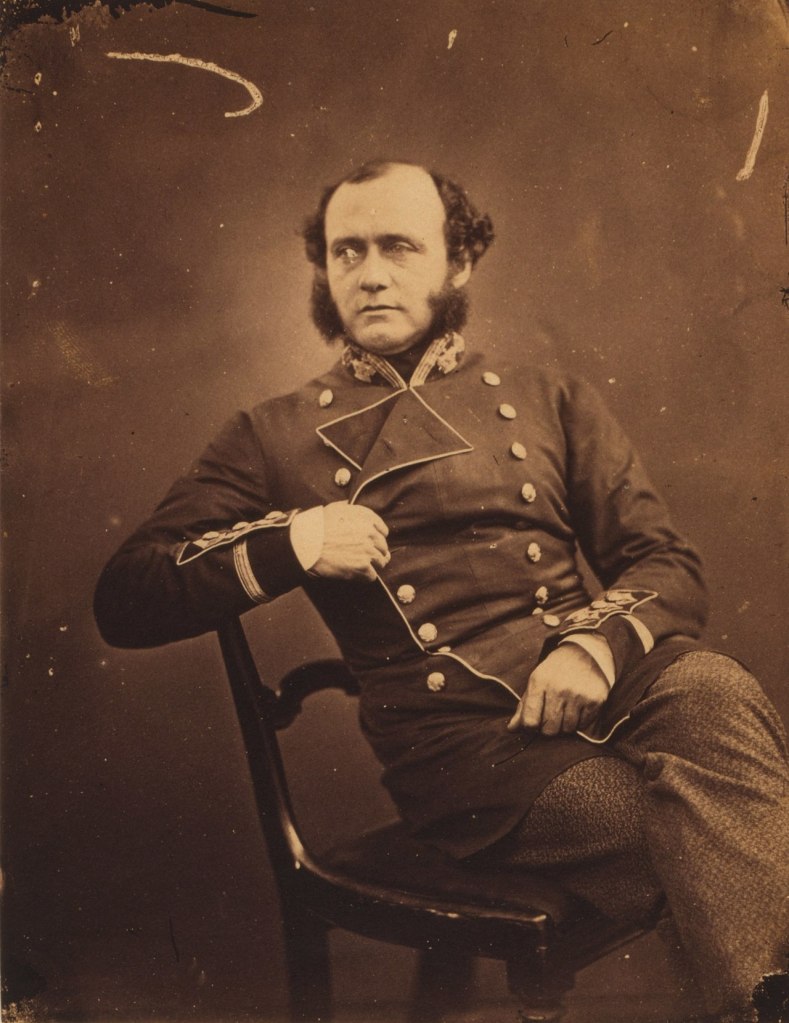
1855
Following the Crimean War, Charles Ash Windham found himself at the short end of employment. He had discerned himself during the war, leading the charge on the Redan to the south of the Malakoff redoubt at Sevastopol and on his arrival back home in 1856, the honours came tumbling in but for some reason, no one seemed to know what to do with him in India. Now a major general, Windham lost no time in offering his services to the government at the outbreak of the mutiny, but he was left waiting until there were so many casualties among high-ranking officers, that it seemed opportune, finally, to accept his offer. He set sail for India and arrived at Calcutta shortly after the fall of Delhi, in September.
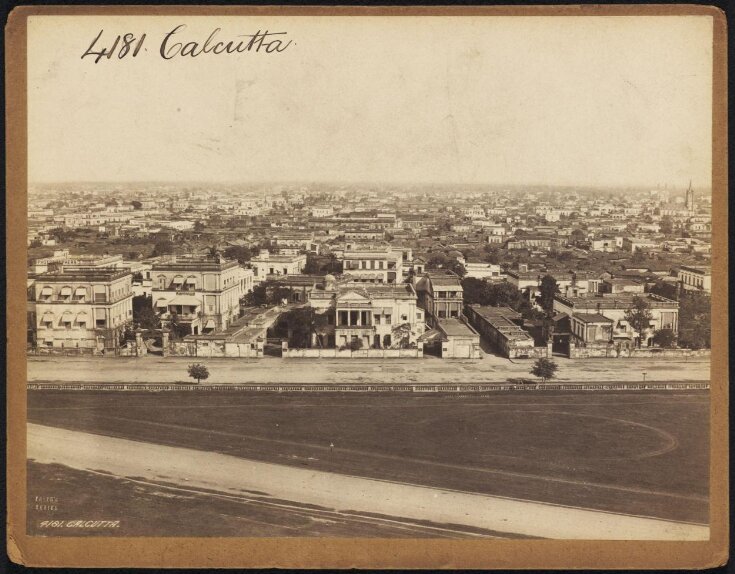
Once in Calcutta, Windham wasted no time in applying for a command in the field, but he was sorely disappointed — there were no openings for him, so said the government, and he was left kicking his heels. He then tried to volunteer his services, keeping the lines of communication open, if he could be given command of one of the disarmed Bengal Army regiments. No one was interested — all the authorities were finally willing to give Windham was command of the Sirhind Division, a district on the Delhi-Lahore road, with no troops whatsoever and absolutely no chance of active service. It would appear, that at this juncture, even the reputation he had so established in Crimea, was of little use in India, a country in which, it must be noted, Windham had no experience at all and in the field, he was limited to his Crimea achievements— the authorities at Calcutta must have been rather baffled by what Windham expected. It was not as if Windham was not likeable — he “was handsome and debonair, very talkative, fond of a good story, dressy, and fashionable.”
Sirhind would not have been an exciting posting, but it would perhaps have given Windham a chance to understand what he had got himself into. Instead, he was saved from that particular fate by Sir Colin Campbell and would find himself shortly after, in Cawnpore.
Cawnpore
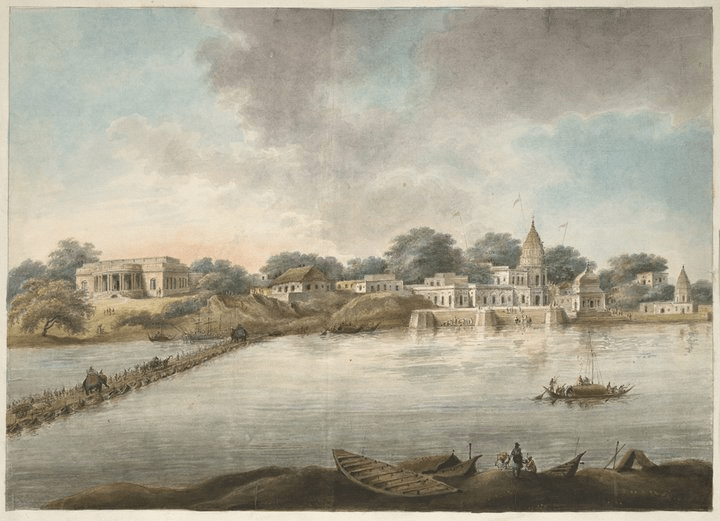
With his plans in place for the relief of the Lucknow Garrison, Sir Colin Campbell left Cawnpore on the 9th of November to rendezvous with Grant’s Moveable Column. He had had some misgivings — the Gwalior Contingent was known to be hovering close by, and even Sir James Outram had tried to persuade Campbell to deal with them first before moving on Lucknow, stating the Residency could hold out until the end of November if need be. As long as the Contingent was not on the move and their actual direction uncertain, to force their hand in the field with the force he had at his disposal was, in Campbell’s estimation, one risk too many. Should he meet with any significant losses, his chances of relieving Lucknow diminished considerably. While the garrison was admirably holding on, they could not do so indefinitely. So Campbell decided to make a dash for Lucknow. He abandoned all intentions of holding the city and, except for garrisoning the Alambagh, the risk of being cut off, like Havelock had been, was all too present in Campbell’s mind. If he was swift in his endeavours, Campbell hoped to be back in Cawnpore before the Contingent made their intentions known.
It must be noted that although the Battle of Kudjwa had been a success, Powell had allowed himself to be dictated to by George Probyn – the magistrate of Fatehpur – who had first brought the news that Bihar rebels were amassing not far from his position; it would be advantageous for Powell to strike. Then, against general orders, Powell had diverted his force to Kudjwa. In the ensuing fight, Powell was killed, and Captain Peel was left to finish off the day, albeit brilliantly. The results, however, meant little to Campbell; he disliked Sappers being used as infantry and, above all, informed “General” Probyn to mind his own business in the future for the sake of all concerned. For Sir Colin, the cost of Kudjwa had been, at this critical juncture, a hardly justifiable loss of life.
In something of a temper regarding Powell, Campbell relinquished Brigadier Nicholas Wilson of his command and entrusted Cawnpore to Major-General Windham — while he left him some powers of decision, his instructions were likewise clear enough to impress on Windham his hands were still, in effect, tied.
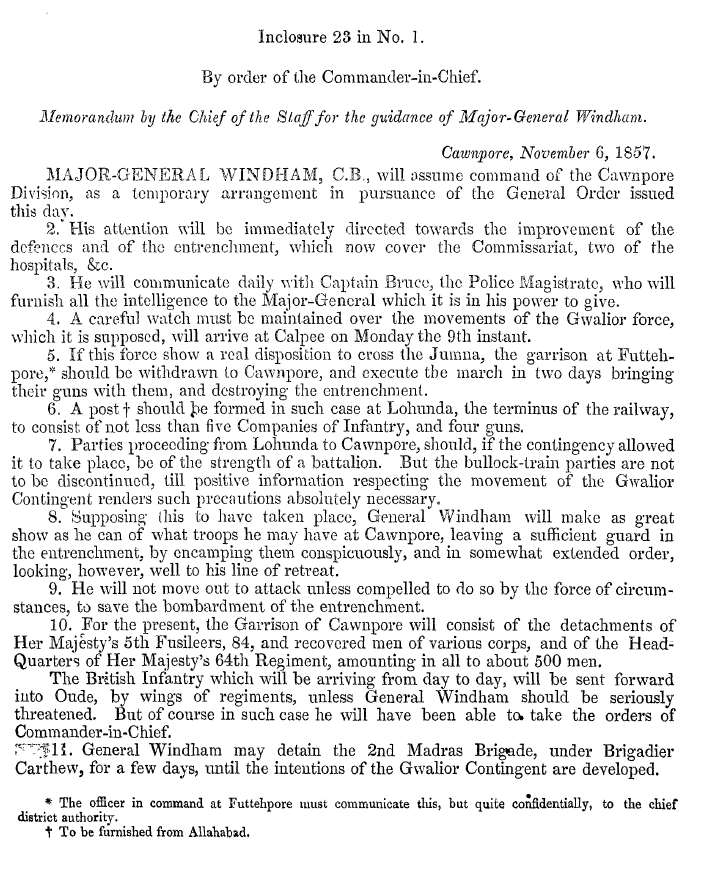
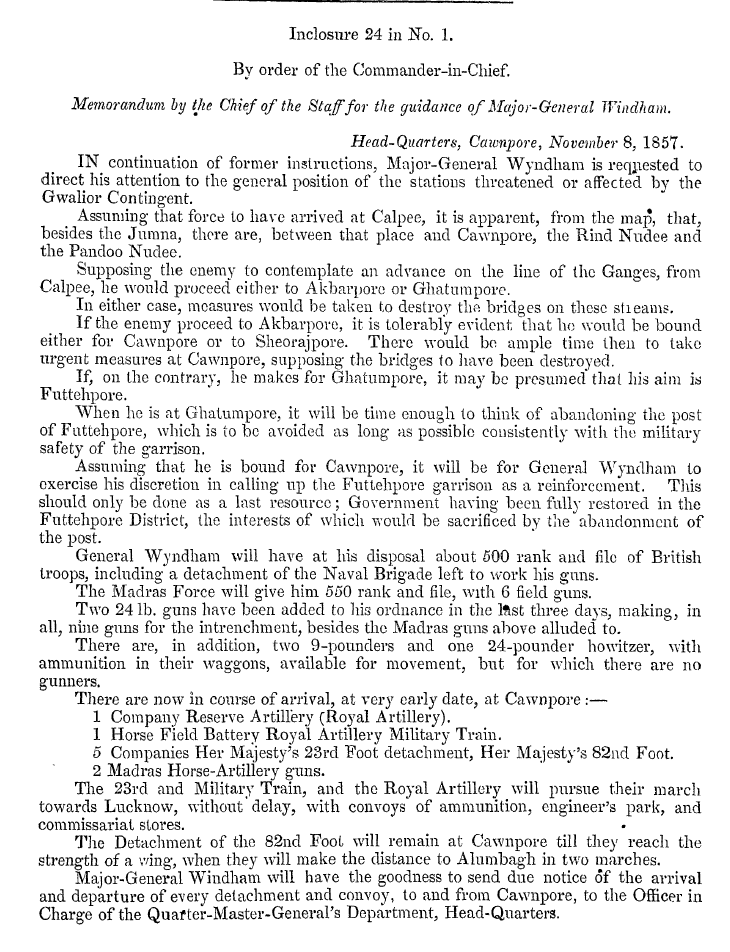
Clearly concerned his instructions were not sufficient, Campbell added the following:
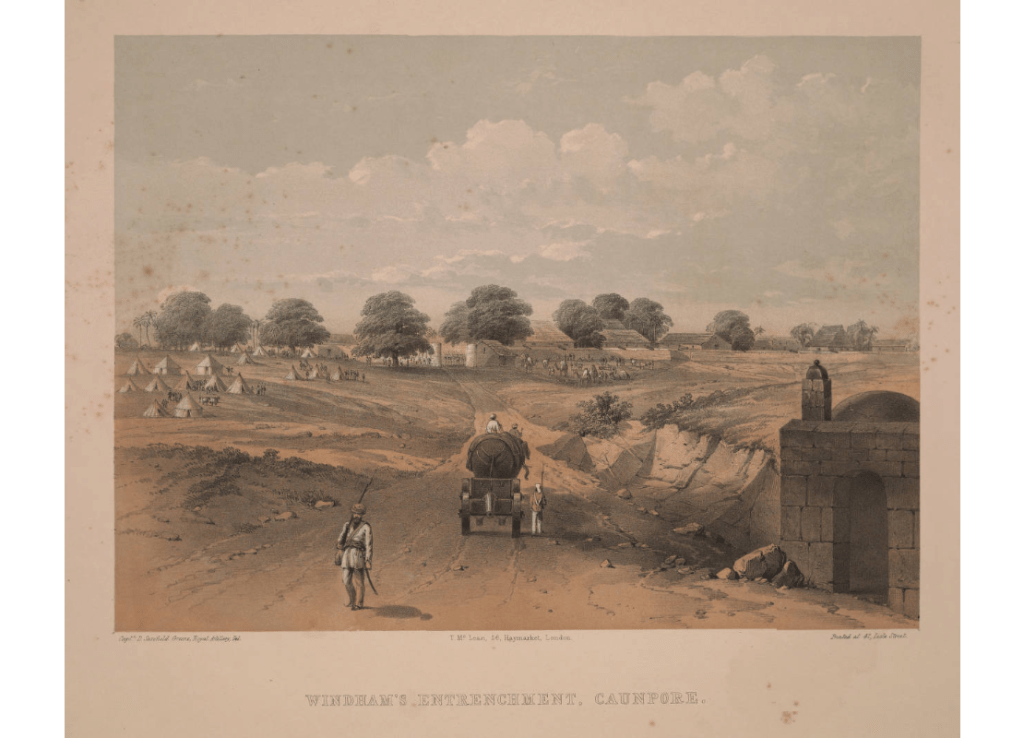
The entrenchment, which had been started by Havelock in July, was now alive again with activity. Employing upwards of 2000 people, including women and children, Windham, under the vigorous direction of Major Norman Chester Macleod of the Bengal Engineers, set about improving the position. The works were extended and strengthened, while outlying buildings were reduced to rubble and the glacis partially cleared. Thus secured as time allowed and the passage across the river protected as far possible, more guns were brought into the entrenchment. However, the position, from a military point of view, could not, for all the work put into it, be made completely defendable. The old native city of Cawnpore still loomed a few hundred yards in the distance, and consequently, any rebel force approaching from that side would still have the advantage over the entrenchment. It was something Brigadier Neill had pointed to Havelock many months ago — unless the city was levelled, which was not practicable, the entrenchment was nothing more than a holding point, commanding the river.
At his disposal, Windham had 500 European troops consisting of detachments of the HM’s 84th, the 5th Fusiliers, men from various corps, some of whom belonged to mutinied regiments (including, curiously enough, Coverley Jackson, who, on his own volition as one time Resident of Lucknow, decided to volunteer his services at Cawnpore), the recovering invalids, the Headquarters of the 64th, a detachment of Sikhs and 50 seamen of the Naval Brigade. The Naval Brigade would man the 9 guns in the entrenchment, but for the remainder — two 9-pounders and one 24-pounder howitzer — Windham set about training the Sikhs to make up for the lack of gunners. When the Madras troops arrived, his artillery would increase by 6 field guns, of which four were light six-pounders, and another 500 men would join his force.
Windham, according to instructions, continued moving troops forward to Lucknow as and when they arrived in Cawnpore. Meanwhile, his spies had been closely watching the Gwalior Contingent as they gradually moved over the river, and on the 13th of November, Windham informed Campbell he believed they were intending to attack Cawnpore. By the 15th, Campbell instructed Windham to “cause all detachments coming along the Grand Trunk Road to halt at Cawnpore until further orders. ” Between the 14th and the 26th of November, Windham’s force would increase by successive drafts of the 34th, 82nd and 88th Regiments, the Rifle Brigade and a remaining wing of the 27th Madras Native Infantry. He now had 1700 men.
Suddenly, all news from Campbell stopped and Windham realised he was, at least for now, completely alone.
Tantia Tope and the Gwalior Contingent
“A wary, capable and astute man,” Tantia Tope was one of the few generals under the rebels who had any of the qualities needed to be a success. He had served under Baji Rao, then under Nana Sahib and most likely not only orchestrated the attack on Wheeler’s Entrenchment but possibly the massacre of Satichaura Ghat. Following their trouncing at the Battle of Bithur, both the Nana Sahib and Tantia Tope had to seek other pastures and attempted to thwart Havelock on his march to Lucknow. They then left Oudh altogether for a time, their intentions being to continue sowing discontent and amassing support, but now, in November 1857, Tope returned, and, acting in the name of the Nana Sahib, took control of the Gwalior Contingent.
It must be noted, that although the force is called the Gwalior Contingent, it was not limited to the contingent alone. Various mutinied regiments, local levies and irregulars had been joining the rebel banner in Oudh for some months — at Kalpi, where Tope decided to set up his headquarters for the moment, the force would swell to over 14000 men.
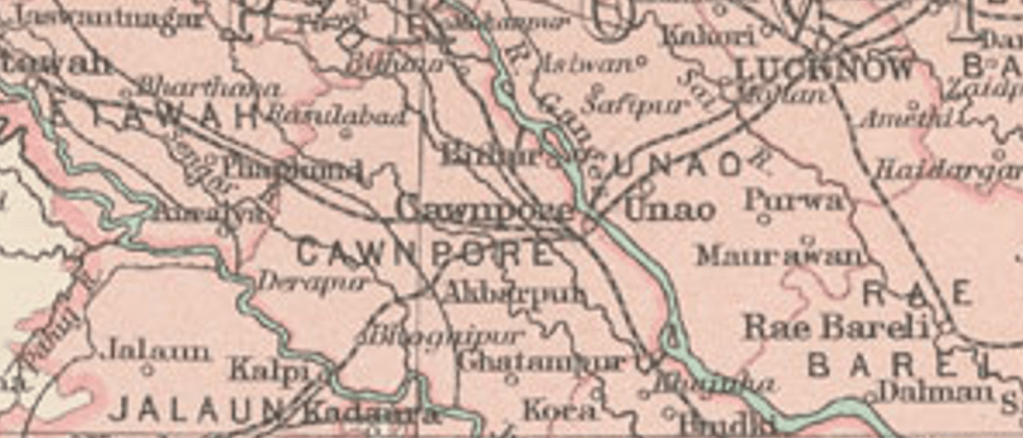
Tope was not a man to be underestimated by any costs. He knew perfectly well the movements of the British and on the 9th of November, he arrived at Kalpi, on the very day Campbell left Cawnpore. Kalpi as such was merely 46 miles (ca. 74 km) distant on the right bank of the Jumna – all he needed to do, thus, was cross the river. There was no one to oppose him for the entire distance. At Jalaun he left his treasure and commissariat, while at Kalpi he left behind 3000 men and 20 guns, taking the rest over the river on the 10th of November. His advance was necessarily slow. Tope would not show his hand until he was sure Campbell was committed to relieving Lucknow and as such, he restricted himself to short marches, leaving troops judiciously on his route to garrison Akbarpur, Sheoli and Sheorajpur. By the 19th of November, Tope successfully severed all communications between Cawnpore with the west and the north-west, stopping not only supplies but messages to and from Lucknow.
Sources:
Adye, John. The Defence of Cawnpore, by the Troops under the Orders of Major General Charles A. Windham, C.B., in November, 1857. London: Longman, Brown, Green, Longmans, and Roberts, 1858.
Adye, John. Recollections of a Military Life. London: Smith, Elder, & Co., 1895.
Bulletins and Other State Intelligence for the Year 1858. Part 1. London: Harrison and Sons, 1859.
Forbes, Archibald. Colin Campbell, Lord Clyde. London: Macmillan and Co., 1895.
Forrest, G. W. A History of the Indian Mutiny: Reviewed and Illustrated from Original Documents. Vol. 2. Edinburgh: William Blackwood and Sons, 1904.
Forrest, G. W., ed. Selections from the Letters, Despatches and Other State Papers Preserved in the Military Department of the Government of India, 1857-58. Vol. 2, Lucknow, Cawnpore. Calcutta: Military Department Press, 1902.
Further Papers (No. 8) Relative to the Insurrections in the East Indies: Presented to Both Houses of Parliament by Command of Her Majesty. London: Harrison and Sons, 1858.
Mackay, James [Rev. John]. From London to Lucknow: With Memoranda of Mutinies, Marches, Flights, Fights, and Forays. 2 vols. London: James Nisbet & Co., 1860.
Malleson, G. B. History of the Indian Mutiny, 1857–1858, Commencing from the Close of the Second Volume of Sir John Kaye’s History of the Sepoy War. Vol. 2. London: Wm. H. Allen & Co., 1879.
Sherer, J. W. Daily Life During the Indian Mutiny: Personal Experiences of 1857. London: S. Sonnenschein & Co., 1910.
Verney, G. L. The Devil’s Wind: The Story of the Naval Brigade at Lucknow, from the Letters of Edmund Hope Verney and Other Papers Concerning the Enterprise of the Ship’s Company of H.M.S. Shannon in the Campaign in India, 1857-58. London: Hutchinson, 1956.
Windham, Charles Ash. The Crimean Diary and Letters of Lieut.-General Sir Charles Ash Windham, K.C.B., with Observations upon His Services during the Indian Mutiny. Edited by Hugh Pearse. London: Kegan Paul, Trench, Trübner & Co., 1897.
—
 Mutiny Reflections