Jalpaiguri
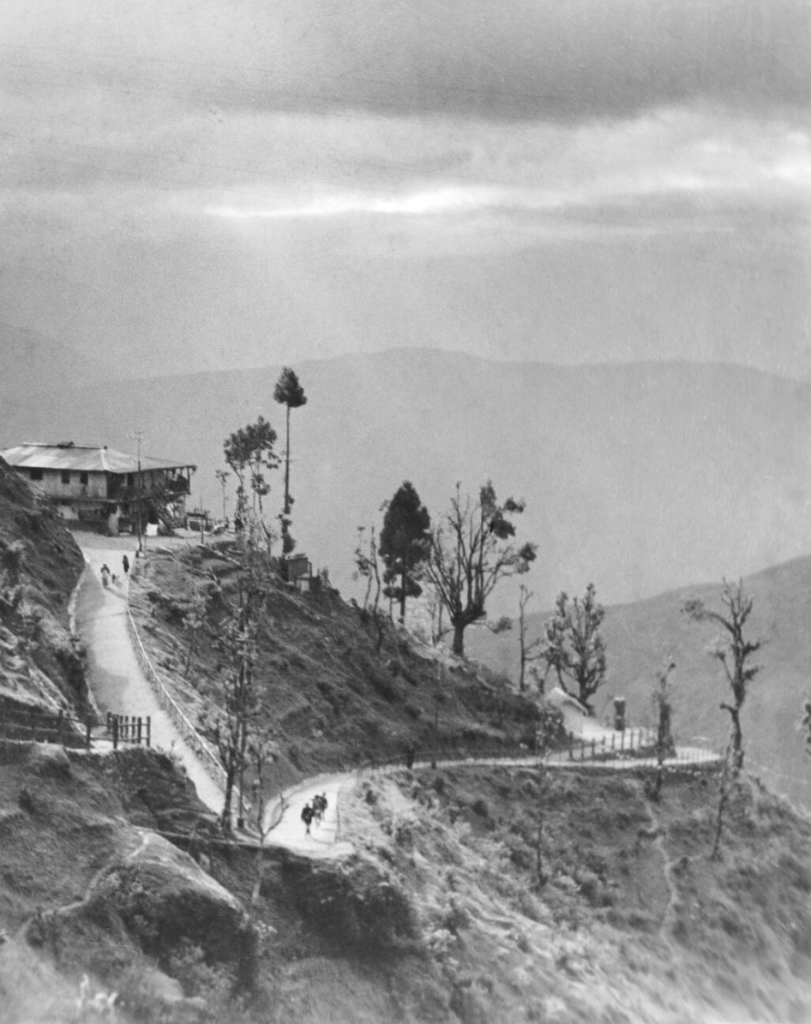
Situated in the lower foothills of the Himalayas bordering Bhutan, 300 miles from Calcutta on the direct road to Darjeeling, Jalpaiguri was the most far-flung corner of the Bengal province. As one of the most isolated, it was as far from the assistance of European troops as possible. A detachment of the 73rd BNI had been sent here, far away from the comrades in Chittagong. Their commander, who had but lately joined them in this quiet exile, was one Colonel George Moyle Sherer.
Born in Blanford in Dorset in 1800, he arrived in India in 1822 and was posted to the 20th BNI. He transferred to the 29th NI in 1823 and a year later to the 57th BNI. From there, his career took a slightly different turn. Promoted to lieutenant in 1824, he took a year’s furlough in 1825 and returned to India towards the end of 1826. He briefly returned to his regiment, but in June 1827, Sherer took up the post of Acting Superintendent of cadets at Fort William in Calcutta, after which followed various appointments as an engineer and as assistant and finally supervisor for various stud departments which occupied most of his career until 1853. He was posted as Lieutenant Colonel to the 71st BNI in 1853, from which he quickly transferred to the 2nd European Bengal Fusiliers and then went on furlough with a sick certificate for two years.
On the 2nd of January 1857, Sherer transferred to the 73rd BNI and took up command at Jalpaiguri. There were some reservations about sending Sherer to command the 73rd – though his knowledge of horses was considered profound, he had spent 30 years away from regimental duties and had subsequently “forgotten all his drill.” Perhaps it was his rather unconventional thinking, rather than strict adherence to military practice, that saved the 73rd at Jalpaiguri. From the very onset of his command, Sherer decided he would trust his men and when trouble reared its ugly head in May, he continued in the same manner as he felt, “that vague alarms and groundless suspicions, rather than any discontent or any hatred of the English, were hurrying the Sepoys into rebellion.” Only assurances of the goodwill of the British government and its officers, Sherer felt, would thwart mutiny in the ranks of the 73rd.
Rumours, like those in Dacca, even reached Jalpaiguri – one day, the sepoys believed an English regiment was coming to disarm them, on another, they were being marched up to destroy them. With disarming all the rage at the moment, it was clear to Sherer why his men were uneasy. However, determined not to betray their trust, Sherer remained resolute that disarming the 73rd under his watch would never happen. The arrival of a despatch from Division Headquarters led him to remark to his second-in-command, “If this, as I suspect, is an order to disarm our men, nothing will induce me to do it; I would rather lose my commission.” Realising Sherer was not about to comply with anything sent to him by post, his officers attempted to urge him to at least remove the rifles from the sepoys’ possession and place them on boats from whence, at the first sign of trouble, they could be sent downriver. Sherer, a little surprised at this somewhat bizarre idea, promptly ignored it. At his call at Jalpaiguri, he did have two troops of irregular cavalry who were “sharpening their swords and eager to be led against the infantry,” but this he felt was somewhat premature.
Towards the end of June, his faith in the 73rd would be put to the test as “sinister rumours of disaffection” came to his ears – emissaries from Lucknow and Meerut, one disguised as a fakir – had made their way to Jalpaiguri, and wherever they went, trouble was sure to follow. On the 25th, men of two companies of the 23rd, who had arrived from Dacca, set about pouring fuel into an already smouldering fire. Two hundred Europeans, they said, were on their way from Calcutta to disarm them and, like the Jemadar in Jessore, proceeded to speak of dissension, of the end of the Company rule and the reinstatement of the native Raj. Their words had the desired effect – the men of the 73rd swore they would never give up their arms, and some even spoke of turning the streets of Jalpaiguri red with English blood. They had not reckoned with their colonel.
Sherer heard the ” tidings of excitement”, but never a hasty officer, he put off visiting the lines and ordered a parade for the next day. His nervous officers asked if the men should parade with their arms,
“Yes,” he replied, “ by all means – with their arms, loaded as they are.” On the morning of the 26th, mounted on his horse, Sherer rode to the lines. As he approached, he heard the “murmur of many voices which bespeaks the general excitement” and rightly surmised, his men were ready to mutiny. However, the parade was formed; under Sherer’s watchful eye, the hubbub died down, the men performed as expected, adhering to all the discipline they had been taught and “confidence was triumphant.” The crisis though stayed, was hardly over.
Over the next months, the 73rd continued on in a state of nervous anxiety. A convoy of elephants sent by Sherer to Darjeeling to bring the office establishment of the Lieutenant-Governor with all its bag and baggage to the plains, set off a rumour that the pachyderms would return covered in the English troops; numerous plots to murder the English officers were thwarted; and all the while, Sherer continued on with “blended kindness and vigour” to put the minds of the 73rd at whatever ease they could expect to find in these turbulent times. However, kindness and understanding could only go so far, and Sherer was not beyond setting a few well-timed examples.
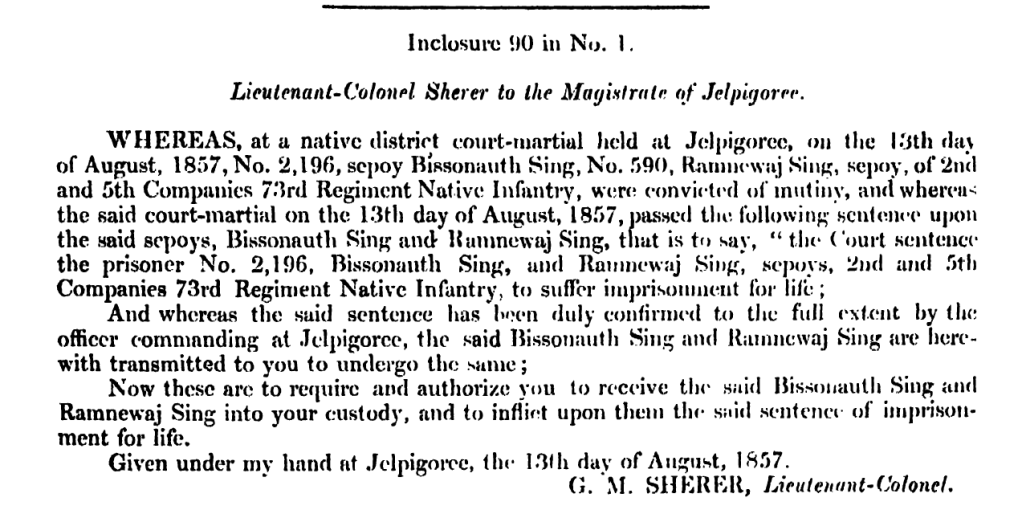
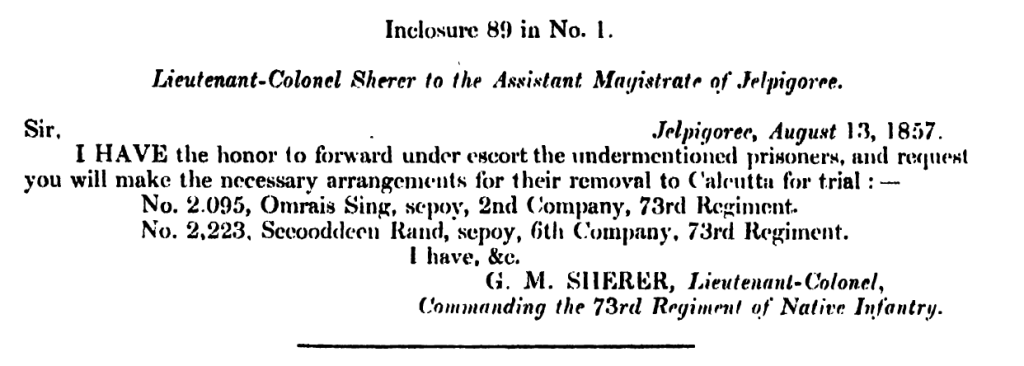
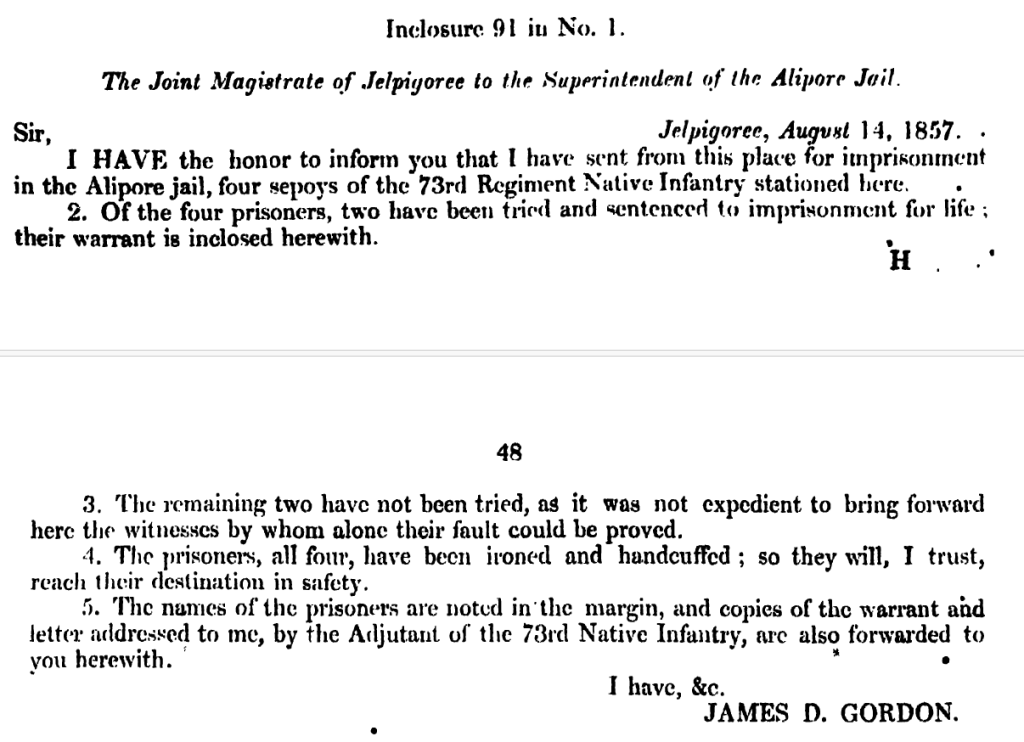
For their part, Calcutta was not impressed with Sherer’s idea of sending them to Calcutta, and grumbled at having to keep mutineers and rebels, “fed and clothed, without any possible return for the expenses attending their incarceration, and almost a certainty of their making the other convicts to rebel from their having nothing whatever to do.” Sherer’s and that of the joint magistrate Gordon, however, was sound – imprisoning the men in Jalpaiguri itself would have fermented even more dissatisfaction and possibly even plots to release them – by sending them away to far off Calcutta, away from their comrades, Sherer was ensuring his men understood their fate all too clearly if mutiny crossed their minds. Punishment was not the only weapon in Sherer’s diplomatic arsenal – he encouraged his men to keep their Colours with regimental promotions and monetary rewards. Three men of the 73rd were awarded the Indian Order of Merit, 1st Class:
– Sepoy Deoram Doobee (G.O. 559/1858)
– Subedar Bindadeen Tewaree (G.O. 1057 13 July 1858)
– Subedar Achaiba Lolla (G.O. 1057 13 July 1858)
In the case of Deoram Doobee, he was additionally promoted to the rank of Subedar:
“Promoted to the rank of Subedar and specially admitted to the 1st Class Order of Merit for his conspicuous loyalty and great attachment to all his European officers through a period of great peril. For eight months, this man daily kept his commanding officer informed of all that took place in the lines at Jalpaiguri, and enabled him to nip in the bud many a growing conspiracy. Deoram Doobee was thus the means of saving the lives of many, if not all, the British officers at Jalpaiguri.”
Those who faced court-martial were arrested without warning; others who were known to keep loaded weapons in their huts and known to be planning their great uprising were attacked in their huts, which led to one man being shot through the head. Another, out of fear of Sherer’s justice, malingered in hospital, attempting to starve himself to death – when this ruse did not work and it was clear he was next up for court-martial, he drowned himself in the river. Another was not so swift.
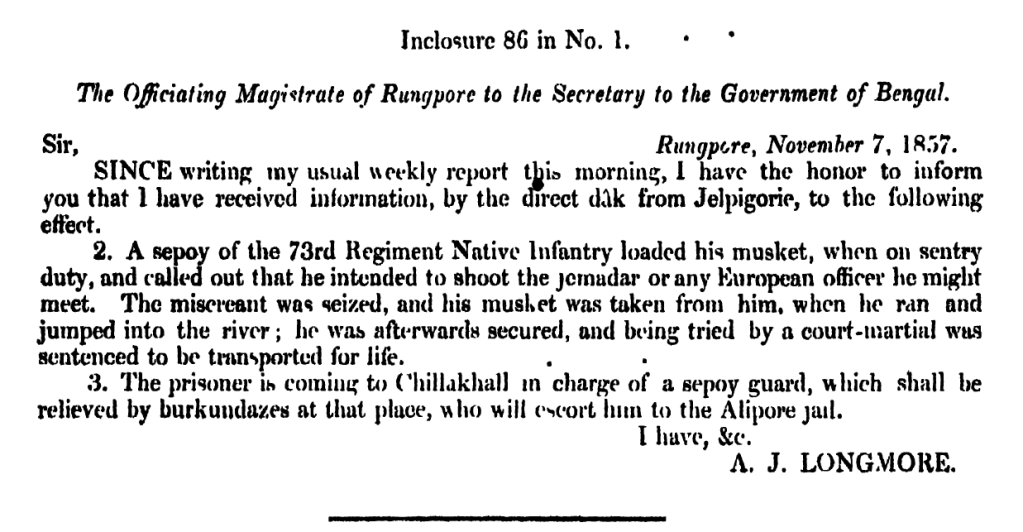
The mutinous spirit did not end here – four men were given over to Sherer as the ringleaders of a plot that would have seen the English murdered in their beds the following night – Sherer had the men court-martialed and sentenced to death. However, unable to carry out the sentence on his own authority, Sherer had to wait for confirmation from Calcutta – when it did, it was rather less detailed than was the nature of the government and simply stated he was to “dismiss the offenders from service.” After a fashion, Sherer did so. He ordered a parade for the following morning, brought out the condemned men and had them blown from guns in front of the assembled regiment. He then returned to his quarters and wrote back to Calcutta. The order, he said, had been received and understood. He had dismissed the men that morning – from the muzzles of four loaded guns. For now, a sudden quiet would fall over Jalpaiguri. However, a greater test would soon arrive at Sherer’s doorstep which would finally decide where the loyalty of his men actually lay.
 Mutiny Reflections