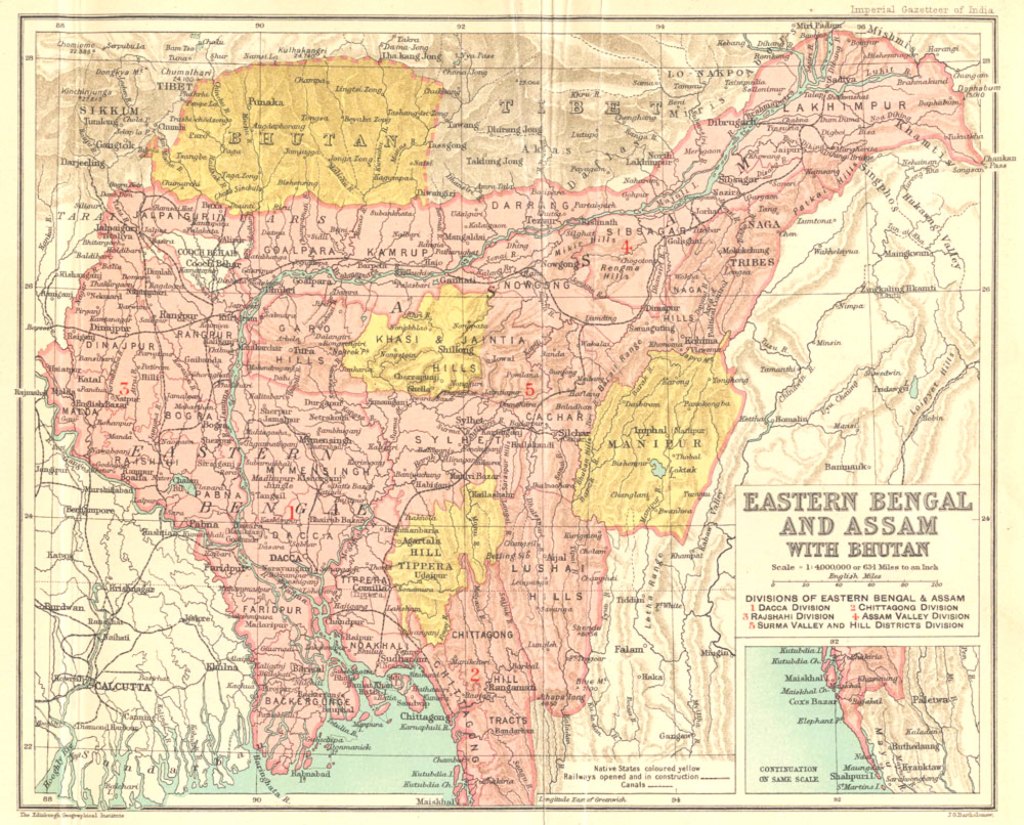
Once the land of warring kingdoms and empires, fighting for what was one of the most bountiful provinces the subcontinent had to offer, there had been little peace in this land of rivers and jungles.
From the 14th century, Bengal was ruled by the Bengal Sultanate, founded by Fakhruddin Mubarak Shah. It was the dominant power in the Ganges-Bharamputra Delta for nearly 2 centuries and accumulated into its borders parts of Orissa in the southwest, Tripura in the east and Arakan in the southeast. This thriving trading nation began its fall into decline during the long and protracted war with the Suri Empire. Its fate was sealed by the final conquest by the Mughals in 1576 when the entirety of Bengal was annexed, and the eastern provinces disintegrated into petty kingdoms.
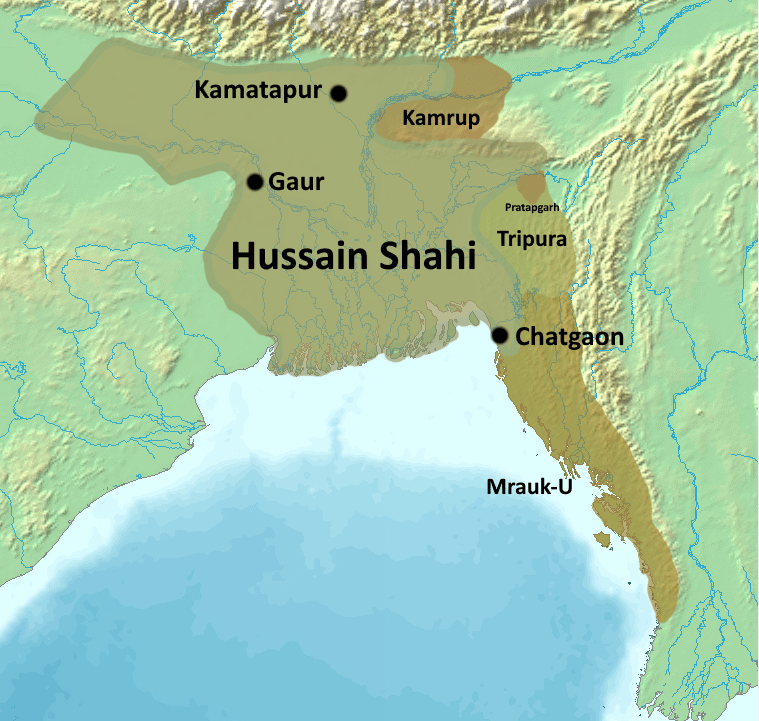
During its peak, the Bengal Sultanate had established valuable trade links with China, Southeast Asia and the Middle East, with tales of its wealth spreading far and wide. It is therefore hardly surprising when among the visitors to the sultanate were the Portuguese, who rapidly settled in the capital of Gaur. They established a settlement in the port of Chittagong (Chatgoan) but were never granted sovereignty over any land in East Bengal. Under Mughal rule, the capital city was established at Dacca (Dhaka) on the banks of the Buriganga River. In all the tumult and strife, the East India Company managed to set up a small trading post in East Bengal, where they would rub shoulders with the Dutch and the French. However, all things do come to an end, as we have seen in ” A Little History”.
Under East India Company rule, the eastern outskirts of the burgeoning empire – though still vastly important for the bounty which could be reaped from its land – gradually faded. Dacca, no longer a splendid eastern capital, was now a provincial district headquarters, a thriving city, teeming with bazaars, a fine river and Lalbagh Fort, constructed by Prince Muhammad Azam in 1678. In 1835, Dacca College was founded by Dr. James Taylor – among its first graduates were not only Hindus and Muslims but also Armenian and Portuguese students. While the advent of EICo rule in Bengal had been turbulent, to say the least, by the start of the 19th century, a certain peace had descended on the province east of Calcutta.
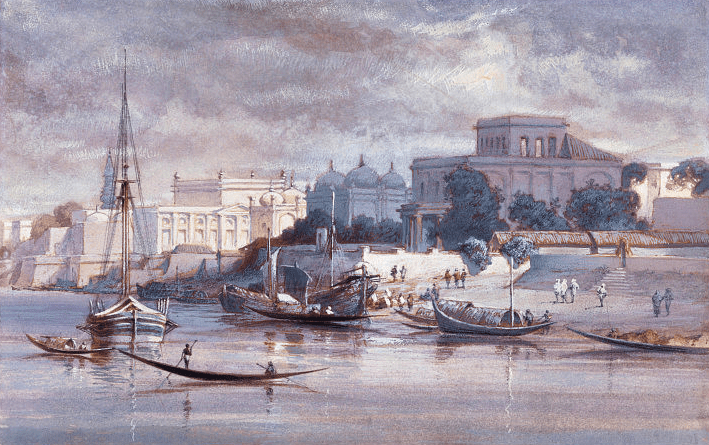
1857 found this eastern dominion relatively calm. The panics in Calcutta had their spill-over effect in Dacca, but as such, the mutiny “touched the mass of people not at all.” Dacca, and indeed the entire area of eastern Bengal, had no European troops; two companies of the 73rd BNI with some artillery were quartered at the Lalbagh Fort in Dacca, and three companies of that very disgruntled regiment, the 34th, were stationed at Chittagong. At the same time, the most far-reaching town of Jalpaiguri on the border of Bhutan boasted the entire regiment of the 73rd BNI minus the 2 companies at Dacca. Towards Assam in the northern regions, the Sylhet Light Infantry plied its trade while various irregulars made up the rest.
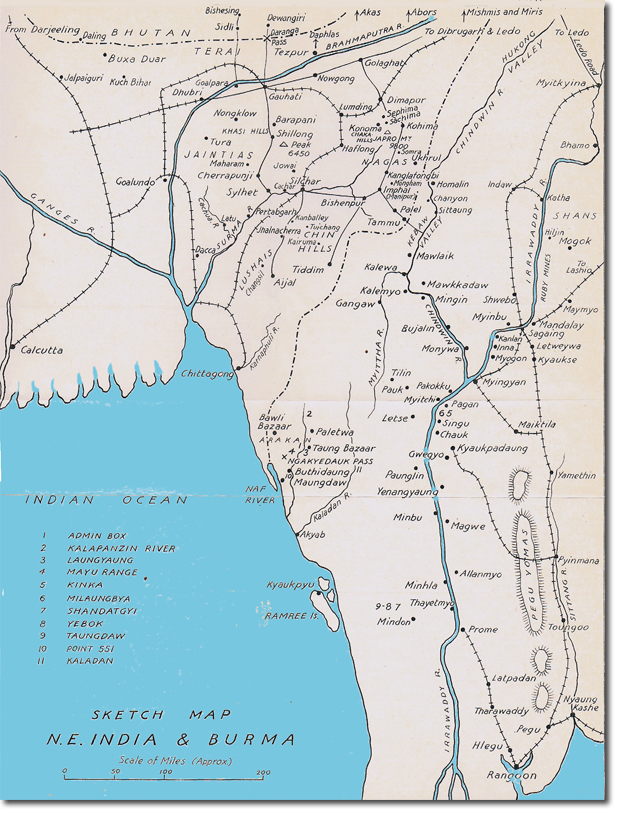
For a narrative of events in Dacca, the rather factual principal of Dacca College, Mr. Brennand, left us with his account:
10th June – The troops appear excited on account of the rumour that European troops are to be sent to Dacca.
12th June – A panic spread among the Europeans in consequence of a report to the effect that the two companies of the 73rd which had left the station about the beginning of the month had met some of the disbanded men from Barrackpore and had mutinied: that they had returned to Dacca and had been joined by the men at the Lal Bagh: that they were looting the bazaar and setting free the prisoners at the jail. A number of Europeans assembled at the house of Mr. Jenkins, the Magistrate; others resolved to defend themselves at the Bank. Some of the ladies went on board boats on the river; arms were collected; the whole town was in a state of excitement; the Bund was crowded with natives in a state of wonder and curiosity. Lieutenants McMahon and Rhynd, the officers in command of the troops, started for the Lal Bagh where the sepoys were located. On their return, they reported that their men were all quiet in their quarters and the alarm was groundless. On the evening drive, the natives who were collected in knots along the road seemed surprised to see us after the report we had all fled and left them to their fate.”
(On the first day of the panic, Mr. Jenkins was still the magistrate, while Mr. Carnac was the collector – however, Mr. Carnac would subsequently take over as both Collector and Magistrate of Dacca).
The Dacca panic was not lost on Calcutta, which reacted with more promptitude than was their nature so early on in the mutiny. They sent, on the request of Mr. Carnac, 100 men of the Naval Brigade, under Lieutenant Lewis, to protect Dacca. They arrived on the 23rd of June. Not an idle man by any means, Mr. Carnac supplemented this rather meagre draft with all the Europeans and Eurasians capable of holding a gun to serve as volunteers and included not just himself but Mr. Davidson, the Commissioner and the Judge, Mr. Abercrombie. Sixty men in all, they would mostly patrol the city streets and keep up a show of calm in front of the increasingly frightened residents. They were formed on the 30th of July and split into two corps – one of Infantry under Major Smith and the other of Cavalry under Lieutenant Hitchins.
Mr. Brennand continues:
5th July – the Metcalfes came in from Comillah in a fright; they had heard that the sepoys at Chittagong had mutinied and that they were on their way to Dacca. The report was without foundation. Dacca has been comparatively quiet since the arrival of the sailors. Lieut. Lewis has his tars out frequently in the morning to practice with the guns. Today, there was something of a panic among the sepoys. Dowell, who is in command of the station sent up to the Lal Bagh for the screws used to elevate the guns and the men there supposed there was intention of disarming them.”
 Mutiny Reflections