Chittagong, 17th of November
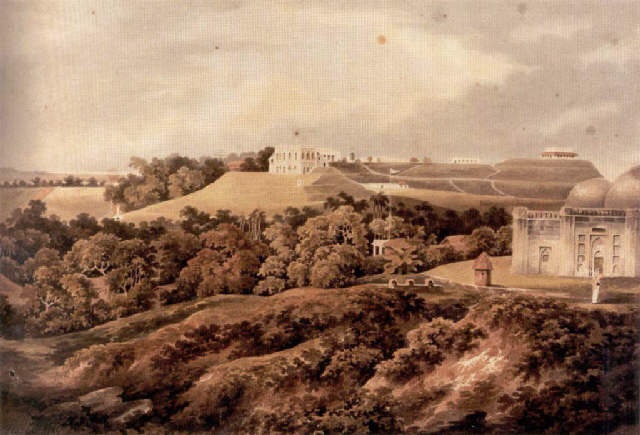
Wednesday, the 17th of November started, as had become the rule for the past three months, with nothing to report. The sepoys of the 34th BNI were placidly going about their duties in Chittagong; the authorities in the city were writing their demi officials on everything from trade to elephants. The weather was cool and pleasant; even the Portuguese had stopped living on their boats. The mood in the bustling bazaar reflected nothing out of the ordinary. It was, in fact, a very ordinary day in these rather strange times. The news from Calcutta had been encouraging — European troops were now arriving in greater numbers than before, and soon, a cold-weather campaign would begin, and this blasted mutiny would finally be resigned to the annals of history. In the evening, the officers and civilians took their customary drive and then returned to their homes to dine and wile away the night with conversation, cards, and cheroots.
Suddenly, at 9 p.m., a noise was heard from the direction of the 34th Lines. It started as a low rumble but turned into a shout as hundreds of voices rose in an excited cry. The first officer to hear the noise was Captain Dewool, whose house was close to the Lines. Dewool quickly armed himself, buckled on his sword, and calling Lieutenant Hunter, who was likewise prepared, the two men proceeded, on foot, towards the Lines. The intention was to parade the regiment, but when they arrived, they found that part of the regiment had already run off and taken up their position in the Magazine, while the rest were hovering around the parade ground, loading their muskets. Their demeanour was quite changed -from the mild sepoys they had seen but a few hours ago, they were now “very violent.” Unperturbed, De Wool ordered Hunter to retire while he proceeded to the Magazine alone.
He found a strong guard in front of the Magazine, and like their compatriots on the parade ground, were hardly in a pleasant mood. They challenged De Wool with shouts of “Don’t care for him!” and “Go away, you have no business here!” Still, De Wool advanced, his hands outstretched. He first tried arguments – if only the men would return to their lines, this whole business would be over. He then opted for persuasion, insisting they return to their duty. Still, the men stood firm. A Mohammedan, who De Wool noticed was not wearing his uniform and standing away from the others, called out in a loud voice, “The whole detachment is in a state of mutiny, and we have determined to die if it is necessary. Go away!” He followed this up by shaking his fist in De Wool’s face with “violent gestures.” From the rear, a shout now rose up, “Shoot him! Shoot him!” Fortunately for De Wool, several voices replied, “No! No! Don’t hurt the captain!”
Thinking there might be some reason left in the 34th, De Wool again endeavoured to recall them to their sense of duty. He appealed to a few sepoys, who had previously been noted for their good character, and, addressing them by name, asked them to think “what they were about and to remain faithful to their salt.” It was no use; the men shook their heads and replied they had joined the mutineers and could no longer withdraw. Again, cries rose to shoot De Wool, and again, pleas were made for his life. At the same moment, three sepoys, with their muskets at the charge, advanced towards De Wool. He stepped back a few paces, moving his way out of the crowd that had gradually come up around him. Suddenly, a Sikh from No.4 Company came forward and roughly pushed De Wool back. “Go away from this!” he shouted. De Wool, realising that not a single commissioned or non-commissioned officer, not one sepoy or Sikh would stand by him and to stay, at this point, meant certain death, he quickly retreated.
De Wool rushed to Lieutenant Hunter’s house, close by, and found Lieutenant Thomson pacing on the veranda. He told the two men what had occurred at the Magazine – there was nothing for it but to accept the 34th was no longer under their control. Hunter and Thomson, armed, decided they would give it one more try and went to the Lines. For his part, De Wool now made the round of every house in the cantonment to give warning to the residents, only to find that most of them had already fled. At the far end of the cantonment, the Civil Surgeon and his family were still in their bungalow, and De Wool joined them. Escape was now the only option, but on the parade ground and all around the cantonment, mutineers were prowling, and their numbers were growing. De Wool, with the surgeon and his family, broke open the wall behind the house and scrambled into the adjoining property, which they found empty. Here, they found the servants had not joined their employer in his flight but stood ready in the darkened bungalow, ready to help in any way they still could. For the next two hours, having procured “native clothing” for the party, they stood vigilant, watching the movements of the mutineers. No one, however, approached the house. As soon as there was a moment’s respite, the servants hurried the party down a jungle path behind the cantonments to the banks of the river and, after some difficulty, managed to secure a boat. Then, for the rest of the night, they sailed downriver until they finally reached the rest of the civilians who had gathered at the port. Hunter and Thomson shortly after made their appearance and confirmed what De Wool already knew. The 34th had lost all reason.
Things could have gone in one of two ways. The 34th, well-armed and violent, could have made their way down to the river and massacred every European in sight. The Europeans would have been unable to defend themselves for too long; their only hope would have been to sail away from Chittagong and escape to Dacca by the river route. As it was, the 34th chose a different direction altogether. Their objective was not blood; it was treasure.
They plundered the treasury down to nearly the last cent, leaving behind just 340 Rupees in cash and stamps, the Government securities and records. Then they broke open the jail, killing a helpless guard from a local levy who tried to stand in their way. It was not so much to release the prisoners but to coerce the most able-bodied to carry the treasure they had just looted. Then they blew up the Magazine and burned down their Lines. They swept through the cantonment, not to plunder the bungalows but to steal a few horses to use as baggage carriers and with that, leaving all private property untouched, they marched out of Chittagong, acquiring as they moved onwards, three elephants of the commissariat department. Thakur Bux, a jemadar of the Provincial Chittagong Battalion who they caught on their way, was forced to accompany them down to the river, but there they let him go – Pay Havildar Rujub Ali Khan of No. 4 Company assumed command of the mutinied detachment and directed their flight across the Fenny River. They entered the territories of the Tipperah Raja and, for a moment at least, vanished from sight.
For the Europeans at Chittagong, the fright was over. Not a single one had been injured or, indeed, killed. They returned to their houses and began writing their reports.
 Mutiny Reflections