The Final Battles of the Malwa Field Force
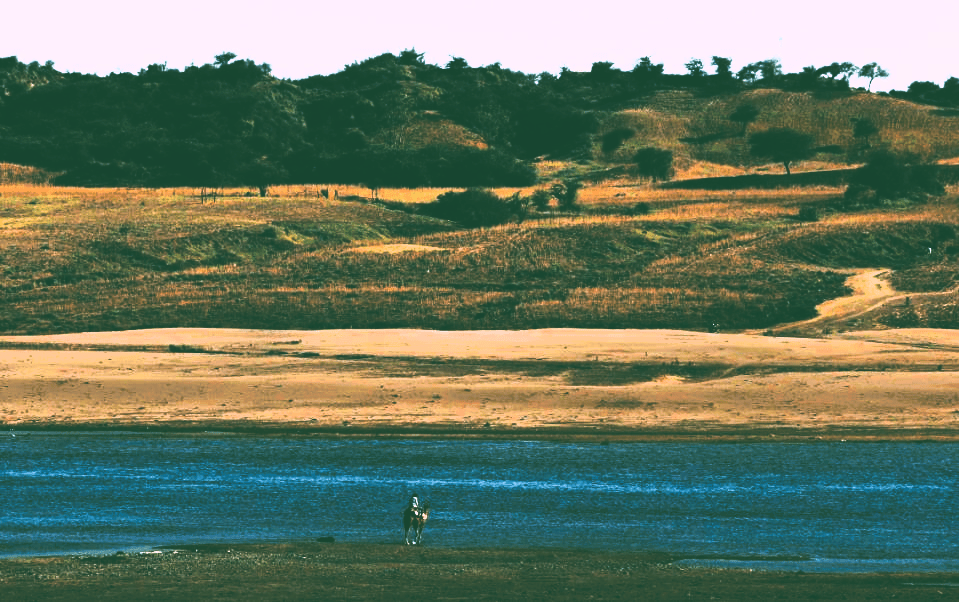
“I never saw a more animated and beautiful picture in my life than when our brigade crossed this river. The steep, verdant, shrubby banks covered with our varied forces, elephants, camels, horses, and bullocks; the deep flowing clear river reaching on and on to the far east to the soft deep-blue tufted horizon; the babble and yelling of men, the lowing of the cattle, the grunting screams of the camels, and the trumpeting of the warily heavily-laden elephant, the rattle of our artillery down the bank, through the river, and up the opposite side; the splashing and plunging of our cavalry through the stream — neighing and eager for the green encamping ground before them; and everybody busy and jovial, streaming up from the deep water to their respective grounds; and all this in the face, almost, of an enemy, formed a tableau vivant never to be forgotten!”
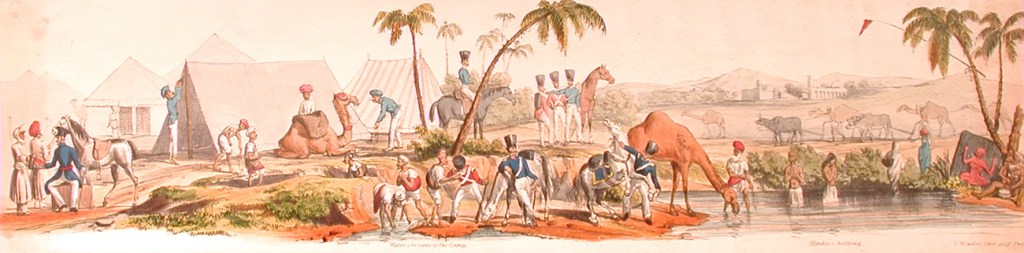
On the 19th of November, the Malwa Field Force pitched their camp on the banks of the River Chambal. They were now barely 20 miles (ca. 32 km) away from a large force, said to be 5000 strong, and the information from the spies was encouraging -at Mandsaur, it had been given out that the British had been defeated at Dhar. There would be very little work left, it was said, to finish off the straggling remains of Stuart’s force. As such, when they arrived at the riverbank, the other side was surprisingly free from insurgents. As the banks were rugged and nearly perpendicular, the sappers had to first cut a road down the bank for the wagons and the artillery and repeat the same procedure on the other side. Had there been a road before, no one could say; the rains had washed all traces of it away. It would take nearly two days to see the Malwa Field Force safely over the river.
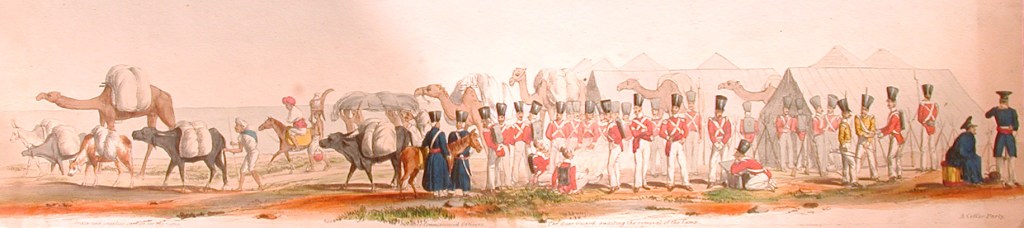
They had brought with them the prisoners taken by Major Orr and his men at Rawal. Now settled on the other side of the Chambal, a parade was called shortly before sunset. The 76 men were brought forward to meet their executioners, the riflemen of the 86th. As the blindfolds were tied to cover their eyes, Captain Coley, the brigade major, read aloud their sentence and the reasons for their grim assemblage. Among their number were mutineers from Mahidpur, those that had switched sides and left Timins and Drysart to their fates; another, a mere lad of 15 who was accused of trying to betray Mrs Timins to her would-be assassins and was thwarted by her tailor; and strangely enough, an armless man who, due to his unsuspicious character, admitted he had acted as a spy for the insurgents. They were all drawn up in a long line as the sentence was read out, and the boy shouted, “Very good, I don’t care!” and then continued his last narrative, expressing his sorrow he could not kill more firangis. Others cried out, “Deen, deen!” but many only wailed and groaned as the brigade major rode past and said,
“Fire at the sound of the bugle!”
The bugle sounded, and the long rattle of muskets swept through the sudden stillness. Behind them, the sappers put the finishing touches on the immense grave they had been digging and then, under the growing moonlight, the bodies were deposited in the pit and covered over with earth. The execution left a terrible impression on the men and executioners alike — killing in battle was their work, but wholesale killing like this was a very different devil.
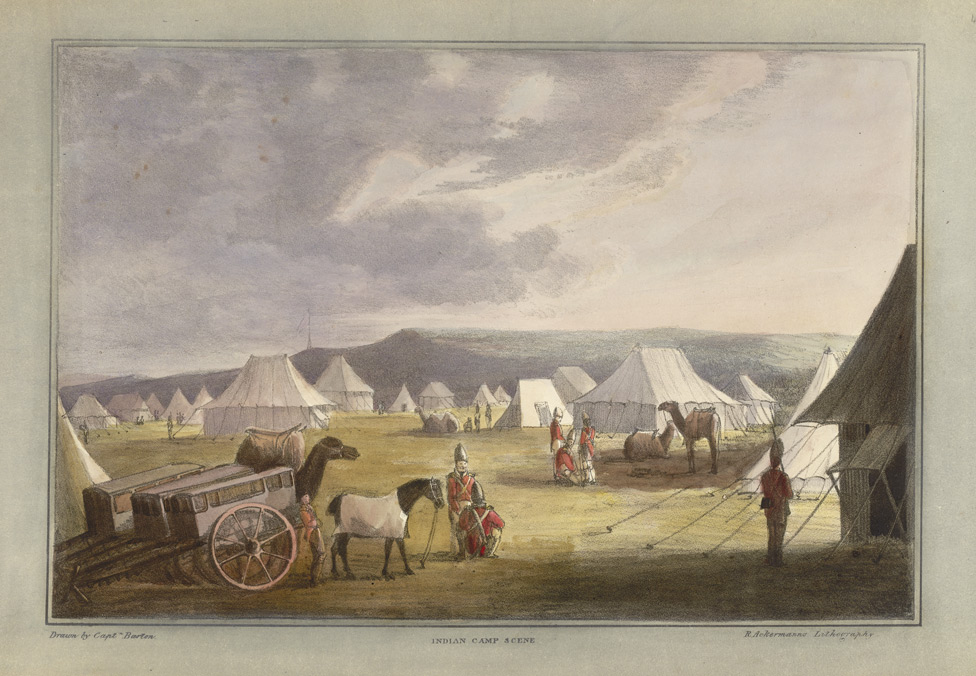
After a short night on the banks of the River Chambal, the Malwa Field Force advanced again — on the 21st of November, they reached the outskirts of Mandsaur. The camping ground had been chosen with much thought — immediately to the front was a high, rising bank and in front, to the left, a small village with its unspoiled gardens. Beyond were several groves of trees and cultivated ground, and further off, even more villages surrounded by trees and fields. To the right were further villages and hills. Beyond this extensive plateau to the front lay Mandsaur.
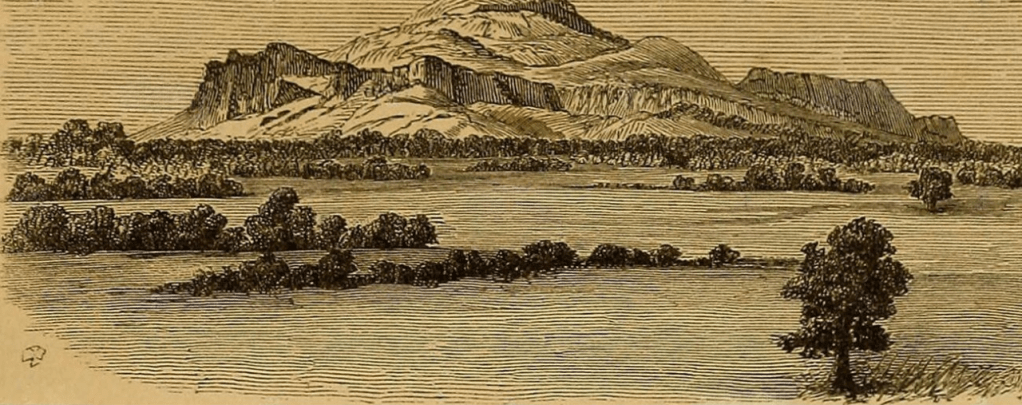
A reconnaissance party was sent out while the tents were pitched and the men sat down for breakfast. Not leaving anything to surprise, pickets rapidly occupied advanced positions to the front and placed in the village off to the left. From their position, they could see
“…the enemy mustering in force below the town, and their yellow and green flags waving about.” While Firoz Shah might have been surprised to find the entirety of the Malwa Field Force encamped at his doorstep, only 3 1/2 miles distant, he was just as swift to remedy the mistake his faulty intelligence had brought down upon him.
The Affair at Mandsaur
While Stuart’s men still “speculated upon the probabilities of an engagement”, the bugle sounded out in camp. As every man buckled on his sword and pistols, officers shouted out the order to fall in. The dragoons, “jingling” as they rode past quickly to the front, as the artillery dashed forward, “the clinking of steel as the bright bayonets were fixed, the straggling sowars swiftly threading their way, spear in hand, to the front, and the dashing right and left, backwards and forwards, the staff gave an air of glancing brilliance…” There was not a man in the Malwa Field Force who had not seen a fight, and out of the camp, they now rose in battle-array. Hungerford’s and Woolcombe’s batteries were placed on the right centre, the bullock battery of the Hyderabad Contingent on the left, the dragoons took position on the extreme right, and the Hyderabad cavalry on the extreme left. This left the 25th Bombay Infantry and the 86th regiments in the centre. The Madras Sappers and the Hyderabad infantry, under Captain Sinclair, were positioned on the left with the Hyderabad guns.
The Mandsaur insurgents were attempting to take Stuart on both the flanks and the centre, and in reply, he came out to meet them. As the Mandsaur men advanced on the left and occupied a small village, thus forcing the picket to retire, so advanced the Hyderabad cavalry, well before the guns could be brought into play. To the right front, Lieutenant Dew of the 14th Light Dragoons charged the oncoming insurgents and then took the now-opened ground as a picket. As the insurgents attempted to take the centre, the artillery opened fire.
“The artillery worked away in a most animating affair for some three-quarters of an hour. Lieutenant Strutt’s shooting was very true. “All the while this firing was going on, a fine fellow, dressed in white, with a green flag, coolly walked out and sauntered leisurely along the whole line of our guns, while round shot and shell were whizzing about him in awful proximity. He occasionally stooped down, but never attempted to run; he then quietly retraced his steps…” A shot from Stutt brought the man to the ground. What he had been attempting to do was anyone’s guess, but very likely, it was an open show of bravado to bring on the now wavering men of Mandsaur. Driven back from all points, they stopped their advance and, in one swift about turn, dashed back to Mandsaur with Orr’s cavalry on their heels. He only turned back when he came up to the walls. Before sundown, the field belonged to the Malwa force — this time, no prisoners were taken.
The Malwa Field Force returned to the camp and spent what would turn out to be a very quiet night on the plain. Quiet for the men, but not for Durand and Stuart.
Intelligence brought in required they would have to take the field the very next day — the rebels besieging Neemuch had been hastily recalled to Mandsaur. It was Stuart’s intention to cut them off before they had a chance to shut themselves up in the walls. Very early on the morning of the 22nd, the force was once again on the march.
Stuart moved his force in order of battle in a flank movement – as his left flank reached the village of Kuglipore unopposed, he then made a flank movement to the left. He left an advance guard to cover it and to reinforce the rearguard. He then crossed the river Sowna at the Bakri ford and encamped his force 1400 yards (1.28 km) southwest of Mandsaur. As they neared the town in front, still moving away on the left flank away from it, a heavy gun opened a very ineffectual fire from the southwest bastion of the Mandsaur walls. The camp was struck facing Mandsaur to the west, protected by two branches of the river, its line running, as Stuart pointed out, “at right angles to the right of Sir Thomas Hislop’s camp in 1817.” It was ground already fought over, but the enemy now, though numerous, were hardly the might of the Maratha army.
The Goraria Affair
While the camp was still being marked out, it was reported that parties of cavalry were seen off to the left of the position. Major Orr, on reconnaissance (with two troops of the 1st Hyderabad Contingent Cavalry under Captain Abbott and a further two troops of the 4th Hyderabad Contingent Cavalry under Captain Murray) saw some 300 men, supposedly under the rebel leader, Hira Singh, who were attempting to draw Orr off towards the north-west. Apparently, they were keeping a distance between themselves and Orr, making an attack impossible but not completely impracticable. Reinforcements of cavalry were swiftly called for.
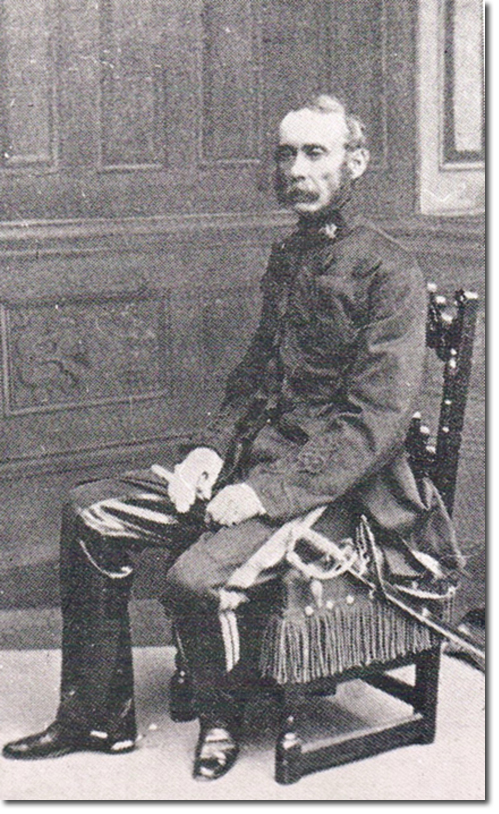
While the left wing of the 14th Light Dragoons (one squadron) under Major Gall and the 3rd Hyderabad Contingent Cavalry under Lieutenant Clerk were still moving up, Major Orr received information that Hira Singh’s baggage party had just left the village of Goraria on the Neemuch road. It was apparent Hira Singh had tried to draw Orr’s attention away from it, and Orr was quick on his heels.
The Dragoons, the 1st and 4th Cavalry, galloped off in pursuit of Hira Singh while the 3rd Cavalry remained in reserve. After 6 miles (ca. 10 km) of hard riding, they caught up with the insurgents two miles south of Peeplia. The fight that followed was swift but brutal, leaving 200 insurgents dead or wounded or, in Orr’s words, they were “severely punished.” The skirmish would result in a VC for Lieutenant Harry Prendergast, Madras Engineers.
As Orr halted his men a mile south of the Peeplia, he noticed a strong body of infantry, their standards flying, had taken up a strong position to his front. It would have been suicide to take cavalry into that fray, so Orr wisely returned to camp.
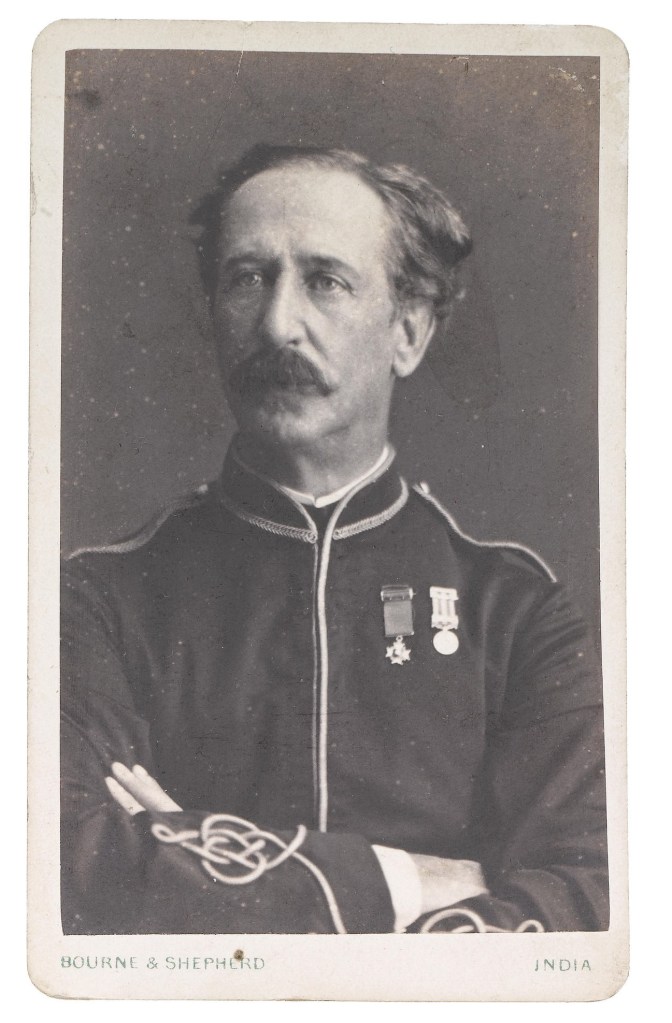
What he had seen was only the advance guard of Firoz Shah’s army, and he did not see the 5000 men who had moved up from Neemuch.
The next day, Stuart moved out at 8 a.m., keeping to the left and crossed the northern branch of the Sowna. He then halted his column and collected all the baggage on the reverse flank before moving on to the proposed camp on the Neemuch-Mandsaur road, confident he could oppose the insurgents from one or the other direction. On arriving at the grounds, the insurgents immediately appeared to the north, so Stuart ordered the baggage to collect on a strong mound, reinforced his rear guard and proceeded to meet the insurgents.
“After a short advance, I formed line to my front, facing northward, and found th enemy occupying a very strong position, with their right in and beyond the village of Goraria, their right centre covered by a date nullah and lines of date trees, their battery of six guns on a rising ground, with a large mud hut protecting their gunners, and their left stretched along the ridge running east from the village.” While this was Stuart’s official report, Lowe recalled something quite different.
He recalled seeing “something in front of us very like moving masses and flags waving above the high crops.” Their left was covered by fields of uncut grain with much-broken ground and ditches in their front, full to the brim with water and mud. While Stuart’s order to collect the baggage resounded, Lowe watched as “the hulky elephant come trumpeting and trotting to the rear, wîth his driver almost green with fright, and the unwitting dooly bearers, who had strayed, in defiance of orders, to far ahead with their sick charges, jolting the little life they had in them to pieces as they ran back, and perverse ghorawallas tumbling with fright as they made their retreat into the crowd of baggage, fast collecting in a jumbled mass.”
The artillery rattled to the front, like “a railway train” as the 86th marched down, formed into a double line on the right of the guns while the 25th fixed bayonets and unfurled their standard, and, with the Madras sappers on their left, moved up in double line to the rebel centre. Left of these stood advanced the Hyderabad Contingent Infantry.
Stuart advanced his line, covered by skirmishers as the rebel infantry, with many green banners flying, moved down to meet him through the jowar fields as their guns opened fire. He halted his line and replied with his guns, having brought Hungerford and Woolcombe’s batteries to proceed to a range of 900 yards. A few rounds later, Stuart permitted Hungerford to move his half battery to the right front, from which he could enfilade the insurgents. Again the column moved forward but only 300 yards as the artillery battle resumed.
The brigadier had ordered the cavalry to be held ready “wherever it might be necessary to attack” to prevent any attempts by the insurgents on the left flank. A detachment of 2 companies of the 3rd Hyderabad Contingent Infantry under Captain Sinclair, with 2 guns of the 1st Company were ordered to reinforce the rearguard. The remainder of the infantry and 2 guns of the 4th Company, Artillery under Captain J. de C. Sinclair assisted by 2 guns from Woolcombe’s battery, under the command of Lieutenant Keating (Bombay Artillery) then advanced in line with the column. The cavalry was now ordered to join the general attack.
“A most gallant charge was then made on the enemy’s guns by the escort of Her Majesty’s 14th Light Dragoons atached to Captain Hungerford, under Lieutenant Martin, who found, however, that the position was still held very strongly by the enemy’s infantry. ” Severely wounded, Martin retired. Now Hungerford’s half battery advanced to within 100 yards and after a round or two of grape, the guns were once again charged and this time captured, scattering the insurgents “in great numbers” into the village.
Up came the 3rd Regiment Cavalry, Hyderabad Contingent, Major Orr in front, and advanced rapidly along the right front, then having been wheeled left, swept down on the retreating rebels. The line then changed front “about the eighth of a circle”, with the right thrown forward, and moved on the village.
Stuart halted within 300 yards of the village and allowed the artillery to open fire with shots and shell before he allowed the 86th and the 25th to complete the work of destruction.
Resistance was fierce. Some of the insurgents had taken up positions in the trees and others in haystacks – as the infantry pushed forward, from their concealed positions, they opened fire. Those in the trees “dropped down like birds” but those in the haystacks met a grimmer fate as stack after stack was set on fire burning them alive. As one man noted, they were displaying, in all, a highly “defiant attitude.”
“One fellow, more daring than the rest or infuriated by liquor, rushed out of the village towards our infantry, fired his matchlock, then threw it away, and came running and capering down the hill, brandishing his sword a thousand ways, and jumping round and round like a maniac, untouched, though scores of bullets were fired at him; he even passed through the skirmishers of the 25th and continued his antics; but a private with fixed baynet advanced from the line to the front and awating his approach, and, when within reach, struck him to the earth.” While he could have retreated, he “chose to run his race his own particular way.”
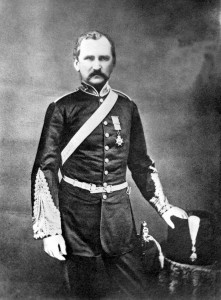
With the infantry meeting a considerable fight, Brigadier Stuart was unable to get any information about what was happening to his rear when he suddenly heard firing. Quickly recalling the infantry, he placed strong pickets around the village and moved the remainder of the men back to where the baggage had been passed up from the rear. While Stuart had been holding his fight in the front, a strong body of insurgents from Mandsaur had attempted to attack the rear, with the intention of not only carrying off the baggage but also the siege train. They had been stiffly repulsed by the dragoons, supported by a 24-pound howitzer, served by a havildar of the Madras sappers and the remaining guns that threw shot and shell at their heads. The attack was repulsed, but it cost the life of Lieutenant Redmayne.
When the attackers had gained a piece of ground during their retreat that was heavily broken up, making it difficult for cavalry to follow, unfortunately, Redmayne’s horse had carried him too far ahead of his men and, trapped in this impossible terrain, was mortally wounded. Before anyone could react, his attackers had him off his horse and robbed him of his accoutrements, his horse, sword, pistol and watch and then hacked him to bits. When his body was brought in, “no feature could be distinguished,” so barbaric had been the attack on the wounded man.
However, even without the infantry, the rear guard had managed to hold back and repulse the insurgents – they did not lose a single piece of baggage, nor were any camp followers injured.
By now, night was drawing in, and the battle wound down. The insurgents were still holding the village, but they were not only they surrounded by Stuart’s pickets, a fire blazed, encircling their position. For now, Stuart would let his men rest and take care of his wounded and dead – he lost upwards of 60 officers and men. The camp was pitched, and the men settled down as best they could to await daylight.
During the night, the camp was thrown out of their sleep when the alarm was sounded, and the whole force was back under arms, “weary and shivering.”
It turned out the pickets surrounding the village had detected a body of insurgents attempting to use the darkness to flee the village and had opened fire. The firing subsided, and the men went back to their beds.
The next morning, Brigadier Stuart ordered the artillery to lay waste to the village. 18-pounders and the 24-pound howitzer were brought to the fore, some 250 yards from the village and opened fire. Inside, however, the insurgents held on and doggedly continued to return fire. After three hours of unceasing cannonade, a detachment of the 86th under the command of Major Keane and the 25th Bombay Infantry, under Major Robertson, again stormed the village, but not without fierce resistance. Just getting into the place was difficult – there were no streets, and each house “led from each other” in a series of courtyards and alleys. Brutal hand-to-hand combat ensued, with house after house cleared, causing severe losses in the infantry, and the support of a detachment of the 3rd Regiment Hyderabad Contingent under Captain Sinclair quickly moved up in support. As the day grew to a close, Goraria was nothing more than a burnt-out charnel house; the rebels had fought to the last.
There would be no help for them, no reinforcements, no more banners flying. Firoz Shah Shahzada, with his remaining 2000 Afghans and Mekranis, had evacuated Mandsaur during the night and were well on their way, in full retreat towards Nangarh.
“Pursuit, however, was scarcely necessary. The blow struck at Goraria was a blow from which there was no rallying. The Afghans and Mekranis, as panic-stricken as they had been bold, fled through the country, avoiding towns and villages and endeavouring to seek refuge in the jungles. One party of them, more daring than their fellows, suddenly appeared at Partabgarh. The loyal chief of that state, summoning his Thakurs, attacked them, killed eighty of them, and drove the rest into flight. The others seemed, above all, anxious to place the Chambal between themselves and their conqueror.”
The Shahzada would move towards Rahatgarh but was forced to leave on the advance of Sir Hugh Rose on the 28th of January 1858. He then escaped to Rohilkhand, but by May 1858, that too proved to be an uncertain refuge. Stubborn to the last, he stirred up trouble in December 1858 in Etawah but was chased off by Mr. Allan Octavius Hume, that rather persistent collector. He tried to re-enter Central India, but by then, the rebellion was on its last legs. He was chased by General Napier through Gwalior and eventually withdrew towards Chanderi. In January 1859, Firoz Shah finally managed to join forces with Tantya Tope, but his efforts at this point were fruitless. He disappeared into the Sironj jungles, made a brief reappearance at Goonah, but after April 1859, all trace of this once wily and independent prince is lost. He escaped India altogether, it is said, disguised as a pilgrim and died in 1877 in Karbala.
Entering Mandsaur
The Malwa Field Force encamped under the walls of Mandsaur and was met by scores of inhabitants, many of them bewailing the misery Firoz Shah had brought upon them, none lamenting louder than the merchants who claimed they had been threatened and then looted down to their last rupee. However, as the men walked through the streets, it was clear that the rest of the townspeople were mortally afraid of the British. They closed their doors and fastened their shutters; they were not wrong. There was a distinct air of retribution about the men, who were not done with Mandsaur yet, as the hunt for the remaining insurgents began. Over the next days, men were brought out, betrayed by the townspeople, more out of fear than vengeance. It did not help that the head of Major Tucker was found in a basket – fortunately, it was no longer pinned to the wall on a spike. Houses were pointed out as still harbouring insurgents, and when these were broken open, guilt was satisfied by the quantity of plunder found inside. In one, the caps, boots, and bayonets of the mutinied troops of Mahidpur were found; in another, Captain Tucker’s sword. When one house was broken into, a quantity of “European loot” from the burned houses of Neemuch and Mahidpur was discovered, along with a quantity of the commissioner’s papers.
Not all was quiet in Mandsaur. A dragoon, while out on a stroll, was attacked by a man brandishing a knife. The dragoon, in undress and surprised, managed to wrestle the man to the ground and kill him with his own knife – but the dragoon did not walk away unscathed, sustaining severe cuts about the arms and body. This man at least did not have to sit through the drumhead court-martials, the hastily convened trials or the inevitable execution that followed.
By the end of it, some 200 men would be taken prisoner. Further, prisoners were brought in from the surrounding villages, not by Stuart’s men but by the villagers themselves. On the 30th of November, a general parade of the troops was ordered for that evening. The troops assembled and formed up on three sides of a square while three guns were set on the fourth. Twenty-six prisoners were brought out, three of whom were the subadar major, the subadar and the jemadar of the Mahidpur artillery – they met their fate, blown from the guns. The remaining prisoners were blindfolded and shot.
With their work now done, the Malwa Field Force ceased to exist. The main body would march to Indore with Colonel Durand for a discussion with Holkar’s surly troops, while the Hyderabad Contingent, for a time, would remain holding Mandsaur. For the next month, they would be kept busy apprehending rebels and restoring order to the district. 120 rebel sowars of the Gwalior Contingent would be captured, tried and executed – only a few were found not guilty. A new phase of the Central India Campaign would soon commence – this time, under Major General Sir Hugh Rose. As the Central India Field Force, they would march again.
Sources:
Burton, Reginald George. A History of the Hyderabad Contingent. Calcutta: Government of India Central Printing Office, 1905.
Great Britain Parliament. Further Papers (No. 6) Relative to the Mutinies in the East Indies. London: Harrison and Sons, 1858.
Intelligence Branch, comp. The Revolt in Central India 1857-59. Simla: Government Monotype Press, 1908.
Lowe, Thomas. Central India during the Rebellion of 1857-1858. London: Longman, Green, Longman & Roberts, 1860.
Malleson, G. B. History of the Indian Mutiny, commencing from the close of the 2nd Volume of Sir John Kaye’s History of the Sepoy War. Vol. III. London: W.H. Allen & Co., 1888.
Stotherd, E. A. W. History of the Thirtieth Lancers, Gordon’s Horse, formerly 4th Nizam’s Cavalry, 4th Cavalry, Hyderabad Contingent, 4th Lancers, Hyderabad Contingent. Aldershot: Gale & Polden, Ltd., 1911.
Sylvester, John Henry. Recollections of the Campaign in Malwa and Central India under Major General Sir Hugh Rose. Bombay: Smith, Taylor & Co., 1860.)
Links to the portraits:
https://www.britishempire.co.uk/forces/armyunits/britishcavalry/14thltdragoonsherbertgall.htm
https://www.britishempire.co.uk/forces/armyunits/britishcavalry/14thltdragoonsjamesleith.htm
https://www.woollcombe.co.uk/biographies/136/john-woollcombe
 Mutiny Reflections